
Market Report · May 18, 2026

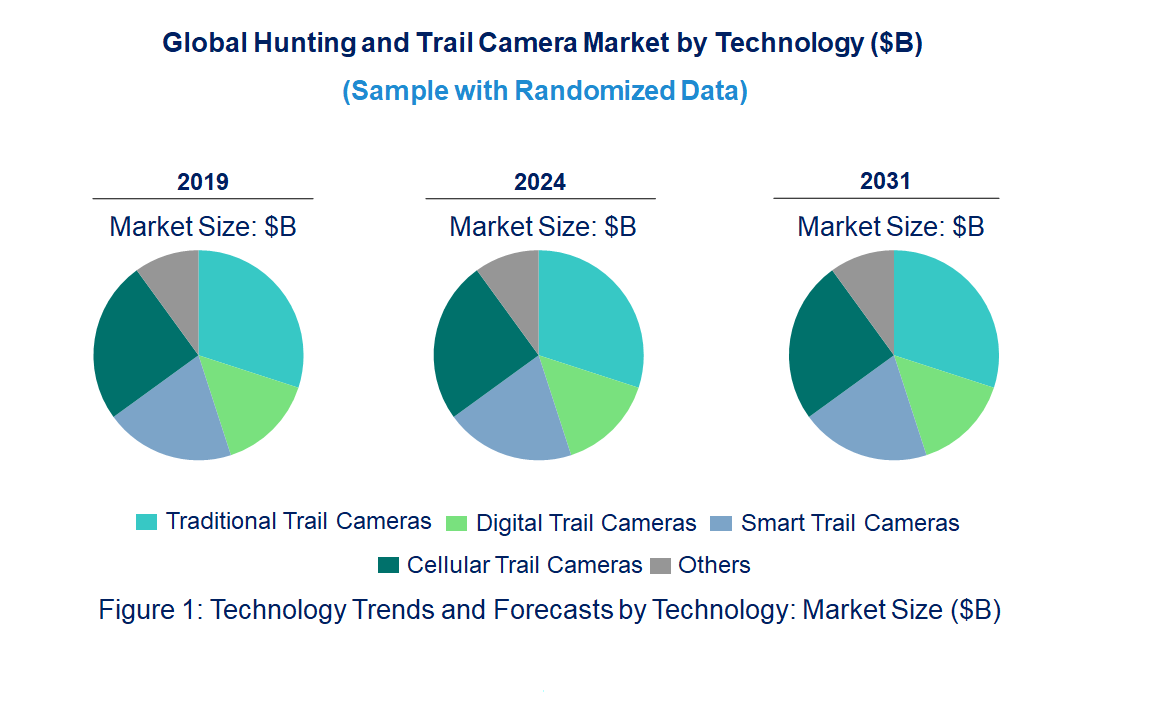
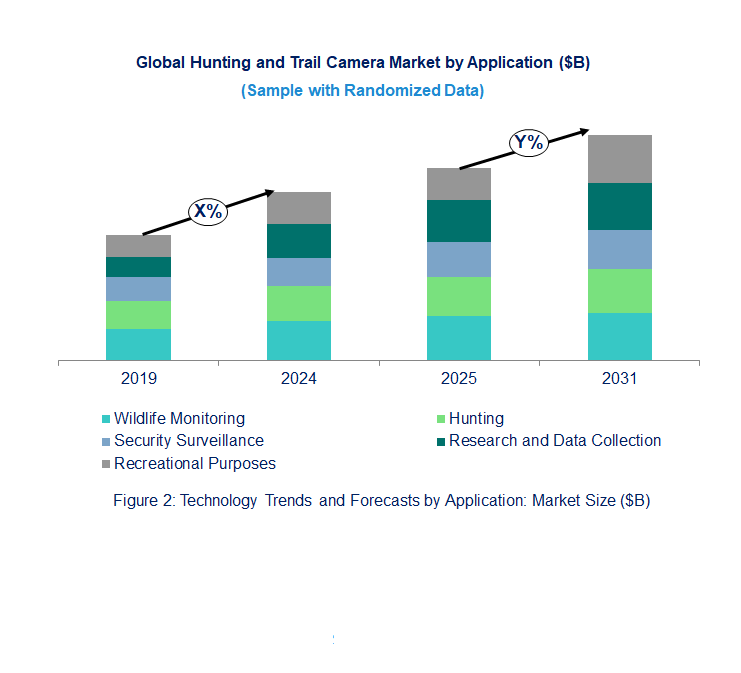
This market report covers trends, opportunities, and forecasts in the global hunting and trail camera market to 2031 by technology (traditional trail cameras, digital trail cameras, smart trail cameras, cellular trail cameras, and others), application (wildlife monitoring, hunting, security surveillance, research and data collection, and recreational purposes), and region (North America, Europe, Asia Pacific, and the Rest of the World)
We'll send your sample report shortly.
• Integration of Artificial Intelligence (AI) and Machine Learning: AI and machine learning algorithms are being integrated into trail camera to improve image recognition and data analysis. These technologies can help detect and classify animals, differentiate between movement types, and reduce false triggers. The use of AI enhances the overall efficiency of these camera by allowing them to focus on relevant events, reducing the need for manual monitoring.
• Shift from Wired to Wireless and Cellular Connectivity: Cellular trail camera, equipped with wireless connectivity, are becoming increasingly popular due to their ability to transmit data remotely. This trend is revolutionizing wildlife monitoring and security applications, as it allows users to access real-time images and video without needing to retrieve the camera physically. Wireless options like Wi-Fi and Bluetooth are also improving camera functionality by enabling remote management.
• Higher Image and Video Quality: Advancements in camera technology have led to improvements in image resolution, video quality, and night vision. Trail camera now offer higher megapixel counts and 4K video capabilities, making them ideal for capturing more detailed images and videos. This is particularly useful for wildlife monitoring and research, where accurate data collection is essential. Enhanced night vision and infrared technology also contribute to better performance in low-light conditions.
• Battery Life Improvements with Solar and Rechargeable Options: The need for longer battery life is being addressed by the introduction of solar-powered and rechargeable battery systems. Solar-powered camera ensure continuous operation without the need for frequent battery changes, making them ideal for long-term monitoring. Rechargeable options are also becoming more popular as they offer a sustainable and cost-effective alternative to disposable batteries.
• Miniaturization and Enhanced Durability: Modern trail camera are becoming smaller and more lightweight without compromising on performance. This miniaturization trend allows for more discreet placement and easier transportation. Additionally, the durability of these camera has improved, with many models being weatherproof and resistant to harsh environmental conditions. These enhancements make the camera more suitable for a variety of outdoor activities and environments. These emerging trends in the Hunting and Trail Camera Market are significantly reshaping the industry, offering users more advanced, efficient, and reliable products. The integration of AI, wireless technologies, and improvements in image quality and battery life are enhancing the capabilities of these camera across different applications. As technology continues to evolve, the market is likely to see further innovations that will continue to meet the demands of both recreational and professional users alike.
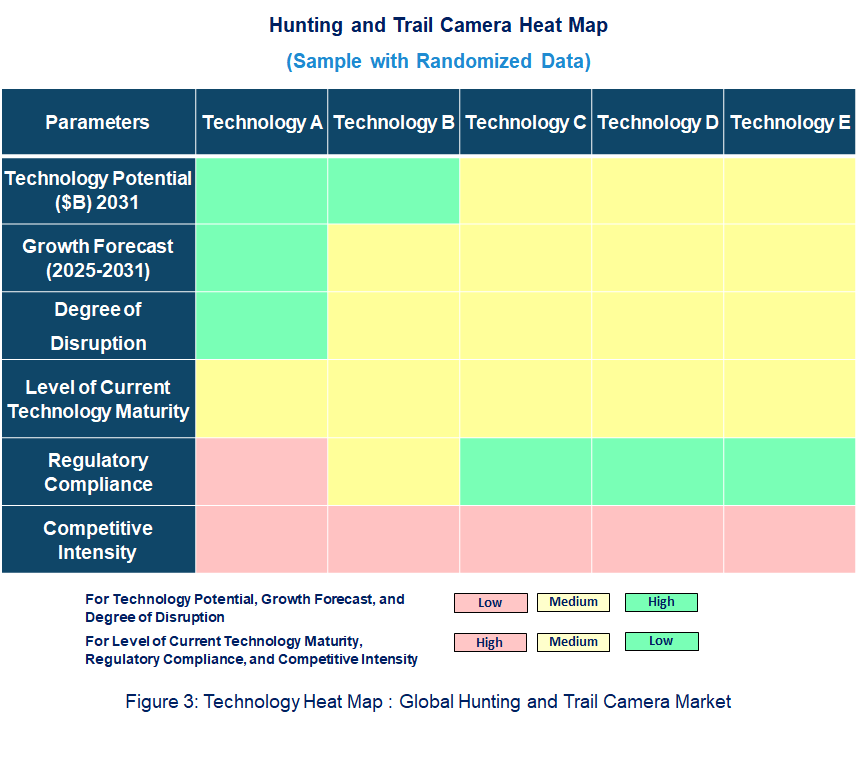
• Technology Potential: The Hunting and Trail Camera Market presents significant technology potential, driven by rapid advancements in imaging sensors, AI integration, wireless connectivity, and energy-efficient designs. These innovations are transforming how trail camera are used in wildlife monitoring, hunting, security, and research applications. Enhanced features such as real-time data transmission, mobile integration, and smart analytics are opening new opportunities across consumer and professional segments.
• Degree of Disruption: The degree of disruption varies by technology type. Traditional and digital trail camera offer limited disruption due to their basic functionality and widespread maturity. In contrast, smart and cellular trail camera are highly disruptive. They enable users to monitor remote areas in real time and access data via cloud platforms, eliminating the need for physical retrieval. These technologies are reshaping industry standards and user expectations.
• Technology Maturity: In terms of technology maturity, traditional and digital trail camera are well-established and widely adopted, while smart and cellular variants are quickly maturing due to growing demand and rapid innovation. Solar-powered and eco-friendly options are emerging and gaining traction but remain less mature.
• Regulatory Compliance: Regulatory compliance is increasingly important, particularly for cellular and smart camera. These must adhere to telecommunications, data privacy, and cybersecurity regulations. Additionally, sustainable models must comply with environmental standards, making compliance a key consideration for product development and market expansion.
• Aries Electronics: Aries Electronics has been focusing on expanding its product offerings in the outdoor equipment sector. While specific developments in the trail camera market are not detailed, the company's expertise in electronic components positions it well to contribute to advancements in camera connectivity and power solutions.
• Enplas Corporation: Enplas Corporation has been involved in providing components for various electronic devices. While direct involvement in trail camera is not specified, their expertise in precision molding and component manufacturing suggests potential applications in enhancing camera durability and performance.
• Loranger International Corporation: Loranger International Corporation specializes in providing components for electronic devices. While specific developments in the trail camera market are not detailed, their expertise in component manufacturing could contribute to advancements in camera technology.
• Mill-Max Mfg. Corp.: Mill-Max Mfg. Corp. is known for its precision interconnect components. While direct involvement in trail camera is not specified, their expertise in manufacturing connectors and interconnects could support the development of more reliable and efficient camera systems.
• Molex LLC: Molex LLC has been actively involved in providing connectivity solutions for various industries. Their expertise in wireless communication technologies could play a significant role in enhancing the connectivity features of trail camera, enabling real-time data transmission and remote monitoring capabilities. The recent developments by key players in the hunting and trail camera market highlight a concerted effort to innovate and enhance product offerings. While some companies are focusing on expanding their product lines and improving component manufacturing, others are leveraging their expertise in connectivity solutions to enable advanced features like real-time data transmission. These advancements are poised to meet the evolving needs of users in wildlife monitoring, security surveillance, and recreational hunting, thereby driving the growth and transformation of the market.
• Technological Advancements: The continuous improvement in camera sensors, image quality, and wireless connectivity is a significant driver. Modern trail camera now offer HD video, real-time data transmission, and AI-powered analytics, enabling higher efficiency in applications like wildlife monitoring, hunting, and security.
• Rising Demand for Security and Surveillance: The increased need for surveillance in both urban and rural areas has fueled demand for trail camera, especially those equipped with motion detection, cellular connectivity, and real-time monitoring. These camera serve as an effective solution for monitoring remote or vulnerable areas.
• Growing Interest in Wildlife Research and Conservation: There is a growing awareness about wildlife conservation and environmental monitoring, which is driving the adoption of trail camera. Researchers and conservationists use these camera to track animal movements and gather valuable data without disturbing wildlife. Challenges
• High Initial Costs: Despite technological advancements, the cost of high-end trail camera, especially those with cellular or smart capabilities, remains a barrier for some consumers. These camera often require high upfront investments, limiting their accessibility for casual users and small-scale researchers.
• Battery Life and Durability Issues: Maintaining long battery life and ensuring durability in harsh environmental conditions continue to be challenges for trail camera manufacturers. Long-term deployment in remote locations often leads to concerns about battery efficiency and the need for frequent maintenance. The major growth opportunities in the Hunting and Trail Camera Market, including AI integration, advanced battery technologies, and remote monitoring, are helping to drive the market forward. These innovations are enhancing the functionality and accessibility of trail camera, meeting the needs of both professional and recreational users. Despite challenges such as high costs and battery limitations, these opportunities are reshaping the market, making trail camera more efficient, affordable, and versatile for a broad range of applications.
• Vista Outdoor
• Prometheus Group
• Spypoint
• Kinghat
• Gsm Outdoors
• Technology Readiness by Technology Type: Traditional trail camera are well-established with basic image capture technologies, offering low competition due to their simplicity. They have minimal regulatory compliance and are primarily used in hunting and wildlife monitoring. Digital trail camera offer enhanced image resolution and storage, facing moderate competition with some regulatory compliance for data protection. They’re mainly used for wildlife monitoring and hunting. Smart trail camera integrate advanced features like motion detection, wireless connectivity, and mobile app integration, making them highly competitive. They comply with data privacy regulations and are used for wildlife monitoring, security, and recreational purposes. Cellular trail camera are the most technologically advanced, offering real-time data transmission via cellular networks. They face high competition and strict regulatory compliance for telecom and data privacy laws, with applications in remote wildlife monitoring and security. Other technologies, like solar-powered camera, provide sustainable, long-lasting power solutions, facing moderate competition. These camera comply with environmental standards and are ideal for long-term outdoor use in remote locations where access to power is limited.
• Competitive Intensity and Regulatory Compliance: Traditional trail camera face low competitive intensity as they offer basic functionality with minimal innovation, and regulatory compliance is generally limited to safety standards. Digital trail camera have moderate competitive intensity due to improved image quality and storage, with some regulatory compliance related to data protection. Smart trail camera experience high competitive intensity, as they integrate advanced features like motion detection and wireless connectivity, necessitating compliance with privacy and wireless communication laws. Cellular trail camera are the most competitive, offering real-time data transmission, with stringent regulatory compliance for telecommunications and data privacy, especially in regions with strict data protection laws. Other technologies, such as solar-powered camera, face moderate competition, and compliance revolves around environmental and energy consumption standards, making them more attractive to eco-conscious users and long-term outdoor applications.
• Disruption Potential by Technology Type: Traditional Trail Camera have low disruption potential as they offer basic, established technology with limited innovation. Digital Trail Camera have moderate disruption potential, as their improved resolution and data storage provide better value, but they are still relatively conventional. Smart Trail Camera have high disruption potential due to their advanced features like motion detection, wireless connectivity, and mobile app integration, offering enhanced user experience and new functionalities. Cellular Trail Camera possess very high disruption potential, allowing real-time data transmission and remote access, transforming wildlife monitoring and security surveillance. Other technologies like solar-powered camera present moderate disruption potential by offering eco-friendly and sustainable solutions, though they mainly target niche markets with specific environmental needs, rather than broad consumer base.
• Traditional Trail Cameras
• Digital Trail Cameras
• Smart Trail Cameras
• Cellular Trail Cameras
• Others
• Wildlife Monitoring
• Hunting
• Security Surveillance
• Research and Data Collection
• Recreational Purposes
• North America
• Europe
• Asia Pacific
• The Rest of the World
• Latest Developments and Innovations in the Hunting and Trail Camera Technologies
• Companies / Ecosystems
• Strategic Opportunities by Technology Type


Choose a license that fits your team. Instant PDF delivery.
Prices exclude taxes. Instant delivery. Custom licensing available on request.
Market Report · May 18, 2026
Market Report · May 18, 2026
Market Report · May 18, 2026
Trusted partner for strategic intelligence and business growth


Receive a complimentary market analysis tailored to your industry. Our analysts will identify key growth opportunities and competitive dynamics specific to your business.

Market size, growth rate, and key trend analysis for your specific sector.

Top competitor positioning and market share analysis.

Strategic recommendations backed by data-driven insights.
Get curated market intelligence and competitive moves straight to your inbox.
By subscribing, you agree to receive our monthly insights. Unsubscribe anytime.
Receive a complimentary market analysis tailored to your industry. Our analysts will identify key growth opportunities and competitive dynamics specific to your business.
Market size, growth rate, and key trend analysis for your specific sector.
Top competitor positioning and market share analysis.
Strategic recommendations backed by data-driven insights.
Get curated market intelligence, emerging trends, and competitive moves straight to your inbox each month.
By subscribing, you agree to receive our monthly insights. Unsubscribe anytime.
We'll send your sample report shortly.