
Market Report · May 18, 2026

This market report covers trends, opportunities, and forecasts in the global horse grain feeder market to 2031 by technology (mechanical feeding systems, electronic feeding systems, sensor-based feeding systems, automatic timer-controlled feeding systems, and others), end use industry (equestrian farms, commercial stables, horse training facilities, recreational horse owners, and others), and region (North America, Europe, Asia Pacific, and the Rest of the World)
We'll send your sample report shortly.
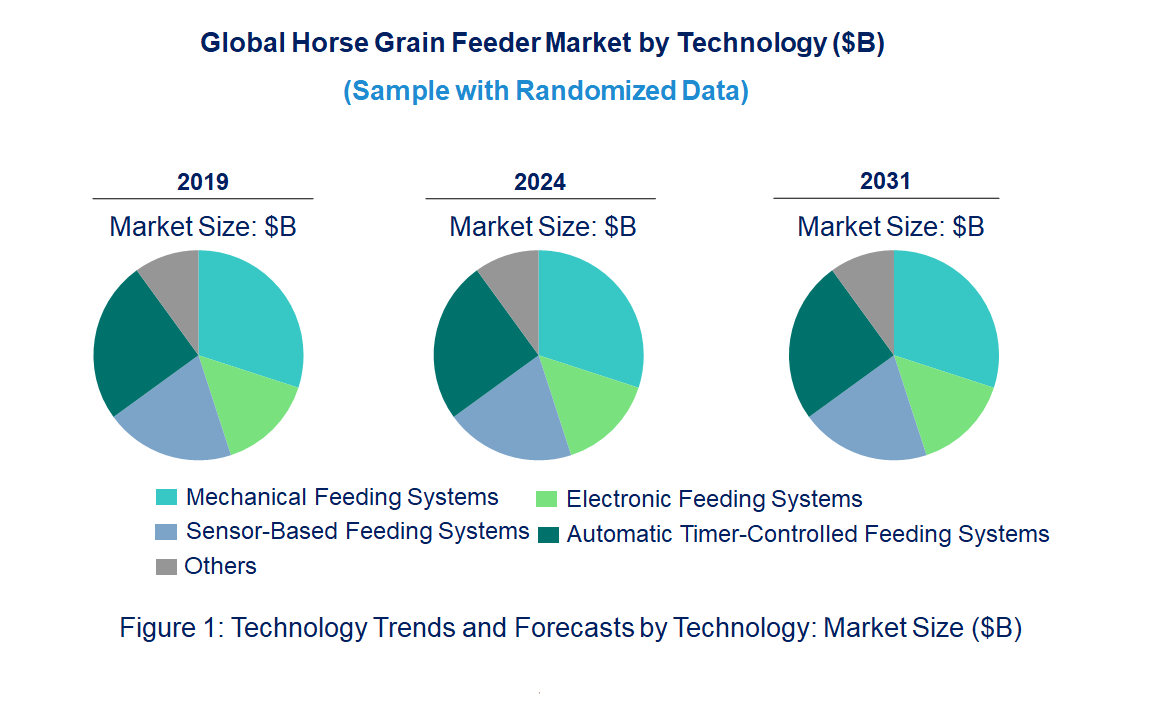
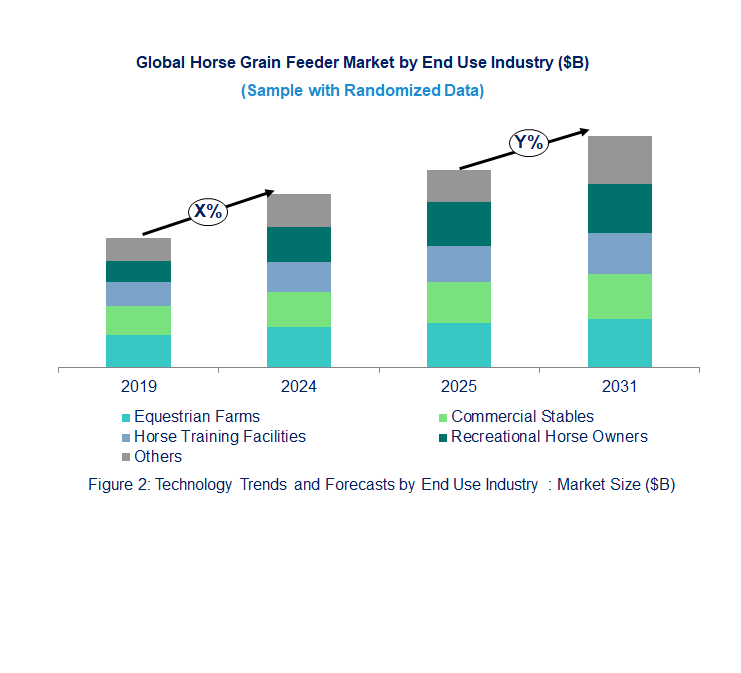
• Integration of Sensor-Based Feeding Systems: Sensor-based feeding systems are becoming popular, with real-time monitoring of the grain dispensed to horses. These systems can detect and adjust the feeding process according to the needs of the horse, improving feed accuracy and reducing waste. This ensures better nutrition management and more efficient feed utilization.
• Automation and Smart Technology: The demand for automated and smart feeding solutions is on the rise. More systems are being used that feature timers, sensors, and remote control functions to automate feeding schedules and monitor the activity of horses. This trend improves feeding consistency, reduces labor costs, and provides convenience to horse owners and operators.
• Customization and Flexibility in Feeding Programs: The main emphasis is on customizable feed options to meet the specific nutritional needs of various horses. Advanced feeding systems allow users to adjust feed portions, frequencies, and times to accommodate individual horses, promoting better health and performance tailored to specific requirements.
• Sustainability and Waste Reduction: With sustainability as a priority, feed waste reduction through more accurate feeding systems is on the rise. Automated and sensor-based feeders help reduce overfeeding by dispensing the correct portion, ensuring that horses receive only the required amount of grain, which in turn reduces environmental impact.
• Increased Adoption in Commercial Stables and Training Facilities: As equine enterprises increase their demand in the markets, more advanced equine stables and training institutions are adopting newer horse grain feeders. Their purpose is to improve feeding efficiency and consistency to accommodate larger herd sizes. The shift to high-tech automated and electronic feeder systems allows for proper nutritional content for larger herds under optimal and precise scheduling. These new trends are revolutionizing the horse grain feeder market with higher automation, better feed accuracy, and sustainability. Sensor-based and automated technologies not only improve the efficiency of operations but also provide better care for horses. As this market continues to evolve, it will be dominated by these technologies, offering increased efficiency, convenience, and customization for both small and large-scale equine operations.
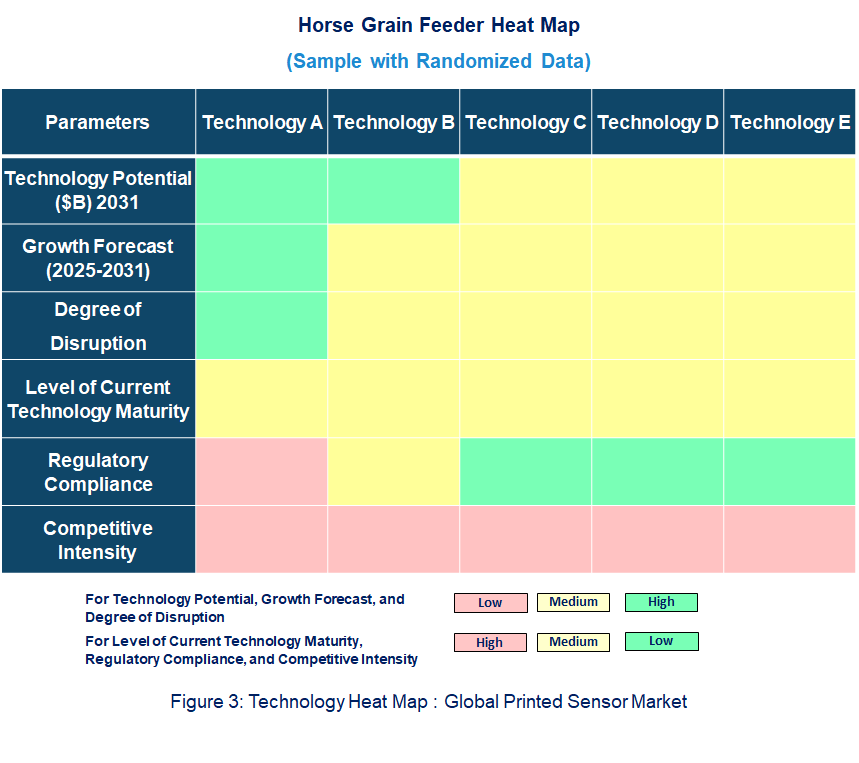
• Technology Potential: It holds massive technological potential, as innovations in sensor-based automated feeders and smart feeders begin to drive change. Real-time monitoring and accurate quantities to minimize waste are made easier by improving nutrient intake for horses. The integration of IoT and automation into feeders greatly improves operational efficiency and reduces manual labor.
• Degree of Disruption: This is a highly disruptive market, as new technologies replace traditional manual feeding systems. Sensor-based and automated feeders offer more accurate and consistent feeding schedules, significantly altering established practices and providing a more efficient way of managing horse nutrition. These innovations could replace older, less efficient methods.
• Level of Current Technology Maturity: Currently, technologies like automated grain feeders are at a moderate maturity level, with widespread application in commercial stables and training facilities. However, technologies like sensor-based systems and smart feeders are still emerging and will take time to reach full-scale adoption in smaller equestrian operations.
• Regulatory Compliance: For the horse grain feeder market, regulatory compliance is necessary to ensure that automated systems support proper animal welfare standards and adhere to environmental regulations. These systems must meet all relevant regulations and industry guidelines related to food handling and safety.
• IOTTI ZOOTECNIA SRL: IOTTI ZOOTECNIA SRL offers new, modern electronic feeding systems that can monitor and regulate feed portions with the help of sensors, enabling real-time monitoring. These systems improve the accuracy of feeding and reduce waste, benefiting both large commercial stables and small equine units, promoting sustainability and optimal nutritional management for horses.
• Stallion: Stallion has been a market player through its provision of versatile grain feeder systems designed for easy customization according to the specific feeding needs of horses. The company’s focus on user-friendly interfaces and reliable, durable products has made it a popular choice among recreational horse owners and larger equestrian facilities seeking efficient, consistent feeding solutions.
• Polidas: Polidas has emphasized implementing IoT and automation in its grain feeder systems. Through its product lines that can be managed and monitored via mobile devices, Polidas has improved the convenience and versatility of grain feeding. These systems are particularly useful in larger training facilities and commercial establishments, where specificity and timely feeding are crucial for the animals.
• Röwer & Rüb: Röwer & Rüb has developed sensor-based feeding systems that incorporate advanced technologies to ensure consistent and precise portion control. This technology has greatly simplified feeding for both individual and large-scale equestrian operations, improving the overall management of horses' diets as well as their health and performance outcomes.
• D P Agri Ltd.: D P Agri Ltd. has recently developed automatic timer-controlled feeding systems designed to optimize feeding schedules and enhance operational efficiency. These systems cater to large-scale commercial stables and training facilities by automating the process and reducing the need for manual intervention, thereby improving productivity and consistency in feed distribution.
• SIEPLO: SIEPLO has made great strides with innovative grain feeders that combine automation and precision technology to optimize grain distribution in various equine settings. Their products aim to perfect the control of feeding schedules, ensuring that the right quantities of grain are dispensed to horses and supporting better feeding habits across different horse categories. These key players will shape the future of the horse grain feeder market through innovations centered around automation, precision, and sustainability. Their advancements in smart technologies, IoT integration, and user-friendly systems are transforming grain distribution to be more efficient, with reduced waste and better horse care across diverse equine operations.
• Automation and Operational Efficiency: Automated feeding systems are increasingly gaining popularity due to their efficiency in streamlining feeding processes, saving labor costs, and ensuring consistency in the nutrition of horses. Automation enables large-scale operations to save time while increasing efficiency, offering a significant growth opportunity for manufacturers that provide automated grain feeders.
• Customization According to Nutritional Needs: Customized feeding systems are now in higher demand to meet the needs of individual horses. These systems allow more control over portion sizes and feeding times, enhancing horse health and performance. This is an ongoing trend in commercial stables, training stables, and equestrian farms.
• Internet of Things (IoT) Integration: The adoption of Internet of Things (IoT) technology is driving growth through real-time monitoring, data analytics, and remote control of grain feeders. Predictive maintenance is made possible through IoT integration, minimizing downtime and improving feed accuracy. This feature enhances operational efficiency, which is particularly beneficial in larger operations.
• Sustainability and Waste Reduction: With sustainability being a primary focus, horse grain feeder systems are evolving to reduce feed waste and environmental impact. Advanced systems are designed to deliver precise portions of grain, ensuring that horses receive the right amount while reducing excess feed. This reduces waste and aligns with growing environmental concerns in the industry. Challenges
• High Initial Costs of Advanced Technology: Although advanced feeding systems offer several benefits, the high upfront cost of automated and sensor-based systems is a challenge for smaller operators or recreational horse owners. The cost deters many from adopting such technology, especially in developing markets where budget constraints are a key consideration for equine operators. Innovations in automation, customization, and smart technology in the horse grain feeder market are transforming feeding practices and improving operational efficiency. However, the high initial investment cost remains a barrier for smaller operations. Despite this, the overall growth of the market is driven by technological advancements that improve both the quality of care for horses and the efficiency of feeding systems.
• Iotti Zootecnia Srl
• Stallion
• Polidas
• Röwer & Rüb
• D P Agri Ltd.
• Sieplo
• Technology Readiness by Technology Type for Horse Grain Feeder Market: Mechanical feeding systems are the most established and widely used, although they are less advanced than newer technologies. Electronic feeding systems are mature and ready for widespread adoption, providing increased automation and precision in feeding. Sensor-based systems are emerging but are becoming more accessible, with increasing adoption in larger operations. Automatic timer-controlled systems are well-established, providing reliable but less customizable solutions compared to more advanced technologies. Overall, although mechanical systems remain dominant in smaller settings, electronic and sensor-based technologies are rapidly advancing the market toward more automated feeding solutions. Competitive dynamics depend on the increasing demand for automation, and regulatory compliance is becoming stricter, mainly for newer systems that require animal welfare oversight.
• Competitive Intensity and Regulatory Compliance of Various Horse Grain Feeder Technologies: The competitive intensity in the horse grain feeder market is high, driven by the demand for more efficient and automated feeding systems. Mechanical systems are less competitive as modern alternatives, such as electronic and sensor-based systems, gain traction. Electronic systems dominate due to their automation features, while sensor-based systems cater to specific needs like real-time monitoring. Automatic timer-controlled systems are highly competitive in this advanced technology, but they are still widely used in cost-sensitive markets. Regulatory compliance is also essential for new technologies, especially for safety and animal welfare, which includes feed accuracy and automation in large-scale operations.
• Disruptive Potential of Various Technologies for Horse Grain Feeder Industry: The disruption potential in the horse grain feeder market is high as new technologies quickly replace traditional mechanical systems. Mechanical feeding systems are gradually being replaced by more efficient electronic and sensor-based systems, which offer precision and automation. Sensor-based systems allow for real-time monitoring and feedback, disrupting older methods. Electronic feeding systems enable automation and IoT integration, reducing labor hours. Automatic timer-controlled systems also improve feeding consistency and efficiency. These improvements are changing feeding protocols, providing smarter solutions that enhance nutritional management and lower operational costs, especially in commercial stables and large establishments.
• Mechanical Feeding Systems
• Electronic Feeding Systems
• Sensor-Based Feeding Systems
• Automatic Timer-Controlled Feeding Systems
• Others
• Equestrian Farms
• Commercial Stables
• Horse Training Facilities
• Recreational Horse Owners
• Others
• North America
• Europe
• Asia Pacific
• The Rest of the World
• Latest Developments and Innovations in the Horse Grain Feeder Technologies
• Companies / Ecosystems
• Strategic Opportunities by Technology Type


Choose a license that fits your team. Instant PDF delivery.
Prices exclude taxes. Instant delivery. Custom licensing available on request.
Market Report · May 18, 2026
Market Report · May 18, 2026
Market Report · May 18, 2026
Trusted partner for strategic intelligence and business growth


Receive a complimentary market analysis tailored to your industry. Our analysts will identify key growth opportunities and competitive dynamics specific to your business.

Market size, growth rate, and key trend analysis for your specific sector.

Top competitor positioning and market share analysis.

Strategic recommendations backed by data-driven insights.
Get curated market intelligence and competitive moves straight to your inbox.
By subscribing, you agree to receive our monthly insights. Unsubscribe anytime.
Receive a complimentary market analysis tailored to your industry. Our analysts will identify key growth opportunities and competitive dynamics specific to your business.
Market size, growth rate, and key trend analysis for your specific sector.
Top competitor positioning and market share analysis.
Strategic recommendations backed by data-driven insights.
Get curated market intelligence, emerging trends, and competitive moves straight to your inbox each month.
By subscribing, you agree to receive our monthly insights. Unsubscribe anytime.
We'll send your sample report shortly.