
Market Report · July 29, 2026

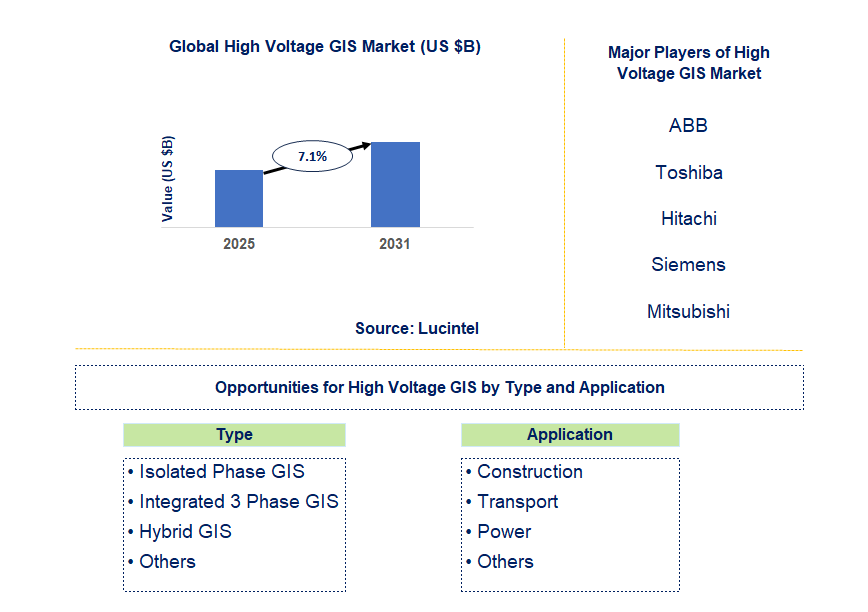
Key data points: The growth forecast = 7.1% annually for the next 7 years. Scroll below to get more insights. This market report covers Trends, opportunities and forecasts in high voltage GIS market to 2031 by type (isolated phase GIS, integrated 3 phase GIS, hybrid GIS, and others), application (construction, transport, power, and others), and region (North America, Europe, Asia Pacific, and the Rest of the World)
We'll send your sample report shortly.
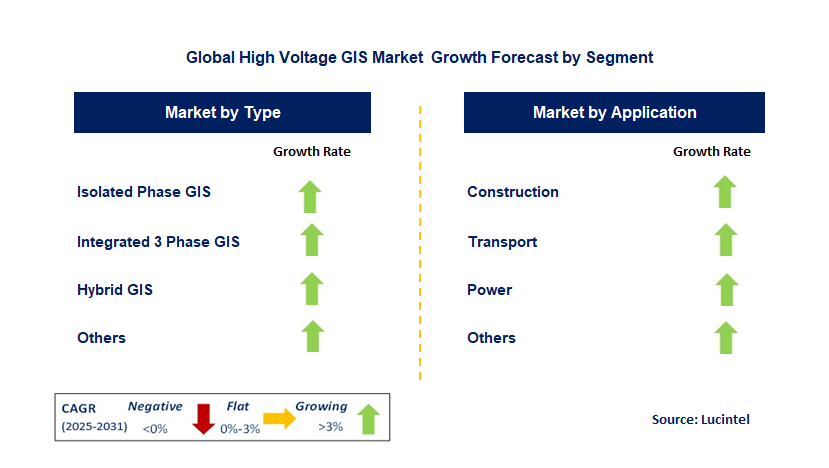
• Lucintel forecasts that, within the type category, hybrid GIS is expected to witness the highest growth over the forecast period due to the rising trend of renewable energy integration.
• Within the application category, power is expected to witness the highest growth due to the increasing need for reliable and sustainable energy solutions.
• In terms of region, APAC is expected to witness the highest growth over the forecast period due to the growing investments in infrastructure and grid modernization.
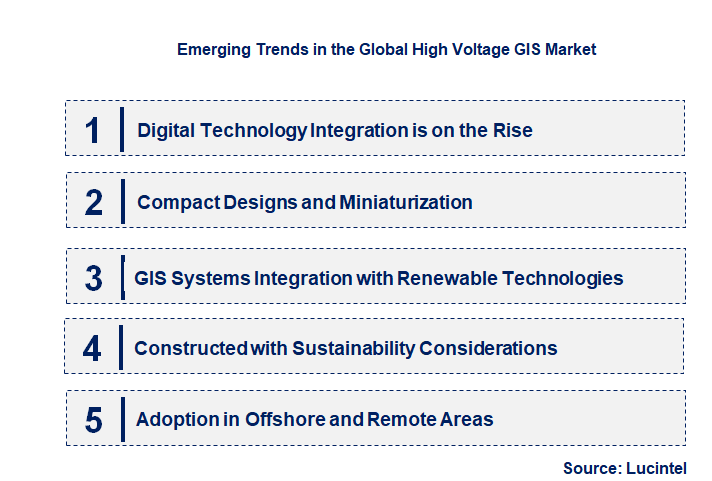
• Digital Technology Integration is on the Rise: There is an integration of other digital technologies IoT, sensors, and automation into GIS solutions. The development of Smart GIS systems offers remote monitoring, which allows for predictive maintenance and advanced fault management capabilities. In turn, this improves the reliability of power grids and reduces overall downtime. The digitization of utilities has helped to optimize performance improvement in complex grid systems. These systems are widely being adopted in developed economies like the US, Japan, and Germany, which are striving towards more advanced and efficient grid systems.
• Compact Designs and Miniaturization: Another potential trend in the high voltage GIS market is the miniaturization of GIS systems. Compact GIS solutions are ideal for offshore installations or urban areas with space constraints. From an economical perspective in reduced footprint systems, smaller systems not only increase cost effectiveness and flexibility in power distribution but also help reduce the overall systems installation cost. Used where population density is high and remote locations where installation of traditional open air switchgear is impossible or cost prohibitive, Miniaturized GIS is gaining acceptability.
• GIS Systems Integration with Renewable Technologies: Integration of new renewable sources such as wind and solar energy is opening doors for new high Voltage GIS projects. The heterogeneous nature of these power sources needs reliable and efficient grid infrastructure to integrate them. GIS is ideally suited for renewable energy integration as it provides dependable, compact, and scalable solutions for power distribution in regions with emerging renewable energy projects. This is particularly true for Germany, India, China, and others, where the adoption of renewable energy is growing at a rapid pace.
• Constructed with Sustainability Considerations: The global concern about the environmental effects of GIS is on the rise. More and more developers of GIS are adopting and using environmentally friendly insulation gases and materials that minimize the environmental effect resulting from the power distribution. A combination of legislative drivers and an increasing emphasis on energy sustainability are what move these nations forward. For instance, Germany and Japan, with strong environmental policies, are frontrunners in the adoption and provision of environmentally friendly GIS, which is boosting the market.
• Adoption in Offshore and Remote Areas: In Japan and Germany, there is a shift towards using high voltage GIS systems instead of other solutions for power transmission and distribution in remote and offshore locations. For example, offshore wind farms require the use of robust GIS that occupy less space while maintaining high levels of safety and reliability at higher voltages. These countries are focusing more on building offshore renewable energy facilities, so this becomes more popular. These countries tend to have harsh environmental conditions, and therefore, GIS has advantages over other technologies because of its compact design. Renewable energy sources and the miniaturization of devices, together with the implementation of digital technologies, have continuously redefined the high-voltage GIS market. Moreover, the integration of energy and environmental sustainability has influenced the development of more reliable and environmentally friendly energy systems. The pace of growth in the global high voltage GIS market is expected to intensify in regions that are undergoing infrastructure development and transition in energy.
• Transitioning Towards SF6-Free GIS System: Because of the environmental issues regarding sulfur hexafluoride (SF6), which is a greenhouse gas used in traditional GIS, there seems to be a movement toward the creation and implementation of SF6-free GIS systems. Manufacturers are working on using alternative gases, such as clean air and fluoronitrile-based solutions, to make GIS systems less harmful to the environment. This trend is especially noteworthy in areas with tough environmental laws, like the EU and Japan, and is moving the market toward more sustainable GIS solutions.
• Merging Smart Grids Automation: The integration of high voltage GIS systems with smart grid technologies is a remarkable move in the industry. Smart grids enhance the efficacy of GIS by achieving real-time data gathering, monitoring, and power distribution optimization. The implementation of IoT sensors and cloud technology is becoming more widespread, allowing utilities to better diagnose faults, anticipate maintenance, and enhance grid reliability. This changes the function of GIS in the transmission and distribution networks of power systems.
• Wind Farm Projects With High Voltage Power Lines: The proliferation of offshore wind energy projects is presenting new possibilities for high voltage GIS systems. These offshore wind farms, which are equipped with compact and high-performance wind turbines, are located in areas with harsh marine environments. Therefore, GIS is the most suitable solution for managing the offshore wind farm’s voltage level and power distribution requirements. This advancement is vital for nations like Japan and Germany, who are heavily investing in offshore wind energy to facilitate the transition to renewable energy. Through efficient and durable power solutions, GIS aids in ensuring the reliable operation of these projects.
• High voltage GIS for remote locations: New advancements are now being made in high voltage GIS technologies. These technologies are increasingly being adopted in remote areas and islands where conventional power infrastructure is costly and difficult to deploy. The GIS system provides compact and reliable power distribution solutions while maintaining stability within the grid and avoiding large infrastructural works. The development of these GIS enables regions that are underserved with power distribution, especially in countries like India, where remote regions are being connected to the national grid as part of the country’s electricification activities.
• Collaborations for Technological Advancements: The collaborations between global companies are spearheading new developments in high voltage GIS. These collaborations are joining with all major industries in all segments of the market to develop and create profitable products. By joining together, these corporations can make significant improvements in the efficiency of the GIS systems. Across many competitive markets, companies are using both financial and human capital to remain competitive. Through collaboration, manufacturers can enhance the development pace of SF6-free GIS and other digital innovations that respond to the current power utilities’ demands. The high voltage GIS market is being advanced by the recent developments in sustainability, smart grid integration, and offshore energy projects. These alternative and digital approaches are making GIS systems more efficient and reliable, while the increased focus on the integration of renewable energy is providing new frontiers in GIS Technology. These developments will focus on high voltage GIS sustainability and ensure that it contributes to the modernizing and expansion of global power networks. Systems in combination with the digital ecosystem will contribute towards comprehensive energy efficiency possibilities on national and regional levels.
• Integration of Renewable Energy: Renewable energy integration is one of the leading drivers for the expansion of the high voltage GIS industry. Efficient power transmission is essential for renewable resources, such as wind and solar, to be utilized successfully, which is where GIS systems come into play. As more nations strive towards clean energy adoption, there will be an increasing need for GIS to help integrate renewable energy initiatives, especially in Europe, India, and China.
• Deployment of Smart Grids: With the increased adoption of smart grid technology, there is an increase in demand for GIS systems that work with these grids. Smart grids need efficient, compact, and reliable power distribution systems to handle data and optimize energy distribution. This transformation provides an opportunity for high voltage GIS to be at the forefront as infrastructure for smart grid solutions is needed.
• Development of Offshore Wind Farms: The construction of offshore wind farms is a new frontier for growth in the high voltage GIS market. The offshore deployment of wind energy farms requires reliable power distribution, and GIS systems are suited for the high voltage offshore wind energy generation. Onshore countries like Japan and Germany are significantly expanding the capacity of their offshore wind farms. There will be an increasing requirement for GIS solutions in these projects that will never cease.
• Modernization of Grids in Developing Markets: In developing economies, such as India and some parts of Africa, grid modernization is basically a necessity. These regions have aging power networks that are suitable for compact and reliable high voltage GIS systems. The economic prospects of developing nations are closely associated with the enhancement of energy infrastructure and grid reliability, resulting in the increased adoption of GIS systems across these economies.
• Sustainability and Green Energy Focus: Global movement towards sustainability and green energy solutions will unlock new growth for high voltage GIS. Stringent regulations on emissions and the use of green technologies have diverted the attention of GIS manufacturers to eco-friendly systems. The development of sustainable GIS technology to be SF6-free meets eco-friendly standards and constitutes a significant opportunity for sustainable GIS technology. Strategic growth opportunities are paving the way toward the development of the high voltage GIS market through technological improvement and support for global energy transitions. There is substantial market demand due to the current development of renewables, smart grids, and sustainability solutions, in addition to the ongoing development of offshore wind farms and grid modernization. Those changes will ensure that the high voltage GIS market will continue to expand and evolve in the future.
• ABB
• Toshiba
• Hitachi
• Siemens
• Mitsubishi
• Shanghai Zonfa Electric
• Henan Pinggao Electric
• Xi’an XD
• Sieyuan Electric
• New Northeast Electric Group
• Isolated Phase GIS
• Integrated 3 Phase GIS
• Hybrid GIS
• Others
• Construction
• Transport
• Power
• Others
• North America
• Europe
• Asia Pacific
• The Rest of the World
• United States: The high voltage GIS market in the US is growing due to the need for modernized power grids and the use of other renewable energy sources. Urban regions and offshore power plants have limited space; hence, GIS systems are very appealing. The country has also been heavily investing in upgrading the aged electrical infrastructure. This includes replacing older systems with sophisticated high voltage GIS that can increase the reliability and use of distributed energy resources. Digital monitoring and automation controls have also been adopted into GIS systems, which improves performance while lowering maintenance costs.
• China: Renewable energy-driven industrial growth, rapid urbanization, and other factors have propelled China to become one of the largest markets for high voltage GIS. Smart Grid development and energy infrastructure modernization efforts have further accelerated the adoption of GIS technology. The Belt and Road Initiative furthers the Chinese efforts to promote the use of GIS internationally, especially in other developing countries with weaker power grids. Leading Chinese firms are now positioning themselves as frontrunners in the high voltage switchgear market by spending on R&D to improve efficiency, scalability, and environmental performance of GIS.
• Germany: High voltage GIS will become increasingly required as Germany transitions to a more sustainable energy system. The country is replacing traditional open-air switchgear with GIS along with existing substations throughout the country as part of the energiewende (energy transition) program prepaid during peak load areas at the time. GIS is necessary for the integration of renewable sources, such as wind and solar, into the national grid. At the same time, Germany strives towards greater automation and digitalization of its GIS infrastructure to enhance grid management and maintenance efficiency.
• India: The high voltage GIS market in India is expected to grow due to increased government investment in power infrastructure and integration of renewable energy sources into the energy grid. GIS is regarded as an optimal solution for urban and rural locations that are challenged by limited space and extreme weather conditions for traditional open-air switchgear. The construction of large solar and wind projects has fueled the use of GIS systems. In addition, the modernisation of existing grids and the development of smart grids are expected to boost the demand for high voltage GIS systems in India.
• Japan: In Japan, a sharp focus has been placed on improving the reliability and stability of the power grid with the adoption of advanced infrastructure technologies like high voltage GIS. The increase in the adoption of GIS in Japan stems from an aging power network and increased reliance on renewables after the Fukushima disaster. Moreover, Japan has taken the lead in the integration of digital technologies with GIS for better monitoring, diagnostics, and automation. The rising use of offshore wind farms and the shift toward cleaner energy are further driving the growth of GIS technologies in Japan.


• ABB
• Toshiba
• Hitachi
• Siemens
• Mitsubishi
• Shanghai Zonfa Electric
• Henan Pinggao Electric
• Xi’an XD
• Sieyuan Electric
• New Northeast Electric Group Q5. Which high voltage GIS market segment will be the largest in future? Answer: Lucintel forecasts that, within the type category, hybrid GIS is expected to witness the highest growth over the forecast period due to the rising trend of renewable energy integration. Q6. In high voltage GIS market, which region is expected to be the largest in next 5 years? Answer: In terms of region, APAC is expected to witness the highest growth over the forecast period due to the growing investments in infrastructure and grid modernization. Q7. Do we receive customization in this report? Answer: Yes, Lucintel provides 10% customization without any additional cost.


Choose a license that fits your team. Instant PDF delivery.
Prices exclude taxes. Instant delivery. Custom licensing available on request.
Market Report · July 29, 2026
Market Report · July 20, 2026
Market Report · July 20, 2026
Trusted partner for strategic intelligence and business growth


Receive a complimentary market analysis tailored to your industry. Our analysts will identify key growth opportunities and competitive dynamics specific to your business.

Market size, growth rate, and key trend analysis for your specific sector.

Top competitor positioning and market share analysis.

Strategic recommendations backed by data-driven insights.
Get curated market intelligence and competitive moves straight to your inbox.
By subscribing, you agree to receive our monthly insights. Unsubscribe anytime.
Receive a complimentary market analysis tailored to your industry. Our analysts will identify key growth opportunities and competitive dynamics specific to your business.
Market size, growth rate, and key trend analysis for your specific sector.
Top competitor positioning and market share analysis.
Strategic recommendations backed by data-driven insights.
Get curated market intelligence, emerging trends, and competitive moves straight to your inbox each month.
By subscribing, you agree to receive our monthly insights. Unsubscribe anytime.
We'll send your sample report shortly.