
Market Report · July 29, 2026

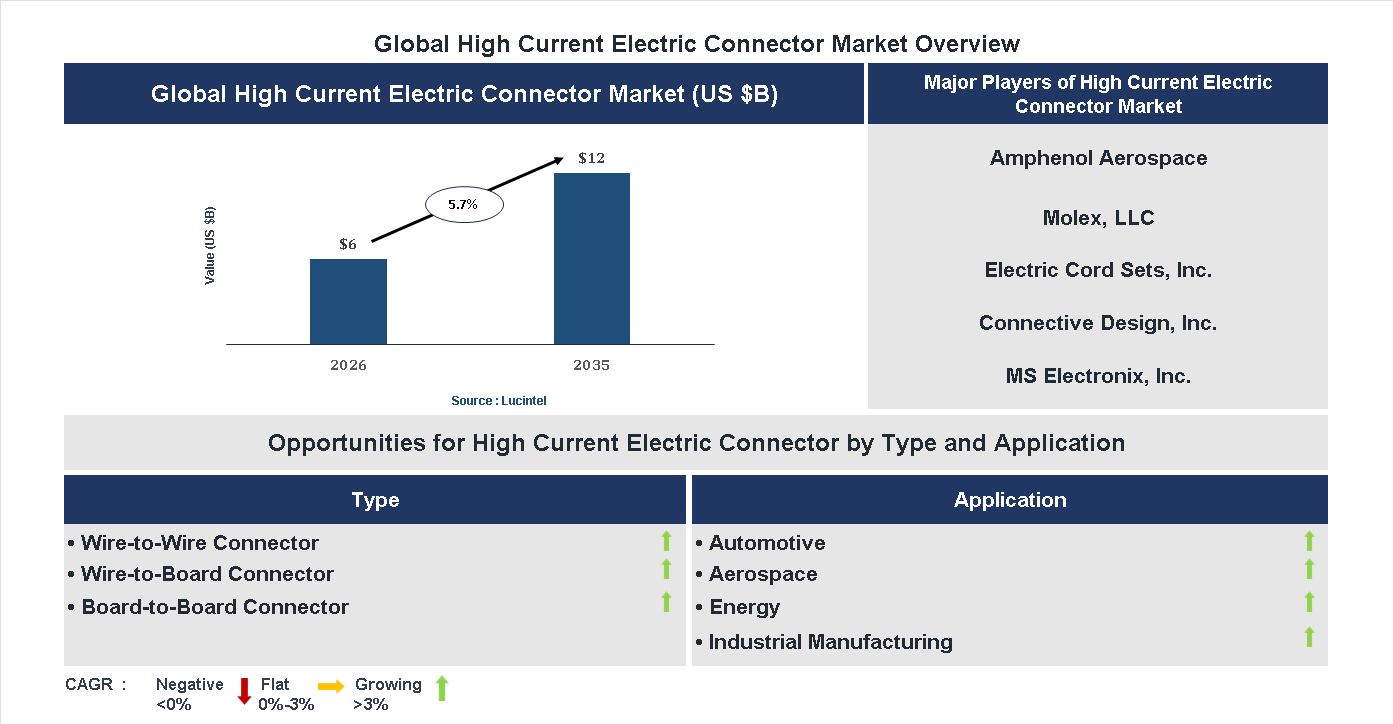
Key data points: The market size in 2035 = $12 billion, growth forecast = 5.7% annually for the next 8 years. Scroll below to get more insights. This market report covers trends, opportunities and forecasts in high current electric connector market to 2035 by type (wire-to-wire connector, wire-to-board connector, and board-to-board connector), application (automotive, aerospace, energy, and industrial manufacturing), and region (North America, Europe, Asia Pacific, and the Rest of the World)
We'll send your sample report shortly.
• Lucintel forecasts that, within the type category, wire-to-board connector is expected to witness higher growth over the forecast period.
• Within the application category, automotive is expected to witness the highest growth.
• In terms of region, APAC is expected to witness the highest growth over the forecast period. Gain valuable insights for your business decisions with our comprehensive 150+ page report. Sample figures with some insights are shown below.
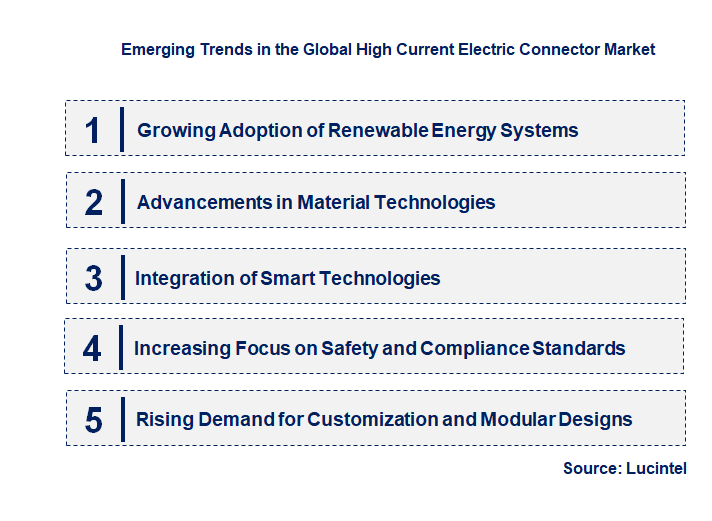
• Growing Adoption of Renewable Energy Systems: The shift towards renewable energy sources like solar and wind power is significantly increasing demand for high current connectors. These connectors are essential for efficient power transfer in large-scale energy projects, ensuring safety and reliability. As governments and industries invest heavily in clean energy infrastructure, the market is witnessing a surge in specialized connectors capable of handling high voltages and currents. This trend promotes sustainable energy solutions and accelerates the transition to greener power grids, creating new opportunities for manufacturers to develop innovative, durable, and high-performance connectors tailored for renewable applications.
• Advancements in Material Technologies: The development of new materials such as high-performance plastics, composites, and advanced metals is transforming the high current connector industry. These materials offer enhanced thermal management, corrosion resistance, and mechanical strength, which are critical for high-current applications. Improved insulation and durability reduce maintenance costs and increase lifespan, making connectors more reliable in demanding environments. The adoption of innovative materials also enables miniaturization and design flexibility, allowing for more compact and efficient connectors. This trend enhances overall system safety and performance, opening avenues for use in harsh environments like industrial automation and electric vehicles.
• Integration of Smart Technologies: The incorporation of smart features such as sensors, IoT connectivity, and real-time monitoring is revolutionizing high current connectors. These smart connectors can detect faults, measure current flow, and communicate data to centralized systems, enabling predictive maintenance and reducing downtime. The integration of digital technologies improves safety by providing early warnings of potential failures and optimizing energy efficiency. As industries move towards automation and Industry 4.0, smart high current connectors are becoming essential components in complex electrical systems, offering enhanced control, reliability, and operational insights that drive overall system performance.
• Increasing Focus on Safety and Compliance Standards: Stringent safety regulations and industry standards are shaping the development of high current connectors. Manufacturers are investing in designing connectors that meet or exceed safety norms related to insulation, grounding, and environmental resistance. Compliance with standards such as UL, IEC, and ISO ensures product reliability and market acceptance. This focus on safety not only minimizes risks of electrical failures and accidents but also boosts customer confidence. As safety requirements evolve, the market is witnessing the introduction of innovative safety features like fail-safe mechanisms and enhanced sealing, which are critical for applications in critical infrastructure, transportation, and industrial sectors.
• Rising Demand for Customization and Modular Designs: The diverse needs of industries such as aerospace, automotive, and data centers are driving the demand for customizable and modular high current connectors. These solutions offer flexibility in installation, maintenance, and scalability, allowing systems to adapt to specific operational requirements. Modular connectors facilitate easier upgrades and repairs, reducing downtime and costs. Customization enables manufacturers to tailor connectors for unique voltage, current, and environmental conditions, enhancing overall system efficiency. This trend supports the development of versatile, scalable electrical systems capable of meeting the evolving demands of high-power applications across various sectors. These emerging trends are collectively reshaping the high current electric connector market by enhancing performance, safety, and adaptability. They are enabling industries to adopt more sustainable, reliable, and intelligent electrical solutions, thereby driving innovation and growth in this dynamic market landscape.
• Growing Adoption in Electric Vehicles: The surge in electric vehicle production is fueling demand for high current connectors capable of handling increased power loads. These connectors ensure safety, efficiency, and durability in EV charging and battery systems. As automakers focus on faster charging and longer-range vehicles, the need for robust high current connectors becomes critical. This trend is expected to significantly expand market size and innovation in connector design, supporting the transition to sustainable transportation.
• Expansion in Renewable Energy Projects: The integration of renewable energy sources like solar and wind into power grids requires high-capacity connectors for efficient transmission. These connectors facilitate the transfer of large amounts of electricity over long distances with minimal losses. As governments and industries invest heavily in renewable infrastructure, the demand for high current connectors is rising. This development enhances grid stability and supports the global shift toward cleaner energy, boosting market growth.
• Advancements in Connector Materials and Design: Innovations in materials such as high-performance plastics and conductive alloys are improving connector durability and performance. New designs focus on heat dissipation, corrosion resistance, and ease of installation, which are vital for high current applications. These advancements extend the lifespan of connectors and reduce maintenance costs. Improved materials and design are making high current connectors more reliable, fostering wider adoption across various sectors, including industrial automation and data centers.
• Increasing Focus on Safety and Standards Compliance: Stringent safety regulations and industry standards are driving the development of high current connectors with enhanced safety features. Innovations include better insulation, secure locking mechanisms, and thermal management systems. Compliance with international standards ensures compatibility and reliability, reducing risks of failures or accidents. This focus on safety boosts customer confidence and accelerates market penetration, especially in critical sectors like aerospace, defense, and healthcare.
• Integration of Smart Technologies and IoT: The incorporation of smart features such as real-time monitoring, diagnostics, and remote control is transforming high current connectors. IoT-enabled connectors improve system efficiency, predict maintenance needs, and prevent failures. These innovations facilitate smarter energy management and operational optimization. As industries adopt digitalization, the market for intelligent high current connectors is expanding rapidly, offering new revenue streams and competitive advantages for manufacturers. These developments are significantly impacting the high current electric connector market by enhancing performance, safety, and integration capabilities. The focus on electric vehicles, renewable energy, and smart technologies is driving innovation and expanding application areas. As a result, the market is poised for substantial growth, with increased adoption across multiple sectors, fostering a more efficient, reliable, and sustainable electrical infrastructure worldwide.
• Growing Adoption in Renewable Energy Sector: The increasing deployment of renewable energy sources like wind and solar power requires high-capacity, reliable connectors to handle substantial power loads. As renewable projects expand worldwide, demand for high current connectors that ensure safety, durability, and efficiency is rising. This trend is driven by government policies supporting clean energy and technological advancements that enable better integration of renewable systems into existing grids, creating substantial growth opportunities for market players.
• Expansion of Electric Vehicle Charging Infrastructure: The rapid growth of electric vehicles (EVs) necessitates robust high current connectors for fast-charging stations. These connectors must support high power transfer with minimal loss and ensure safety during operation. As governments and private sectors invest heavily in EV infrastructure, the demand for high current connectors is expected to surge, encouraging manufacturers to innovate and develop standardized, high-capacity solutions that cater to diverse charging needs and improve user experience.
• Increasing Use in Data Centers and Industrial Applications: Data centers and industrial facilities require high current connectors to support heavy machinery, servers, and power distribution systems. The need for reliable, high-capacity connections to ensure uninterrupted operations is driving market growth. Technological advancements in connector design, such as enhanced thermal management and modular configurations, are enabling better performance and safety, making high current connectors essential for modern infrastructure development and operational efficiency.
• Technological Innovations Enhancing Connector Performance: Continuous R&D efforts are leading to the development of advanced high current connectors with features like improved thermal management, reduced size, and enhanced durability. Innovations such as modular designs and materials resistant to harsh environments are expanding application possibilities. These technological improvements are critical for meeting the increasing power demands of various sectors, thereby opening new avenues for market expansion and strengthening the competitive landscape.
• Strategic Partnerships and Market Penetration in Emerging Economies: Companies are forming strategic alliances to penetrate emerging markets with growing infrastructure needs. Collaborations with local firms, government agencies, and industry stakeholders facilitate market entry and product adoption. Focused efforts on customization, cost reduction, and compliance with regional standards are enabling market players to expand their footprint, capture new customer bases, and accelerate growth in regions with rising industrialization and energy demands. The overall market outlook indicates that these growth opportunities will significantly influence the evolution of the high current electric connector industry, fostering innovation, expanding applications, and driving global market expansion. Companies that strategically leverage these opportunities will be well-positioned to capitalize on the increasing demand for high-capacity, reliable power connectivity solutions.
• Technological Innovation: The continuous development of high-capacity, durable connectors enhances efficiency and safety, meeting the increasing power demands of industries such as renewable energy, data centers, and industrial automation. Innovations like modular designs and improved materials reduce installation time and maintenance costs, making high current connectors more attractive. As technology advances, the market benefits from improved performance, reliability, and scalability, which are critical for supporting the growth of smart grids and electric vehicle infrastructure.
• Growing Renewable Energy Sector: The global shift towards renewable energy sources like wind and solar power necessitates high-capacity electrical connectors capable of handling substantial currents safely. As renewable projects expand, the need for reliable, high-current connectors becomes more prominent to ensure seamless power transmission and integration into existing grids. This trend is driven by government incentives, decreasing costs of renewable technologies, and increasing environmental awareness, all of which contribute to market growth.
• Infrastructure Development and Urbanization: Rapid urbanization and infrastructure development in emerging economies require robust electrical connections to support new buildings, transportation systems, and industrial zones. High current connectors are essential for efficient power distribution in these expanding urban landscapes. Governments and private sectors are investing heavily in infrastructure projects, which demand high-capacity electrical components to ensure safety, efficiency, and future scalability, thereby fueling market demand.
• Economic Growth and Industrialization: Increasing industrial activities and economic expansion in developing regions drive the need for high-current electrical connectors to support heavy machinery, manufacturing plants, and energy distribution networks. As industries grow, so does the requirement for reliable, high-capacity connectors that can withstand demanding operational conditions, ensuring uninterrupted power supply and operational efficiency, which in turn stimulates market growth.
• Adoption of Electric Vehicles (EVs): The rising adoption of electric vehicles necessitates high-current connectors for fast charging stations and vehicle-to-grid applications. As EV infrastructure expands globally, the demand for high-capacity, durable connectors increases significantly. This trend is supported by government policies promoting EV adoption, technological advancements in charging solutions, and consumer preference shifts towards sustainable transportation, all contributing to the markets expansion. The challenges in the high current electric connector market are:
• High Manufacturing and Material Costs: Producing high-current connectors involves advanced materials and precision engineering, which significantly increases manufacturing costs. These costs can limit affordability for end-users and slow down adoption, especially in price-sensitive markets. Additionally, fluctuations in raw material prices, such as copper and specialized alloys, can impact profit margins and lead to price volatility, posing a challenge for manufacturers to maintain competitive pricing while ensuring quality.
• Compatibility and Standardization Issues: The lack of universal standards and compatibility across different regions and industries complicates the deployment of high-current connectors. Variations in voltage ratings, connector sizes, and safety protocols can lead to integration challenges, increased customization costs, and delays in project implementation. This fragmentation hampers market growth by creating barriers for manufacturers and end-users seeking seamless, scalable solutions.
• Evolving Regulatory and Safety Standards: Rapid changes in safety regulations and environmental standards require continuous product updates and certifications. Navigating complex regulatory landscapes across different countries can be resource-intensive and time-consuming. Non-compliance risks, potential legal liabilities, and the need for frequent product modifications can hinder market expansion and increase operational costs for manufacturers and suppliers. The high current electric connector market is driven by technological advancements, the expansion of renewable energy, infrastructure development, economic growth, and the rise of electric vehicles. However, high manufacturing costs, compatibility issues, and evolving regulations pose significant challenges. These factors collectively influence market dynamics, requiring stakeholders to innovate continuously and adapt strategies to sustain growth. The overall impact suggests a promising yet complex environment where technological progress and regulatory compliance will be crucial for future success.
• Amphenol Aerospace
• Molex, LLC
• Electric Cord Sets, Inc.
• Connective Design, Inc.
• MS Electronix, Inc.
• Panasonic
• Connectronics Corp.
• Wiring Products, Ltd.
• DDK Ltd.
• Furukawa Electric Power Systems
• Wire-to-Wire Connector
• Wire-to-Board Connector
• Board-to-Board Connector
• Automotive
• Aerospace
• Energy
• Industrial Manufacturing
• North America
• Europe
• Asia Pacific
• The Rest of the World
• United States: The US market has seen rapid adoption of high current electric connectors driven by the expansion of electric vehicle (EV) infrastructure and renewable energy projects. Major manufacturers are investing in R&D to develop connectors that support higher currents and improved safety standards. The government’s incentives for EV adoption and clean energy initiatives have further accelerated market growth. Additionally, advancements in smart connector technology for industrial automation are gaining traction, enhancing efficiency and connectivity in manufacturing processes.
• China: China remains the largest market for high current electric connectors, fueled by aggressive EV adoption and government policies promoting renewable energy. Local companies are leading innovation with cost-effective, high-performance connectors tailored for mass production. The country’s focus on expanding EV charging networks and renewable energy projects has increased demand for durable, high-capacity connectors. Moreover, China’s emphasis on domestic manufacturing and technological self-sufficiency is driving the development of advanced connector solutions to meet domestic and export needs.
• Germany: Germany’s market is characterized by a focus on high-quality, reliable connectors for industrial applications and electric vehicles. The country’s strong automotive sector is integrating high current connectors into electric and hybrid vehicles, emphasizing safety and durability. Germany’s commitment to renewable energy integration, especially wind and solar, has spurred innovations in connectors capable of handling high power loads efficiently. The emphasis on sustainability and engineering excellence has positioned Germany as a leader in developing cutting-edge connector technologies for both automotive and industrial sectors.
• India: The Indian market is witnessing rapid growth due to increasing investments in renewable energy, EV infrastructure, and industrial automation. Local manufacturers are expanding their product portfolios to include high current connectors suitable for diverse applications. Government initiatives like the Faster Adoption and Manufacturing of Hybrid and Electric Vehicles (FAME) scheme are boosting EV adoption, thereby increasing demand for high current connectors. The market is also benefiting from rising urbanization and infrastructure development, which require reliable, high-capacity electrical connections for power distribution and industrial use.
• Japan: Japan’s high current electric connector market is driven by advancements in robotics, industrial automation, and electric vehicles. Japanese companies are focusing on developing highly durable, high-performance connectors that withstand harsh environments and high currents. The country’s emphasis on innovation and quality assurance has led to the adoption of advanced materials and design techniques. Japan’s push towards sustainable energy solutions and smart grid technology is further supporting the growth of high current connectors, especially in renewable energy projects and smart infrastructure development.


• Amphenol Aerospace
• Molex, LLC
• Electric Cord Sets, Inc.
• Connective Design, Inc.
• MS Electronix, Inc.
• Panasonic
• Connectronics Corp.
• Wiring Products, Ltd.
• DDK Ltd.
• Furukawa Electric Power Systems Q6. Which high current electric connector market segment will be the largest in future? Answer: Lucintel forecasts that, within the type category, wire-to-board connector is expected to witness higher growth over the forecast period. Q7. In high current electric connector market, which region is expected to be the largest in next 5 years? Answer: In terms of region, APAC is expected to witness the highest growth over the forecast period. Q8. Do we receive customization in this report? Answer: Yes, Lucintel provides 10% customization without any additional cost.


Choose a license that fits your team. Instant PDF delivery.
Prices exclude taxes. Instant delivery. Custom licensing available on request.
Market Report · July 29, 2026
Market Report · July 20, 2026
Market Report · July 20, 2026
Trusted partner for strategic intelligence and business growth


Receive a complimentary market analysis tailored to your industry. Our analysts will identify key growth opportunities and competitive dynamics specific to your business.

Market size, growth rate, and key trend analysis for your specific sector.

Top competitor positioning and market share analysis.

Strategic recommendations backed by data-driven insights.
Get curated market intelligence and competitive moves straight to your inbox.
By subscribing, you agree to receive our monthly insights. Unsubscribe anytime.
Receive a complimentary market analysis tailored to your industry. Our analysts will identify key growth opportunities and competitive dynamics specific to your business.
Market size, growth rate, and key trend analysis for your specific sector.
Top competitor positioning and market share analysis.
Strategic recommendations backed by data-driven insights.
Get curated market intelligence, emerging trends, and competitive moves straight to your inbox each month.
By subscribing, you agree to receive our monthly insights. Unsubscribe anytime.
We'll send your sample report shortly.