
Market Report · May 18, 2026

This market report covers trends, opportunities, and forecasts in the global hi toxic gas diffuser market to 2031 by technology (electrochemical sensors, photoionization detectors (pid), infrared (ir) sensors, catalytic bead sensors, and laser-based detection systems), end use industry (chemical industry, oil & gas, pharmaceuticals, mining, and wastewater treatment), and region (North America, Europe, Asia Pacific, and the Rest of the World)
We'll send your sample report shortly.
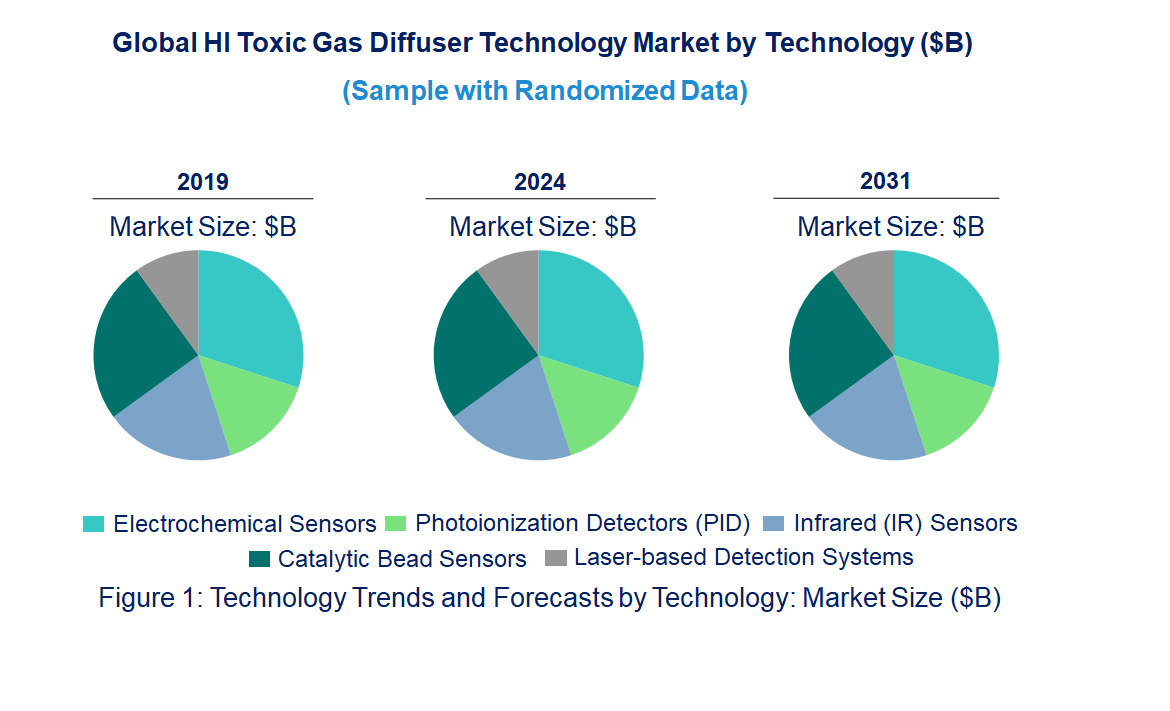
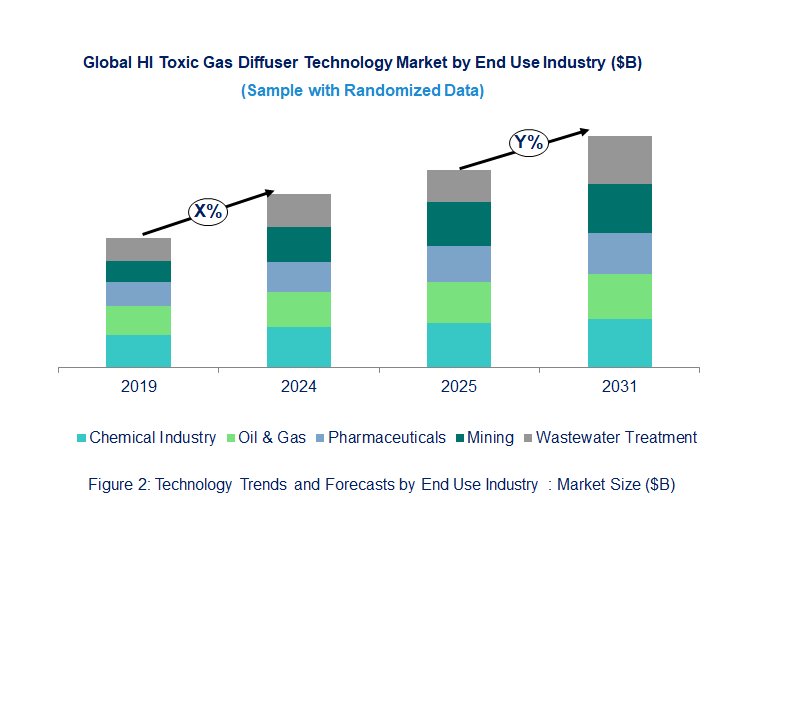
• Shift toward Laser-based Detection – Offers long-range detection, high accuracy, and minimal cross-sensitivity compared to traditional sensors.
• IoT and Cloud Integration – Enables real-time data tracking, remote diagnostics, and predictive maintenance.
• Miniaturization and Portability – Development of compact diffusers for mobile or wearable applications in hazardous environments.
• Multi-Gas Detection Systems – Single devices capable of detecting multiple gases simultaneously, improving efficiency and response.
• Increased Emphasis on Intrinsically Safe Designs – Compliance with ATEX, IECEx, and OSHA standards for high-risk zones. Conclusion: These trends are reshaping the Hi toxic gas diffuser market by enhancing detection speed, reliability, and compliance with international safety standards while enabling smarter industrial automation.
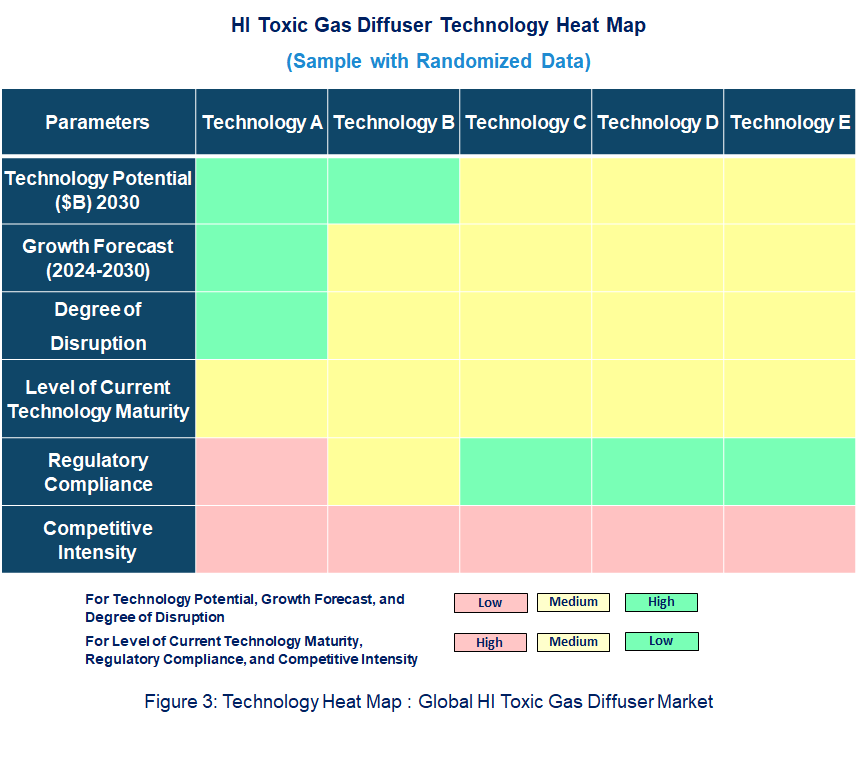
• Technology Potential : The HI toxic gas diffuser market exhibits significant technological potential, especially with the integration of advanced sensing methods like laser-based systems and infrared sensors. These technologies allow for rapid, accurate, and selective detection of hazardous gases, improving worker safety and operational uptime.
• Degree of Disruption: The degree of disruption is high for laser-based systems and IoT-enabled devices due to their transformative role in smart industrial safety. In contrast, electrochemical and catalytic bead sensors represent mature, cost-effective solutions with moderate innovation potential.
• Current Technology Maturity Level: Electrochemical and catalytic bead sensors are well-established and widely used, while PIDs and IR sensors are transitioning to mainstream use, especially in high-precision sectors. Laser-based systems, though emerging, are rapidly gaining traction due to their non-intrusive nature and robust detection capabilities. Regulatory compliance is a critical factor—technologies must meet rigorous safety and environmental regulations such as those imposed by OSHA, EPA, and ATEX, especially in oil & gas and chemical sectors.Overall, the industry is poised for rapid evolution, driven by stricter safety regulations, environmental policies, and the push toward digital transformation. This creates space for both disruptive innovations and gradual enhancements to legacy systems.
• Regulatory Compliance: Electrochemical sensors have low disruption potential due to their maturity, low cost, and broad use, though they lack scalability and advanced capabilities. Photoionization detectors (PID) offer moderate disruption with high VOC sensitivity, gaining traction in pharmaceutical and hazardous monitoring. Infrared (IR) sensors are highly disruptive due to their non-contact design and robustness in harsh settings like oil & gas. Laser-based detection systems lead in disruption potential with precise, real-time data and seamless integration with AI and IoT platforms.
• Honeywell International: Introduced connected gas detection platforms integrating wireless sensors with cloud analytics, improving remote hazard visibility and real-time alert systems.
• Det-Tronics: Launched SIL2-certified open-path gas detectors with laser-based technology, enhancing precision and meeting IEC standards.
• Sierra Monitor Co.: Expanded its Sentry IT platform, integrating Modbus and BACnet compatibility for smart building and industrial environments.
• Simtronics: Enhanced its GD10P IR detector line with AI-enabled self-diagnostics and auto-calibration features, reducing downtime.
• Emerson Electric Co.: Rolled out ultrasonic and laser-based toxic gas detection systems compatible with their Plantweb digital ecosystem, ensuring seamless integration with industrial IoT infrastructure.
• Stricter Industrial Safety Norms – Regulatory bodies like OSHA and ATEX are enforcing gas monitoring across industries, propelling market growth.
• Rising Chemical and Oil & Gas Activities – Expansion in high-risk industries is boosting demand for reliable, real-time gas detection solutions.
• Growth in Smart Factory Adoption – Integration of gas diffusers with IoT and AI is transforming industrial safety systems.
• Technological Limitations in Legacy Systems – Older sensors often fail in extreme conditions or multi-gas environments, hindering effectiveness.
• High Initial Investment Costs – Advanced sensors, particularly laser and IR-based systems, require substantial capital, limiting adoption in small industries. These drivers are catalyzing innovation and investment in advanced detection technologies, while challenges like cost and technical constraints shape strategic decisions in the HI Toxic Gas Diffuser Market.
• Honeywell International
• Det-Tronics
• Sierra Monitor Co.
• Simtronics
• Emerson Electric Co
• Technology Readiness by Technology Type for HI Toxic Gas Diffuser Market: Electrochemical sensors are the most mature, with widespread industrial deployment and strong regulatory certification. PIDs are also well-developed, particularly in petrochemical and environmental fields, with moderate to high competition. IR sensors have high readiness, especially in fixed installations, and are increasingly adopted in smart monitoring systems. Catalytic bead sensors are fully mature but declining in innovation due to limitations in sensitivity. Laser-based detection systems are in early commercial phases, with high disruption potential but still undergoing regulatory alignment and cost reduction. Competitive levels are highest for electrochemical and PID sensors, moderate for IR, and low for lasers due to their novelty. Regulatory compliance is robust for mature types and evolving for laser-based systems. Key applications span industrial safety, chemical manufacturing, hazardous material handling, and confined space monitoring. Across all technologies, readiness aligns with the degree of integration in broader safety and automation ecosystems.
• Competitive Intensity and Regulatory Compliance: Electrochemical sensors face high competition due to widespread use and low cost, with strong compliance to OSHA and ISO standards. PIDs are highly competitive in industrial hygiene and environmental monitoring markets, driven by sensitivity demands. IR sensors face moderate competition and must comply with ATEX, UL, and CSA for use in explosive environments. Catalytic bead sensors are standardized and face commoditization but are still widely used. Laser-based systems are emerging, with limited vendors but increasing regulatory scrutiny due to their advanced optical components. Compliance across all technologies involves calibration standards, EMI/EMC certification, and toxic gas exposure limits. Industrial and environmental safety mandates drive high certification burdens. Competitive intensity is highest in multi-gas detection systems where hybrid sensors are bundled. Regulatory alignment with ANSI, NFPA, and international chemical safety frameworks is essential for market entry. Vendors must prioritize interoperability, data integrity, and auditability in regulated sectors.
• Disruption Potential of Technologies for HI Toxic Gas Diffuser Technology: Electrochemical sensors offer moderate disruption due to their accuracy and affordability in detecting low concentrations of toxic gases. Photoionization detectors (PIDs) are highly disruptive for detecting volatile organic compounds quickly and sensitively. Infrared (IR) sensors enable remote, non-contact detection and are gaining traction in hazardous environments. Catalytic bead sensors are less disruptive due to their maturity and limitations in detecting low LEL gases. Laser-based detection systems are emerging as the most disruptive, offering unmatched precision and real-time feedback for highly toxic and reactive gases. The integration of AI with laser sensors enhances real-time risk prediction. Sensor miniaturization across platforms enables portable and wearable gas detection applications. Advanced self-calibrating technologies improve reliability and reduce operational costs. Disruptive potential also stems from integration with IoT for smart building and industrial safety ecosystems. Collectively, these technologies redefine how hazardous gas threats are detected and mitigated.
• Electrochemical Sensors
• Photoionization Detectors (PID)
• Infrared (IR) Sensors
• Catalytic Bead Sensors
• Laser-based Detection Systems
• Chemical Industry
• Oil & Gas
• Pharmaceuticals
• Mining
• Wastewater Treatment
• North America
• Europe
• Asia Pacific
• The Rest of the World
• Latest Developments and Innovations in the HI Toxic Gas Diffuser Technologies
• Companies / Ecosystems
• Strategic Opportunities by Technology Type


Choose a license that fits your team. Instant PDF delivery.
Prices exclude taxes. Instant delivery. Custom licensing available on request.
Market Report · May 18, 2026
Market Report · May 18, 2026
Market Report · May 18, 2026
Trusted partner for strategic intelligence and business growth


Receive a complimentary market analysis tailored to your industry. Our analysts will identify key growth opportunities and competitive dynamics specific to your business.

Market size, growth rate, and key trend analysis for your specific sector.

Top competitor positioning and market share analysis.

Strategic recommendations backed by data-driven insights.
Get curated market intelligence and competitive moves straight to your inbox.
By subscribing, you agree to receive our monthly insights. Unsubscribe anytime.
Receive a complimentary market analysis tailored to your industry. Our analysts will identify key growth opportunities and competitive dynamics specific to your business.
Market size, growth rate, and key trend analysis for your specific sector.
Top competitor positioning and market share analysis.
Strategic recommendations backed by data-driven insights.
Get curated market intelligence, emerging trends, and competitive moves straight to your inbox each month.
By subscribing, you agree to receive our monthly insights. Unsubscribe anytime.
We'll send your sample report shortly.