
Market Report · July 22, 2026

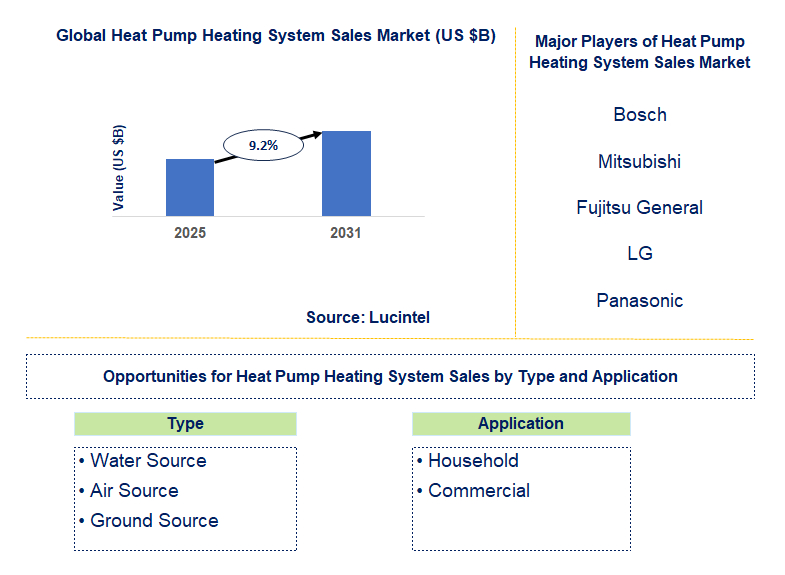
Key data points: The growth forecast = 9.2% annually for the next 7 years. Scroll below to get more insights. This market report covers Trends, opportunities and forecasts in heat pump heating system sales market to 2031 by type (water source, air source, and ground source), application (household and commercial), and region (North America, Europe, Asia Pacific, and the Rest of the World)
We'll send your sample report shortly.
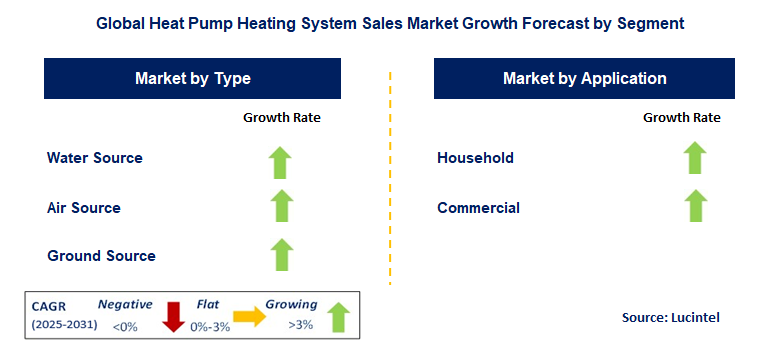
• Lucintel forecasts that, within the type category, ground source is expected to witness the highest growth over the forecast period.
• Within the application category, commercial is expected to witness higher growth due to the increasing demand for energy-efficient systems.
• In terms of region, APAC is expected to witness the highest growth over the forecast period due to the rising demand for energy efficiency in this region.
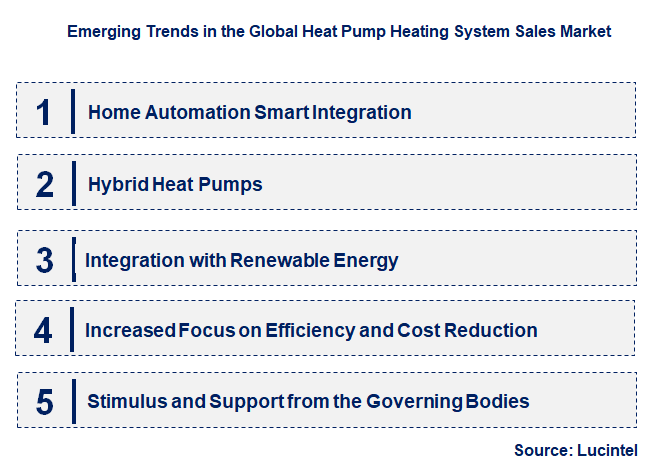
• Home Automation Smart Integration: Home automation is emerging in the markets for the heat pump heating system. Today's heat pumps can now be automated with home systems allowing the homeowner to monitor and control the heating system from anywhere. This trend saves money, energy, and provides convenience. Smart thermostats and other mobile apps allow users to connect and control the heating system through apps enabling users to switch on the system only when necessary and thus avoid unnecessary energy waste.
• Hybrid Heat Pumps: Another important trend is the adoption of hybrid heat pumps. Hybrid systems integrate with the heat pump to other heating technologies like gas boilers or solar thermal systems for operational efficiency and flexibility. These systems are capable of functioning with either a heat pump or a secondary heating source. Whichever is simpler for the external temperature or energy use of the system at that time. Hybrid heat pumps are gaining traction as they use less energy and lower emissions while delivering effective heating.
• Integration with Renewable Energy: The combination of renewable sources of energy, like solar and wind, with heat pump systems is steadily increasing. The adoption of heat pumps enables easy savings on energy bills while also lowering carbon emissions. The solar-assisted heat pump is a classic example as it draws energy from the sun to aid the heating process. This increases the efficiency of the system. It is in line with solar energy development and the reduction of dependency on fossil fuels.
• Increased Focus on Efficiency and Cost Reduction: In light of the current rise in energy costs and environmental problems, there is a greater emphasis on the effectiveness of heat pump systems. Investment in research and development to improve the efficiency of heat pumps is a priority, along with cost savings. These include innovations that enhance the effectiveness and affordability of heat pumps, such as those in the heat exchange, compressor, and control systems.
• Stimulus and Support from the Governing Bodies: Support from various governments is one of the main factors contributing to the growth of the heat pump industry. There are quite a few countries that are providing financial assistance in the form of grants, tax reimbursements, and subsidies for energy-saving heating accessories such as heat pumps. Such stimuli are assisting to raise the investment value of heat pump purchases so that consumers may afford them. Moreover, new stringent regulations on the environment and the need to cut down on carbon are necessitating the supply of sustainable and cleaner heating systems such as heat pumps. These new developments are changing the sales market of heat pump heating systems to become more environmentally friendly, efficient, and cost effective. The combination of smart technologies, hybrid systems, and renewable energy sources alongside the rise in governmental aid, is boosting the use of heat pumps. As these developments progress, the energy-efficient heating systems will become more widespread and the market will respond positively to these changes.
• Technological Innovations on the Efficiency of Heat Pumps: Increased efficiency of heat pump systems arises from changes made to the design of the compressor, the heat exchanging system, and the system for controlling the pump. Modern heat pumps also operate in cold climates, thus they can function all year around and do not require other types of heat during winter. These changes make heat pumps more versatile in terms of the conditions and the places that they can be used.
• Government Programs and Policy Options: Nations have made a number of changes to the policies implemented around the world to support the use of heat pumps, among them tax credit schemes, grants, and rebates for residential and commercial installations of heating systems. These policies have made heat pump systems more affordable by decreasing the initial expenditure needed to purchase the system. Furthermore, the introduction of more stringent standards and regulations relating to energy efficiency increases the necessity for more environmentally friendly and sustainable solution for heating, which equally helps the market.
• Hybrid Heat Pump Systems: The market is being transformed by the development and integration of hybrid heat pump systems. These systems are integrating the effectiveness of heat pumps with the backup heating features of heating gas boilers which guarantees effectiveness all the time. These systems are becoming increasingly embraced in most parts of the world with extremely cold temperatures where heat pumps fail to adequately heat during the extremely cold temperatures.
• Increased Energy Efficiency and Cost Savings: Concern for the environment coupled with escalating energy prices has made it vital for consumers to switch to more economical systems of heating. Due to its exceptional efficiency and capability of saving considerable energy dollars, heat pumps are becoming one of the best solutions. The evolution of heat pump technology is more cost-efficient because it brings along added efficiency. Consequently, the public is gradually abandoning the traditional heating systems for the more efficient heat pumps.
• Development of Emerging Markets: Countries such as China, India, and certain areas in Africa are developing markets for heat pump systems. The increasing urbanization of the region along with the sustainable practices in the construction industry has led to a greater need for energy efficient heating systems. In the quest to make heat pumps more affordable and appropriate for these regions, manufacturers are extending the applications of heat pump technology. Changes in sales of heat pump heating systems have made them more efficient, cheaper, and easier to get. The growth of emerging economy markets ground, government support and technological improvement, growth of hybrid system, and the expansion of heat pumps is new business booster. Markets, however, still face challenges such as cost and insufficient public awareness but are on a clear rise towards adopting eco-friendly heating devices.
• Adoption in the Residential Sector: The residential sector presents a tremendous market opportunity for heat pump heating systems. Homeowners are increasingly adopting heat pumps for cooling and heating their residences. Heat pump adoption in residential buildings is being fueled by government incentives and increased sustainability awareness. This segment is witnessing remarkable growth.
• Applications in Commercial and Industrial Sectors: The commercial and industrial sectors also offer exciting opportunities for increased adoption of heat pump systems. Thermally efficient large buildings, office complexes, and industrial plants represent great opportunities for installing heat pumps as these regions need substantial heating and cooling. With the high value placed by companies on reducing operating costs for energy and the growing need for organizations to meet sustainability policies, the use of heat pumps in the commercial and industrial sectors is rising.
• Heat Pumps for District Heating Systems: This is another important opportunity for growth with the use of heat pumps. The systems use heat pumps to provide heating to many individual buildings or a whole neighborhood. This is particularly useful for densely populated cities where energy efficiency and sustainability are of utmost importance. The combination of district heating systems supplied by renewable energy sources makes the use of heat pumps more attractive for diverse large scale applications.
• Renewable Energy Integration: A rising phenomenon today is the integration of heat pump systems with renewable energy sources such as solar and wind energy. This has both ecological and economic advantages since it helps users cut down on fossil fuel consumption and save on energy expenditures. The demand for hybrid and integrated heat pump solutions is likely to surge as more consumers and merchants seek methods to incorporate renewable energy into their heating systems.
• Expansion into New Markets: Asia and Africa are emerging markets that offer lucrative business prospects for the expansion of heat pump heating systems. With the rapid pace of urbanization and the increasing need for energy solutions, heat pumps are gaining acceptance as a viable green substitute for conventional heating. These regions are being primed as manufacturers strive to produce lower-cost heat pumps that are more suitable to the specific economic conditions. The market for the sale of heat pump heating systems remains on an upwards trajectory, especially in the residential, commercial, and industrial segments. The adoption of heat pumps in conjunction with renewable energy sources, the entry into new developing regions, and the construction of district heating plants are some of the factors that are contributing to this growth. The market is changing and heat pumps are increasingly becoming a feasible, green alternative for many uses.
• Bosch
• Mitsubishi
• Fujitsu General
• LG
• Panasonic
• NIBE
• Glen Dimplex
• Danfoss
• Aermec
• Vaillant
• Water Source
• Air Source
• Ground Source
• Household
• Commercial
• North America
• Europe
• Asia Pacific
• The Rest of the World
• United States: In the United States, the heat pump market is steadily growing due to the increased focus on energy efficient systems and systems. Federal and state programs have been subsidizing and offering tax credits for renewable heating systems, motivating many homeowners and businesses to purchase heat pumps. Alongside the growing social concerns about energy and climate change, advancements in technology have also contributed to increased efficiency and lowered costs of purchasing heat pumps, making them economically viable.
• China: The demand for heat pump systems is rapidly increasing in China, primarily due to government policies targeting carbon emissions and energy efficiency. The efforts toward reducing coal dependency for heating is shifting investment toward renewable energy, including heat pumps. Some major Chinese cities are implementing the use of heat pumps in district heating systems as there have been technological advancements and decreased costs associated with their use. Furthermore, the constantly increasing need for eco-friendly buildings in the urbanizing parts of China contributes to the growth of the heat pump industry.
• Germany: Germany is one of the frontrunners in using heat pumps for heating systems because of their strong commitment to sustainability and renewable energy. The uptake of heat pump technology has increased due to the Evergreened initiative which aims for a low-carbon energy system. The government subsidizes the installation of heat pumps in homes and businesses which has increased their market demand. The adoption of heat pumps in Germany’s residential and industrial sectors has also been aided by new developments such as hybrid solar systems.
• India: The Indian market is witnessing a rapid growth in the adoption of heat pumps for heating purposes driven by the energy efficiency needs of residential and commercial buildings. Rising energy consumption and target oriented improvements in energy efficiency setting by the government is other drivers for heat pump adoption. Suppliers have begun exploring the market despite high upfront costs due to capital government funding and prospective “effective” energy savings. Urban construction expansion for green builds combined with the increasing need for residential heating and cooling is continuing to push the market.
• Japan: Japan is one of the leading countries in the adoption of heat pump systems for heating purposes as the government strongly advocates the use of advanced energy-efficient technologies in their sustainability agenda. Currently, pumps are installed in many homes and businesses, as well as a growing number New Zealanders are interested in linking them to solar panels. The drive towards Japan's national target of reduced carbon emissions in conjunction with being energy independent shifts the country to further adoption of heat pumps. In addition, popularization of new technologies in heat pump systems increase their affordability and efficiency, making them more sought out in Japan.


• Bosch
• Mitsubishi
• Fujitsu General
• LG
• Panasonic
• NIBE
• Glen Dimplex
• Danfoss
• Aermec
• Vaillant Q5. Which heat pump heating system sales market segment will be the largest in future? Answer: Lucintel forecasts that, within the type category, ground source is expected to witness the highest growth over the forecast period. Q6. In heat pump heating system sales market, which region is expected to be the largest in next 5 years? Answer: In terms of region, APAC is expected to witness the highest growth over the forecast period due to the rising demand for energy efficiency in this region. Q7. Do we receive customization in this report? Answer: Yes, Lucintel provides 10% customization without any additional cost.


Choose a license that fits your team. Instant PDF delivery.
Prices exclude taxes. Instant delivery. Custom licensing available on request.
Market Report · July 22, 2026
Market Report · July 22, 2026
Market Report · July 17, 2026
Trusted partner for strategic intelligence and business growth


Receive a complimentary market analysis tailored to your industry. Our analysts will identify key growth opportunities and competitive dynamics specific to your business.

Market size, growth rate, and key trend analysis for your specific sector.

Top competitor positioning and market share analysis.

Strategic recommendations backed by data-driven insights.
Get curated market intelligence and competitive moves straight to your inbox.
By subscribing, you agree to receive our monthly insights. Unsubscribe anytime.
Receive a complimentary market analysis tailored to your industry. Our analysts will identify key growth opportunities and competitive dynamics specific to your business.
Market size, growth rate, and key trend analysis for your specific sector.
Top competitor positioning and market share analysis.
Strategic recommendations backed by data-driven insights.
Get curated market intelligence, emerging trends, and competitive moves straight to your inbox each month.
By subscribing, you agree to receive our monthly insights. Unsubscribe anytime.
We'll send your sample report shortly.