
Market Report · May 18, 2026

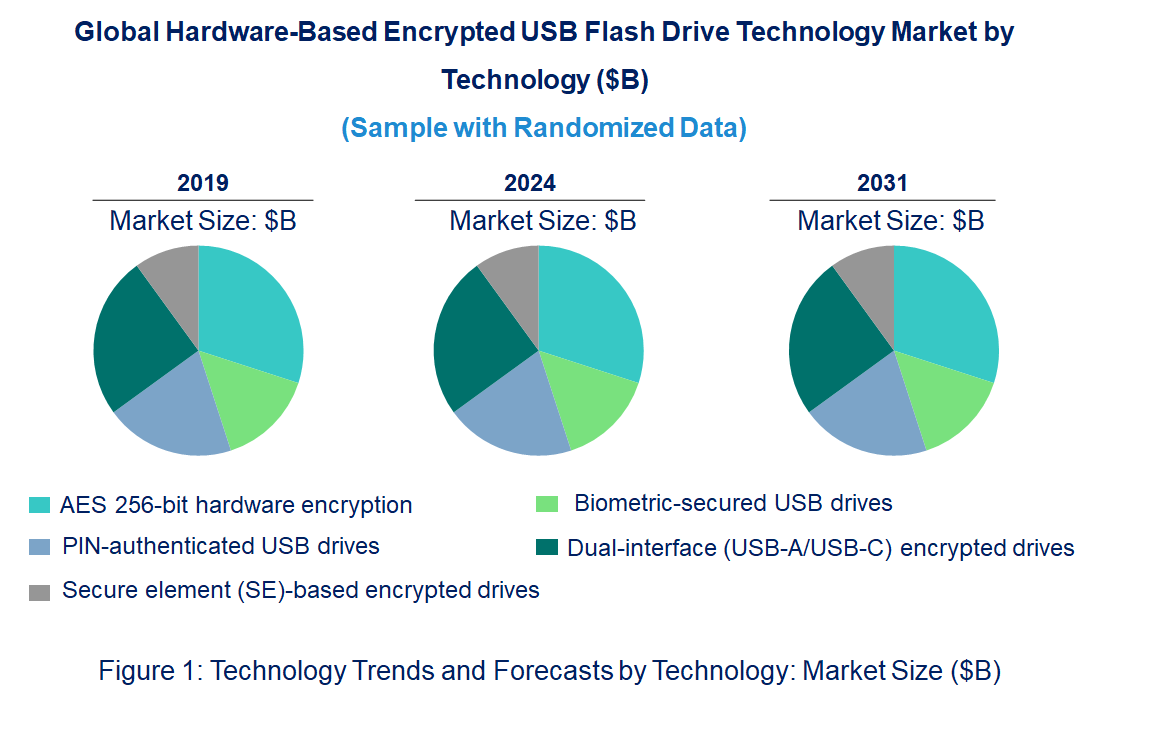
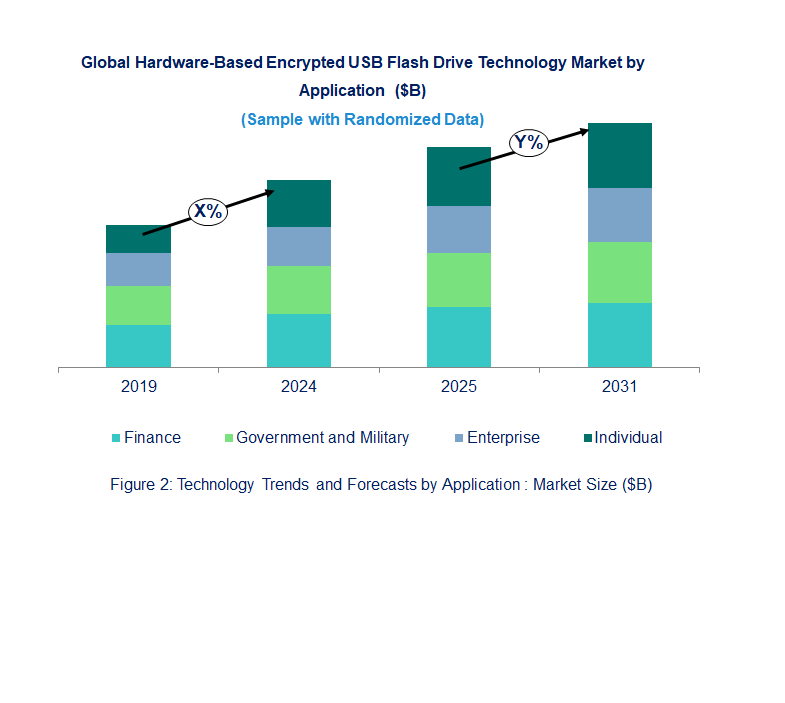
This market report covers trends, opportunities, and forecasts in the global hardware-based encrypted usb flash drive market to 2031 by technology (aes 256-bit hardware encryption, biometric-secured usb drives, pin-authenticated usb drives, dual-interface (usb-a/usb-c) encrypted drives, and secure element (se)-based encrypted drives), application (finance, government and military, enterprise, and individual), and region (North America, Europe, Asia Pacific, and the Rest of the World)
We'll send your sample report shortly.
• Integration of Biometric Authentication: Fingerprint recognition is being adopted in place of traditional PIN authentication, significantly enhancing physical access control. This method provides an intuitive and secure user experience, minimizing unauthorized usage and adding a layer of identity verification that cannot be easily duplicated.
• Rise of Secure Element (SE)-Based Drives: Drives with Secure Elements offer isolated encryption key storage and tamper-proof architecture. SE technology improves resistance to physical attacks and malware, making these drives a preferred choice for sectors handling sensitive or classified data.
• Adoption of Dual-Interface USB Drives: With USB-A and USB-C ports built into a single device, dual-interface drives ensure compatibility across modern and legacy systems. This flexibility enhances usability for professionals operating in cross-platform environments, reducing reliance on additional adapters or converters.
• Enhanced Compliance with Global Data Regulations: Manufacturers are engineering drives to comply with data protection standards like GDPR, HIPAA, and FIPS 140-2. This regulatory alignment is accelerating adoption in healthcare, government, and finance, where strict security and auditability are non-negotiable.
• Miniaturization and Rugged Design: Smaller, durable drives designed to withstand water, shock, and extreme temperatures are increasingly in demand. These rugged models support mobile and field-based workforces, especially in defense, emergency response, and research settings, where durability is essential. The hardware-encrypted USB flash drive market is rapidly innovating to meet modern data protection needs. From biometric access and secure elements to rugged portability and regulatory compliance, these trends reflect a shift toward more intelligent, versatile, and user-centric security tools. As risks increase and compliance tightens, these drives will remain a foundational element in secure data mobility strategies.
• Kanguru Solutions: Kanguru launched the Defender Bio-Elite30, a biometric USB drive featuring AES 256-bit encryption and a tamper-proof design. Built for enterprise use, it enhances identity verification and protects sensitive data through fingerprint authentication, appealing to organizations focused on high-security access.
• Datalocker: Datalocker introduced a managed series of encrypted USB drives with centralized administration and remote lockdown capabilities. This development improves control over distributed endpoints, ideal for organizations managing large-scale, mobile workforces and sensitive data environments.
• Apricorn: Apricorn expanded its Aegis Secure Key line with USB-C models that meet FIPS 140-2 Level 3 standards. These drives target compliance-heavy industries, offering secure portable storage that aligns with both modern hardware interfaces and strict regulatory requirements.
• Integral Memory: Integral Memory released drives with hardware-level self-destruction mechanisms that activate after multiple failed access attempts. This feature provides an additional defense layer for users handling highly sensitive information, reducing risks of brute-force attacks and unauthorized access.
• iStorage: iStorage rolled out the datAshur PRO², which includes PIN-based access, automatic lock, and brute-force attack protection. Designed for both business and personal users, it offers a strong balance of usability and advanced security.
• Verbatim: Verbatim unveiled fingerprint-secured USB flash drives with broad platform compatibility and regulatory alignment. By emphasizing ease of use and compliance, the company targets professional users who need plug-and-play secure storage without sacrificing standards adherence.
• Axiom: Axiom introduced rugged, waterproof USB drives built to withstand harsh environments, making them ideal for defense, utilities, and field service personnel. These drives combine physical durability with strong encryption, ensuring data integrity under extreme conditions. These developments underscore a major shift toward secure, compliant, and user-friendly portable data protection. From biometric access to ruggedized designs and centralized management, vendors are responding to evolving cybersecurity threats and regulatory demands. As a result, hardware-encrypted USB drives are becoming indispensable tools for secure, mobile data workflows across industries.
• Advancements in Biometric Authentication: Integrating fingerprint and biometric sensors enhances physical access control, reducing unauthorized use. This advancement increases user convenience and security, positioning biometric-encrypted USB drives as preferred choices for high-security environments.
• Secure Element (SE)-Based Encryption Technology: SE-based drives store encryption keys in isolated hardware, protecting against tampering and malware attacks. This enhances data security and attracts industries with stringent protection requirements, such as defense and finance.
• Regulatory Compliance and Certification: Drives designed to comply with GDPR, HIPAA, FIPS 140-2, and other regulations facilitate adoption in compliance-heavy sectors. Certified devices reduce risk exposure and enable organizations to meet legal and industry standards confidently.
• Rugged and Portable Designs for Field Operations: Shockproof, waterproof, and compact encrypted drives cater to mobile workforces and harsh environments, supporting sectors like defense, utilities, and research. This expands market reach beyond traditional office settings.
• Dual-Interface USB Drives for Cross-Platform Compatibility: USB-A and USB-C combined drives address compatibility challenges, allowing seamless use across older and newer devices. This flexibility improves user experience and broadens adoption across diverse IT ecosystems. Challenges
• High Cost and Lifecycle Management Complexity: Hardware-encrypted USB drives often involve higher upfront costs and require careful management for provisioning, tracking, and replacement, which can deter smaller organizations.
• User Resistance to Carrying Physical Tokens: Some users prefer software-based authentication and may resist using separate hardware devices, impacting mass adoption.
• Competition from Software-Based and Cloud Encryption Solutions: Emerging alternatives like cloud storage with integrated encryption and mobile authentication apps offer convenience but sometimes at the expense of hardware-level security. The hardware-based encrypted USB flash drive market is driven by the need for robust, portable data security amid tightening regulations and increasing cyber threats. Innovations in biometric integration, secure element technology, and rugged designs are expanding applicability and enhancing user experience. Despite cost and adoption challenges, these growth opportunities continue to propel market expansion, positioning hardware encryption as a cornerstone of modern data protection strategies.
• Kanguru Solutions
• Datalocker
• Apricorn
• Integral Memory
• iStorage
• Verbatim
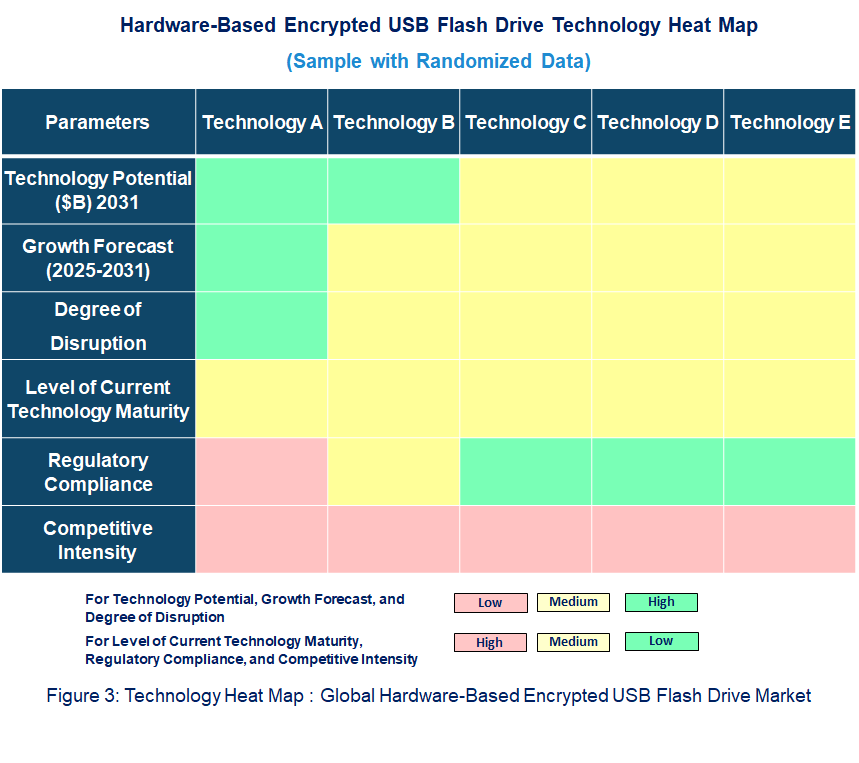
• Technology Readiness by Technology Type: AES 256-bit hardware encryption is highly mature and widely adopted, forming the security backbone for most encrypted USB drives, with strong compliance across regulated industries. Biometric-secured USB drives are nearing full readiness with increasing adoption, especially in sectors requiring multifactor authentication, though biometric data handling regulations remain critical. Pin-authenticated USB drives are fully mature, widely deployed in enterprise environments, and compliant with key security standards, though less flexible compared to biometric options. Dual-interface encrypted drives are technologically ready and rapidly gaining market share due to evolving device ecosystems, offering seamless compatibility and robust security. SE-based encrypted drives are advanced, used in high-security applications requiring tamper-resistant hardware, with strong regulatory certifications but limited broader market penetration. Competitive intensity is highest for biometric and dual-interface drives due to innovation and user demand. Regulatory compliance is stringent for biometric and SE-based technologies, reflecting data sensitivity. Key applications include secure data transport, government compliance, healthcare data protection, and financial services security.
• Competitive Intensity and Regulatory Compliance: The market for hardware-based encrypted USB flash drives is highly competitive, with AES 256-bit encryption being a baseline expectation across most vendors, driving commoditization in encryption capabilities. Biometric-secured USB drives face growing competition from emerging security firms, with stringent compliance requirements around biometric data privacy, such as GDPR and CCPA. Pin-authenticated drives compete in a crowded enterprise space, benefiting from established standards but facing limitations in innovation. Dual-interface encrypted drives enjoy competitive advantage due to growing demand for cross-device compatibility, with compliance centered on cryptographic standards and interface certifications. SE-based encrypted drives, although niche, have high entry barriers and regulatory scrutiny given their critical role in secure key management, needing certifications like FIPS 140-2 and Common Criteria. Vendors emphasize regulatory adherence to build trust, especially for government, healthcare, and financial sectors. Compliance with export controls and data protection laws further shapes product development. The competition revolves around innovation, certification, and ease of use.
• Disruption Potential by Technology Type: The market for hardware-based encrypted USB flash drives is highly competitive, with AES 256-bit encryption being a baseline expectation across most vendors, driving commoditization in encryption capabilities. Biometric-secured USB drives face growing competition from emerging security firms, with stringent compliance requirements around biometric data privacy, such as GDPR and CCPA. Pin-authenticated drives compete in a crowded enterprise space, benefiting from established standards but facing limitations in innovation. Dual-interface encrypted drives enjoy competitive advantage due to growing demand for cross-device compatibility, with compliance centered on cryptographic standards and interface certifications. SE-based encrypted drives, although niche, have high entry barriers and regulatory scrutiny given their critical role in secure key management, needing certifications like FIPS 140-2 and Common Criteria. Vendors emphasize regulatory adherence to build trust, especially for government, healthcare, and financial sectors. Compliance with export controls and data protection laws further shapes product development. The competition revolves around innovation, certification, and ease of use.
• AES 256-bit hardware encryption
• Biometric-secured USB drives
• PIN-authenticated USB drives
• Dual-interface (USB-A/USB-C) encrypted drives
• Secure element (SE)-based encrypted drives
• Finance
• Government and Military
• Enterprise
• Individual
• North America
• Europe
• Asia Pacific
• The Rest of the World
• Latest Developments and Innovations in the Hardware-Based Encrypted USB Flash Drive Technologies
• Companies / Ecosystems
• Strategic Opportunities by Technology Type


Choose a license that fits your team. Instant PDF delivery.
Prices exclude taxes. Instant delivery. Custom licensing available on request.
Market Report · May 18, 2026
Market Report · May 18, 2026
Market Report · May 18, 2026
Trusted partner for strategic intelligence and business growth


Receive a complimentary market analysis tailored to your industry. Our analysts will identify key growth opportunities and competitive dynamics specific to your business.

Market size, growth rate, and key trend analysis for your specific sector.

Top competitor positioning and market share analysis.

Strategic recommendations backed by data-driven insights.
Get curated market intelligence and competitive moves straight to your inbox.
By subscribing, you agree to receive our monthly insights. Unsubscribe anytime.
Receive a complimentary market analysis tailored to your industry. Our analysts will identify key growth opportunities and competitive dynamics specific to your business.
Market size, growth rate, and key trend analysis for your specific sector.
Top competitor positioning and market share analysis.
Strategic recommendations backed by data-driven insights.
Get curated market intelligence, emerging trends, and competitive moves straight to your inbox each month.
By subscribing, you agree to receive our monthly insights. Unsubscribe anytime.
We'll send your sample report shortly.