
Market Report · July 22, 2026

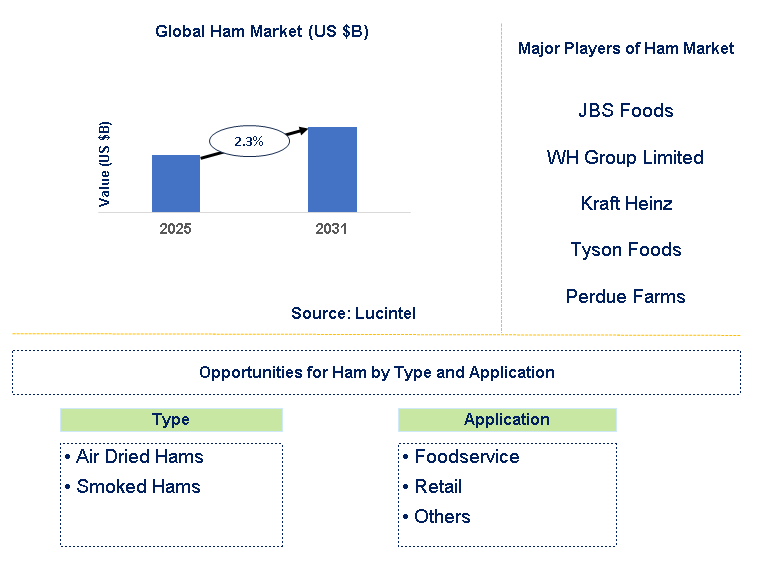
Key data points: The growth forecast = 2.3% annually for the next 7 years. Scroll below to get more insights. This market report covers trends, opportunities and forecasts in ham market to 2031 by type (air dried hams and smoked hams), application (foodservice, retail, and others), and region (North America, Europe, Asia Pacific, and the Rest of the World)
We'll send your sample report shortly.
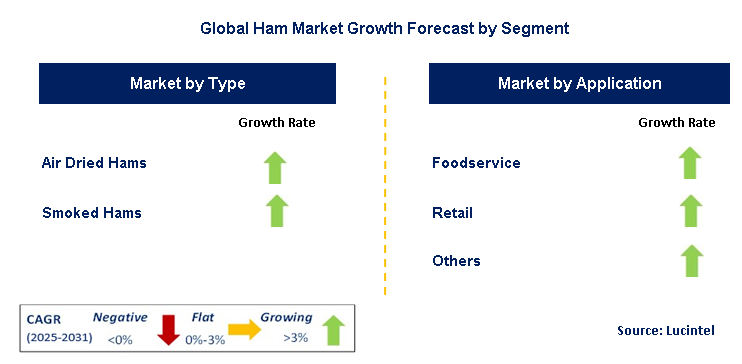
• Lucintel forecasts that, within the type category, smoked ham is expected to witness higher growth over the forecast period.
• Within the application category, retail is expected to witness higher growth.
• In terms of region, APAC is expected to witness the highest growth over the forecast period. Gain valuable insights for your business decisions with our comprehensive 150+ page report. Sample figures with some insights are shown below.
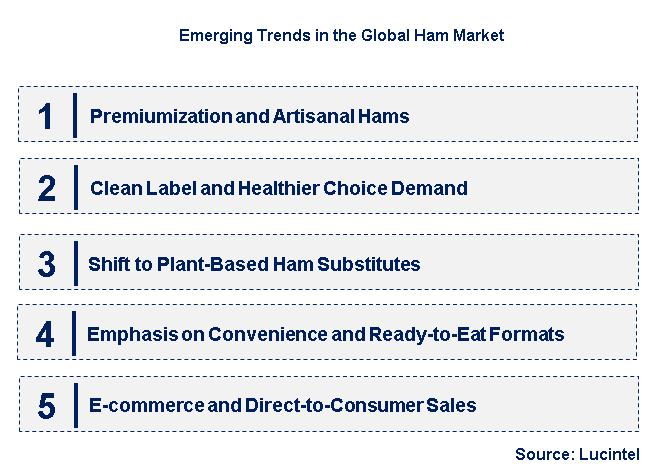
• Premiumization and Artisanal Hams: This phenomenon points to an increasing consumer need for quality, generally traditionally produced, and specialty hams. Such consumers would be willing to pay a premium for hams that carry distinctive flavor profiles, special regional origin (e.g., Iberian, Prosciutto), and those made with artisanal curing processes. The effect is higher sales of gourmet ham types, emphasis on brand narratives of heritage and craftsmanship, and higher profit margins for producers of such premium products. This also invites niche producers into the market.
• Clean Label and Healthier Choice Demand: Consumers are becoming more critical of food labels, wanting fewer artificial components, preservatives, and lower sodium or nitrate content. This creates demand for "clean label" hams, preferably cured with natural substitutes such as celery powder or sea salt. The effect is reformulation of current ham products to address such needs, greater transparency in sourcing ingredients, and marketing hams as healthier protein options, riding larger wellness trends and health concerns of consumers.
• Shift to Plant-Based Ham Substitutes: Fueled by environmental, ethics, and health concerns, there is a strong new trend in the production and consumption of plant-based substitutes for ham. These foods seek to replicate the flavor and texture of conventional ham from foods like soy, pea protein, or mushrooms. The effect is a novel competitive niche in the ham category, appealing to flexitarian, vegetarian, and vegan consumers. This forces conventional ham manufacturers to innovate and think about diversification, as well as increase the broader "ham" product category.
• Emphasis on Convenience and Ready-to-Eat Formats: Convenience is the norm in today’s lifestyle, and therefore there is a high trend towards pre-packaged, pre-sliced, and ready-to-eat ham products with low preparation needs. These include deli meat, ham snacks, and quick meal components. The effect is higher sales in foodservice and retail channels through convenience of use, portion control to meet the needs of single-serving households, and creative packaging that preserves shelf life and retains freshness. This trend addresses busy consumers’ need for quick and convenient meal solutions.
• E-commerce and Direct-to-Consumer Sales: Development of e-commerce sites and direct-to-consumer (D2C) business models is revolutionizing how ham products are marketed and distributed. Consumers can readily find a greater range of hams, including specialty and artisanal, online. The effect is increased market access for producers, especially smaller artisanal ones, less dependence on conventional retail outlets, and the potential to establish direct relationships with customers. This also allows for more tailored marketing and subscription services for high-end ham goods. These nascent trends collectively are remodeling the ham market by driving it towards premiumization, healthiness, and convenience, introducing new competitive dynamics from plant-based entrants. The emphasis on artisanal and clean label points back to changing consumer values. The surge in plant-based alternatives is broadening the market, and the priority on convenience is responding to changing lifestyles. The expansion of e-commerce is reworking distribution. This multifaceted transformation is making the ham market more diverse, innovative, and responsive to a broader range of consumer demands.
• Increase in Demand for Premium and Artisanal Hams: One of the major recent trends has been increasing consumer demand for premium and artisanal types of ham. This encompasses products such as dry-cured hams (e.g., Prosciutto, Jamun Iberic) and hams with special geographic indications. The effect is a shift towards high-quality, often higher-priced, special hams in terms of production and marketing. This is a sign of consumers’ openness to paying extra for genuine flavor, traditional techniques of production, and differentiation in cuisine, which results in added investment in specialist production and curing processes.
• Attention to "Clean Label" and Lower Additives: There has been a marked recent shift towards "clean label" ham products, i.e., hams that are produced using fewer artificial ingredients, nitrates, or nitrites. Producers are reacting to consumer pressures for natural ingredients and perceived healthier choices. The effect is a transformation of much traditional ham fare, utilizing natural curing agents (such as cultured celery powder) and highlighting clear ingredient labels. This trend is directed toward appealing to health-oriented consumers and toward synchronizing with changing dietary tastes for less processed alternatives.
• Plant-Based Ham Alternatives: One of the key recent trends, especially in Western markets, is the sudden rise and growth of plant-based alternatives to ham. They are formulated to replicate the taste, texture, and look of regular ham with plant proteins (e.g., pea, soy, wheat). The effect is a new competitive segment in the overall ham market, appealing to flexitarian and vegetarian consumers. This trend also promotes conventional meat producers to diversify into plant-based products or boost the attractiveness of their traditional products.
• Packaging Innovation for Convenience and Extended Shelf Life: Recent innovations involve major advances in ham packaging, with a focus on convenience and extending product shelf life. This includes easy-open resealable packaging, vacuum-sealed portions, and single-serviceability. The benefit is increased consumer convenience, less food waste, and extended distribution capabilities. These package innovations address busy lifestyles, decreasing household sizes, and the increasing demand for ready-to-consume and on-the-move protein sources, making ham more convenient and desirable.
• Sustainable and Ethical Sourcing Practices: Increasingly, there is a recent trend in the ham market towards increased sustainability and ethically sourced pork. This encompasses efforts involving animal welfare, decreased environmental impact of pig husbandry, and open supply chains. The effects are more stringent oversight of pork suppliers, animal welfare certifications, and marketing campaigns emphasizing sustainable sourcing. This trend addresses growing consumer concern regarding the ethics of food production and environmental considerations, driving purchases and encouraging producers to become more responsible. All these recent trends are collectively contributing towards the ham market by creating a dual emphasis on premium grade and health-oriented choices as well as embracing product format innovation and sustainability. The popularity of artisanal and clean label hams responds to changing consumer values. The growth of plant-based offerings is diversifying the market space. Packaging innovation is increasing convenience, and the focus on sustainable sourcing is meeting environmental and ethical requirements. This evolution is rendering the ham market more responsive, diversified, and adaptive to a wider array of contemporary consumer needs.
• Convenience Meals and Ready-to-Eat: The frenetic pace of contemporary life creates a compelling strategic growth potential in the convenience meal and ready-to-eat categories. These encompass pre-cooked ham, pre-sliced deli ham, ham chunks for salads, and ham ingredients in frozen meals or meal kits. Potential exists in creating new, high-quality ham products with little preparation required, with different flavor profiles and convenient, portion-controlled packages. This is aimed at time-pressed consumers, single-household units, and increasing demand for quick, convenient, and healthy meal options, most notably in urban settings.
• Expansion of the Foodservice Market: The foodservice market (restaurants, cafes, hotels, catering) is a strong strategic growth market. Ham is an adaptable product extensively used in sandwiches, breakfast, pizzas, salads, and gourmet dishes. Opportunities lie in providing value-added ham cuts and formulations to meet diverse culinary requirements, supplying bulk packaging for convenience, and working with chefs to create new ham-based dishes. Strategic expansion includes fostering close relationships with foodservice distributors and chains, providing consistent quality and assured supply to satisfy high-volume requirements.
• Premium and Gourmet Retail Segment: The growing consumer demand for gourmet cooking and premium ingredients provides a good growth prospect for premium ham products. This comprises artisanal dry-cured hams, heritage breed hams, and organic or sustainably produced varieties. Opportunities exist in marketing these hams through specialty food stores, gourmet food online retailers, and direct-to-consumer models. Strategic expansion entails highlighting product country, heritage curing processes, distinct taste profiles, and limited releases to attract sophisticated customers wanting high-end dining experiences and genuine products.
• Categories of Snacks and Appetizers: Expanding snacking trend and need for convenient protein sources provide a strategic expansion opportunity for ham in snack and appetizer categories. This encompasses ham jerky, ham roll-ups with cheese, small pre-packaged cuts of ham, or ham in charcuterie packs. Opportunities include creating creative flavors, easy packaging for on-the-go eating, and promoting ham as a healthy, high-protein alternative snack. This appeals to consumers looking for quick, filling, and transportable food items for meals, snacks, or occasion-based situations, such as school lunches or office snacks.
• Health and Wellness Oriented Products: As consumers become more health-conscious, there is a strategic opportunity for growth in creating ham products that meet particular nutritional requirements or dietary choices. These include low-sodium ham, nitrate-free ham, organic ham, and ham from non-antibiotic, non-hormone-treated hogs. Opportunities exist in clear ingredient labeling, highlighting the nutritional value of ham (e.g., source of protein), and creating portion-controlled products. Strategic expansion means working with nutritionists and healthcare specialists to position ham as a healthy part of an overall diet. Opportunities for strategic expansion are deeply influencing the ham market by propelling diversification and innovation through different consumer touchpoints. The emphasis on ready-to-eat and foodservice uses is meeting convenience and commercial needs. The focus on premium retail and snack channels is meeting changing consumption habits. The increasing desire for wellness and health is encouraging the creation of niche products. Overall, these opportunities are creating focused product development, improving market responsiveness to particular consumer desires, and placing the ham market on the path to continued growth in a broad range of culinary and lifestyle categories.
• JBS Foods
• WH Group Limited
• Kraft Heinz
• Tyson Foods
• Perdue Farms
• Hormel Foods
• OSI Group
• Seaboard
• Grandi Salumifici Italiani
• BRF
• Air Dried Hams
• Smoked Hams
• Foodservice
• Retail
• Others
• North America
• Europe
• Asia Pacific
• The Rest of the World
• United States: The U.S. market for ham is experiencing a strong trend towards premium and artisanal, with an emphasis on air-dried and specialty hams, as consumers seek gourmet experiences and charcuterie boards. Convenience is still a driver, with growing demand for pre-sliced and ready-to-eat ham products. There is also increasing focus on "clean label" products, with consumers wanting hams that contain no artificial preservatives or nitrates. Plant-based ham substitutes are also on the rise, a sign of increased movement towards flexitarian and vegetable diets among some consumer groups.
• China: China’s ham market, a considerable proportion of its total pig meat consumption, is seeing an anticipated rise in value despite recent dips in consumption volume. This expansion is driven primarily by increasing prosperity and altered diet, specifically a move towards more processed meat products. Recent trends have shown a growing requirement for traditional Jinhua and Xuanwu hams, as well as acceptance of imported high-grade hams. The market is also experiencing investment in updating processing plants and enhancing supply chain efficiency to address rising consumer demand.
• Germany: The traditional German ham market, rich in culinary heritage, still holds a premium for high-quality, regional specialties such as Westphalian ham. Though particular up-to-date market figures are included within general meat industry trends, emphasis continues to be placed on strong quality controls and traditional curing processes. There is ongoing interest in premium, artisanal hams, underscoring strong consumer respect for craftsmanship and genuine flavor profiles. The market also reflects continued adjustment towards more stringent animal welfare laws and sustainable sourcing strategies.
• India: India’s ham market is still in its early days relative to Western nations, largely driven by the "Ham Projects" meaning the Hybrid Annuity Model in road construction. But if one is talking about pork ham, the market is extremely niche and mostly limited to urban areas and certain communities. Current developments here would be extremely slow growth, led by rising globalization, tourism, and exposure to multicultural cuisine. Any major advances would be in the area of cold chain development, processing, and serving the expatriate population and high-end hospitality industry.
• Japan: The Japanese market for ham, especially top-end varieties such as Iberian ham, commands a lot of value, which suggests high regard for high-quality, specialty items. Current trends indicate an ongoing need for imported hams, particularly those with built reputations for quality and flavor. Although the overall beauty market is found on search results, the ham trend is toward gourmet use. There is probably an ongoing emphasis on product safety, quality control, and careful presentation, reflecting Japanese consumer values for premium food products and novel food experiences.


• JBS Foods
• WH Group Limited
• Kraft Heinz
• Tyson Foods
• Perdue Farms
• Hormel Foods
• OSI Group
• Seaboard
• Grandi Salumifici Italiani
• BRF Q5. Which ham market segment will be the largest in future? Answer: Lucintel forecasts that, within the type category, smoked ham is expected to witness higher growth over the forecast period. Q6. In ham market, which region is expected to be the largest in next 5 years? Answer: In terms of region, APAC is expected to witness the highest growth over the forecast period. Q7. Do we receive customization in this report? Answer: Yes, Lucintel provides 10% customization without any additional cost.


Choose a license that fits your team. Instant PDF delivery.
Prices exclude taxes. Instant delivery. Custom licensing available on request.
Market Report · July 22, 2026
Market Report · July 22, 2026
Market Report · July 22, 2026
Trusted partner for strategic intelligence and business growth


Receive a complimentary market analysis tailored to your industry. Our analysts will identify key growth opportunities and competitive dynamics specific to your business.

Market size, growth rate, and key trend analysis for your specific sector.

Top competitor positioning and market share analysis.

Strategic recommendations backed by data-driven insights.
Get curated market intelligence and competitive moves straight to your inbox.
By subscribing, you agree to receive our monthly insights. Unsubscribe anytime.
Receive a complimentary market analysis tailored to your industry. Our analysts will identify key growth opportunities and competitive dynamics specific to your business.
Market size, growth rate, and key trend analysis for your specific sector.
Top competitor positioning and market share analysis.
Strategic recommendations backed by data-driven insights.
Get curated market intelligence, emerging trends, and competitive moves straight to your inbox each month.
By subscribing, you agree to receive our monthly insights. Unsubscribe anytime.
We'll send your sample report shortly.