
Market Report · July 16, 2026

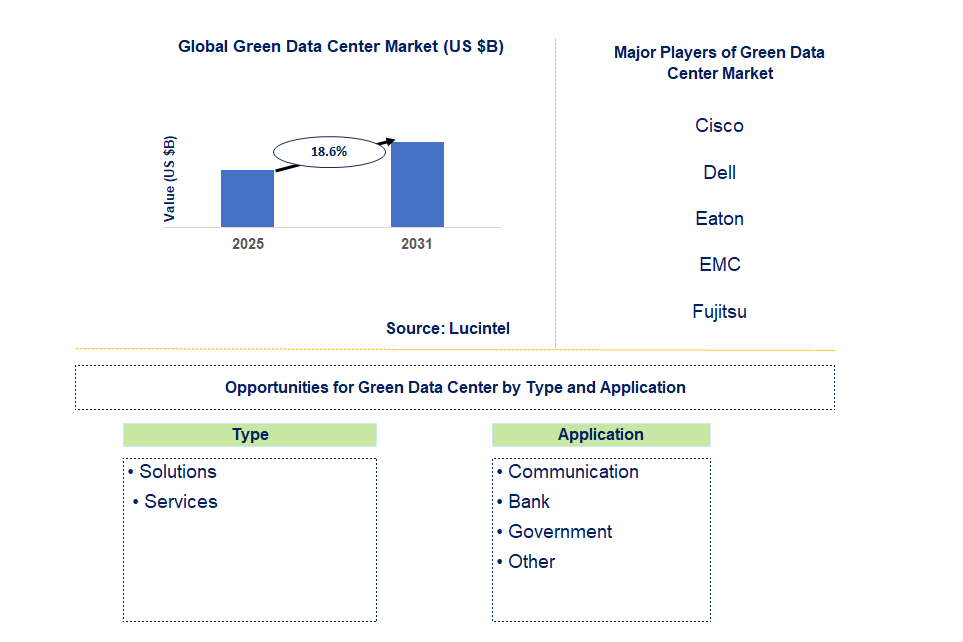
Key data points: The growth forecast = 18.6% annually for the next 7 years. Scroll below to get more insights. This market report covers Trends, opportunity and forecast in green data center market to 2031 by type (solutions and services), application (communication, bank, government, and other), and region (North America, Europe, Asia Pacific, and the Rest of the World)
We'll send your sample report shortly.
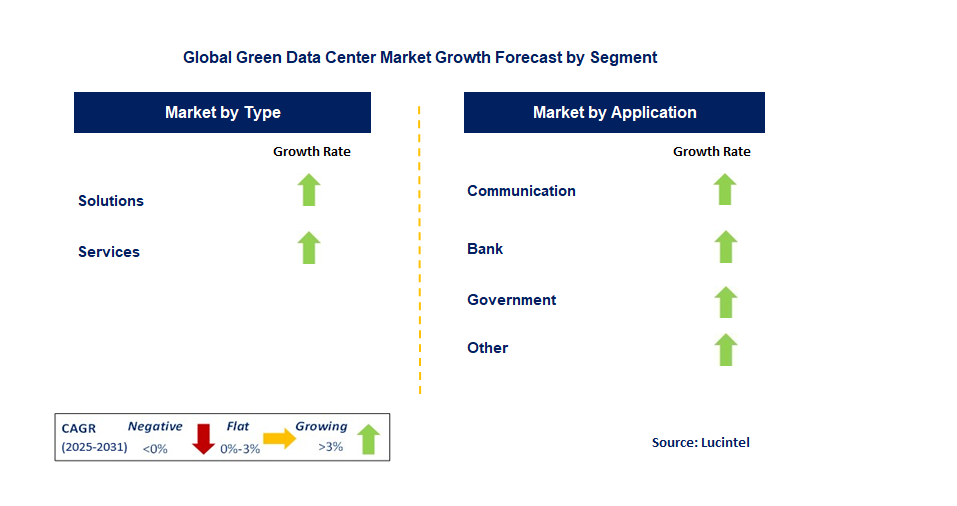
• Lucintel forecasts that, within the type category, solutions are expected to witness higher growth over the forecast period.
• Within the application category, communication will remain the largest segment.
• In terms of region, North America will remain the largest region over the forecast period. Gain valuable insights for your business decisions with our comprehensive 150+ page report. Sample figures with some insights are shown below.
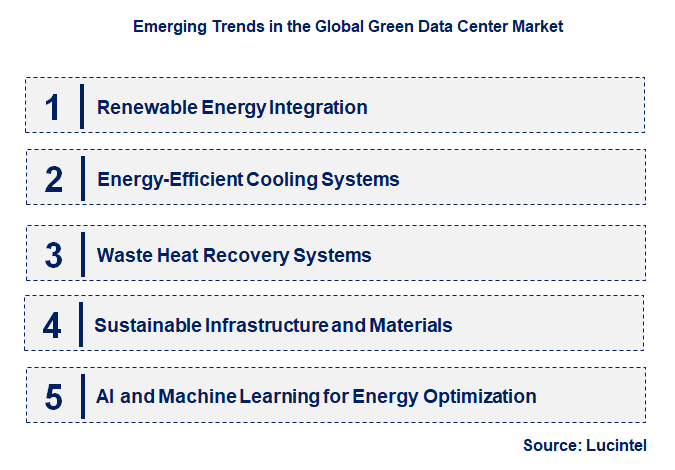
• Renewable Energy Integration: One of the key trends in green data centers is the increased integration of renewable energy sources, such as solar and wind power. Many data centers are now opting to run their operations on clean energy, either by installing on-site renewable systems or purchasing energy from green energy providers. This transition reduces dependency on fossil fuels, decreases carbon emissions, and supports corporate sustainability goals. As renewable energy technology becomes more cost-competitive and accessible, the adoption of solar, wind, and other renewable energy sources in green data centers will continue to rise, playing a pivotal role in making data storage more environmentally friendly.
• Energy-Efficient Cooling Systems: Cooling accounts for a significant portion of a data center's energy consumption, making it a focal point for energy efficiency improvements. Advanced cooling technologies, such as liquid cooling, free-air cooling, and immersion cooling, are gaining traction in green data centers. These systems reduce the need for energy-intensive air conditioning, lowering overall energy consumption. The integration of AI and machine learning to optimize cooling operations further enhances energy savings by adjusting cooling systems based on real-time data. Energy-efficient cooling is crucial for reducing the environmental impact of data centers while improving operational efficiency.
• Waste Heat Recovery Systems: Waste heat recovery is becoming a key component of green data center strategies. Data centers generate large amounts of excess heat, which can be repurposed for other processes, such as heating office spaces or powering nearby facilities. By recovering waste heat, data centers can reduce their overall energy consumption and carbon footprint. This trend not only helps in reducing the environmental impact of data centers but also offers cost-saving benefits. The use of waste heat recovery systems is gaining momentum as more data centers seek to optimize their energy usage and contribute to sustainability goals.
• Sustainable Infrastructure and Materials: Green data centers are increasingly incorporating sustainable building materials and infrastructure to minimize their environmental footprint. The use of eco-friendly materials, such as recycled steel and low-carbon concrete, is on the rise. Additionally, energy-efficient design features, like optimized building layouts and natural lighting, are being integrated to reduce energy demand. Data centers are also focusing on water conservation and waste management as part of their sustainability efforts. Sustainable infrastructure and materials not only reduce environmental impact but also help data centers comply with growing sustainability regulations and certifications, positioning them as eco-conscious businesses.
• AI and Machine Learning for Energy Optimization: Artificial intelligence (AI) and machine learning (ML) are playing an increasingly vital role in the optimization of energy usage in green data centers. These technologies can analyze vast amounts of operational data in real-time to predict and adjust energy consumption patterns. By optimizing cooling, power distribution, and workload management, AI and ML help data centers operate more efficiently, reduce waste, and improve sustainability. These smart systems can identify energy-saving opportunities, automate processes, and enhance the overall performance of data centers, helping organizations achieve their environmental and energy efficiency goals. The emerging trends in the green data center market are reshaping the way data storage and processing are approached. With the integration of renewable energy, energy-efficient cooling systems, waste heat recovery, sustainable infrastructure, and AI-powered energy optimization, green data centers are becoming more sustainable and cost-effective. These trends are enabling businesses to reduce their environmental impact while improving operational efficiency. As organizations increasingly prioritize sustainability, the adoption of these innovations will continue to grow, driving the transformation of the green data center market and supporting the broader shift toward a more environmentally responsible digital economy.
• Adoption of Renewable Energy Sources: One of the most significant developments in the green data center market is the increased adoption of renewable energy sources, such as solar and wind power. Companies are investing in renewable energy to power their data centers, reducing dependence on fossil fuels and lowering carbon emissions. Many leading technology companies, such as Google and Microsoft, have committed to running their data centers entirely on renewable energy. This shift not only helps reduce the environmental impact of data centers but also drives further innovation in sustainable energy solutions, ensuring long-term sustainability.
• Energy-Efficient Cooling Systems: Energy-efficient cooling systems are crucial in reducing the operational costs and environmental impact of data centers. Traditional cooling methods consume a significant amount of energy, but advancements in cooling technologies, such as liquid cooling and free-air cooling, are making data centers more energy-efficient. These technologies minimize the need for power-hungry air conditioning units while maintaining optimal operating conditions for servers. As energy consumption becomes a critical factor for green data centers, these innovations are helping businesses achieve sustainability goals while improving the performance and reliability of their data centers.
• Waste Heat Recovery Systems: Waste heat recovery systems are becoming an integral part of green data centers. These systems capture and reuse the excess heat generated by servers to power other parts of the facility or for district heating purposes. By recovering waste heat, data centers can significantly reduce their overall energy consumption. This technology not only increases efficiency but also contributes to the circular economy by turning waste into a resource. The integration of waste heat recovery systems is a key factor in making data centers more sustainable and cost-effective.
• Water Conservation and Management: As data centers consume large amounts of water for cooling, efficient water management is a critical aspect of green data center development. New technologies and practices, such as closed-loop water cooling and rainwater harvesting, are helping reduce water usage and increase sustainability. Many companies are also focusing on minimizing their water footprint by using alternative cooling methods that require less water. By incorporating water conservation strategies, data centers can reduce their environmental impact while improving their overall operational efficiency, making water management a vital part of the green data center agenda.
• Green Building Certifications: Green building certifications, such as LEED (Leadership in Energy and Environmental Design), are becoming increasingly important for data centers aiming to showcase their commitment to sustainability. These certifications evaluate a building's energy use, lighting, water usage, and material selection to ensure it meets environmentally-friendly standards. Many new data centers are being designed and built to meet these stringent requirements, ensuring that they operate in a sustainable and energy-efficient manner. As a result, green building certifications are gaining traction in the green data center market, motivating companies to adopt sustainable construction practices. Recent developments in the green data center market are driving significant changes in how data centers operate, with a strong focus on sustainability and energy efficiency. From adopting renewable energy sources and energy-efficient cooling systems to integrating waste heat recovery and water conservation techniques, these innovations are making data centers more environmentally friendly. Green building certifications are also pushing the industry toward more sustainable construction practices. As demand for cloud services continues to grow, these advancements are helping the green data center market thrive, ensuring that data centers play a vital role in achieving global sustainability goals.
• Renewable Energy Integration: One of the most significant opportunities in the green data center market is the integration of renewable energy sources. Data centers consume large amounts of electricity, and transitioning to renewable energy—such as solar, wind, or hydropower—can significantly reduce their carbon footprint. By adopting renewable energy solutions, green data centers can operate in an eco-friendly manner while lowering operational costs. This shift is essential for meeting sustainability goals and responding to increasing regulatory pressure for companies to reduce their environmental impact. As renewable energy becomes more accessible and affordable, this growth opportunity will continue to drive market expansion.
• Energy-Efficient Cooling Technologies: Cooling systems are a significant part of energy consumption in data centers, and improving their efficiency is a crucial growth opportunity. Green data centers are adopting innovative cooling solutions, such as liquid cooling, free cooling, and air-side economization, to reduce energy use. These energy-efficient cooling technologies not only lower electricity consumption but also extend the lifespan of the equipment by preventing overheating. As energy costs rise and the demand for data processing increases, the implementation of advanced cooling systems will play a pivotal role in minimizing environmental impact while optimizing operational performance in green data centers.
• Edge Computing Adoption: Edge computing is creating new opportunities for green data centers to reduce their environmental impact by processing data closer to the source. Instead of relying on centralized data centers, edge computing distributes computing power to various local sites, reducing the energy required for long-distance data transmission. By deploying mini data centers at the edge, businesses can minimize energy consumption, reduce latency, and optimize resource usage. The rise of edge computing, combined with the need for energy-efficient solutions, makes it a key driver for the growth of green data centers, particularly in industries like IoT, autonomous vehicles, and smart cities.
• Data Center Virtualization: Virtualization technologies enable green data centers to optimize the use of hardware resources by consolidating multiple physical servers into virtual ones. This process reduces the number of physical machines required, lowering energy consumption and reducing e-waste. Virtualization also enhances scalability and flexibility, allowing data centers to meet growing demands without significant increases in energy use. As businesses seek to optimize their IT infrastructure, the adoption of virtualization technologies will continue to drive demand for green data centers. This opportunity allows organizations to improve efficiency, reduce costs, and contribute to sustainability goals while maintaining performance.
• Sustainable Design and Construction: Sustainable design and construction practices are a key growth opportunity for the green data center market. By using environmentally friendly materials, implementing energy-efficient building systems, and considering factors like water conservation, green data centers can minimize their environmental impact from the outset. Building data centers with sustainability in mind allows companies to meet long-term sustainability targets, reduce operational costs, and improve their brand reputation. As the demand for green building standards and certifications (such as LEED) grows, more data centers will be constructed with a focus on eco-friendly and resource-efficient design. The green data center market is growing rapidly due to several key opportunities driven by the adoption of renewable energy, energy-efficient cooling technologies, edge computing, data center virtualization, and sustainable design practices. These trends are reshaping the data center industry, helping organizations meet their environmental sustainability goals while improving operational efficiency. As green data centers become an essential part of the digital infrastructure, these growth opportunities will continue to shape the future of the market, offering sustainable solutions that benefit both businesses and the planet.
• Cisco
• Dell
• Eaton
• EMC
• Fujitsu
• Hitachi
• HP
• Solutions
• Services
• Communication
• Bank
• Government
• Other
• North America
• Europe
• Asia Pacific
• The Rest of the World
• United States: In the United States, green data centers are rapidly expanding as companies strive to meet sustainability targets and reduce energy consumption. Leading companies like Google, Microsoft, and Amazon have committed to using 100% renewable energy in their data centers. Additionally, advancements in cooling technologies and energy-efficient server equipment are helping to lower power consumption. The U.S. government’s push for energy efficiency, along with the increasing importance of corporate social responsibility, has made green data centers a priority. These facilities not only contribute to sustainability but also offer significant cost savings in the long run.
• China: China is investing heavily in the development of green data centers to meet its ambitious environmental goals. Major tech giants like Alibaba and Tencent are focusing on building energy-efficient data centers powered by renewable energy sources such as wind and solar. The Chinese government has introduced policies to promote green data centers, including incentives for energy-efficient technologies and stricter environmental regulations. China’s rapid industrialization and digital transformation have led to an increased demand for data centers, and green technologies are seen as essential to managing energy consumption and reducing emissions in the sector.
• Germany: Germany has emerged as a leader in green data center development, driven by a strong commitment to sustainability and energy efficiency. Companies like Deutsche Telekom and RWE are investing in renewable energy-powered data centers, with a focus on using hydroelectric power and wind energy. The country’s stringent environmental regulations and commitment to carbon neutrality have prompted the widespread adoption of green technologies, such as efficient cooling systems and energy-saving equipment. Additionally, the German government is incentivizing the adoption of green data centers, ensuring the country remains at the forefront of sustainable digital infrastructure.
• India: The Indian green data center market is seeing growth as businesses increasingly focus on reducing their carbon footprint and energy consumption. Companies like Tata Communications and Adani Group are leading the way in building energy-efficient data centers that leverage renewable energy sources like solar power. India’s rapidly expanding digital economy, coupled with government initiatives like the National Data Center Policy, has encouraged the development of sustainable infrastructure. Green data centers are becoming a critical part of India’s efforts to reduce emissions while supporting the country’s growing demand for digital services and cloud computing.
• Japan: Japan is making strides in the development of green data centers, driven by the need to balance technological advancement with environmental responsibility. Companies such as Fujitsu and NTT Communications are incorporating renewable energy sources and energy-efficient technologies into their data centers. Japan’s government has set ambitious goals for carbon neutrality, and green data centers are playing a key role in achieving these objectives. The use of advanced cooling techniques, such as liquid cooling, and the integration of renewable energy are helping Japan reduce its energy consumption and carbon emissions, positioning it as a global leader in sustainable data center practices.


• Cisco
• Dell
• Eaton
• EMC
• Fujitsu
• Hitachi
• HP Q5. Which green data center market segment will be the largest in future? Answer: Lucintel forecasts that solutions are expected to witness higher growth over the forecast period. Q6. In green data center market, which region is expected to be the largest in next 5 years? Answer: North America will remain the largest region over the forecast period. Q7. Do we receive customization in this report? Answer: Yes, Lucintel provides 10% customization without any additional cost.


Choose a license that fits your team. Instant PDF delivery.
Prices exclude taxes. Instant delivery. Custom licensing available on request.
Market Report · July 16, 2026
Market Report · May 18, 2026
Market Report · May 18, 2026
Trusted partner for strategic intelligence and business growth


Receive a complimentary market analysis tailored to your industry. Our analysts will identify key growth opportunities and competitive dynamics specific to your business.

Market size, growth rate, and key trend analysis for your specific sector.

Top competitor positioning and market share analysis.

Strategic recommendations backed by data-driven insights.
Get curated market intelligence and competitive moves straight to your inbox.
By subscribing, you agree to receive our monthly insights. Unsubscribe anytime.
Receive a complimentary market analysis tailored to your industry. Our analysts will identify key growth opportunities and competitive dynamics specific to your business.
Market size, growth rate, and key trend analysis for your specific sector.
Top competitor positioning and market share analysis.
Strategic recommendations backed by data-driven insights.
Get curated market intelligence, emerging trends, and competitive moves straight to your inbox each month.
By subscribing, you agree to receive our monthly insights. Unsubscribe anytime.
We'll send your sample report shortly.