
Market Report · May 18, 2026

This market report covers trends, opportunities, and forecasts in the global grain roller market to 2031 by technology (electric grain roller, manual grain roller, hydraulic grain roller, pneumatic grain roller, and others), application (feed processing, brewery & distillery, and flour milling), and region (North America, Europe, Asia Pacific, and the Rest of the World)
We'll send your sample report shortly.
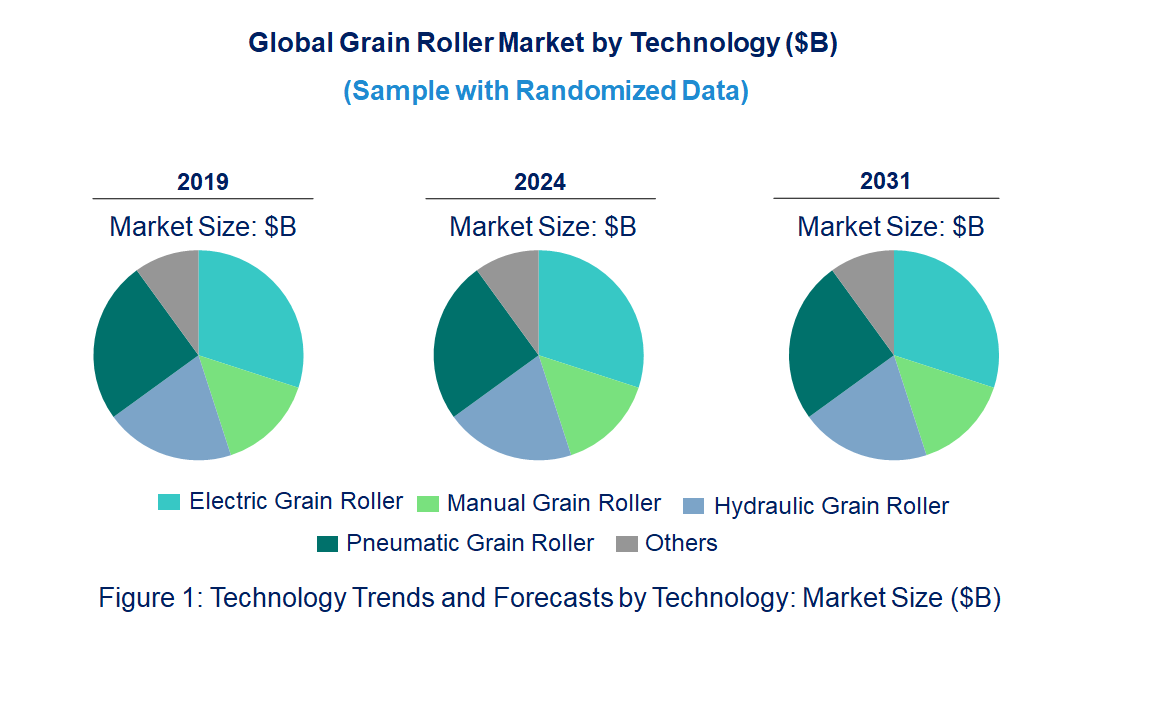
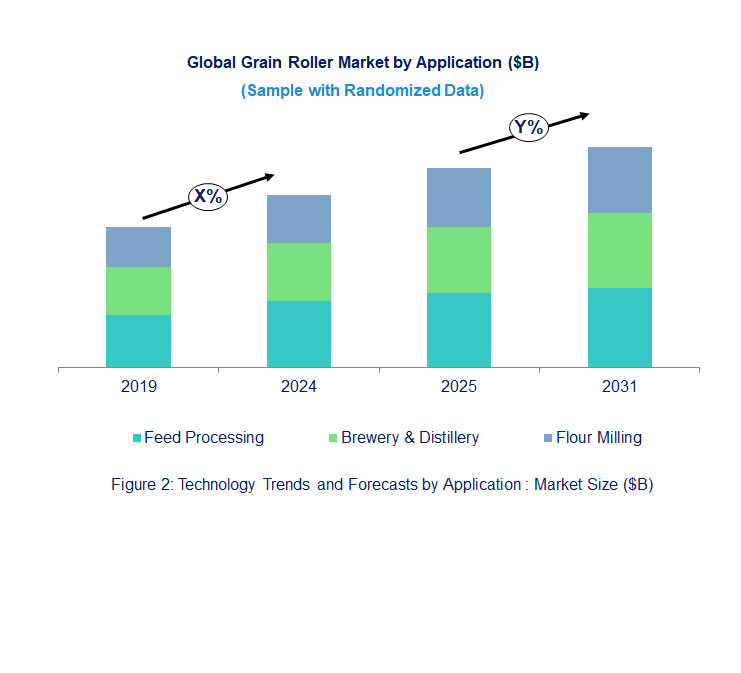
• Move towards Automation and Smart Technology: Automation is a new trend in the grain roller market, with electric and pneumatic grain rollers gaining popularity. These rollers are integrated with advanced sensors and control systems. Smart technologies enable real-time monitoring, precision adjustments, and automation of grain milling processes, reducing labor costs while improving operational efficiency.
• Energy-Efficient and Sustainable Solutions: Grain rollers and related markets are seeing the introduction of many energy-efficient technologies as concerns about sustainability continue to rise. High-performance electric and pneumatic rollers with low energy consumption have become the focus of manufacturers. This is related to cost-cutting during operation and helps comply with stringent environmental regulations while meeting the growing demands for environmentally friendly industrial processes.
• Customization and Versatility: Along with increasing demand for customized solutions across various industries, grain roller manufacturers are offering systems tailored to specific operational needs. Grain rollers are becoming more versatile, with customers able to adjust the speed, pressure, and gap settings of rollers to suit applications such as feed processing, milling, and brewing.
• Integration of IoT and Data Analytics: The integration of Internet of Things (IoT) technology in grain roller systems is on the rise. IoT-enabled rollers collect data on operational parameters, which can be analyzed for predictive maintenance, performance optimization, and troubleshooting. This data-driven approach helps manufacturers improve system reliability, reduce downtime, and increase overall productivity.
• Rising Demand for High-Quality Grains and Precision Milling: In the milling industry for flour and beer brewing, it is critical to focus on grain quality and fine milling. These advances have resulted in even grain rollers that deliver consistent particle size, increase extraction rates, and improve the quality of the final product, thus meeting consumer demand for higher-quality food and beverages. These technologies are changing the grain roller market by improving efficiency in operations, sustainability, and precision in the milling process quality. The primary factors driving this change are automation, energy efficiency, IoT integration, and customization. As these technologies continue to develop, the grain roller market will become more dynamic and responsive to market needs, leading to increased competitiveness in the coming years.
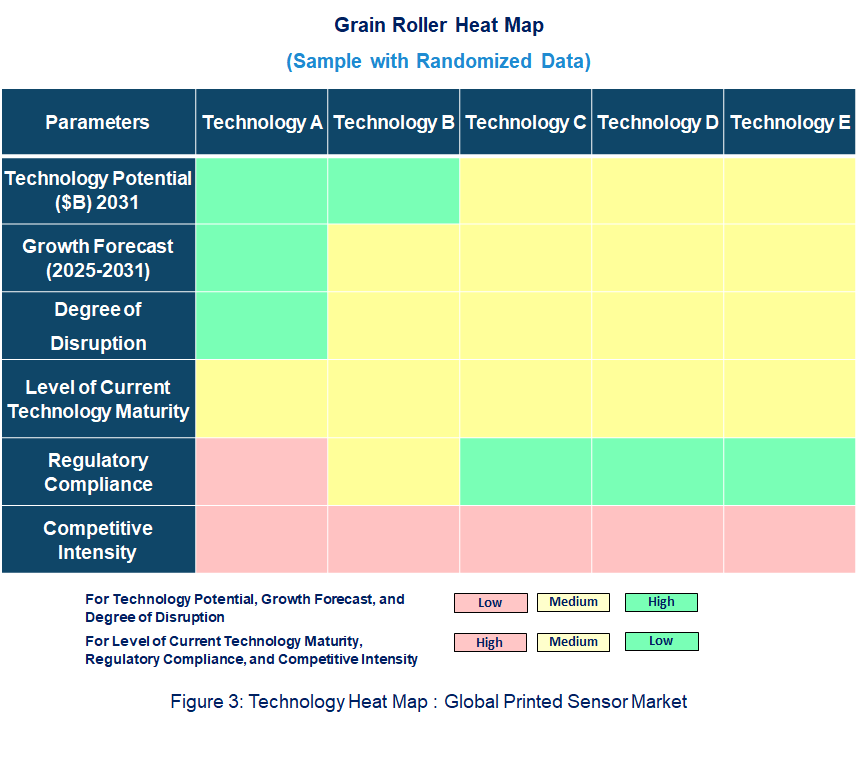
• Technology Potential: This can be a highly disruptive area in the grain roller market, with electric and pneumatic grain rollers offering automation, precision, and energy efficiency. The potential to replace traditional manual and hydraulic systems is significant, with lower labor costs, higher throughput, and consistency in product quality.
• Depth of Disruption: Additionally, the adoption of smart technology, including IoT and sensors, may enable real-time monitoring, predictive maintenance, and data analytics, further enhancing operational control and disrupting traditional grain milling processes.
• Maturity Level of Current Technologies: The current maturity of technology in electric and pneumatic grain rollers is relatively high, and these systems are widely adopted in large-scale operations. However, technologies such as IoT integration and advanced automation are still emerging and may take time to reach full maturity across all sectors of the grain roller market.
• Regulatory Compliance: As environmental and safety regulations become stricter, the grain roller market must comply with standards that ensure minimal energy consumption, efficient operation, and safe use of machinery. Regulatory compliance is becoming more stringent, especially for energy-efficient and smart technologies, which must meet both industry and environmental standards.
• Bühler Holding AG: Bühler has taken the lead in the technological surge in the grain roller market, especially with the introduction of its innovative milling systems through IoT technology for predictive and efficient operations. Bühler's investment in energy-efficient grain rollers and automation technology has improved precision and productivity in grain milling, giving the company a competitive position in both industrial and small-scale business segments.
• Satake Corporation: Satake Corporation has continued to enhance its grain roller technology by focusing on automation and high-precision milling solutions. The company has developed advanced pneumatic and electric roller mills that deliver improved product consistency and efficiency. Satake's commitment to research and development, particularly in smart technologies for grain milling, is strengthening its position in the global market, especially in Asia.
• Alapala Machine Industry & Trade Inc.: Alapala has diversified its product line with the introduction of high-performance grain roller systems that focus on customization and versatility. The company caters to various milling applications, including flour and feed production. Its modular designs and energy-efficient solutions have positioned the company as a strong player in the market, especially in emerging regions where cost-effective milling technologies are in demand.
• Groupe Danone: Groupe Danone, known for food and beverages, is working to optimize its supply chain by investing in more productive grain milling technologies. Groupe Danone has established advanced roller mill systems aimed at improving the quality and homogeneity of the grains it uses in production. These efforts improve resource management and reduce energy consumption, factors that contribute to the larger sustainability effort.
• General Mills: General Mills has taken significant steps to ensure that innovative grain roller technologies are integrated into its milling operations. The company emphasizes automation and energy efficiency. General Mills has adopted more precise grain milling techniques, increasing the efficiency of its production lines. By embracing cutting-edge technologies, the company ensures that it meets the growing demand for high-quality grains while reducing its environmental footprint. Recent trends from leading companies indicate a transition toward more intelligent, energy-efficient, and customizable grain roller technologies. With increasing emphasis on automation, IoT integration, and precision milling, these companies are investing heavily in innovation to meet market demand, enhance product quality, and boost operational efficiency. These developments will shape the future of the grain roller market and foster competition in technology.
• Technological Advancements: Technological innovation through automation, IoT integration, and energy-efficient systems is revolutionizing the grain roller market. It increases the efficiency of grain milling, decreases labor costs, and increases the consistency of the product. It has made the market attractive to both large and small operations.
• Increasing Demand for High-Quality Grains As consumer preferences shift towards higher-quality products, flour milling and brewing industries are investing in precision milling technologies. This trend drives the demand for grain rollers that can deliver consistent, high-quality grains, boosting the market for more advanced milling systems.
• Sustainability Concerns: The growing environmental concerns and energy efficiency push are inclining the grain roller market. Energy efficiency, apart from saving cost, also helps companies adhere to severe environmental regulations that appeal to the environmentally responsive business mindset of such companies.
• Flexibility and Customization: There is an added demand for customized grain roller systems that cater to specific industry requirements, such as flour and feed production. Manufacturers now focus on developing modular systems that can adjust speed, pressure, and gap settings so that they can be beneficial for different operational requirements, thereby increasing market appeal.
• Developing Automation and Smart Technologies: The rise of smart technologies in grain roller systems, such as IoT-enabled sensors and automation, is revolutionizing the market. These technologies enable real-time monitoring, predictive maintenance, and performance optimization, leading to greater operational efficiency and reduced downtime, which boosts productivity. Challenges
• High Initial Investment: The deployment of modern grain rollers is a very capital-intensive project, thus limiting small organizations from installing modern grain rolling equipment. The cost burden limits the high penetration of the latest, efficient technologies, reducing market growth.
• Difficultness of Advanced Technologies: The integration of smart technologies and automation into grain roller systems becomes a challenge for industries that come with limited technical expertise. Maintenance issues and delayed adoption characterise such systems in areas that lack proper development. The existence of various small and medium-sized manufacturers that produce products of different quality will confuse buyers and prevent the market from consolidating. This fragmentation leads to high competition and inconsistent quality, which makes it difficult for customers to make the right decisions. Technological advancement, rising demand for quality grains, concern over sustainability, and customized options form the driving factors behind grain roller markets. The investments in such a venture are usually high, along with its technological complexity, and further fragmentation in the market does not help matters. Such factors have brought about the dynamic and competitive landscape. The market, in due course, is set to advance, with further scope for efficiency and sustainability at its forefront.
• Bühler Holding Ag
• Satake Corporation
• Alapala Machine Industry & Trade Inc.
• Groupe Danone
• General Mills Inc.
• Technology Readiness by Technology Type for Grain Roller Market: The technology readiness of grain roller systems varies. The least advanced is the manual grain roller, which is widely used in small operations but offers low initial costs and less efficiency. Hydraulic systems are well-established and offer better power and precision for mid-sized operations. Pneumatic systems are more advanced, offering faster operation and better control, ready for large-scale milling. The electric grain rollers are the most advanced in terms of automation and energy efficiency. They are suited for high-demand environments. Although manual systems are ready for basic operations, electric and pneumatic rollers are increasingly being used because of higher efficiency, compliance with energy regulations, and integration into large-scale industrial applications.
• Competitive Intensity and Regulatory Compliance of Different Technologies for Grain Roller Market: The competitive intensity in the grain roller market is quite strong, as there are various technologies provided by manufacturers to suit different needs within the market. Manual grain rollers are losing ground to a more efficient, automated system, but prevail in smaller, low-budget operations. Hydraulic systems are in wide use in mid-range applications, but the pneumatic and electric rollers are gaining popularity because of higher efficiency and automation. Regulatory compliance is becoming increasingly stringent, particularly for pneumatic and electric systems that need to meet environmental standards. Manufacturers must ensure compliance with energy efficiency, safety regulations, and animal welfare standards, especially as automation and sustainability become key priorities.
• Disruption Potential of Various Technologies for Grain Roller Market: The grain roller market is seeing significant disruption potential driven by advancements in technology. Electric grain rollers, for instance, with their automation and precision, represent a major shift away from the traditional manual and hydraulic systems, thus reducing labor costs and increasing throughput. Pneumatic grain rollers, fast in operation, with better control, mark a disruption in large-scale milling. Manual grain rollers are increasingly being replaced due to their limited efficiency, while hydraulic systems, though more powerful, are also being edged out by more modern technologies. Electric and pneumatic systems, due to their energy efficiency and higher automation, have strong disruptive potential, transforming the way grain milling is conducted across industries.
• Electric Grain Roller
• Manual Grain Roller
• Hydraulic Grain Roller
• Pneumatic Grain Roller
• Others
• Feed Processing
• Brewery & Distillery
• Flour Milling
• North America
• Europe
• Asia Pacific
• The Rest of the World
• Latest Developments and Innovations in the Grain Roller Technologies
• Companies / Ecosystems
• Strategic Opportunities by Technology Type


Choose a license that fits your team. Instant PDF delivery.
Prices exclude taxes. Instant delivery. Custom licensing available on request.
Market Report · May 18, 2026
Market Report · May 18, 2026
Market Report · May 18, 2026
Trusted partner for strategic intelligence and business growth


Receive a complimentary market analysis tailored to your industry. Our analysts will identify key growth opportunities and competitive dynamics specific to your business.

Market size, growth rate, and key trend analysis for your specific sector.

Top competitor positioning and market share analysis.

Strategic recommendations backed by data-driven insights.
Get curated market intelligence and competitive moves straight to your inbox.
By subscribing, you agree to receive our monthly insights. Unsubscribe anytime.
Receive a complimentary market analysis tailored to your industry. Our analysts will identify key growth opportunities and competitive dynamics specific to your business.
Market size, growth rate, and key trend analysis for your specific sector.
Top competitor positioning and market share analysis.
Strategic recommendations backed by data-driven insights.
Get curated market intelligence, emerging trends, and competitive moves straight to your inbox each month.
By subscribing, you agree to receive our monthly insights. Unsubscribe anytime.
We'll send your sample report shortly.