
Market Report · July 24, 2026

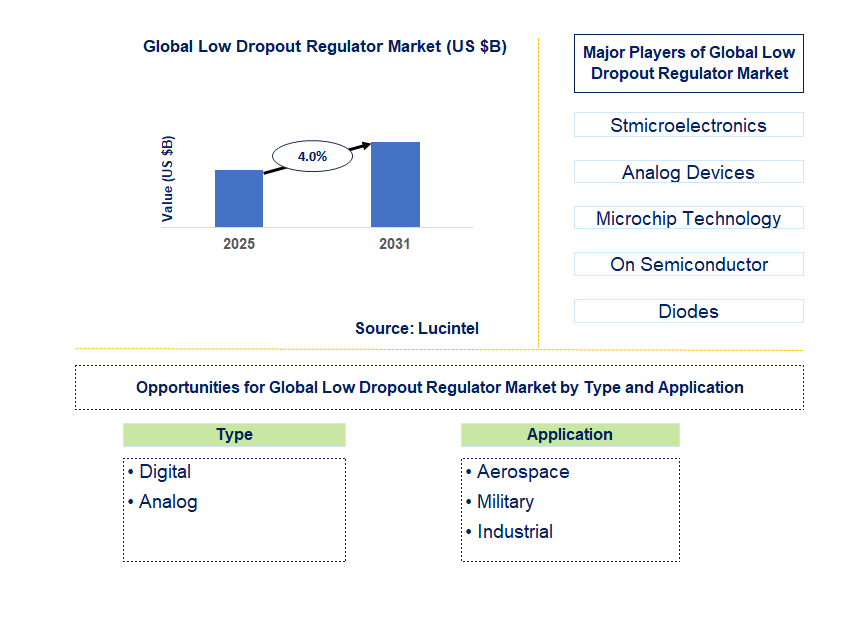
Key data points: The growth forecast = 4.0% annually for the next 7 years. Scroll below to get more insights. This market report covers Trends, opportunity and forecast in global low dropout regulator market to 2031 by type (digital and analog), application (aerospace, military, and industrial), and region (North America, Europe, Asia Pacific, and the Rest of the World)
We'll send your sample report shortly.
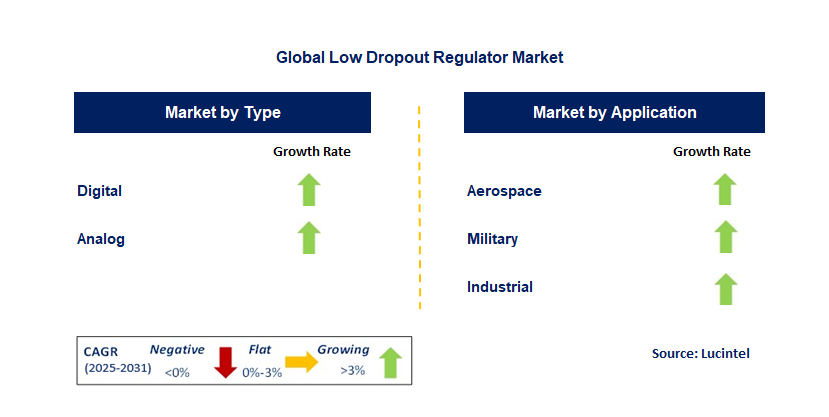
• Lucintel forecasts that, within the type category, analog is expected to witness higher growth over the forecast period due to its wider adoption in a variety of power management applications.
• Within the application category, industrial is expected to witness the highest growth due to its wide application across various industrial sectors, including automation, energy systems.
• In terms of region, APAC is expected to witness the highest growth over the forecast period due to the strong presence of consumer electronics manufacturing, automotive growth. Gain valuable insights for your business decisions with our comprehensive 150+ page report. Sample figures with some insights are shown below.
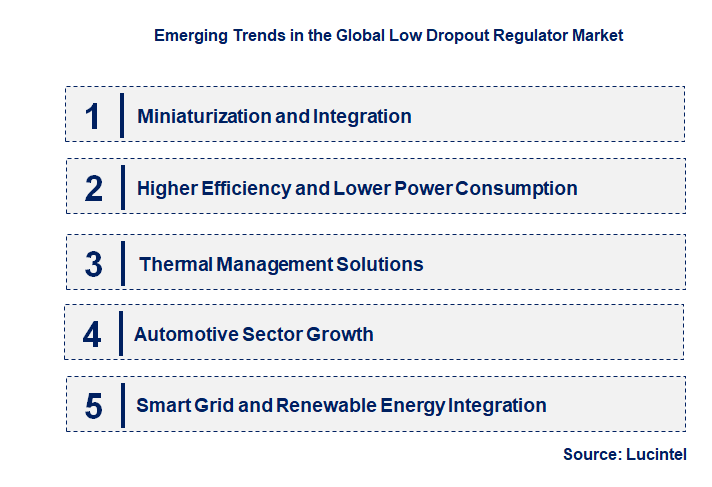
• Miniaturization and Integration: LDOs are becoming more compact and integrated with other power management components to meet the demands of smaller, more portable devices. This trend is driven by the need for high efficiency in space-constrained applications like wearables, mobile devices, and IoT sensors. Integrated power management solutions offer lower cost, reduced component count, and higher efficiency, particularly in battery-operated devices. As a result, manufacturers are focusing on designing smaller, more powerful LDOs to address these market needs.
• Higher Efficiency and Lower Power Consumption: As electronic devices become more energy-efficient, the demand for LDOs with lower dropout voltage and higher efficiency has surged. To cater to this, manufacturers are designing LDOs that operate at lower voltages while delivering more stable outputs. Efficiency improvements help extend battery life in portable devices and reduce energy waste in industrial applications. This trend is particularly critical in applications like electric vehicles, renewable energy systems, and high-performance computing, where maximizing energy efficiency is paramount.
• Thermal Management Solutions: With growing power densities in electronic devices, efficient thermal management is a critical aspect of LDO development. The focus is on designing LDOs that can manage heat dissipation effectively while maintaining stable performance. This trend is especially relevant for applications in automotive, telecommunications, and industrial automation, where devices are subjected to high thermal loads. Manufacturers are increasingly integrating advanced heat management features into LDO designs to improve overall reliability and prevent system failures.
• Automotive Sector Growth: LDOs are becoming integral to the automotive sector, particularly in electric and autonomous vehicles. These vehicles require precise voltage regulation for critical electronic systems, such as infotainment, safety, and battery management. LDOs are being used to provide stable power to sensors, controllers, and infotainment systems, ensuring optimal vehicle performance. The shift toward electric vehicles and smart automotive systems is driving innovation in LDO design, with manufacturers developing more robust, power-efficient solutions tailored for the automotive market.
• Smart Grid and Renewable Energy Integration: The global push for renewable energy and smarter grids is increasing demand for LDOs in power management systems. Solar power systems, wind farms, and smart grid technologies require stable and efficient voltage regulation to maintain energy supply and system reliability. LDOs are used to ensure smooth power conversion and distribution, particularly in environments with fluctuating energy sources. This trend is expected to grow as nations invest in sustainable energy infrastructure, and LDOs become critical components in energy-efficient power systems. These trends are reshaping the LDO market by pushing the development of smaller, more efficient, and more integrated components that can meet the demands of modern electronics and energy systems.
• Advancements in Semiconductor Materials: The development of new semiconductor materials, such as Gallium Nitride (GaN), has led to significant improvements in the efficiency and performance of LDOs. GaN-based LDOs provide higher efficiency at lower voltages and reduce power loss, making them ideal for applications in power-sensitive devices like wearables, IoT, and electric vehicles. These materials allow for better thermal performance and miniaturization, leading to more compact and reliable LDO solutions.
• Increased Focus on Automotive Applications: The automotive industry is driving demand for more robust and energy-efficient LDOs, particularly in electric and hybrid vehicles. Manufacturers are focusing on designing LDOs that can handle the high power demands of electric vehicle batteries and provide stable voltage regulation for critical electronic systems, such as infotainment and driver assistance systems. The shift towards electric mobility is prompting manufacturers to develop specialized LDOs that are tailored to the needs of modern automotive applications.
• Integration with Power Management ICs: To improve system efficiency and reduce component count, LDOs are increasingly being integrated with other power management functions, such as voltage regulators and DC-DC converters. This trend has been especially prevalent in consumer electronics, where manufacturers are looking to reduce the size and cost of power management solutions while improving performance. Integrated LDOs are now seen in a wide range of applications, from smartphones to industrial systems, due to their ability to deliver reliable power with minimal space requirements.
• Enhanced Thermal Management: As electronic devices become more powerful, managing heat dissipation in LDOs has become a key focus. Advances in thermal management technologies, such as the use of heat sinks and advanced packaging materials, are improving the performance and reliability of LDOs in high-power applications. These improvements are critical for sectors like automotive, industrial, and telecommunications, where LDOs must operate in environments with high thermal loads and maintain consistent performance under demanding conditions.
• Adoption of LDOs in IoT and Wearables: The rise of IoT devices and wearable technologies is fueling demand for smaller, more energy-efficient LDOs. These devices often require LDOs that can operate at low voltages while maintaining high efficiency to extend battery life. Manufacturers are developing LDOs that are specifically designed for the power needs of IoT and wearable devices, incorporating features such as ultra-low quiescent current and low dropout voltages to optimize performance in these compact, power-sensitive applications. These developments are not only improving the performance of LDOs but also enabling their use in new and emerging applications, driving growth in the market.
• Electric Vehicles (EVs): The electric vehicle market presents significant growth opportunities for LDO manufacturers. EVs require stable voltage regulation for their critical systems, including battery management, safety, and infotainment. LDOs are integral to maintaining power efficiency and system stability. As the global shift towards electric vehicles accelerates, demand for specialized LDOs tailored for the automotive industry is expected to rise, offering manufacturers new revenue streams.
• Renewable Energy Systems: With the increasing adoption of renewable energy solutions such as solar and wind power, the demand for LDOs in power conversion and distribution is growing. LDOs are crucial in stabilizing voltage in these systems, ensuring optimal performance and minimizing power loss. As governments worldwide invest in renewable energy infrastructure, there is a growing opportunity for LDO manufacturers to supply efficient power management solutions for this sector.
• Industrial Automation: Industrial automation and the rise of smart factories are driving demand for energy-efficient LDOs. These systems rely on precise voltage regulation for sensors, controllers, and actuators. LDOs are used to ensure that these components receive stable power, even in fluctuating environments. As industries continue to invest in automation, there is a clear opportunity for LDO manufacturers to cater to the power needs of industrial equipment.
• Wearables and IoT Devices: The wearables and IoT markets are growing rapidly, driven by increasing consumer demand for connected devices. These devices require small, efficient LDOs that can operate at low voltages while extending battery life. As the number of connected devices grows, the demand for compact and reliable LDOs will continue to rise, providing significant growth potential for manufacturers in this sector.
• Telecommunications Infrastructure: The expansion of 5G networks and telecommunications infrastructure presents a key growth opportunity for LDOs. These networks require efficient power management to support high-performance equipment, such as base stations and antennas. LDOs are essential for ensuring that these systems maintain stable voltage under demanding conditions. As 5G deployment continues globally, the demand for LDOs will increase, offering a significant opportunity for growth in the telecommunications sector. These growth opportunities highlight the broad range of applications for LDOs, with manufacturers poised to benefit from advancements in energy-efficient technologies and increasing demand across various industries.
• Stmicroelectronics
• Analog Devices Corporation
• Microchip Technology
• On Semiconductor
• Diodes
• Digital
• Analog
• Aerospace
• Military
• Industrial
• North America
• Europe
• Asia Pacific
• The Rest of the World
• United States: The U.S. LDO market has seen substantial growth, largely driven by the expansion of electric vehicles (EVs) and renewable energy solutions. With the increasing adoption of semiconductor technologies and IoT devices, manufacturers are focusing on improving LDO efficiency and miniaturization. Companies are also emphasizing the development of LDOs that cater to specific sectors like telecommunications and automotive, where voltage regulation and low dropout are crucial for device reliability. Additionally, government initiatives and investments in clean energy are encouraging the development of energy-efficient power solutions.
• China: In China, the demand for Low Dropout Regulators has been growing rapidly, driven by advancements in consumer electronics, automotive, and renewable energy. With China’s focus on developing next-generation technologies like 5G, AI, and electric vehicles, LDOs are becoming essential in regulating power for smaller, more powerful devices. The Chinese government has also been promoting local manufacturing of power components, which is leading to increased competition among domestic suppliers. Additionally, advancements in semiconductor manufacturing technologies are pushing LDO performance to new levels in terms of efficiency and thermal management.
• Germany: Germany’s LDO market is shaped by its leadership in automotive engineering and industrial automation. In particular, there is increasing demand for LDOs in the electric and hybrid vehicle sector, where efficient power regulation is needed for critical electronic systems. LDOs are also being used in industrial equipment to enhance power efficiency in complex automation systems. Germany’s regulatory focus on reducing carbon emissions has further prompted innovations in energy-efficient LDO solutions. Local suppliers are increasingly collaborating with automotive manufacturers to integrate advanced LDOs into electric vehicle architectures.
• India: India’s LDO market is benefiting from the growing demand for mobile devices, consumer electronics, and renewable energy solutions. With an expanding middle class and a push towards electrification, the need for power-efficient devices and systems is rising. In particular, India is focusing on integrating LDOs into solar power systems and electric vehicle charging infrastructure. As the country works to modernize its grid and improve energy access in rural areas, LDOs are being integrated into new power systems to ensure stability and efficiency in power distribution.
• Japan: Japan’s LDO market is focused on high-performance applications, particularly in consumer electronics, robotics, and automotive sectors. As a global leader in robotics and advanced automotive technologies, Japan’s LDO manufacturers are increasingly focusing on miniaturization, low power consumption, and advanced thermal management. The rising demand for automation, smart devices, and AI-based systems has driven the need for compact, efficient power regulators. Additionally, Japan’s commitment to sustainability is pushing for more energy-efficient and low-emission solutions, with LDOs playing a critical role in these efforts.


• Stmicroelectronics
• Analog Devices Corporation
• Microchip Technology
• On Semiconductor
• Diodes Q5. Which global low dropout regulator market segment will be the largest in future? Answer: Lucintel forecasts that analog is expected to witness higher growth over the forecast period due to its wider adoption in a variety of power management applications. Q6. In global low dropout regulator market, which region is expected to be the largest in next 5 years? Answer: APAC is expected to witness the highest growth over the forecast period due to the strong presence of consumer electronics manufacturing, automotive growth. Q7. Do we receive customization in this report? Answer: Yes, Lucintel provides 10% customization without any additional cost.


Choose a license that fits your team. Instant PDF delivery.
Prices exclude taxes. Instant delivery. Custom licensing available on request.
Market Report · July 24, 2026
Market Report · July 20, 2026
Market Report · July 20, 2026
Trusted partner for strategic intelligence and business growth


Receive a complimentary market analysis tailored to your industry. Our analysts will identify key growth opportunities and competitive dynamics specific to your business.

Market size, growth rate, and key trend analysis for your specific sector.

Top competitor positioning and market share analysis.

Strategic recommendations backed by data-driven insights.
Get curated market intelligence and competitive moves straight to your inbox.
By subscribing, you agree to receive our monthly insights. Unsubscribe anytime.
Receive a complimentary market analysis tailored to your industry. Our analysts will identify key growth opportunities and competitive dynamics specific to your business.
Market size, growth rate, and key trend analysis for your specific sector.
Top competitor positioning and market share analysis.
Strategic recommendations backed by data-driven insights.
Get curated market intelligence, emerging trends, and competitive moves straight to your inbox each month.
By subscribing, you agree to receive our monthly insights. Unsubscribe anytime.
We'll send your sample report shortly.