
Market Report · May 18, 2026

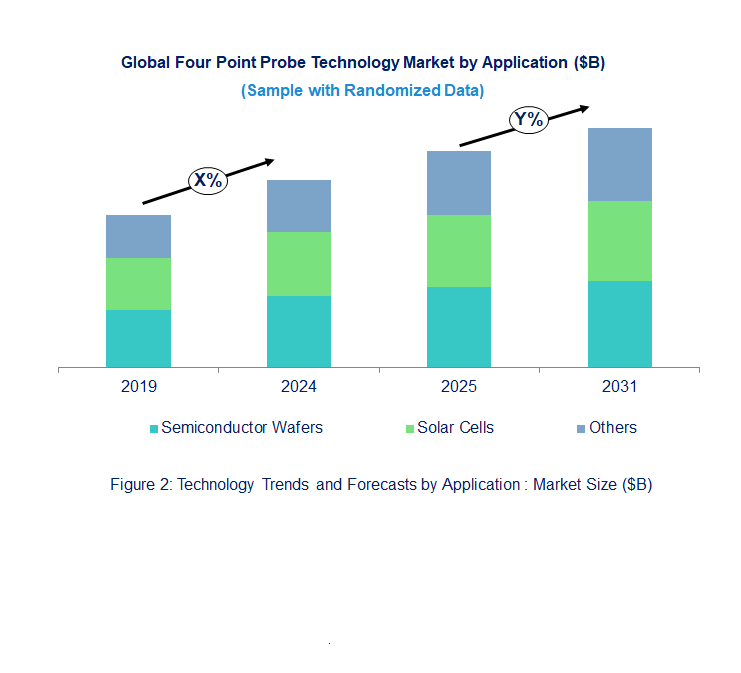
This market report covers trends, opportunities, and forecasts in the global four point probe market to 2031 by technology (mechanical probes, electrical probes, pulsed current measurement, thermal probe systems, and integrated systems for material characterization), application (semiconductor wafers, solar cells, and others), and region (North America, Europe, Asia Pacific, and the Rest of the World)
We'll send your sample report shortly.
• Integration of Multi-Functional Measurement Systems: Modern four point probe setups now incorporate additional capabilities, such as thermal conductivity and Hall effect measurements, in a single platform. This integration enables comprehensive material characterization, reducing the need for multiple devices and improving research efficiency. Such systems are particularly relevant for advanced semiconductor and thermoelectric applications
• Adoption of Pulsed Current Techniques: The use of pulsed currents minimizes thermal effects during resistivity testing, offering higher accuracy in sensitive materials. This technique is gaining popularity for applications in microelectronics and nanomaterials, where precision is critical, and heat-induced measurement errors can compromise results
• Automation and AI Integration: Automation in probe positioning and data acquisition is reducing human errors, while AI-based algorithms analyze measurement data for trends and anomalies. This enhances repeatability and speeds up analysis, making it ideal for high-throughput material testing environments
• Advancements in Probe Materials: New materials, such as diamond-coated probes and alloys, improve durability and reduce wear, enabling reliable measurements on hard or irregular surfaces. These advancements extend probe lifespan and ensure consistent contact quality across varied applications
• Miniaturization for Nanoscale Applications: The demand for nanoscale resistivity measurements has driven the miniaturization of probe systems. These are now capable of analyzing ultra-thin films and nanostructures, supporting developments in nanoelectronics and advanced materials research These trends underscore a shift towards greater precision, versatility, and efficiency in Four Point Probe technology. By integrating advanced techniques and leveraging automation, the technology is reshaping material analysis for next-generation applications, from semiconductors to nanotechnology, ensuring its relevance in emerging industrial and research needs.
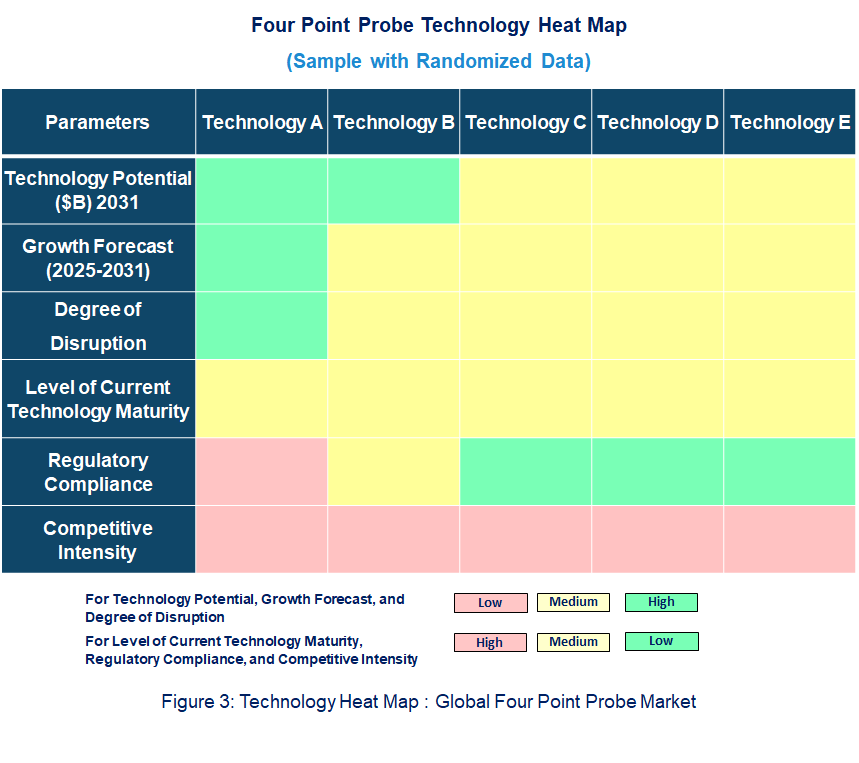
• Technology Potential: Four Point Probe technology holds significant potential for material characterization, particularly in fields like semiconductors, thin films, and nanotechnology. Its precise resistivity measurements enable advancements in microelectronics, photovoltaics, and thermoelectrics. Emerging features like multi-functional integration and pulsed current techniques enhance accuracy and broaden applications, signaling its expanding impact.
• Degree of Disruption: The degree of disruption lies in its ability to replace traditional methods with highly precise, non-destructive techniques, particularly for materials requiring nanoscale evaluation. Innovations like thermal probes and AI-enhanced automation are redefining efficiency and accuracy, challenging older methodologies. These advancements streamline workflows in both research and industrial settings, further emphasizing their transformative potential.
• Current Technology Maturity Level: In terms of maturity, Four Point Probe technology has reached a high level of refinement for standard applications, such as wafer testing and material research. However, emerging capabilities like integrated thermal and electrical measurements remain in the growth phase, driving further innovation.
• Regulatory Compliance: Regulatory compliance is essential, especially in the semiconductor and electronics industries. The technology aligns with international standards such as ASTM and ISO for electrical resistivity measurement, ensuring its reliability and acceptance across markets. Overall, Four Point Probe technology is poised to drive precision-driven material analysis, solidifying its role in advanced applications.
• KLA Corporation: KLA has advanced its four-point probe systems by integrating high-resolution measurement capabilities with artificial intelligence for defect detection in semiconductors. These upgrades enhance precision in resistivity measurement, offering a competitive edge for applications in advanced microchip manufacturing
• MicroXact: The company has focused on custom-designed probing systems that cater to complex material characterization needs, such as thin films and nanomaterials. Its innovations in automation have improved operational efficiency, making it a preferred choice for academic and industrial research
• Jandel Engineering: Jandel has introduced versatile four-point probe systems capable of handling diverse sample types, from thin films to bulk materials. With features like micro-positioning stages and software integration, its systems allow for precise and user-friendly operation in resistivity measurements
• Ossila: Ossila has enhanced its probe systems with easy-to-use interfaces and compatibility with organic semiconductors. Its low-cost solutions aim to democratize access to high-quality resistivity measurement tools, particularly for educational institutions and small labs
• Kleindiek Nanotechnik GmbH: Kleindiek has leveraged nanoscale positioning technologies to refine four-point probes, making them suitable for ultra-small-scale measurements. Their systems target applications in cutting-edge nanotechnology and quantum materials research
• Bridge Technology: This company has improved the modularity of its four-point probe systems, enabling customization for specific industrial applications. These developments address the growing demand for flexible and robust systems in material testing
• NAPSON Corporation: NAPSON has developed compact and portable four-point probe devices, expanding their usability in field environments while maintaining high accuracy for semiconductor and thin-film measurements
• Everbeing: Everbeing's focus has been on producing economical yet efficient probe systems with simplified setup and operation. This is particularly impactful for smaller laboratories aiming to improve measurement accuracy without significant investment
• Creative Design Engineering: This company has introduced hybrid probe systems combining electrical and thermal capabilities, enabling multi-parameter analysis in a single setup. These innovations serve advanced research and industrial quality assurance processes These developments reflect a dynamic shift in the market, emphasizing precision, versatility, and accessibility in four-point probe technology, shaping its adoption across various industries.
• Rising Demand in Semiconductor and Thin-Film Applications: The growing need for precise electrical characterization in semiconductor and thin-film production drives demand. Innovations in microelectronics require accurate resistivity measurements, positioning Four Point Probes as critical tools for quality assurance. This has led to increased adoption in both research and industrial environments, boosting market growth.
• Integration of Automation and AI: Automation and AI-enhanced systems simplify data analysis and reduce human errors, making Four Point Probes more efficient. These technologies expand the scope of applications and improve throughput, particularly in high-volume industries like electronics manufacturing and photovoltaic production. Challenges
• High Costs of Advanced Systems: The high cost of acquiring and maintaining advanced Four Point Probe systems limits their adoption, particularly for small-scale labs and emerging markets. Manufacturers must address cost-effectiveness to broaden accessibility.
• Limited Standardization in Emerging Applications: While standardized for semiconductors, emerging applications such as nanotechnology lack universal protocols, complicating system development and interoperability. Addressing this gap is crucial for broader industry adoption. The four point probe market's growth is driven by innovations in precision, automation, and integration but hindered by cost and standardization challenges. Addressing these issues will enable the technology to achieve broader adoption across industries and applications.
• Kla Corporation
• Microxact
• Jandel
• Ossila
• Kleindiek
• Bridge Technology
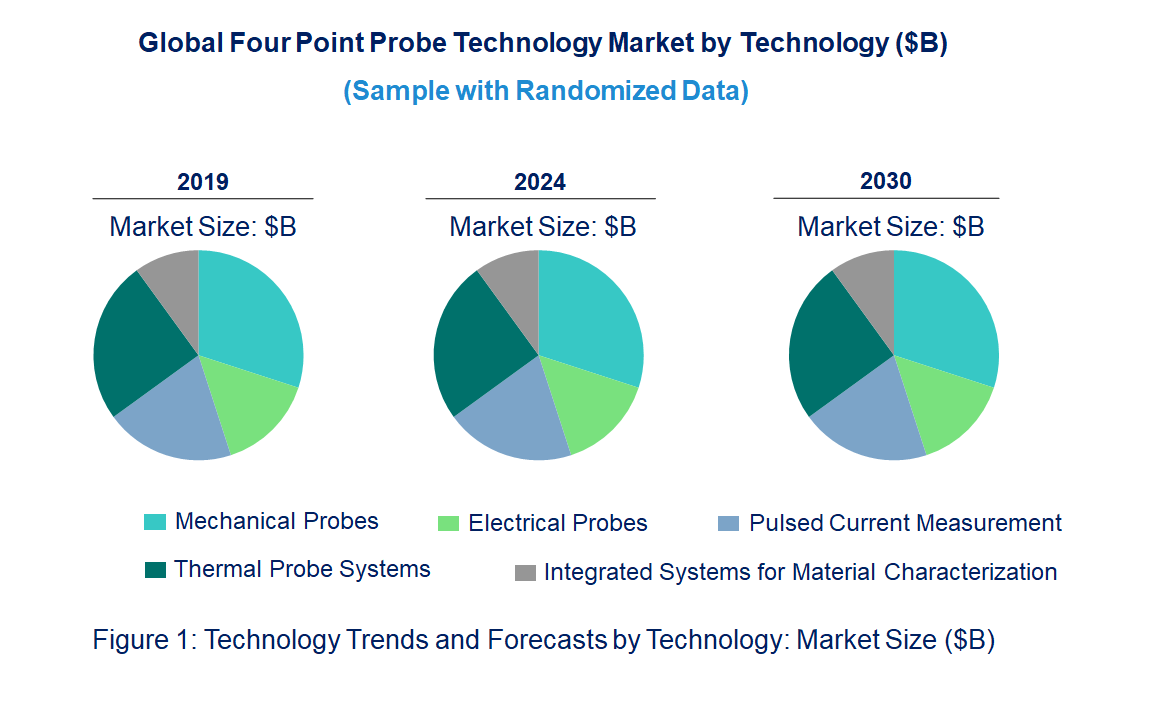
• Technology Readiness by Technology Type: The Four point probe market has experienced a significant technology shift in recent years, particularly with the integration of advanced features like mechanical and electrical probes. Mechanical probes, traditionally used for manual measurements, have evolved into more automated systems that improve precision and reduce human error.
• Competitive Intensity and Regulatory Compliance: Electrical probes have similarly advanced, incorporating better materials and design to enhance the accuracy of resistivity measurements in various industries, such as semiconductors and thin films. Additionally, the integration of pulsed current measurement techniques into Four Point Probe systems has improved the ability to detect and analyze transient resistivity changes, offering more detailed insights into material properties, especially in rapidly evolving fields like nanotechnology and organic semiconductors
• Disruption Potential by Technology Type: Another notable shift is the development of thermal probe systems, which now enable simultaneous measurement of both electrical and thermal properties. This multi-parameter analysis is crucial for comprehensive material characterization, allowing for the assessment of not just resistivity, but also thermal conductivity in advanced materials. Furthermore, integrated systems for material characterization have emerged, combining various testing techniques and streamlining processes for more efficient and high-throughput testing. These advancements reflect a broader trend towards more versatile and high-performance Four Point Probe systems, catering to the growing demand for precise measurement tools in research and industry
• Mechanical Probes
• Electrical Probes
• Pulsed Current Measurement
• Thermal Probe Systems
• Integrated Systems for Material Characterization
• Semiconductor Wafers
• Solar Cells
• Others
• North America
• Europe
• Asia Pacific
• The Rest of the World
• Latest Developments and Innovations in the Four Point Probe Technologies
• Companies / Ecosystems
• Strategic Opportunities by Technology Type


Choose a license that fits your team. Instant PDF delivery.
Prices exclude taxes. Instant delivery. Custom licensing available on request.
Market Report · May 18, 2026
Market Report · May 18, 2026
Market Report · May 18, 2026
Trusted partner for strategic intelligence and business growth


Receive a complimentary market analysis tailored to your industry. Our analysts will identify key growth opportunities and competitive dynamics specific to your business.

Market size, growth rate, and key trend analysis for your specific sector.

Top competitor positioning and market share analysis.

Strategic recommendations backed by data-driven insights.
Get curated market intelligence and competitive moves straight to your inbox.
By subscribing, you agree to receive our monthly insights. Unsubscribe anytime.
Receive a complimentary market analysis tailored to your industry. Our analysts will identify key growth opportunities and competitive dynamics specific to your business.
Market size, growth rate, and key trend analysis for your specific sector.
Top competitor positioning and market share analysis.
Strategic recommendations backed by data-driven insights.
Get curated market intelligence, emerging trends, and competitive moves straight to your inbox each month.
By subscribing, you agree to receive our monthly insights. Unsubscribe anytime.
We'll send your sample report shortly.