
Market Report · June 29, 2026

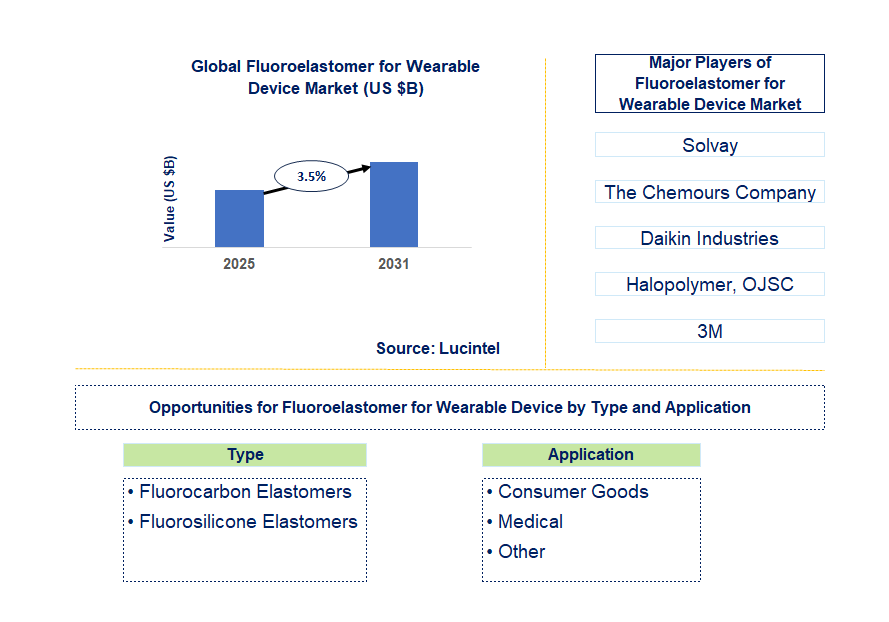
Key data points: The growth forecast = 3.5% annually for the next 7 years. Scroll below to get more insights. This market report covers Trends, opportunity and forecast in fluoroelastomer for wearable device market to 2031 by type (fluorocarbon elastomers and fluorosilicone elastomers), application (consumer goods, medical, and other), and region (North America, Europe, Asia Pacific, and the Rest of the World)
We'll send your sample report shortly.
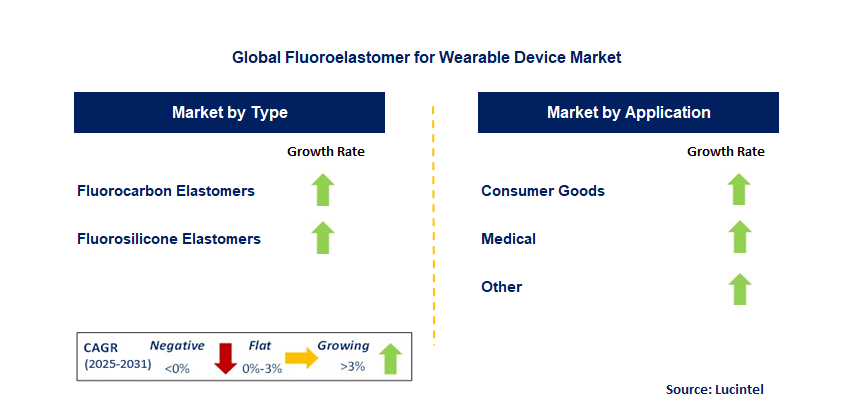
• Lucintel forecasts that, within the type category, fluorocarbon elastomers is expected to witness higher growth over the forecast period due to known for their excellent chemical resistance, high thermal stability.
• Within the application category, consumer goods will remain the largest segment due to production of wearables like smartwatches, fitness trackers, and other consumer electronics.
• In terms of region, North America will remain the largest region over the forecast period due to advanced healthcare and technology infrastructure. Gain valuable insights for your business decisions with our comprehensive 150+ page report. Sample figures with some insights are shown below.
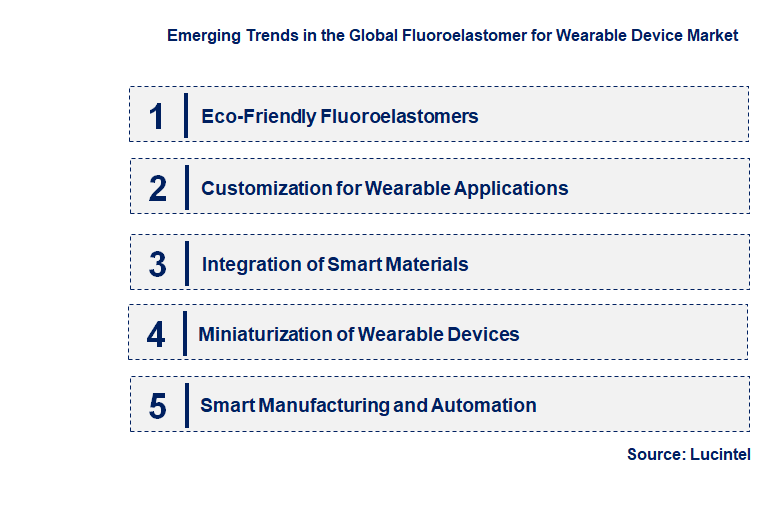
• Eco-Friendly Fluoroelastomers: The growing focus on sustainability in the wearable tech industry has led to an increase in demand for eco-friendly fluoroelastomers. Manufacturers are exploring ways to reduce the environmental impact of fluoroelastomers by developing formulations that use renewable raw materials and are easier to recycle. This trend is aligned with the increasing consumer awareness of environmental issues, especially in the tech sector, which is looking for sustainable alternatives.
• Customization for Wearable Applications: With the increasing diversity of wearable devices, manufacturers are focusing on customizing fluoroelastomer formulations to meet specific requirements for each application. For instance, different wearables such as fitness trackers, smartwatches, and medical devices may require unique properties like enhanced flexibility, resistance to sweat, or specific thermal resistance. This trend is fostering innovation in fluoroelastomer formulations, making them more adaptable and versatile in meeting the diverse needs of the wearable market.
• Integration of Smart Materials: The integration of smart materials into fluoroelastomers is another key trend. These materials are capable of sensing environmental changes, such as temperature or pressure, and adapting accordingly. In wearables, smart fluoroelastomers can improve device functionality by enhancing comfort or extending battery life. This trend is crucial as the demand for more advanced, multifunctional wearables grows, particularly in health-monitoring and fitness tracking devices.
• Miniaturization of Wearable Devices: As wearable devices become smaller and more compact, the demand for high-performance materials like fluoroelastomers that can maintain functionality in smaller formats is increasing. Fluoroelastomers are being engineered to retain their durability, flexibility, and sealing properties even in miniaturized designs. This trend is enabling the development of increasingly sophisticated, compact, and wearable-friendly devices, especially in medical and consumer electronics sectors.
• Smart Manufacturing and Automation: The rise of smart manufacturing technologies, including automation and AI-driven production lines, is impacting the fluoroelastomer market. These technologies enable more efficient and cost-effective production of fluoroelastomers, enhancing the scalability of manufacturing operations for wearable devices. This trend is helping to reduce production costs and improve material consistency, making high-quality fluoroelastomers more accessible to a broader range of manufacturers in the wearable tech sector. In conclusion, emerging trends in the fluoroelastomer for wearable device market, such as eco-friendly formulations, smart material integration, and customization, are shaping the future of wearables. These trends enhance performance, sustainability, and adaptability, driving the market’s growth.
• Development of Advanced Fluoroelastomer Alloys: Manufacturers are increasingly developing fluoroelastomer alloys that offer superior resistance to wear and tear, UV radiation, and extreme temperatures. These alloys enhance the durability of wearable devices, making them more reliable for long-term use. This development is particularly significant for wearables used in harsh environments, such as industrial monitoring devices or outdoor sports applications.
• Expansion of Recycling Technologies: In response to environmental concerns, companies are developing new recycling technologies for fluoroelastomers. These innovations are aimed at improving the circular economy by making it easier to recycle and reuse fluoroelastomers from wearable devices. The development of such technologies is crucial for meeting sustainability goals and addressing the growing pressure for eco-friendly practices in tech manufacturing.
• Improved Customization Capabilities: Fluoroelastomer manufacturers are investing in new technologies to provide more tailored solutions for wearable devices. This includes offering custom formulations that meet the specific needs of wearables, such as providing better grip, moisture resistance, or more comfort for users. Customization capabilities enable manufacturers to address diverse consumer demands in the growing wearable tech market.
• Partnerships for Technological Advancements: Strategic partnerships between fluoroelastomer manufacturers and wearable tech companies are driving technological advancements in the sector. These collaborations allow for the development of specialized materials that meet the exacting standards of wearable devices, especially in fields like healthcare, where reliability and precision are paramount. Partnerships also facilitate access to new markets and innovation.
• Advances in Nano-coating Technologies: Fluoroelastomers are being enhanced through nano-coating technologies that improve their resistance to water, dust, and other contaminants. These coatings help wearables maintain their functionality over extended periods, even in challenging conditions. This development is particularly important for devices like fitness trackers and smartwatches that are exposed to various environmental factors. In conclusion, key developments in the fluoroelastomer for wearable device market, including advancements in material formulations, recycling technologies, and strategic partnerships, are driving growth. These innovations are enhancing performance, sustainability, and customization, supporting the
• Health Monitoring Devices: Fluoroelastomers are increasingly being used in wearable health devices due to their resistance to chemicals, sweat, and extreme temperatures. These materials ensure long-lasting performance in devices like heart rate monitors, glucose trackers, and wearable ECG sensors. The growing demand for health-monitoring wearables presents significant opportunities for fluoroelastomer manufacturers to expand their market share.
• Fitness Trackers and Smartwatches: The growing popularity of fitness trackers and smartwatches presents a huge opportunity for fluoroelastomer suppliers. The demand for materials that provide flexibility, comfort, and durability is increasing, making fluoroelastomers an ideal choice for straps, seals, and other components. As consumers seek more personalized and durable devices, fluoroelastomers are well-positioned to meet these needs.
• Medical Devices and Wearable Diagnostics: With the rise of wearable diagnostic tools, fluoroelastomers are being used to enhance the performance of medical devices, such as wearable infusion pumps, glucose monitors, and skin sensors. The material’s resistance to chemicals, temperature fluctuations, and moisture makes it ideal for devices that need to perform reliably in challenging conditions, opening up new growth opportunities in the medical sector.
• Consumer Electronics: The integration of fluoroelastomers in other consumer electronics, such as smart glasses, hearing aids, and virtual reality headsets, provides manufacturers with new opportunities for growth. Fluoroelastomers’ flexibility and resilience make them suitable for creating wearables that need to endure daily use while providing comfort and maintaining performance.
• Sports and Outdoor Wearables: The sports and outdoor market is a growing sector for fluoroelastomers, particularly in products like GPS watches, rugged fitness trackers, and smart clothing. The durability and resistance to environmental stressors make fluoroelastomers ideal for these devices, which must function reliably in extreme conditions like water, dust, and temperature fluctuations. In conclusion, the fluoroelastomer for wearable device market offers significant growth opportunities, particularly in health monitoring, fitness tracking, and medical applications. As demand for durable, flexible, and sustainable materials rises, fluoroelastomers are set to play a key role in advancing wearable technology.
• Solvay
• The Chemours Company
• Daikin Industries
• Halopolymer, OJSC
• 3M
• Fluorocarbon Elastomers
• Fluorosilicone Elastomers
• Consumer Goods
• Medical
• Other
• North America
• Europe
• Asia Pacific
• The Rest of the World
• United States: The U.S. has seen a surge in the adoption of fluoroelastomers for wearables due to the expansion of the health-tech sector. Companies are increasingly focusing on materials that offer enhanced thermal stability, UV resistance, and chemical durability. U.S. manufacturers are utilizing advanced fluoroelastomer technologies to create more durable, flexible components for wearables, particularly in the fitness and medical device markets. The integration of fluoroelastomers in waterproof seals, gaskets, and wristbands has driven the demand for these materials in the wearable sector.
• China: China’s rapidly growing tech industry, particularly in wearables, is contributing to the rise in demand for fluoroelastomers. The Chinese government’s push for innovation in wearable technology has led to advancements in material science, with fluoroelastomers being used for sealing and protection in devices that are sensitive to heat, moisture, and chemicals. Furthermore, China’s low production costs and large manufacturing base have made it an ideal location for fluoroelastomer suppliers looking to scale their operations for wearables at affordable prices.
• Germany: Germany, a leader in precision engineering and industrial manufacturing, has been advancing the use of fluoroelastomers in wearable devices, particularly in sectors like automotive, medical devices, and consumer electronics. Manufacturers in Germany are focusing on improving the chemical resistance and durability of fluoroelastomers for wearables used in harsh environments, such as industrial monitoring devices and health diagnostics. With its strong research and development infrastructure, Germany is a key player in driving innovation in fluoroelastomer applications.
• India: India’s wearable technology market is expanding, with increasing consumer demand for fitness trackers, health monitors, and smartwatches. Fluoroelastomers are gaining popularity due to their excellent resistance to temperature fluctuations, humidity, and wear and tear. Indian manufacturers are beginning to incorporate fluoroelastomers in wearable devices, especially in health-tech, where durability and chemical resistance are crucial. This shift is driven by the growing trend of wellness and fitness and the expansion of India’s tech manufacturing capabilities.
• Japan: Japan’s technological expertise in wearables has led to a growing use of fluoroelastomers in the sector. The demand for materials that can withstand environmental stressors such as water, heat, and chemical exposure is leading to increased adoption of fluoroelastomers in wearables. In addition, Japan’s focus on consumer electronics, particularly advanced health-monitoring devices, has driven the use of high-performance materials. The country’s commitment to sustainability also encourages the development of more eco-friendly fluoroelastomer formulations, further enhancing their appeal in wearable technologies.


• Solvay
• The Chemours Company
• Daikin Industries
• Halopolymer, OJSC
• 3M Q5. Which fluoroelastomer for wearable device market segment will be the largest in future? Answer: Lucintel forecasts that fluorocarbon elastomers is expected to witness higher growth over the forecast period due to known for their excellent chemical resistance, high thermal stability. Q6. In fluoroelastomer for wearable device market, which region is expected to be the largest in next 5 years? Answer: North America will remain the largest region over the forecast period due to advanced healthcare and technology infrastructure. Q7. Do we receive customization in this report? Answer: Yes, Lucintel provides 10% customization without any additional cost.


Choose a license that fits your team. Instant PDF delivery.
Prices exclude taxes. Instant delivery. Custom licensing available on request.
Market Report · June 29, 2026
Market Report · May 18, 2026
Trusted partner for strategic intelligence and business growth


Receive a complimentary market analysis tailored to your industry. Our analysts will identify key growth opportunities and competitive dynamics specific to your business.

Market size, growth rate, and key trend analysis for your specific sector.

Top competitor positioning and market share analysis.

Strategic recommendations backed by data-driven insights.
Get curated market intelligence and competitive moves straight to your inbox.
By subscribing, you agree to receive our monthly insights. Unsubscribe anytime.
Receive a complimentary market analysis tailored to your industry. Our analysts will identify key growth opportunities and competitive dynamics specific to your business.
Market size, growth rate, and key trend analysis for your specific sector.
Top competitor positioning and market share analysis.
Strategic recommendations backed by data-driven insights.
Get curated market intelligence, emerging trends, and competitive moves straight to your inbox each month.
By subscribing, you agree to receive our monthly insights. Unsubscribe anytime.
We'll send your sample report shortly.