
Market Report · May 18, 2026

This market report covers trends, opportunities, and forecasts in the global floor cleaning machine market to 2031 by operating process technology (mopping, scrubbing, spray cleaning, buffing, and burnishing), end use industry (residential, commercial, and industrial), and region (North America, Europe, Asia Pacific, and the Rest of the World)
We'll send your sample report shortly.
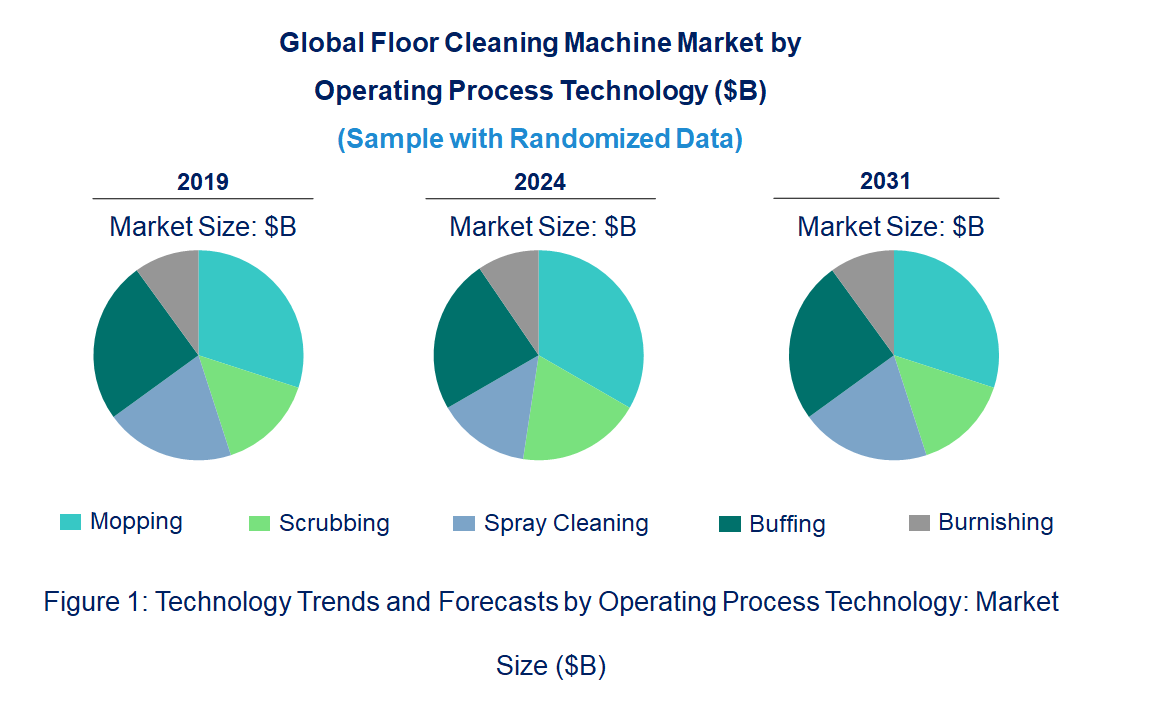
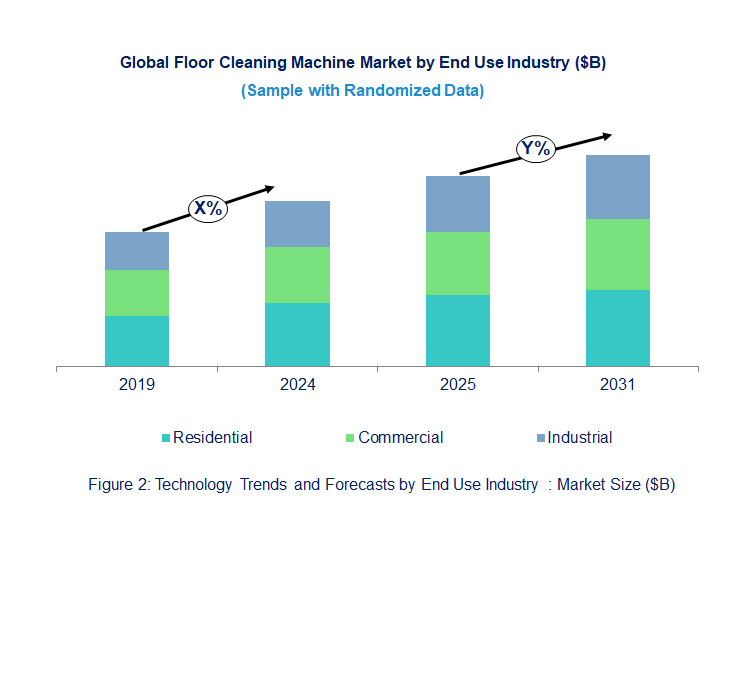
• Automation and Robotics: The growing adoption of robotic floor cleaners marks a significant shift from traditional cleaning techniques. Robots equipped with advanced sensors and AI technology now handle a variety of tasks such as mopping, scrubbing, and even buffing, reducing human effort and enhancing precision in cleaning.
• Battery-powered and Cordless Machines: There has been a shift from corded floor cleaning machines to battery-powered, cordless models, allowing for greater mobility and flexibility in cleaning. Lithium-ion batteries have improved performance, providing longer operational times, shorter charging cycles, and a reduction in maintenance costs.
• IoT and Smart Cleaning Systems: The integration of Internet of Things (IoT) technology into floor cleaning machines has led to the development of smart systems that can be monitored and controlled remotely. Users can now access real-time data on machine performance, cleaning schedules, and even maintenance needs, leading to improved operational efficiency.
• Sustainability and Eco-friendly Solutions: There has been an increasing trend towards using sustainable cleaning solutions. This includes the development of cleaning machines that use less water, require fewer chemicals, and offer energy-efficient operations. This shift towards eco-friendly technologies is aligned with global sustainability goals and is particularly popular in commercial and residential spaces.
• Advanced Scrubbing and Mopping Techniques: The shift from traditional scrubbing and mopping to advanced techniques such as dual-action scrubbing and microfiber-based mopping has enhanced cleaning efficiency. These innovations allow for more thorough cleaning while reducing water and chemical usage, making them environmentally friendly and cost-efficient. In conclusion, technological advancements are fundamentally reshaping the floor cleaning machine market. The shift towards automation, smarter systems, sustainability, and efficient cleaning techniques is driving new opportunities for growth across various end-use industries. As these technologies continue to evolve, we can expect further innovations that will make floor cleaning processes even more efficient, environmentally friendly, and adaptable to a wide range of applications. The ongoing transformation of the market reflects a broader trend towards smarter, more sustainable, and automated solutions in the cleaning industry.
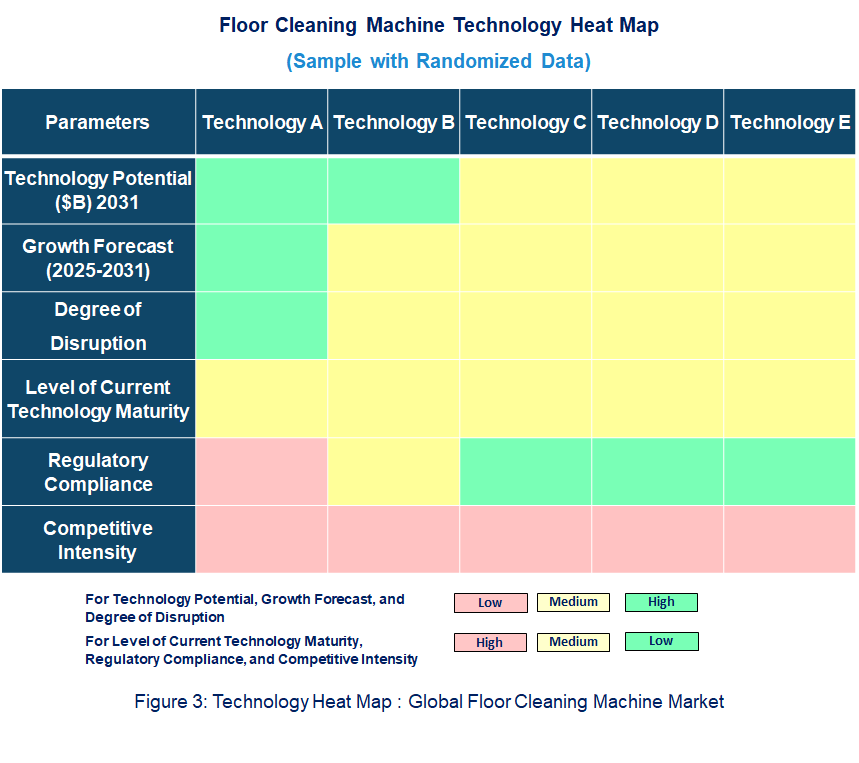
• Technology Potential: Operating process technology for floor cleaning machines holds immense potential. Integration of AI, machine learning, and IoT capabilities enables real-time monitoring, predictive maintenance, and personalized cleaning patterns. Autonomous systems can adapt to various environments, and energy-efficient designs contribute to sustainability. With increasing demand for hygiene standards, these technologies improve both operational efficiency and the quality of floor cleaning.
• Degree of Disruption: The degree of disruption is moderate to high. Automation, remote control capabilities, and smart sensors drastically reduce human involvement, leading to cost reductions and higher productivity. Additionally, the advent of battery-powered machines is helping eliminate the dependency on traditional power sources.
• Level of Current Technology Maturity: The maturity of technology is moderately high, with many floor cleaning machines already incorporating IoT and robotics. However, advancements in fully autonomous cleaning and AI-driven processes are still in progress.
• Regulatory Compliance: Compliance with safety standards, environmental regulations, and energy efficiency norms is crucial. Manufacturers must adhere to these regulations to maintain product integrity and customer trust. The operating process technology in floor cleaning machines is transforming the industry, offering high potential for disruption, though it must continue evolving to meet regulatory and technological requirements.
• Bortex Industries: Bortex has expanded its product range with advanced robotic floor cleaning machines. These machines integrate AI-driven navigation and advanced sensors, ensuring optimal cleaning efficiency. The new machines have garnered attention due to their ability to work autonomously, reducing labor costs and increasing productivity in commercial cleaning environments.
• Clemas & Co.: Clemas & Co. has introduced a range of eco-friendly floor cleaning machines that use less water and energy, aiming to reduce environmental impact. These machines are equipped with innovative features like water recycling systems and low-noise operation, appealing to companies looking to enhance their sustainability practices.
• Denis Rawlins: Denis Rawlins recently launched a series of compact and lightweight cleaning machines tailored for small and medium-sized businesses. These machines are designed to be easy to operate and maintain, and they offer excellent maneuverability, which has made them popular in retail and hospitality sectors.
• Eureka S.P.A. Unipersonale: Eureka has introduced high-performance floor scrubbers that feature enhanced battery life and quick charging capabilities. This development targets the increasing demand for cleaning machines in large facilities where downtime needs to be minimized, thus improving operational efficiency.
• Alfred Karcher: Karcher has focused on integrating IoT technologies into their cleaning equipment, allowing for remote monitoring and fleet management. This feature appeals to large organizations with multiple facilities, offering real-time diagnostics, remote troubleshooting, and maintenance scheduling to minimize operational disruptions.
• Hako: Hako has emphasized innovation in ergonomics and user-friendly design with its latest floor cleaning equipment. Their new models feature enhanced controls, making them easier to operate, which has been particularly well-received by cleaning professionals who require intuitive machines for high-demand environments.
• Nilfisk: Nilfisk has launched a new line of floor cleaning machines designed specifically for outdoor and rugged environments. These machines are highly durable and capable of cleaning large, outdoor areas efficiently. This has positioned Nilfisk as a leader in the industrial and heavy-duty floor cleaning sector.
• Tennant Company: Tennant’s development of eco-friendly, battery-powered floor cleaning machines has been a game-changer. Their innovations, particularly in green cleaning technologies, align with growing environmental regulations and demand for sustainable solutions, making them attractive to businesses that prioritize eco-conscious operations.
• Tornado Industries: Tornado has expanded its product portfolio by introducing autonomous floor cleaning robots. These robots are designed for continuous operation with minimal human intervention, making them ideal for large-scale facilities such as warehouses and shopping centers. Their precision and efficiency are key differentiators in the competitive market.
• Wiese: Wiese’s recent innovation focuses on improving safety and cleaning efficiency through enhanced automation features in their floor scrubbers. Their machines are equipped with advanced obstacle detection and smart navigation systems, making them safer and more effective for use in complex and crowded environments like airports and hospitals. The recent developments in the floor cleaning machine market showcase a significant shift toward automation, eco-friendliness, and advanced technology integration. Key players are responding to market demands by offering innovative solutions that enhance productivity, reduce environmental impact, and improve user experience.
• Automation and Robotics Integration: The growing adoption of automated floor cleaning machines, particularly those equipped with robotics and AI, is a significant driver in the market. These machines reduce labor costs, enhance operational efficiency, and provide more consistent cleaning results, especially in large commercial and industrial spaces.
• Increased Demand for Eco-Friendly Solutions: As sustainability becomes a top priority, businesses are increasingly seeking floor cleaning machines that use less water, chemicals, and energy. This shift toward eco-friendly equipment helps reduce the environmental footprint and aligns with stricter regulations and consumer demand for green solutions.
• Technological Advancements: The incorporation of IoT, AI, and advanced sensors into floor cleaning machines has significantly improved their efficiency and functionality. Features like real-time monitoring, predictive maintenance, and smarter navigation systems are making cleaning machines more effective, cost-efficient, and user-friendly. Challenges in the floor cleaning machine market are:
• High Initial Investment Costs: Advanced floor cleaning machines, particularly those with automation and AI integration, often come with high upfront costs. This can be a barrier for small and medium-sized enterprises (SMEs) looking to invest in such technologies, limiting market penetration.
• Technical Complexity and Maintenance: The increasing complexity of floor cleaning machines, with advanced features like robotics and IoT integration, demands specialized knowledge for operation and maintenance. This can require additional training for operators and technicians, posing challenges for businesses with limited technical expertise.
• Market Fragmentation: The floor cleaning machine market is highly fragmented, with numerous manufacturers offering a wide range of products. This creates intense competition, and companies must continuously innovate to differentiate their products, making it challenging to maintain a competitive edge in the market. The floor cleaning machine market is poised for significant growth driven by automation, eco-consciousness, and technological advancements.
• Bortex Industries
• Clemas & Co.
• Denis Rawlins
• Eureka S.P.A. Unipersonale
• Alfred Karcher
• Hako
• Technology Readiness by Technology Type: Mopping technology is well-established and low in terms of technology readiness but faces increasing competition from robotic systems. Scrubbing technologies are relatively advanced, with increasing automation and intelligence, allowing machines to adapt to different floor types and dirt levels. Spray cleaning is also a mature technology, but innovations like electrostatic spray cleaning are improving its efficiency, making it more competitive. Buffing and burnishing technologies are highly specialized, with significant readiness for use in industrial settings but are less commonly used in daily cleaning due to their specific application needs. Each technology is at varying levels of readiness, with mopping being the simplest and most mature, while robotic and autonomous systems are pushing the readiness of scrubbing, spray cleaning, and even buffing and burnishing to higher technological levels. Competitive pressures are most intense in scrubbing and spray cleaning technologies, which have the potential for automation and AI integration, while buffing and burnishing remain specialized but essential for high-end commercial maintenance. Key applications include healthcare, hospitality, manufacturing, and commercial spaces, where each technology has distinct roles depending on the scale and type of cleaning required.
• Competitive Intensity and Regulatory Compliance: The competitive intensity in the floor cleaning machine market is high, with companies constantly striving to innovate across mopping, scrubbing, spray cleaning, buffing, and burnishing technologies. Mopping technology faces lower competition due to its simplicity, while scrubbing and spray cleaning technologies are rapidly evolving, encouraging more competition among manufacturers. Buffing and burnishing have niche applications, but competition remains strong among specialized companies offering high-quality machines for specific industries. Regulatory compliance is a critical aspect for all technologies, especially concerning safety standards and environmental regulations regarding chemical usage and energy consumption. Scrubbing and spray cleaning technologies face the most scrutiny, as they involve potentially harmful chemicals and water usage, leading to more regulatory oversight. The buffing and burnishing markets also face scrutiny related to the energy efficiency of machines and their environmental impact. Industry standards are increasingly focused on sustainability and energy conservation, compelling companies to innovate while complying with regulations. Regulatory changes are likely to drive further innovation and competition as manufacturers adjust to new safety, energy, and environmental guidelines.
• Disruption Potential by Technology Type: Technologies like mopping, scrubbing, spray cleaning, buffing, and burnishing each offer unique advantages, impacting the floor cleaning machine market differently. Mopping technologies are essential in simple cleaning tasks but face disruption as more automated systems emerge. Scrubbing and spray cleaning provide more efficient solutions for deeper cleaning, with innovations like robotic scrubbers offering increased automation. Buffing and burnishing are crucial for maintaining floor finishes and shine, but innovations like dual-mode machines, which combine multiple functions, could disrupt traditional machines. Autonomous and AI-driven cleaning machines, integrating all these technologies, hold significant disruption potential for reducing labor and increasing efficiency across commercial and industrial spaces. These trends suggest a shift towards smarter, multi-functional systems. Environmental considerations and sustainable solutions may further drive these disruptions, with eco-friendly chemicals and energy-efficient machines being increasingly favored. The growing adoption of IoT and connectivity in floor cleaning devices enhances real-time performance monitoring. Companies focusing on these innovations will likely have an edge in a market increasingly driven by convenience, efficiency, and sustainability.
• Mopping
• Scrubbing
• Spray Cleaning
• Buffing
• Burnishing
• Residential
• Commercial
• Industrial
• North America
• Europe
• Asia Pacific
• The Rest of the World
• Latest Developments and Innovations in the Floor Cleaning Machine Technologies
• Companies / Ecosystems
• Strategic Opportunities by Technology Type


Choose a license that fits your team. Instant PDF delivery.
Prices exclude taxes. Instant delivery. Custom licensing available on request.
Market Report · May 18, 2026
Market Report · May 18, 2026
Market Report · May 18, 2026
Trusted partner for strategic intelligence and business growth


Receive a complimentary market analysis tailored to your industry. Our analysts will identify key growth opportunities and competitive dynamics specific to your business.

Market size, growth rate, and key trend analysis for your specific sector.

Top competitor positioning and market share analysis.

Strategic recommendations backed by data-driven insights.
Get curated market intelligence and competitive moves straight to your inbox.
By subscribing, you agree to receive our monthly insights. Unsubscribe anytime.
Receive a complimentary market analysis tailored to your industry. Our analysts will identify key growth opportunities and competitive dynamics specific to your business.
Market size, growth rate, and key trend analysis for your specific sector.
Top competitor positioning and market share analysis.
Strategic recommendations backed by data-driven insights.
Get curated market intelligence, emerging trends, and competitive moves straight to your inbox each month.
By subscribing, you agree to receive our monthly insights. Unsubscribe anytime.
We'll send your sample report shortly.