
Market Report · May 18, 2026

This market report covers trends, opportunities, and forecasts in the global fire control module market to 2031 by technology (digital module and analog module), end use industry (military, homeland security, and commercial), and region (North America, Europe, Asia Pacific, and the Rest of the World)
We'll send your sample report shortly.
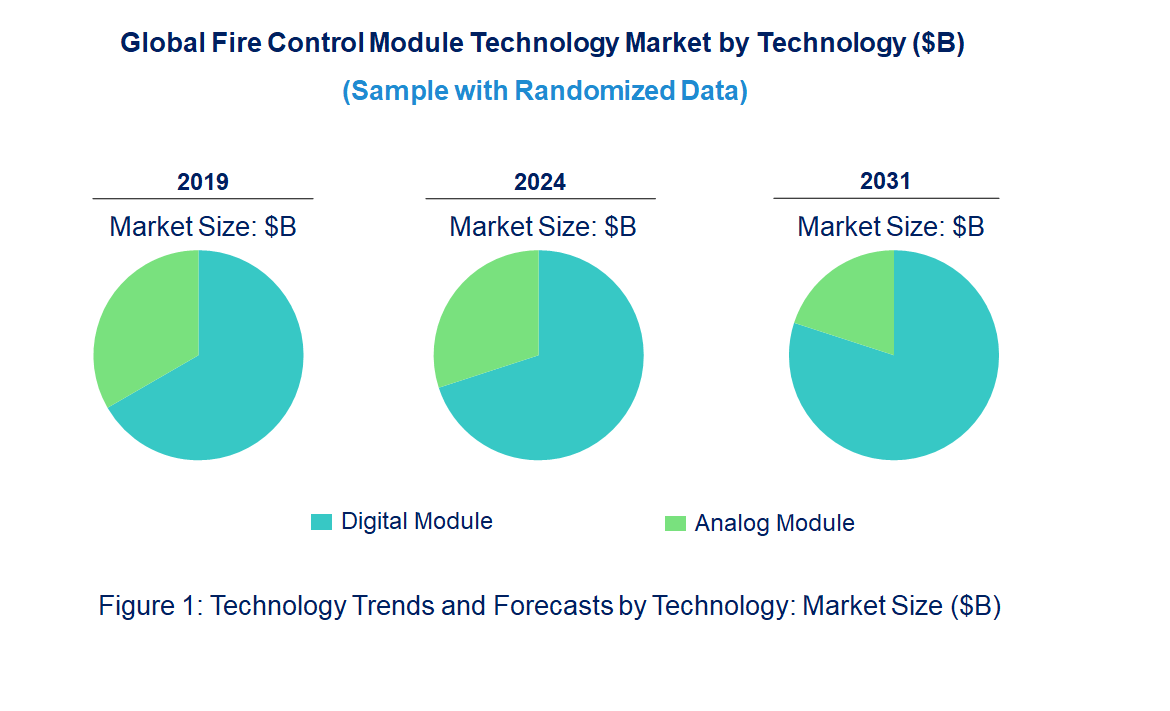
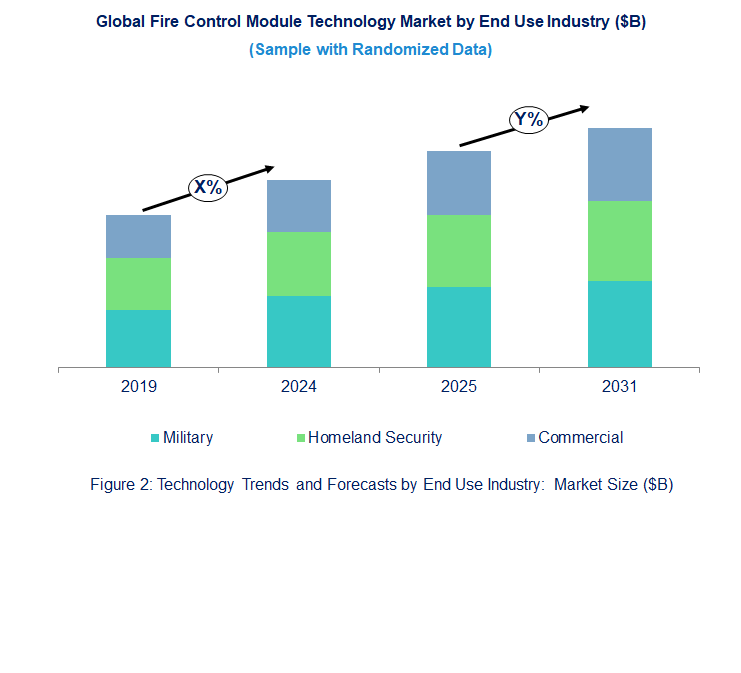
• Shift from Analog to Digital Modules: The market is transitioning from traditional analog fire control modules to more advanced digital modules. This shift offers enhanced precision, faster data processing, and better integration with modern communication and targeting systems. Digital modules allow for more accurate fire control, which is essential in fast-paced military and defense operations.
• Integration with AI and Machine Learning: Artificial Intelligence (AI) and Machine Learning (ML) technologies are increasingly being integrated into fire control systems. These technologies enable real-time decision-making, improved target identification, and predictive analytics. The integration of AI enhances the performance and adaptability of fire control systems, ensuring they meet the evolving demands of military and defense applications.
• Miniaturization and Enhanced Portability: There is a growing trend towards miniaturization in fire control systems. Smaller, more portable modules are becoming essential for improving mobility in military operations. Compact modules enable integration into smaller platforms such as drones, portable weapons systems, and other compact systems used in both combat and tactical scenarios.
• Increased Demand for Networked and Connected Systems: The rise of integrated and connected fire control systems is another key trend. Modern fire control systems are being designed to communicate seamlessly with other military platforms, sensors, and weapon systems. This interconnectivity ensures enhanced situational awareness, quicker target acquisition, and more coordinated responses across military units.
• Improved Cybersecurity Features: With the increasing digitization of fire control modules, cybersecurity has become a top priority. Fire control systems are being developed with enhanced security features to prevent cyberattacks and ensure that critical systems remain protected from unauthorized interference. Robust encryption and secure communication protocols are being integrated to safeguard data integrity. The ongoing technological advancements, including the shift to digital modules, integration with AI, miniaturization, networked connectivity, and heightened cybersecurity, are dramatically reshaping the fire control module market. These trends are enabling more effective and reliable systems across military, homeland security, and commercial sectors, addressing the growing demand for smarter, faster, and more secure fire control solutions.
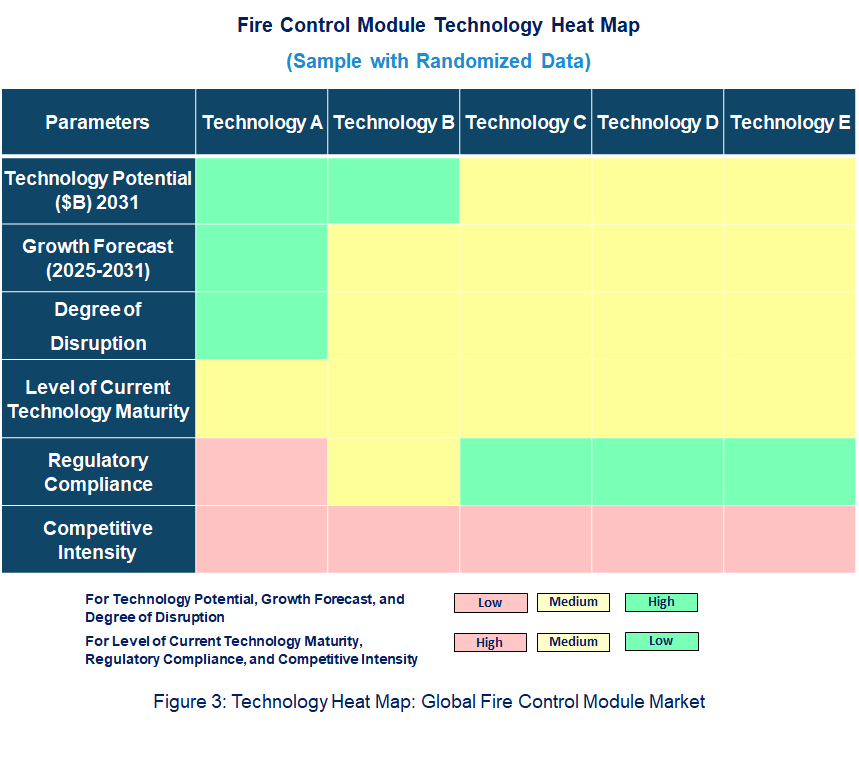
• Technology Potential: The technology potential in fire control modules lies in their ability to enhance precision, speed, and adaptability in real-time combat scenarios. Digital modules, combined with AI and machine learning, can revolutionize targeting systems by improving decision-making processes and enabling predictive analytics, ensuring higher accuracy and efficiency.
• Degree of Disruption: The transition from analog to digital fire control systems is highly disruptive, as it improves speed, scalability, and integration with modern platforms. AI-based systems and networked connectivity further disrupt traditional systems by providing more autonomous and real-time decision-making capabilities, transforming how fire control is executed across platforms.
• Level of Current Technology Maturity: The technology maturity of fire control modules varies. Digital modules and AI integration have reached an advanced stage, with several systems already deployed in military and defense applications. However, fully autonomous, AI-driven systems are still in the developmental phase, requiring further validation and testing.
• Regulatory Compliance: Fire control modules are subject to strict regulatory compliance standards, especially in defense and military applications. These include adherence to national and international security regulations, encryption standards, and export controls, ensuring secure and reliable operation in critical environments.
• Lockheed Martin Corporation: Lockheed Martin has been a leader in developing advanced fire control modules integrated with its next-generation radar and targeting systems. Innovations such as AI and machine learning integration into its fire control systems have greatly improved targeting accuracy and operational efficiency, especially for air defense and missile systems.
• BAE Systems plc: BAE Systems has developed its fire control modules to enhance interoperability across various platforms. Their solutions offer greater flexibility for use in naval, air, and land-based systems, allowing better integration with smart munitions and automated targeting systems, which enhance the speed and accuracy of operations.
• Northrop Grumman Corporation: Northrop Grumman has developed advanced fire control solutions focused on high-precision tracking and targeting systems for defense and homeland security applications. The company’s autonomous fire control technology reduces reliance on human intervention, enabling faster decision-making and improved responsiveness in combat.
• Raytheon Technologies Corporation: Raytheon has upgraded its fire control systems by incorporating advanced sensors, real-time data analytics, and precision-guided munitions. The company’s fire control modules support a wide range of missile defense systems, increasing successful interceptions and enhancing operational reliability in high-demand scenarios like ballistic missile defense.
• Thales Group: Thales Group has enhanced its fire control solutions by incorporating state-of-the-art digital technology and connectivity features. Its fire control modules improve situational awareness and integrate seamlessly with advanced communication networks and radar systems, thereby accelerating target detection and tracking for defense applications.
• General Dynamics Corporation: General Dynamics has released advanced fire control systems integrated with next-generation digital modules and automation features. The company’s focus on miniaturization, combined with AI integration, has resulted in smaller, more efficient, and reliable fire control solutions, leading to significant improvements in power efficiency and system responsiveness. These developments by leading players in the fire control module market are improving the precision, adaptability, and automation of fire control systems. As demand increases for more efficient, integrated, and intelligent fire control technologies, these companies are well-positioned to lead the market with innovative solutions that address the complex needs of modern defense systems.
• Advancements in Automation and Artificial Intelligence (AI): The integration of AI and automation technologies is revolutionizing fire control modules. It enables faster decision-making, reduces human error, and enhances targeting accuracy and operational efficiency in military applications. AI-driven fire control systems are becoming a requirement for modern defense strategies and will be a key growth driver.
• Demand for Enhanced Precision and Efficiency: Advanced fire control modules are increasingly required due to the precision needs in defense operations. High-speed targeting, accurate trajectory calculations, and real-time data processing capabilities of modern combat systems necessitate the development of fire control modules. This need is particularly important for missile defense systems, radar tracking, and military communications.
• Trend Towards Digital and Integrated Systems: Digital fire control modules are replacing older analog systems. These digital modules have better integration with other defense systems like radar, communication, and surveillance. This trend has facilitated the seamless exchange of data, enhanced situational awareness, and improved decision-making. As defense sectors modernize, the adoption of new technologies in fire control systems becomes increasingly crucial. Challenges in the fire control module market are:
• Growing Need for Multi-Platform Interoperability: As military operations become more complex, there is a growing demand for fire control systems that can operate across multiple platforms, such as land, air, and sea. The integration of fire control systems with other platforms enhances the overall effectiveness of defense operations, leading to better combat readiness and faster response times.
• Cost and Budget Constraints: A major challenge in the fire control module market is the high cost of development, integration, and maintenance. Defense budgets are often constrained, which puts pressure on manufacturers to develop cost-effective solutions without compromising performance. This challenge may slow down the adoption of next-generation fire control systems in some markets. The fire control module market is influenced by a combination of technological opportunities and inherent challenges. Growth drivers include emerging AI, the digital transformation of fire control systems, and high demand for precision and interoperability, while cost pressures and technological limitations stand as inhibitors. Overall, these opportunities will reshape the market, guiding it towards more advanced, efficient, and integrated solutions for fire control in modern defense systems.
• Lockheed Martin Corporation
• Bae Systems Plc
• Northrop Grumman Corporation
• Raytheon Technologies Corporation
• Thales Group
• General Dynamics Corporation
• Technology Readiness of Digital and Analog Modules for Fire Control Module Market: Digital modules are highly mature in terms of technology readiness, with well-established integration capabilities and widespread adoption in advanced military, aerospace, and defense systems. They are supported by ongoing advancements in artificial intelligence, real-time data processing, and automation. Analog modules, on the other hand, are becoming outdated as their performance does not meet the growing demands for interoperability and precision in modern defense systems. Digital modules are ready for deployment in critical applications, including missile defense, radar tracking, and homeland security, whereas analog systems are typically used in legacy systems with limited application in modern warfare scenarios. Digital modules lead in competitive intensity due to their adaptability and superior capabilities, while analog modules are increasingly confined to niche areas with lower demand.
• Competitive Intensity and Regulatory Compliance of Digital and Analog Modules for Fire Control Module Market: The competitive intensity in the fire control module market is rising, driven by the rapid advancements in digital technologies, which are becoming the preferred choice for next-generation fire control systems. Digital modules offer a competitive advantage due to their ability to integrate with other modern defense systems and provide enhanced automation. In contrast, analog modules, which are more cost-effective, face increasing pressure as they are less adaptable to the latest technological trends. Regulatory compliance for both technologies is stringent, with defense systems requiring adherence to military standards for reliability and performance. However, digital systems face additional challenges in meeting cybersecurity regulations, as they are more susceptible to cyber threats.
• Disruption Potential of Digital and Analog Modules for Fire Control Module Market: The disruption potential of digital modules in the fire control module market is high due to their superior integration, real-time data processing, and advanced communication capabilities. Digital modules enable faster decision-making, greater accuracy, and enhanced automation compared to analog systems. Analog modules, being more traditional, are limited in scalability and integration with modern technologies. As digital solutions offer significant improvements in precision and efficiency, they are replacing analog systems in many advanced defense applications. The widespread adoption of digital technology is expected to further disrupt the market by creating more intelligent, flexible, and interconnected fire control systems, especially in sectors like military, aerospace, and homeland security.
• Digital Module
• Analog Module
• Military
• Homeland Security
• Commercial
• North America
• Europe
• Asia Pacific
• The Rest of the World
• Latest Developments and Innovations in the Fire Control Module Technologies
• Companies / Ecosystems
• Strategic Opportunities by Technology Type


Choose a license that fits your team. Instant PDF delivery.
Prices exclude taxes. Instant delivery. Custom licensing available on request.
Market Report · May 18, 2026
Market Report · May 18, 2026
Market Report · May 18, 2026
Trusted partner for strategic intelligence and business growth


Receive a complimentary market analysis tailored to your industry. Our analysts will identify key growth opportunities and competitive dynamics specific to your business.

Market size, growth rate, and key trend analysis for your specific sector.

Top competitor positioning and market share analysis.

Strategic recommendations backed by data-driven insights.
Get curated market intelligence and competitive moves straight to your inbox.
By subscribing, you agree to receive our monthly insights. Unsubscribe anytime.
Receive a complimentary market analysis tailored to your industry. Our analysts will identify key growth opportunities and competitive dynamics specific to your business.
Market size, growth rate, and key trend analysis for your specific sector.
Top competitor positioning and market share analysis.
Strategic recommendations backed by data-driven insights.
Get curated market intelligence, emerging trends, and competitive moves straight to your inbox each month.
By subscribing, you agree to receive our monthly insights. Unsubscribe anytime.
We'll send your sample report shortly.