
Market Report · July 16, 2026

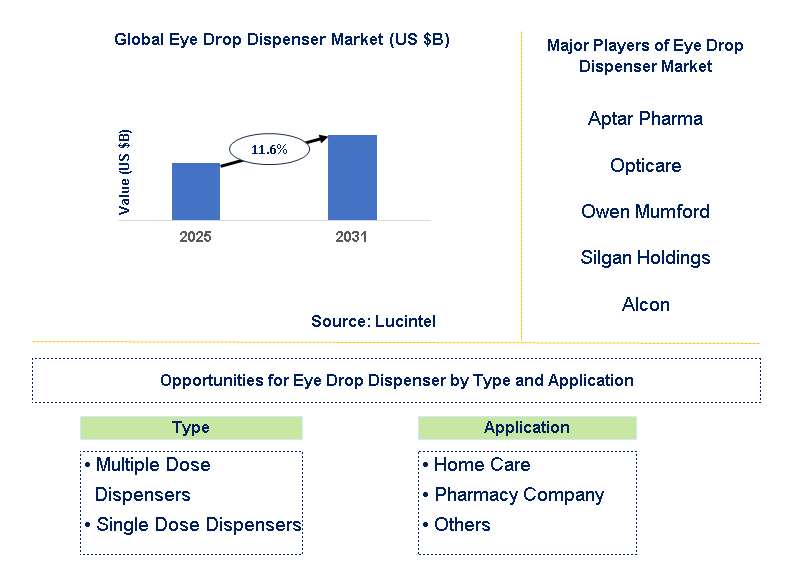
Key data points: The growth forecast = 11.6% annually for the next 7 years. Scroll below to get more insights. This market report covers trends, opportunities and forecasts in eye drop dispenser market to 2031 by type (multiple dose dispensers and single dose dispensers), application (home care, pharmacy company, and others), and region (North America, Europe, Asia Pacific, and the Rest of the World)
We'll send your sample report shortly.
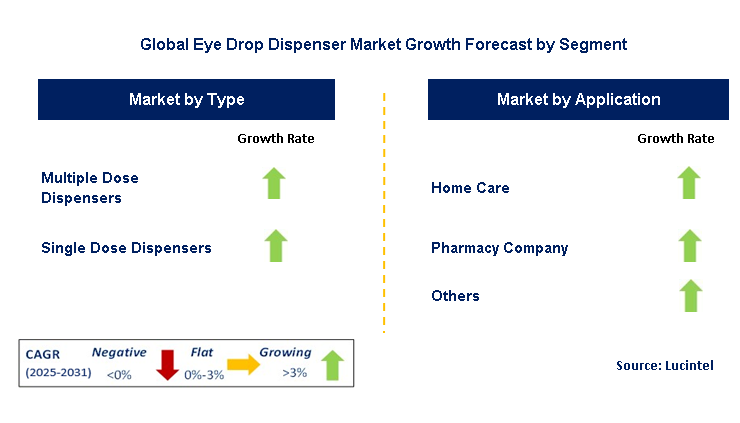
• Lucintel forecasts that, within the type category, multiple dose dispenser is expected to witness higher growth over the forecast period.
• Within the application category, home care is expected to witness higher growth.
• In terms of region, North America is expected to witness the highest growth over the forecast period. Gain valuable insights for your business decisions with our comprehensive 150+ page report. Sample figures with some insights are shown below.
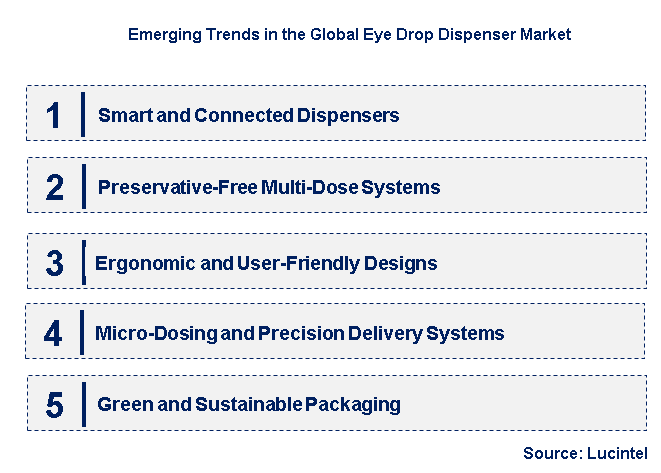
• Smart and Connected Dispensers: One of the rising trends is the creation and use of smart eye drop dispensers with sensors and connectivity features, frequently integrated with smartphone apps. These devices can monitor dosage, remind patients to take their medication, and measure patient compliance in real-time. The effect is improved patient compliance by a great margin, especially in the case of chronic diseases such as glaucoma where regular dosing is important. Smart dispensers enable patients, give healthcare professionals valuable information, and help lower the risk of vision loss from failed dosing.
• Preservative-Free Multi-Dose Systems: Strong new trend is towards preservative-free multi-dose eye drop dispensers using specialized mechanisms for prevention of microbial contamination. Such systems, for example, those with sterile filters or one-way valves, avoid the use of preservatives in the eye drop formulation. The effect is minimizing ocular surface irritation and allergic responses, usual with persistent preserved eye drop use, particularly in dry eye syndrome or glaucoma patients. This increases patient comfort and enables wider usage in sensitive eyes.
• Ergonomic and User-Friendly Designs: The market is experiencing a greater emphasis on creating eye drop dispensers with enhanced ergonomics and user-friendly designs. Such features encompass easy-squeeze action, comfortable handle, broad finger rests, and aiming guides. The effect is simplifying eye drop use and usability for a greater number of users, especially the old, dexterity-impaired (e.g., arthritis), or those with tremors. Increased usability lessens frustration, reduces wastage, and promotes steady compliance with treatment protocols.
• Micro-Dosing and Precision Delivery Systems: One of the new trends is the creation of micro-dosing technology and precision delivery systems, which release very small, uniform amounts of eye medication. Conventional eye drops tend to release much larger-than-necessary volumes, resulting in runoff and systemic absorption. The effect is maximizing drug delivery by delivering the exact therapeutic dose to the eye while avoiding wastage and systemic side effects. This is especially applicable to highly effective drugs or those with a narrow therapeutic window.
• Green and Sustainable Packaging: There is an increasing emerging trend toward integrating sustainable and eco-friendly materials and designs in eye drop dispensers. This ranges from the use of recyclable plastic, minimizing material usage, to developing bio-based options. The influence is keeping pace with worldwide environmental issues and market demands for sustainable products. While maintaining sterility and usability, companies are developing new solutions to minimize the environmental impact of eye drop containers, enabling corporate social responsibility and attracting green consumers. These new trends are all coming together to redefine the eye drop dispenser market by providing smarter, safer, easier, more accurate, and greener administration of eye medications. This convergence of smart technology, advanced material science, and patient-focused design is turning eye drop dispensers into high-tech medical devices that power ably enhance adherence and overall treatment efficacy.
• Increase of Preservative-Free Multi-Dose Dispensers: An important recent trend is the rapid uptake and availability of preservative-free multi-dose eye drop dispensers. These have innovative features such as sterile filters or one-way valves to protect against bacterial contamination on opening, obviating the requirement for conventional preservatives. The effect is much better patient comfort and safety, particularly for those with ongoing eye disease requiring extended usage, since preservatives can irritate and induce allergic reactions.
• Incorporation of Smart Capabilities and Digital Interactivity: There has been a most important recent advancement in the incorporation of smart capabilities into eye drop dispensers. A few of the newer dispensers also feature electronic sensors to see if a drop has actually been dispensed, offer audio or visual cues, and even link wirelessly with smartphone apps for dose monitoring and adherence assessment. The effect is having a dramatic impact on patient compliance, especially for sophisticated dosing schedules (e.g., glaucoma), by giving timely cues and objective feedback, which can be transmitted to healthcare providers to enhance therapy.
• Ergonomic Redesigns for Better Useability: Recent innovations point to the predominant focus on ergonomic redesigns to enhance eye drop dispenser useability. This entails ease-of-squeeze bottles, larger finger grips that are more comfortable, and nozzles that are redesigned to deliver drops more precisely into the eye. The effect is simplifying the administration of eye drops for all ages, particularly the elderly, those with poor dexterity, or those who are visually impaired, thus minimizing wastage and optimizing successful application rates.
• Emphasis on Single-Dose and Unit-Dose Presentations: There is growing recent trend in manufacturing and choice towards single-dose or unit-dose eye drop packaging, mostly for specialty or preservative-free preparations. Each vial provides one dose for immediate use and is then discarded. The effect is effectively removing the risk of contamination, providing maximum sterility for every use. More expensive, perhaps, but this type is extremely popular for post-operative care, delicate eyes, and travel, providing ultimate hygiene and convenience.
• Advances in Manufacturing and Sterilization Methods: New developments also encompass considerable advances in the manufacturing process and sterilization methods for bottles and eye drop dispensers. This provides more product integrity, sterility, and drop consistency. Improvements in blow-fill-seal (BFS) technology, for instance, enable aseptic filling of drops as well as dispenser production in a single, uninterrupted process. The effect is ensuring the quality and safety of ophthalmic products, instilling confidence in consumers and practitioners, and compliance with strict regulatory standards. These recent advancements are collectively affecting the eye drop dispenser market by propelling innovation towards cleaner, smarter, easier-to-use, and more accurately engineered solutions. Contamination prevention, smart technology, ergonomics, and sterile packaging are redefining the way eye drops are dispensed, ultimately leading to improved treatment efficacy and well-being of patients.
• Chronic Eye Disorders (such as Glaucoma, Dry Eye Syndrome): One key strategic growth segment is creating and selling specialized eye drop dispensers for long-term, regular eye disorders such as glaucoma and dry eye syndrome. Dispensers featuring accurate dosing, anti-contamination mechanisms (for preservative-free drops), and tracking of adherence are most desirable. The effect is serving a huge and expanding patient group that depends on daily eye drop use. Better dispensers can greatly help in compliance, minimize preservative-induced side effects, and end up saving vision for the patients.
• Post-Operative Ophthalmic Care: There is a huge strategic opportunity for growth in offering sophisticated eye drop dispensers for post-operative ophthalmic treatment, after procedures like cataract surgery, LASIK, or glaucoma surgery. During such key times, accurate dosing, sterility, and simplicity of use are absolutely necessary to avoid infection and foster healing. The effect is optimal recovery and avoidance of complications, and that is critical to surgical success. Unit-dose or highly sterile multi-dose containers with simple designs are most appealing for this use, providing reassurance to both surgeons and patients.
• Over-the-Counter (OTC) Eye Care Products: The Over-the-Counter (OTC) eye care category, such as artificial tears for comfort against dry eyes, anti-allergy drops, and redness reducers, represents a strong strategic growth space. Consumers in this category value convenience, ease of use, and cleanliness. The effect is serving a wide population of consumers who desire self-care options against universal eye annoyances. Friendly designs, convenience, and appealing packaging for multiple-dose or single-dose applications can fuel brand loyalty and market penetration in this high-volume market.
• Pediatric Ophthalmology: There is a compelling strategic growth position in creating eye drop dispensers that are clearly designed for pediatric ophthalmology, resolving the issues of getting the drops into children. Features such as smaller nozzles, gentler materials, and even maybe child-friendly and fun designs that ease anxiety and enhance compliance. The effect is providing precise and worry-free medication administration for children with eye diseases, which is essential for their developing vision. Technologies in this space can make a big difference to parents and healthcare professionals.
• Integration with Telemedicine and Digital Health Platforms: A key strategic growth opportunity includes integrating the use of eye drop dispensers with telemedicine and digital health platforms. Smart dispensers are able to send adherence information to healthcare professionals, who may then provide remote assistance and guidance. The effect is changing the way medication management is done by allowing remote monitoring of patient compliance, enabling timely intervention on non-adherence, and offering individualized educational materials. This integration enhances the patient-provider connection and enables improved long-term results through connected care. These strategic growth possibilities are having a strong influence in the eye drop dispenser market by stimulating innovation in various user bases and clinical contexts. Through concentration on chronic disease, post-operative requirements, OTC markets, pediatric treatment, and digital connectivity, companies can realize immense market expansion, offering better, easier, and patient-oriented solutions for ocular well-being.
• Aptar Pharma
• Opticare
• Owen Mumford
• Silgan Holdings
• Alcon
• Spruyt Hillen
• Scope Ophthalmics
• Multiple Dose Dispensers
• Single Dose Dispensers
• Home Care
• Pharmacy Company
• Others
• North America
• Europe
• Asia Pacific
• The Rest of the World
• United States: The American eye drop dispenser market is dominated by innovation with high emphasis laid on sophisticated packaging innovations for improved patient compliance. Recent advances incorporate the universal use of preservative-free multi-dose dispensers to help avoid contamination, a primary concern for many chronic eye diseases. More and more research, and commercialization of smart dispensers that can measure dosing, remind, and even integrate with smartphone apps is being seen, especially for diseases such as glaucoma where adherence is paramount. Regulatory clearances for new ophthalmic medications often include specialized dispensing systems.
• China: China's eye drop dispenser market is expanding at a fast pace, driven by a large population with enhanced awareness of eye health and an initiative towards more sophisticated healthcare products. Recent trends have seen a surge in local producers coming up with inexpensive, yet technologically enhanced, eye drop bottles and dispensers. User-friendly designs are high on the priority list to address a populous demographic spread across age groups, including senior citizens. Although multi-dose bottles are still common, there is a trend towards preservative-free and single-dose formats, prompted by concerns about hygiene and the request for gentler products.
• Germany: Germany's eye drop dispenser market is defined by precision engineering and a robust emphasis on product integrity and patient safety. New introductions reflect the ongoing focus on high-end multi-dose dispensers with advanced anti-contamination capabilities, including air filtration systems, to preserve the sterility of preservative-free products. German companies are focused on high-performance and durable dispensing systems that dispense accurate and uniform drops. The market also witnesses ongoing research into sustainable and bio-compatible packaging solutions that fit into the overall environmental drives within the pharmaceutical sector.
• India: India's eye drop dispenser market is on a dynamic growth curve, led by a high prevalence of eye disorders, growing access to eye care, and a strong demand for economical solutions. New developments include the entry of local manufacturers with a variety of eye drop bottles and simple dispensers addressing the country's mixed economic scenario. There is increasing recognition of the advantages of specialized dispensers, and so there has been a gradual movement away from conventional bottles. There is also an attempt to enhance the design and functionality of dispensers to make it more convenient for patients, particularly for chronic diseases.
• Japan: Japan's eye drop dispenser market is focused on high quality, accuracy, and patient comfort, which responds to its sophisticated medical system and aging population. Recent advancements involve investigation of micro-dosing devices to provide ultra-precise and low doses of medication with the aim of minimizing systemic absorption and side effects. Japanese pharmaceutical industry collaborations with ophthalmic device manufacturers are resulting in combined solutions for innovative drug products. There is also emphasis on sleek, compact designs that are manageable by elderly patients, further improving user experience.


• Aptar Pharma
• Opticare
• Owen Mumford
• Silgan Holdings
• Alcon
• Spruyt Hillen
• Scope Ophthalmics Q5. Which eye drop dispenser market segment will be the largest in future? Answer: Lucintel forecasts that, within the type category, multiple dose dispenser is expected to witness higher growth over the forecast period. Q6. In eye drop dispenser market, which region is expected to be the largest in next 5 years? Answer: In terms of region, North America is expected to witness the highest growth over the forecast period. Q7. Do we receive customization in this report? Answer: Yes, Lucintel provides 10% customization without any additional cost.


Choose a license that fits your team. Instant PDF delivery.
Prices exclude taxes. Instant delivery. Custom licensing available on request.
Market Report · July 16, 2026
Market Report · July 15, 2026
Market Report · July 15, 2026
Trusted partner for strategic intelligence and business growth


Receive a complimentary market analysis tailored to your industry. Our analysts will identify key growth opportunities and competitive dynamics specific to your business.

Market size, growth rate, and key trend analysis for your specific sector.

Top competitor positioning and market share analysis.

Strategic recommendations backed by data-driven insights.
Get curated market intelligence and competitive moves straight to your inbox.
By subscribing, you agree to receive our monthly insights. Unsubscribe anytime.
Receive a complimentary market analysis tailored to your industry. Our analysts will identify key growth opportunities and competitive dynamics specific to your business.
Market size, growth rate, and key trend analysis for your specific sector.
Top competitor positioning and market share analysis.
Strategic recommendations backed by data-driven insights.
Get curated market intelligence, emerging trends, and competitive moves straight to your inbox each month.
By subscribing, you agree to receive our monthly insights. Unsubscribe anytime.
We'll send your sample report shortly.