
Market Report · July 15, 2026

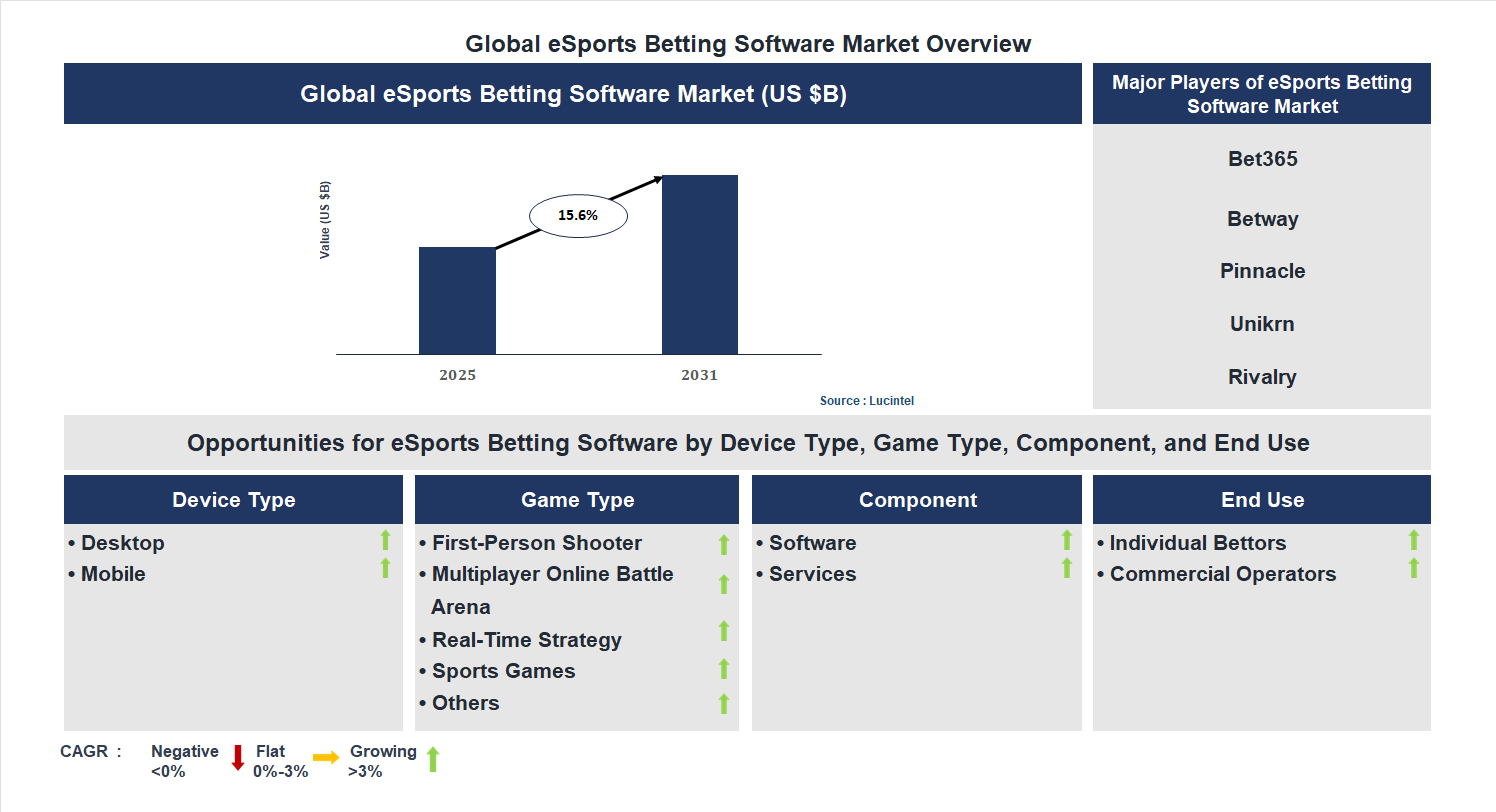
Key data points: The growth forecast = 15.6% annually for the next 7 years. Scroll below to get more insights. This market report covers trends, opportunities and forecasts in esports betting software market to 2031 by device type (desktop and mobile), game type (first-person shooter, multiplayer online battle arena, real-time strategy, sports games, and others), component (software and services), end use (individual bettors and commercial operators), and region (North America, Europe, Asia Pacific, and the Rest of the World)
We'll send your sample report shortly.
• Lucintel forecasts that, within the device type category, mobile is expected to witness higher growth over the forecast period.
• Within the end use category, individual bettor is expected to witness higher growth.
• In terms of region, APAC is expected to witness the highest growth over the forecast period. Gain valuable insights for your business decisions with our comprehensive 150+ page report. Sample figures with some insights are shown below.
• Adoption of Mobile Betting Platforms: The rise of smartphones and mobile internet has led to a surge in mobile betting applications. These platforms offer convenience, real-time updates, and seamless user experiences, attracting a broader audience. Mobile betting enables users to place bets anytime and anywhere, increasing engagement and transaction volumes. This trend is prompting developers to optimize their software for mobile devices, ensuring compatibility and security. As a result, the market is becoming more accessible, especially among younger demographics who prefer mobile gaming, thereby expanding the overall user base.
• Integration of Artificial Intelligence and Data Analytics: AI and data analytics are revolutionizing eSports betting by providing personalized experiences and accurate odds. These technologies analyze vast amounts of gameplay data, player performance, and betting patterns to offer tailored recommendations and risk assessments. AI-driven chatbots enhance customer support, while predictive analytics improve odds setting and match outcomes. This integration increases betting accuracy, reduces fraud, and enhances user trust. Consequently, operators can optimize their offerings, improve customer retention, and gain a competitive edge in a rapidly evolving market.
• Expansion of Live Betting Options: Live or in-play betting is gaining popularity due to its interactive nature and real-time engagement. It allows bettors to place wagers during ongoing matches, capitalizing on dynamic game developments. Advanced streaming and real-time data feeds enable seamless live betting experiences, making the process more immersive. This trend boosts betting volumes and user engagement, as bettors enjoy the thrill of immediate decision-making. Operators are investing in sophisticated platforms to support live betting, which is becoming a key differentiator and revenue driver in the eSports betting software market.
• Focus on Regulatory Compliance and Security: As eSports betting gains mainstream acceptance, regulatory frameworks are evolving to ensure fair play and consumer protection. Market players are prioritizing compliance with regional laws, implementing robust KYC (Know Your Customer) procedures, and enhancing cybersecurity measures. Secure payment gateways and data encryption are critical to prevent fraud and build user trust. This focus on regulation and security is essential for market legitimacy and long-term growth. Companies that proactively address legal and security concerns are better positioned to expand into new markets and sustain their operations amid increasing scrutiny.
• Adoption of Blockchain Technology: Blockchain offers transparency, decentralization, and security, making it an attractive solution for eSports betting platforms. It facilitates transparent transactions, reduces fraud, and ensures fair gameplay through smart contracts. Blockchain-based platforms also enable cryptocurrencies for deposits and withdrawals, appealing to tech-savvy users. This technology enhances trust and reduces operational costs, while also providing innovative features like provably fair gaming. As blockchain adoption increases, it is expected to significantly influence the market by improving transparency, security, and user confidence, thereby attracting a new segment of users seeking decentralized betting options. In summary, these trends are collectively reshaping the eSports betting software market by making platforms more accessible, secure, personalized, and engaging. The integration of advanced technologies and regulatory compliance is fostering sustainable growth, attracting diverse user segments, and expanding market reach. As these developments continue, the industry is poised for significant innovation and increased competitiveness, ultimately transforming how consumers engage with eSports betting worldwide.

• Integration of AI and Machine Learning: The adoption of AI and machine learning algorithms has revolutionized eSports betting by enabling personalized user experiences, real-time odds adjustment, and fraud detection. This technology improves accuracy in predictions and enhances security, leading to increased user trust and engagement. Operators can now offer tailored promotions and better risk management, boosting profitability and customer satisfaction.
• Expansion of Mobile Betting Platforms: The rise of mobile technology has made eSports betting more accessible, with many platforms optimizing their apps for smartphones and tablets. This development has expanded the user base, especially among younger demographics, and increased betting frequency. Mobile platforms also facilitate instant betting and live streaming, enriching the overall user experience and driving market growth.
• Regulatory Developments and Legal Frameworks: Governments and regulatory bodies are establishing clearer legal frameworks for eSports betting, addressing issues like licensing, age restrictions, and responsible gambling. These regulations help legitimize the industry, attract institutional investors, and ensure consumer protection. However, inconsistent regulations across regions pose challenges for global operators, impacting market expansion strategies.
• Integration of Cryptocurrency Payments: The acceptance of cryptocurrencies such as Bitcoin and Ethereum as payment options has gained traction in the eSports betting market. This development offers faster, more secure transactions and appeals to tech-savvy users. Cryptocurrency integration also facilitates cross-border betting, reduces transaction costs, and enhances privacy, thereby broadening market reach and increasing user trust.
• Partnership and Sponsorship Growth: Strategic alliances between eSports organizations, betting operators, and technology providers have increased significantly. These partnerships enhance brand visibility, improve platform offerings, and attract new users through sponsorships and advertising. Such collaborations also foster innovation and help expand the market into new regions, contributing to overall industry growth. In summary, these developments are transforming the eSports betting software market by improving technological capabilities, expanding accessibility, and establishing regulatory clarity. They are driving increased user engagement, market penetration, and investor confidence, positioning the industry for sustained expansion and innovation.
• Mobile Integration: The rise of mobile gaming presents a significant opportunity for eSports betting platforms to develop mobile-friendly software, enabling users to place bets conveniently on smartphones and tablets. This enhances accessibility, increases user engagement, and broadens the customer base, especially in regions with high mobile penetration. Mobile integration is expected to drive higher betting volumes and foster real-time betting experiences, ultimately boosting market revenue.
• Live Betting Features: Incorporating live betting capabilities allows users to place bets during ongoing eSports matches, creating a more immersive and interactive experience. This real-time engagement increases betting activity and user retention, attracting both casual and serious bettors. Advanced live betting features also enable platforms to differentiate themselves competitively, leading to increased market share and higher profitability.
• Data Analytics and AI: Leveraging data analytics and artificial intelligence enhances odds accuracy, risk management, and personalized user experiences. These technologies enable platforms to predict outcomes more effectively and tailor marketing strategies, resulting in increased user satisfaction and retention. The integration of AI-driven insights is expected to optimize operational efficiency and expand market reach.
• Regulatory Compliance and Security: As the market grows, ensuring compliance with regional regulations and enhancing cybersecurity measures become critical. Implementing robust security protocols builds user trust and mitigates risks associated with fraud and data breaches. Regulatory adherence also opens doors to new markets, fostering sustainable growth and attracting institutional investors.
• Regional Expansion: Expanding into emerging markets with growing eSports audiences offers substantial growth potential. Tailoring offerings to local preferences and establishing regional partnerships can accelerate market penetration. This expansion not only increases user base and revenue but also diversifies market risks, positioning companies for long-term success. In summary, these growth opportunities—mobile integration, live betting features, data analytics and AI, regulatory compliance, and regional expansion—are significantly impacting the eSports betting software market. They are driving innovation, increasing user engagement, and enabling market players to capitalize on emerging trends. As a result, the market is poised for accelerated growth, greater competitiveness, and broader global reach.
• Technological Innovation: The continuous development of advanced betting platforms, real-time data analytics, and seamless user interfaces enhances user experience and operational efficiency. These innovations attract more users and enable operators to offer diverse betting options, fueling market expansion. The integration of AI and machine learning further personalizes user engagement and improves risk management, making the software more competitive and appealing in a rapidly evolving digital landscape.
• Growing Popularity of eSports: The surge in eSports viewership and participation has created a vast, engaged audience eager for betting opportunities. Major tournaments attract millions of viewers, translating into increased betting activity. This popularity drives demand for specialized betting software tailored to eSports, encouraging developers to innovate and expand their offerings to meet the needs of a passionate and expanding fan base.
• Increasing Internet Penetration and Smartphone Usage: Widespread internet access and the proliferation of smartphones have made eSports betting accessible to a broader demographic. Mobile-friendly betting platforms enable users to place bets anytime and anywhere, boosting user engagement and market reach. This technological accessibility is crucial for market growth, especially in emerging regions where mobile devices are the primary means of internet access.
• Regulatory Developments and Legal Frameworks: Evolving regulations across different countries influence market operations significantly. Favorable legal environments encourage market players to expand their services, while stringent regulations can restrict access and increase compliance costs. Navigating these regulatory landscapes requires strategic planning and adaptation, impacting the pace and scope of market growth. The challenges facing this eSports betting software market include:-
• Regulatory Uncertainty: The lack of uniform regulations across regions creates unpredictability for market participants. Changes in legal frameworks, licensing requirements, and restrictions on online betting can hinder market expansion and operational stability. Companies must invest heavily in compliance and legal expertise to adapt to diverse regulatory environments, which can increase costs and slow growth.
• Cybersecurity Threats: The digital nature of eSports betting software makes it vulnerable to cyberattacks, data breaches, and fraud. Ensuring data security and protecting user information is critical to maintaining trust and regulatory compliance. The costs associated with cybersecurity measures and the potential reputational damage from breaches pose significant challenges for operators.
• Market Competition and Saturation: The increasing number of market players intensifies competition, leading to price wars and reduced profit margins. Differentiating offerings and maintaining customer loyalty become more difficult in a saturated environment. Companies need to innovate continuously and invest in marketing to sustain growth, which can strain resources and impact profitability. In summary, the eSports betting software market is driven by technological advancements, rising eSports popularity, increased internet access, and evolving regulations. However, it faces challenges such as regulatory uncertainty, cybersecurity threats, and intense competition. These factors collectively influence the markets growth trajectory, requiring stakeholders to adapt strategically. While opportunities for expansion are substantial, addressing regulatory and security challenges is crucial for sustainable development. Overall, the markets future depends on balancing innovation with compliance and security to capitalize on the growing eSports betting trend.
• Bet365
• Betway
• Pinnacle
• Unikrn
• Rivalry
• GG.BET
• Buff.bet
• Loot.bet
• Betfair
• William Hill
• Desktop
• Mobile
• First-Person Shooter
• Multiplayer Online Battle Arena
• Real-Time Strategy
• Sports Games
• Others
• Software
• Services
• Individual Bettors
• Commercial Operators
• North America
• Europe
• Asia Pacific
• The Rest of the World
• United States: The US market has seen significant growth due to the legalization of sports betting in several states, leading to increased investments in eSports betting platforms. Major operators are integrating eSports into their offerings, and regulatory frameworks are becoming clearer, encouraging innovation. The adoption of mobile betting apps and live streaming features has enhanced user engagement, while partnerships with popular eSports teams and events boost market visibility. Additionally, data security and responsible gambling measures are prioritized to meet regulatory standards and consumer expectations.
• China: China remains a major player in the eSports industry, with a large base of dedicated gamers and a growing betting market. The government maintains strict regulations on online gambling, but licensed eSports betting platforms operate within a controlled environment. Recent developments include the integration of blockchain technology for secure transactions and the expansion of mobile betting apps tailored to local preferences. ESports tournaments are increasingly sponsored by major brands, and local platforms are innovating with AI-driven odds and personalized betting experiences to attract users.
• Germany: Germanys eSports betting market is expanding rapidly, supported by progressive regulations and a strong eSports community. Recent developments include the launch of licensed betting platforms that comply with the countrys strict gambling laws, ensuring consumer protection. The market is characterized by a focus on responsible gambling features, such as self-exclusion tools and real-time monitoring. Technological advancements like live betting and augmented reality integrations are enhancing the user experience. International collaborations and sponsorships are also boosting the visibility and credibility of eSports betting in Germany.
• India: The Indian eSports betting market is emerging strongly, driven by a large youth demographic and increasing internet penetration. Recent developments include the legalization of online betting in certain states and the launch of localized platforms that cater to regional preferences. Mobile-first solutions dominate, with apps offering seamless betting experiences. The market is also witnessing investments from global companies, and local tournaments are gaining popularity. Regulatory clarity is still evolving, but the sector is poised for significant growth as government policies become more defined and digital payment methods become more widespread.
• Japan: Japans eSports betting market is in its nascent stages but shows promising growth potential. Recent developments include the legalization of certain forms of eSports betting under specific regulations, with a focus on responsible gambling. Technological innovations such as virtual reality and AI are being explored to enhance betting experiences. The government is working on establishing a clear legal framework to regulate the industry, encouraging local startups and international companies to enter the market. Collaborations with traditional sports betting operators and eSports organizations are also underway, aiming to create a sustainable and regulated environment for eSports betting in Japan.


• Bet365
• Betway
• Pinnacle
• Unikrn
• Rivalry
• GG.BET
• Buff.bet
• Loot.bet
• Betfair
• William Hill Q5. Which esports betting software market segment will be the largest in future? Answer: Lucintel forecasts that, within the device type category, mobile is expected to witness higher growth over the forecast period. Q6. In esports betting software market, which region is expected to be the largest in next 5 years? Answer: In terms of region, APAC is expected to witness the highest growth over the forecast period. Q7. Do we receive customization in this report? Answer: Yes, Lucintel provides 10% customization without any additional cost.


Choose a license that fits your team. Instant PDF delivery.
Prices exclude taxes. Instant delivery. Custom licensing available on request.
Market Report · July 15, 2026
Market Report · June 26, 2026
Market Report · June 24, 2026
Trusted partner for strategic intelligence and business growth


Receive a complimentary market analysis tailored to your industry. Our analysts will identify key growth opportunities and competitive dynamics specific to your business.

Market size, growth rate, and key trend analysis for your specific sector.

Top competitor positioning and market share analysis.

Strategic recommendations backed by data-driven insights.
Get curated market intelligence and competitive moves straight to your inbox.
By subscribing, you agree to receive our monthly insights. Unsubscribe anytime.
Receive a complimentary market analysis tailored to your industry. Our analysts will identify key growth opportunities and competitive dynamics specific to your business.
Market size, growth rate, and key trend analysis for your specific sector.
Top competitor positioning and market share analysis.
Strategic recommendations backed by data-driven insights.
Get curated market intelligence, emerging trends, and competitive moves straight to your inbox each month.
By subscribing, you agree to receive our monthly insights. Unsubscribe anytime.
We'll send your sample report shortly.