
Market Report · July 15, 2026

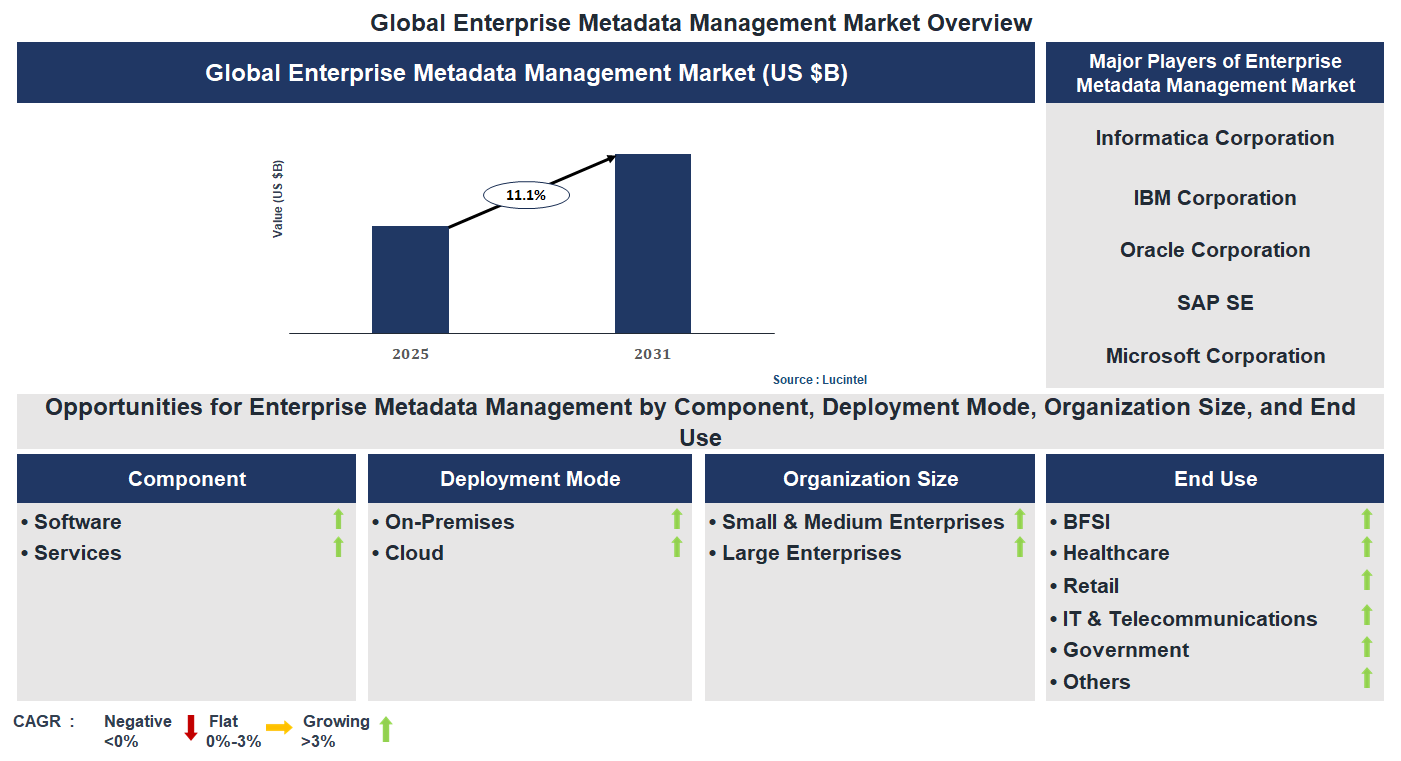
Key data points: The growth forecast = 11.1% annually for the next 7 years. Scroll below to get more insights. This market report covers trends, opportunities and forecasts in enterprise metadata management market to 2031 by component (software and services), deployment mode (on-premises and cloud), organization size (small & medium enterprises and large enterprises), end use (BFSI, healthcare, retail, IT & telecommunications, government, and others), and region (North America, Europe, Asia Pacific, and the Rest of the World)
We'll send your sample report shortly.
• Lucintel forecasts that, within the component category, software is expected to witness higher growth over the forecast period.
• Within the end use category, BFSI is expected to witness the highest growth.
• In terms of region, North America is expected to witness the highest growth over the forecast period. Gain valuable insights for your business decisions with our comprehensive 150+ page report. Sample figures with some insights are shown below.
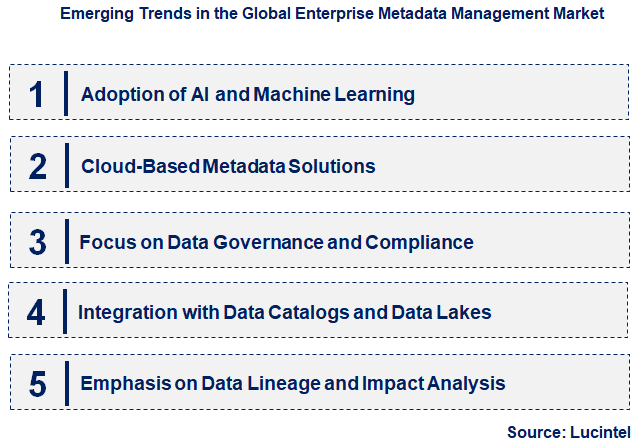
• Adoption of AI and Machine Learning: The integration of AI and ML into metadata management tools is revolutionizing data discovery and classification. These technologies enable automated tagging, anomaly detection, and predictive analytics, reducing manual effort and increasing accuracy. AI-driven metadata solutions facilitate real-time insights, improve data quality, and support complex data governance policies. As AI becomes more sophisticated, enterprises can better manage large, diverse data sets, leading to faster decision-making and enhanced compliance. This trend is making metadata management more intelligent, scalable, and efficient.
• Cloud-Based Metadata Solutions: The shift towards cloud computing is significantly impacting metadata management. Cloud-based solutions offer scalability, flexibility, and cost-effectiveness, allowing organizations to manage metadata across distributed environments seamlessly. These platforms support real-time collaboration, easier integration with other cloud services, and simplified maintenance. As enterprises increasingly adopt multi-cloud and hybrid cloud strategies, cloud-native metadata management tools are becoming essential. This trend is enabling faster deployment, improved accessibility, and better data governance across organizational boundaries.
• Focus on Data Governance and Compliance: Increasing regulatory requirements such as GDPR, CCPA, and HIPAA are driving the demand for robust metadata management to ensure compliance. Organizations are investing in tools that provide detailed data lineage, audit trails, and access controls. Metadata management is becoming central to establishing data governance frameworks that promote transparency, accountability, and risk mitigation. This trend emphasizes the importance of metadata in maintaining data integrity and supporting legal and regulatory obligations, ultimately fostering trust and reducing penalties.
• Integration with Data Catalogs and Data Lakes: The convergence of metadata management with data catalogs and data lakes is creating a unified data ecosystem. This integration enhances data discoverability, lineage tracking, and semantic understanding, making data more accessible and usable for business users. It supports self-service analytics and democratizes data access across the organization. As data environments become more complex, integrated solutions help streamline workflows, improve data quality, and facilitate better collaboration. This trend is transforming metadata from a backend function into a strategic asset for data-driven decision-making.
• Emphasis on Data Lineage and Impact Analysis: Understanding data origin, transformations, and dependencies is increasingly critical for enterprises. Advanced metadata management tools now focus on detailed data lineage and impact analysis to support troubleshooting, compliance, and change management. These capabilities enable organizations to trace data flow across systems, assess the impact of changes, and ensure data accuracy. This trend enhances transparency, reduces risks associated with data errors, and supports audit requirements. As data ecosystems grow more complex, comprehensive lineage and impact analysis are becoming indispensable for effective data governance. In summary, these emerging trends are reshaping the enterprise metadata management market by making data handling more intelligent, scalable, compliant, and integrated. They are empowering organizations to leverage metadata as a strategic asset, driving innovation, operational efficiency, and regulatory adherence in an increasingly data-driven world.
• Adoption of AI and Machine Learning: Integration of AI and ML tools into metadata management systems has improved data discovery, classification, and governance. These technologies enable automated metadata tagging and anomaly detection, reducing manual effort and increasing accuracy. As a result, organizations can manage large data volumes more efficiently, leading to faster insights and better compliance. This development is driving innovation and making metadata management more scalable and intelligent.
• Cloud-Based Metadata Solutions: The shift towards cloud platforms has led to the adoption of cloud-native metadata management solutions. These offer scalability, flexibility, and cost-efficiency, allowing organizations to manage metadata across hybrid and multi-cloud environments seamlessly. Cloud solutions facilitate real-time updates, easier integration, and remote access, which are critical for modern enterprises. This trend is expanding the market reach and enabling organizations to adapt quickly to changing data landscapes.
• Enhanced Data Governance and Compliance: Increasing regulatory requirements such as GDPR, CCPA, and HIPAA have prompted organizations to strengthen their metadata management practices. Advanced tools now offer comprehensive audit trails, automated compliance checks, and policy enforcement features. These enhancements help organizations mitigate risks, ensure data privacy, and meet legal obligations more effectively. The focus on compliance is significantly boosting demand for sophisticated metadata management solutions.
• Integration with Data Catalogs and Data Lakes: The convergence of metadata management with data catalogs and data lakes has created a unified approach to data discovery and access. This integration improves data visibility, lineage tracking, and collaboration across departments. It simplifies data governance and accelerates data-driven initiatives. As organizations seek to democratize data access, this development is fostering a more connected and efficient data ecosystem.
• Focus on Data Lineage and Impact Analysis: Recent developments emphasize tracking data lineage and performing impact analysis to understand data flow and dependencies. These capabilities enhance transparency, facilitate root cause analysis, and support change management. They are crucial for maintaining data quality and ensuring reliable analytics. The emphasis on data lineage is helping organizations build trust in their data assets and comply with regulatory audits. In summary, these developments are transforming the enterprise metadata management market by making systems more intelligent, scalable, compliant, and integrated. They enable organizations to harness their data assets more effectively, improve operational efficiency, and meet regulatory standards. As a result, the market is poised for continued growth, driven by technological innovation and increasing data governance needs.
• Data Governance: Strengthening data governance frameworks enhances data accountability and security. By implementing robust metadata management, organizations can ensure data accuracy, consistency, and compliance with regulations, reducing risks and fostering trust in data assets. This growth opportunity supports regulatory adherence and improves overall data stewardship.
• Data Integration: Improving data integration processes through metadata management enables seamless data flow across diverse systems. This facilitates real-time data access, reduces redundancies, and enhances analytics capabilities. As organizations adopt complex data ecosystems, this application becomes vital for operational agility and strategic insights.
• Data Quality Management: Metadata-driven data quality initiatives help identify, monitor, and rectify data inconsistencies and errors. This ensures high-quality data for analytics and decision-making, reducing operational costs and increasing confidence in data-driven strategies. The focus on data quality is crucial for maintaining competitive advantage.
• Data Cataloging: Developing comprehensive data catalogs improves data discoverability and accessibility for users across the organization. Metadata management enables efficient data search, understanding, and usage, fostering a data-driven culture. This growth opportunity accelerates innovation and supports self-service analytics.
• Compliance Management: Metadata management plays a key role in ensuring compliance with data privacy and security regulations such as GDPR and CCPA. Automating compliance tracking and reporting reduces legal risks and enhances corporate responsibility. This application is increasingly critical as regulatory landscapes evolve. In summary, these growth opportunities are significantly impacting the enterprise metadata management market by enabling organizations to harness their data assets more effectively. They promote better data governance, streamline integration, improve data quality, enhance discoverability, and ensure regulatory compliance. Collectively, these developments are driving market expansion, fostering innovation, and supporting organizations in achieving strategic data objectives.
• Technological Innovation: The rapid evolution of data management tools and technologies, such as AI and machine learning, enhances metadata accuracy and automation. These innovations enable organizations to efficiently catalog, search, and govern vast data assets, leading to improved decision-making and operational efficiency. As technology continues to advance, the ability to integrate metadata across diverse platforms becomes more seamless, fostering a more connected and intelligent data ecosystem. This ongoing innovation drives market growth by meeting the increasing demand for sophisticated metadata solutions that support digital transformation initiatives.
• Growing Data Volumes: The exponential increase in data generated by enterprises across industries necessitates advanced metadata management solutions. As organizations accumulate diverse data types from multiple sources, managing this data effectively becomes critical for compliance, analytics, and operational efficiency. Metadata provides the context needed to understand and utilize data properly, making it indispensable in handling big data challenges. The rising data volumes directly fuel demand for scalable metadata management systems, encouraging vendors to develop more robust and comprehensive offerings to meet these needs.
• Regulatory and Compliance Requirements: Stringent data privacy laws such as GDPR, CCPA, and HIPAA compel organizations to implement effective data governance frameworks. Metadata management plays a vital role in ensuring compliance by providing transparency, traceability, and control over data assets. Organizations are investing in metadata solutions to demonstrate regulatory adherence, avoid penalties, and build customer trust. The increasing complexity of regulatory landscapes across regions further accelerates the adoption of metadata management tools, positioning them as essential components of compliance strategies.
• Digital Transformation Initiatives: The global shift towards digitalization compels enterprises to modernize their data infrastructure. Metadata management is integral to these initiatives, enabling better data integration, quality, and accessibility. As companies adopt cloud computing, IoT, and AI, the need for centralized metadata repositories becomes more pronounced. These initiatives facilitate faster innovation cycles, improved customer experiences, and competitive advantages. Consequently, the push for digital transformation significantly propels the adoption of enterprise metadata management solutions, aligning technology with strategic business goals.
• Increasing Adoption of Cloud-Based Solutions: The migration to cloud platforms offers scalable, flexible, and cost-effective metadata management options. Cloud-based solutions enable real-time data cataloging, easier collaboration, and simplified maintenance, making metadata management accessible to organizations of all sizes. The growing preference for cloud services due to their agility and reduced infrastructure costs further accelerates market growth. Vendors are increasingly offering cloud-native metadata management tools, which cater to the dynamic needs of modern enterprises seeking to leverage cloud benefits for comprehensive data governance. The challenges in the enterprise metadata management market are:
• Data Privacy and Security Concerns: As metadata contains sensitive information about data assets, ensuring its security is paramount. Increasing cyber threats and data breaches pose risks to metadata repositories, potentially exposing critical organizational information. Implementing robust security measures and compliance protocols adds complexity and cost to metadata management systems. Organizations must balance accessibility with security, which can hinder the seamless deployment and integration of metadata solutions, thereby impeding market growth.
• Complexity of Data Ecosystems: Modern enterprises operate with diverse and distributed data environments, including on-premises, cloud, and hybrid systems. Managing metadata across these heterogeneous platforms is complex, requiring sophisticated integration and synchronization mechanisms. This complexity can lead to inconsistencies, data silos, and increased operational overhead. Vendors face challenges in developing comprehensive solutions that can seamlessly operate across varied environments, which may slow down adoption rates and limit market expansion.
• Lack of Standardization: The absence of universal standards for metadata formats and management practices hampers interoperability among different tools and platforms. This fragmentation leads to difficulties in data integration, governance, and compliance efforts. Organizations often resort to custom solutions, increasing costs and reducing efficiency. The lack of standardization also complicates vendor competition and innovation, creating barriers to widespread adoption of metadata management systems and constraining overall market growth. In summary, the enterprise metadata management market is driven by technological advancements, increasing data volumes, regulatory pressures, digital transformation, and cloud adoption. However, challenges such as data security concerns, ecosystem complexity, and standardization issues pose significant hurdles. These factors collectively influence the markets trajectory, requiring stakeholders to innovate and adapt strategies to capitalize on growth opportunities while addressing inherent risks. The dynamic interplay of these drivers and challenges will shape the future landscape of enterprise metadata management, impacting organizational data governance and operational efficiency.
• Informatica Corporation
• IBM Corporation
• Oracle Corporation
• SAP SE
• Microsoft Corporation
• Talend
• Alation Inc.
• Collibra NV
• Data Advantage Group Inc.
• Adaptive Inc.
• Software
• Services
• On-Premises
• Cloud
• Small & Medium Enterprises
• Large Enterprises
• BFSI
• Healthcare
• Retail
• IT & Telecommunications
• Government
• Others
• North America
• Europe
• Asia Pacific
• The Rest of the World
• United States: The US market is witnessing significant advancements with the adoption of AI-powered metadata tools that improve data cataloging and governance. Major tech firms and enterprises are investing heavily in cloud-based metadata solutions to enhance data accessibility and compliance with regulations like GDPR and CCPA. The rise of data privacy concerns has accelerated the deployment of metadata management systems to ensure regulatory adherence. Additionally, US companies are integrating metadata management with broader data analytics and AI initiatives, fostering smarter decision-making processes. The market is also seeing increased adoption of open-source metadata tools, promoting cost-effective solutions.
• China: China’s enterprise metadata management market is rapidly expanding, driven by government initiatives to strengthen data security and compliance. Chinese enterprises are increasingly adopting metadata solutions to manage vast amounts of data generated by digital transformation efforts. The government’s focus on data sovereignty and cybersecurity has led to the development of localized metadata management platforms. Major Chinese tech companies are investing in AI-driven metadata tools to improve data governance and operational efficiency. The market is also characterized by a growing ecosystem of domestic vendors offering tailored solutions to meet local regulatory standards and business needs.
• Germany: Germany’s market emphasizes data privacy and regulatory compliance, aligning with the European Union’s GDPR framework. Companies are adopting advanced metadata management systems to ensure data transparency and control across their operations. There is a strong focus on integrating metadata solutions with existing data governance frameworks to enhance data quality and security. German firms are also exploring innovative technologies such as blockchain for secure metadata tracking. The market benefits from a robust ecosystem of local and international vendors providing specialized metadata management tools tailored to European data protection standards.
• India: India’s enterprise metadata management market is experiencing rapid growth fueled by digital transformation initiatives across sectors like banking, healthcare, and retail. Organizations are increasingly deploying metadata solutions to improve data governance, compliance, and operational efficiency. The government’s push for digital India and data localization policies are driving investments in metadata management platforms. Indian vendors are developing cost-effective, scalable solutions to cater to the diverse needs of local enterprises. The market is also witnessing a surge in cloud-based metadata tools, enabling organizations to manage data more flexibly and securely in a rapidly evolving digital landscape.
• Japan: Japan’s market is characterized by a focus on data security, quality, and compliance with strict regulatory standards. Companies are adopting sophisticated metadata management systems to enhance data traceability and governance. The integration of metadata solutions with AI and automation technologies is gaining traction, improving efficiency and accuracy. Japanese enterprises are also investing in metadata tools that support cross-border data sharing while maintaining compliance with local and international regulations. The market benefits from a strong ecosystem of technology providers offering innovative, secure, and compliant metadata management solutions tailored to Japan’s unique regulatory environment.


• Informatica Corporation
• IBM Corporation
• Oracle Corporation
• SAP SE
• Microsoft Corporation
• Talend
• Alation Inc.
• Collibra NV
• Data Advantage Group Inc.
• Adaptive Inc. Q5. Which enterprise metadata management market segment will be the largest in future? Answer: Lucintel forecasts that, within the component category, software is expected to witness higher growth over the forecast period. Q6. In enterprise metadata management market, which region is expected to be the largest in next 5 years? Answer: In terms of region, North America is expected to witness the highest growth over the forecast period. Q7. Do we receive customization in this report? Answer: Yes, Lucintel provides 10% customization without any additional cost.


Choose a license that fits your team. Instant PDF delivery.
Prices exclude taxes. Instant delivery. Custom licensing available on request.
Market Report · July 15, 2026
Market Report · June 26, 2026
Market Report · June 24, 2026
Trusted partner for strategic intelligence and business growth


Receive a complimentary market analysis tailored to your industry. Our analysts will identify key growth opportunities and competitive dynamics specific to your business.

Market size, growth rate, and key trend analysis for your specific sector.

Top competitor positioning and market share analysis.

Strategic recommendations backed by data-driven insights.
Get curated market intelligence and competitive moves straight to your inbox.
By subscribing, you agree to receive our monthly insights. Unsubscribe anytime.
Receive a complimentary market analysis tailored to your industry. Our analysts will identify key growth opportunities and competitive dynamics specific to your business.
Market size, growth rate, and key trend analysis for your specific sector.
Top competitor positioning and market share analysis.
Strategic recommendations backed by data-driven insights.
Get curated market intelligence, emerging trends, and competitive moves straight to your inbox each month.
By subscribing, you agree to receive our monthly insights. Unsubscribe anytime.
We'll send your sample report shortly.