
Market Report · July 29, 2026

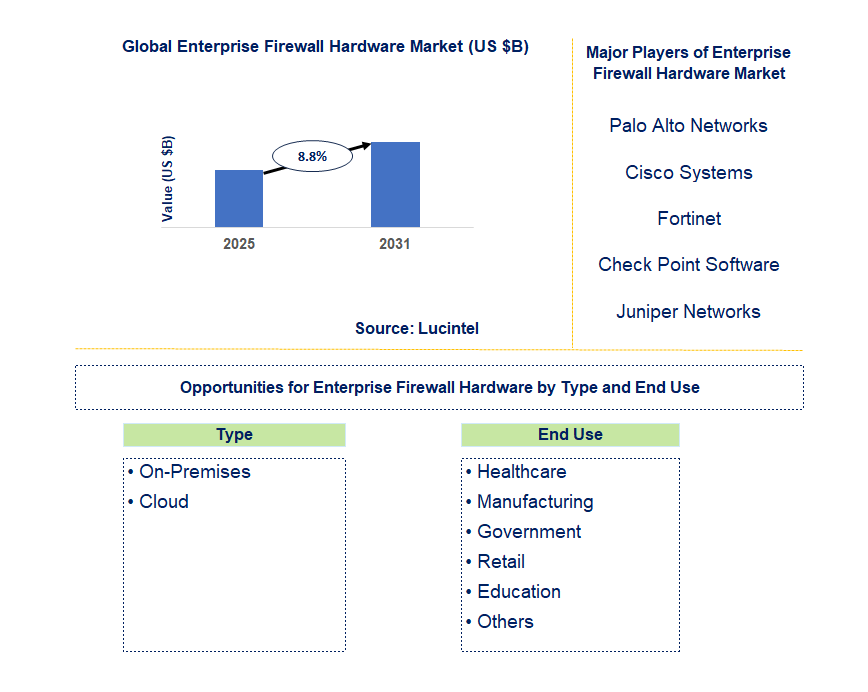
Key data points: The growth forecast = 8.8% annually for the next 7 years. Scroll below to get more insights. This market report covers Trends, opportunity and forecast in enterprise firewall hardware market to 2031 by type (on-premises and cloud), end use (healthcare, manufacturing, government, retail, education, and others), and region (North America, Europe, Asia Pacific, and the Rest of the World)
We'll send your sample report shortly.
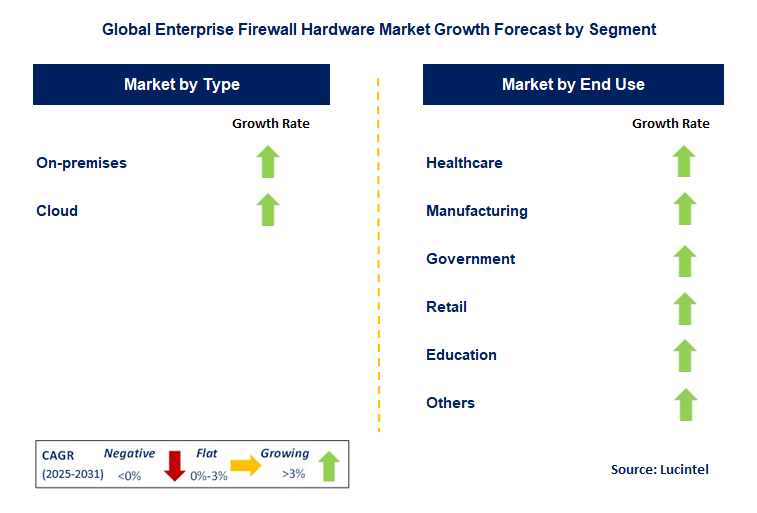
• Lucintel forecasts that, within the type category, on-premise is expected to witness higher growth over the forecast period.
• Within the application category, healthcare is expected to witness the highest growth.
• In terms of region, APAC is expected to witness the highest growth over the forecast period. Gain valuable insights for your business decisions with our comprehensive 150+ page report. Sample figures with some insights are shown below.
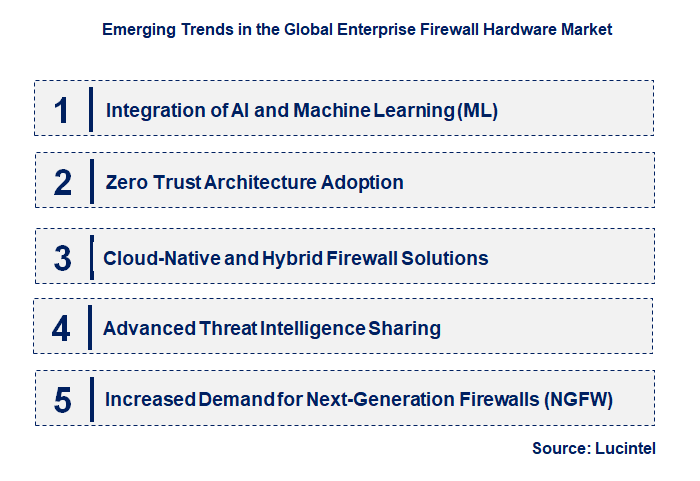
• Integration of AI and Machine Learning (ML): AI and ML are increasingly integrated into enterprise firewall solutions to improve threat detection and response. These technologies enable firewalls to adapt to evolving threats by learning from patterns and behaviors within the network. AI-powered firewalls can automatically identify anomalies and potential security breaches in real time, significantly improving the overall security posture of an enterprise. This integration reduces human intervention and enhances the firewall's ability to respond to advanced, zero-day attacks with minimal delay, providing more effective protection.
• Zero Trust Architecture Adoption: Zero Trust Architecture (ZTA) is becoming a standard in enterprise network security, driving the evolution of firewalls. With ZTA, firewalls are no longer just perimeter defenses but are incorporated within a broader strategy of always verifying user access, regardless of location. This shift increases the importance of firewalls with advanced authentication and granular access control features. By adopting Zero Trust principles, enterprises can significantly reduce the risk of insider threats and unauthorized access while providing a more resilient defense against external attacks.
• Cloud-Native and Hybrid Firewall Solutions: As more businesses migrate to the cloud, there is a growing need for cloud-native and hybrid firewall solutions. Traditional on-premise firewalls are being augmented or replaced by cloud-based solutions that offer flexibility, scalability, and centralized management. Cloud-native firewalls are designed to protect cloud-based applications and workloads, while hybrid firewalls integrate both on-premise and cloud infrastructure for comprehensive security. These solutions help businesses better secure remote work environments and distributed networks while enabling efficient management through a unified platform.
• Advanced Threat Intelligence Sharing: The sharing of threat intelligence between organizations and vendors is becoming an essential trend in the enterprise firewall hardware market. By collaborating and exchanging information about emerging threats, enterprises can better understand and mitigate risks. Firewalls that integrate with global threat intelligence platforms can provide real-time updates on the latest attack vectors and malware signatures. This enhances the firewall’s ability to block known and unknown threats by improving detection and response times. The collaborative approach to threat intelligence strengthens the overall security ecosystem, making it more proactive rather than reactive.
• Increased Demand for Next-Generation Firewalls (NGFW): Next-Generation Firewalls (NGFW) are gaining traction due to their advanced features, such as deep packet inspection, application control, intrusion prevention, and integrated VPN support. NGFWs combine traditional firewall capabilities with additional security features, enabling them to address modern security challenges effectively. With the rise of advanced persistent threats (APTs) and evolving cybercrime tactics, businesses are turning to NGFWs to enhance their defense mechanisms. These firewalls are able to inspect traffic at deeper levels, providing more granular control and better protection against sophisticated cyber threats. Emerging trends such as AI and ML integration, Zero Trust Architecture, cloud-native solutions, advanced threat intelligence sharing, and the rise of Next-Generation Firewalls are reshaping the enterprise firewall hardware market. These trends reflect the evolving landscape of cybersecurity, where enterprises require more adaptive, scalable, and intelligent solutions to combat modern cyber threats. The market is moving toward more comprehensive, integrated, and proactive firewall systems that go beyond traditional perimeter defense, ensuring robust protection for complex, distributed, and cloud-based environments. As these trends continue to evolve, enterprises will have stronger, more flexible security infrastructure to safeguard their networks.
• Next-Generation Firewalls (NGFW): Next-generation firewalls (NGFW) have revolutionized enterprise network security. These firewalls go beyond traditional packet filtering by offering deep packet inspection, application awareness, and integrated intrusion prevention systems. The growing adoption of NGFWs is driven by their ability to identify and block sophisticated cyberattacks while improving traffic management and network performance. NGFWs are essential for organizations facing complex threats such as malware, ransomware, and data breaches. As a result, businesses are increasingly investing in NGFW solutions to strengthen their security posture, reduce risks, and ensure compliance with evolving regulations.
• Cloud-Integrated Firewall Solutions: Cloud-integrated firewalls are gaining traction as enterprises increasingly migrate to cloud environments. These firewalls offer scalability and flexibility by securing cloud-based infrastructures and applications. By enabling seamless integration with cloud services, they provide enhanced security for multi-cloud environments, allowing businesses to protect data across various platforms. Cloud firewall solutions also offer centralized management, making it easier for enterprises to control network security. This development is particularly impactful for organizations looking to balance performance and security in a hybrid work environment, ensuring that both on-premises and cloud-based systems are adequately protected.
• Firewall as a Service (FWaaS): The shift to firewall as a service (FWaaS) is transforming the enterprise firewall market. By offering firewall capabilities via the cloud, FWaaS provides businesses with a cost-effective, scalable, and easy-to-manage alternative to traditional hardware-based firewalls. This development is particularly beneficial for organizations with remote teams or multi-location operations, as it ensures consistent security across dispersed networks without the need for on-premises hardware. With the rise of software-defined networking (SDN) and virtualized environments, FWaaS solutions are gaining popularity as enterprises move toward cloud-first strategies and reduce their reliance on traditional hardware.
• AI-Driven Security Features: Artificial intelligence (AI) is becoming a key component in modern enterprise firewalls. By leveraging machine learning and behavioral analytics, AI-driven firewalls can detect and block advanced threats in real time, often before they cause damage. This development significantly enhances threat intelligence, providing enterprises with proactive defense mechanisms. AI-powered firewalls can also adapt to changing traffic patterns, allowing for dynamic rule updates and improved decision-making in network security. This trend is vital for organizations that face sophisticated attacks, as it provides them with the agility and automation needed to mitigate threats efficiently.
• Increased Focus on Compliance and Privacy Regulations: As data protection and privacy regulations become more stringent worldwide, enterprise firewalls are being enhanced to ensure compliance with laws such as GDPR, CCPA, and others. Firewalls are now equipped with features that enable businesses to enforce security policies that align with regulatory requirements, such as data encryption, logging, and audit trails. This development has driven the demand for firewalls that offer compliance-specific capabilities. For companies operating in highly regulated industries, these features are critical for minimizing risk, avoiding legal consequences, and maintaining trust with customers and stakeholders. Recent developments in the enterprise firewall hardware market are reshaping the cybersecurity landscape. The shift toward next-generation firewalls, cloud-integrated solutions, and AI-driven capabilities is enabling businesses to enhance their network security and stay ahead of evolving threats. Additionally, the rise of FWaaS and the increasing focus on compliance regulations highlight the demand for flexible, scalable, and compliant security solutions. These advancements are helping organizations strengthen their cybersecurity posture, reduce operational costs, and improve overall resilience in the face of a rapidly changing digital threat environment. The enterprise firewall hardware market is on track for continued growth driven by these innovations.
• Cloud Security: With the growing adoption of cloud platforms, the need for cloud-native firewalls is rapidly increasing. Enterprises migrating workloads and applications to the cloud require advanced firewall solutions that ensure the security of these environments. Cloud security firewalls offer scalability, flexibility, and centralized management, allowing organizations to safeguard cloud-based applications from external threats. By providing protection against unauthorized access, data breaches, and other cyberattacks, cloud security firewalls are an essential component of a secure cloud infrastructure. This growth opportunity is critical as businesses move towards hybrid and multi-cloud environments, demanding solutions that can seamlessly integrate and protect these diverse ecosystems.
• Remote Workforce Protection: The surge in remote work, accelerated by global events, has led to a growing need for firewalls capable of protecting remote employees and distributed networks. Enterprise firewalls with integrated VPN support, advanced encryption, and intrusion detection are crucial for ensuring the security of remote work environments. As employees connect from various locations and devices, these firewalls provide essential protection against cyberattacks targeting remote access points. This trend offers significant growth opportunities as businesses invest in next-generation firewalls that enable secure remote access without compromising network performance or security, safeguarding corporate data from potential breaches.
• Application Layer Security: The increasing sophistication of cyberattacks targeting application layers is driving demand for firewalls that go beyond traditional perimeter protection. Application Layer Security (AppSec) firewalls provide deep packet inspection, application awareness, and integrated threat prevention to protect against vulnerabilities in web applications, APIs, and other software-based systems. This growth opportunity is expanding as enterprises prioritize protecting customer-facing applications from advanced persistent threats (APTs) and data breaches. Firewalls that specialize in AppSec offer comprehensive security for sensitive data and applications, helping businesses mitigate risks from cybercriminals exploiting software vulnerabilities.
• Compliance and Regulatory Standards: As regulatory requirements for data protection tighten globally, businesses are under increasing pressure to comply with industry standards like GDPR, HIPAA, and PCI-DSS. Enterprise firewalls are playing a pivotal role in helping organizations meet these compliance requirements by ensuring secure data transmissions, logging, and access control mechanisms. Firewalls with built-in compliance features help organizations maintain secure network environments and avoid penalties for non-compliance. This growth opportunity is particularly important in highly regulated industries, where enterprises need to demonstrate their commitment to data security and privacy protection through robust firewall solutions.
• Threat Intelligence Integration: The integration of real-time threat intelligence into enterprise firewalls is becoming a significant growth opportunity, allowing businesses to proactively detect and mitigate cyber threats. By feeding firewalls with up-to-date information about emerging threats, organizations can better protect their networks from evolving risks, including malware, ransomware, and advanced persistent threats (APTs). Threat intelligence integration enhances the firewall’s ability to respond to new attack vectors quickly, improving overall network defense. This growth opportunity is critical as cybercriminals become more sophisticated and businesses seek solutions that provide real-time updates and automated responses to safeguard their operations. Strategic growth opportunities in the enterprise firewall hardware market are emerging across key applications such as cloud security, remote workforce protection, application layer security, compliance, and threat intelligence integration. As businesses continue to expand their digital footprints, these opportunities are allowing firewall solutions to evolve and offer more comprehensive, scalable, and intelligent protections. By addressing specific security needs, such as securing cloud environments, remote workforces, and applications, these growth areas are helping enterprises stay ahead of increasingly sophisticated cyber threats. As these trends continue to develop, the enterprise firewall hardware market will continue to experience growth, innovation, and greater demand for integrated, next-gen solutions.
• Palo Alto Networks
• Cisco Systems
• Fortinet
• Check Point Software Technologies
• Juniper Networks
• SonicWall
• WatchGuard Technologies
• Sophos
• Barracuda Networks
• Forcepoint
• On-premises
• Cloud
• Healthcare
• Manufacturing
• Government
• Retail
• Education
• Others
• North America
• Europe
• Asia Pacific
• The Rest of the World
• United States: In the United States, the enterprise firewall hardware market has seen accelerated growth as businesses prioritize cybersecurity amid increasing cyber threats. Innovations in next-generation firewalls (NGFWs) have enhanced threat intelligence and provided more granular control over network traffic. Additionally, U.S. enterprises are increasingly adopting firewalls with integrated machine learning capabilities for real-time threat analysis. The rise of cloud-based firewalls and firewall-as-a-service offerings has also been notable. With a strong focus on hybrid and remote work models, there is a greater demand for firewalls to provide secure access for distributed teams while managing cloud workloads efficiently.
• China: China has emerged as a key player in the enterprise firewall hardware market, driven by a surge in digital transformation initiatives and stricter cybersecurity regulations. The Chinese government’s emphasis on enhancing national cybersecurity has led to greater adoption of localized firewall solutions, often developed by domestic companies. The market is witnessing increased demand for firewalls to support the growing volume of internet traffic, particularly in finance, telecommunications, and manufacturing. Companies are integrating firewalls with AI-based threat detection and cloud security solutions to meet evolving security challenges. There is also a significant focus on compliance with data protection regulations.
• Germany: Germany, known for its strong industrial base, has witnessed growing investments in enterprise firewall hardware as businesses seek to protect critical infrastructure and ensure data privacy. With the introduction of stricter European Union (EU) data protection regulations such as GDPR, German enterprises are increasingly focused on integrating firewalls that offer robust security features for compliance. Additionally, many companies are moving toward integrated firewall solutions that offer a combination of advanced threat prevention, application visibility, and data encryption. The rise of digital transformation and Industry 4.0 is driving the demand for firewall hardware that can secure IoT devices and industrial networks.
• India: In India, the enterprise firewall hardware market is expanding rapidly, driven by the increasing adoption of digital services and the growth of cloud-based infrastructures. Enterprises are facing rising cybersecurity threats, which is driving the need for more robust network security solutions. There is growing interest in firewalls that provide advanced capabilities like intrusion prevention, content filtering, and deep packet inspection. India is also seeing a shift toward cost-effective, scalable firewall solutions, particularly among small and medium-sized enterprises (SMEs). Moreover, government initiatives promoting digitization and data protection have spurred demand for high-performance firewall solutions across various sectors.
• Japan: The Japanese enterprise firewall hardware market is characterized by a strong emphasis on security and innovation. With an increasing number of cyberattacks targeting critical sectors such as manufacturing and finance, Japan is prioritizing advanced firewalls that offer deep threat detection and high-speed performance. Additionally, there is a growing interest in integrated firewall solutions that can support hybrid cloud infrastructures and protect against emerging threats like ransomware and advanced persistent threats (APTs). Japanese enterprises are also exploring firewalls that can be easily managed and scaled, with an increasing shift toward cloud-based firewall solutions and greater integration with AI and machine learning technologies for enhanced threat mitigation.


• Palo Alto Networks
• Cisco Systems
• Fortinet
• Check Point Software Technologies
• Juniper Networks
• SonicWall
• WatchGuard Technologies
• Sophos
• Barracuda Networks
• Forcepoint Q5. Which enterprise firewall hardware market segment will be the largest in future? Answer: Lucintel forecasts that on-premise is expected to witness higher growth over the forecast period. Q6. In enterprise firewall hardware market, which region is expected to be the largest in next 5 years? Answer: APAC is expected to witness the highest growth over the forecast period. Q7. Do we receive customization in this report? Answer: Yes, Lucintel provides 10% customization without any additional cost.


Choose a license that fits your team. Instant PDF delivery.
Prices exclude taxes. Instant delivery. Custom licensing available on request.
Market Report · July 29, 2026
Market Report · July 20, 2026
Market Report · July 20, 2026
Trusted partner for strategic intelligence and business growth


Receive a complimentary market analysis tailored to your industry. Our analysts will identify key growth opportunities and competitive dynamics specific to your business.

Market size, growth rate, and key trend analysis for your specific sector.

Top competitor positioning and market share analysis.

Strategic recommendations backed by data-driven insights.
Get curated market intelligence and competitive moves straight to your inbox.
By subscribing, you agree to receive our monthly insights. Unsubscribe anytime.
Receive a complimentary market analysis tailored to your industry. Our analysts will identify key growth opportunities and competitive dynamics specific to your business.
Market size, growth rate, and key trend analysis for your specific sector.
Top competitor positioning and market share analysis.
Strategic recommendations backed by data-driven insights.
Get curated market intelligence, emerging trends, and competitive moves straight to your inbox each month.
By subscribing, you agree to receive our monthly insights. Unsubscribe anytime.
We'll send your sample report shortly.