
Market Report · July 15, 2026

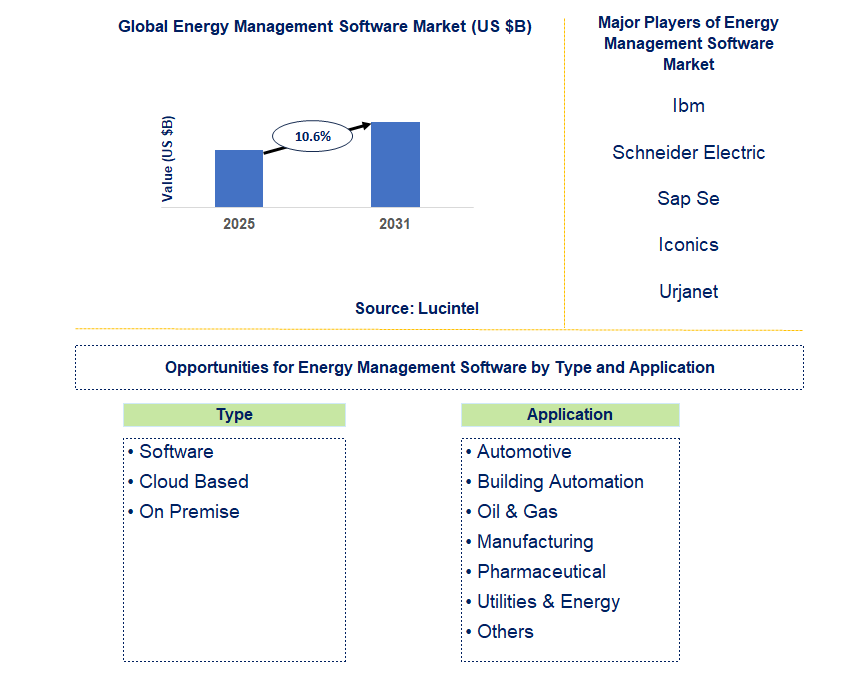
Key data points: The growth forecast = 10.6% annually for the next 7 years. Scroll below to get more insights. This market report covers trends, opportunities and forecasts in energy management software market to 2031 by type (software, cloud based, and on premise), application (automotive, building automation, oil & gas, manufacturing, pharmaceutical, utilities & energy, and others), and region (North America, Europe, Asia Pacific, and the Rest of the World)
We'll send your sample report shortly.
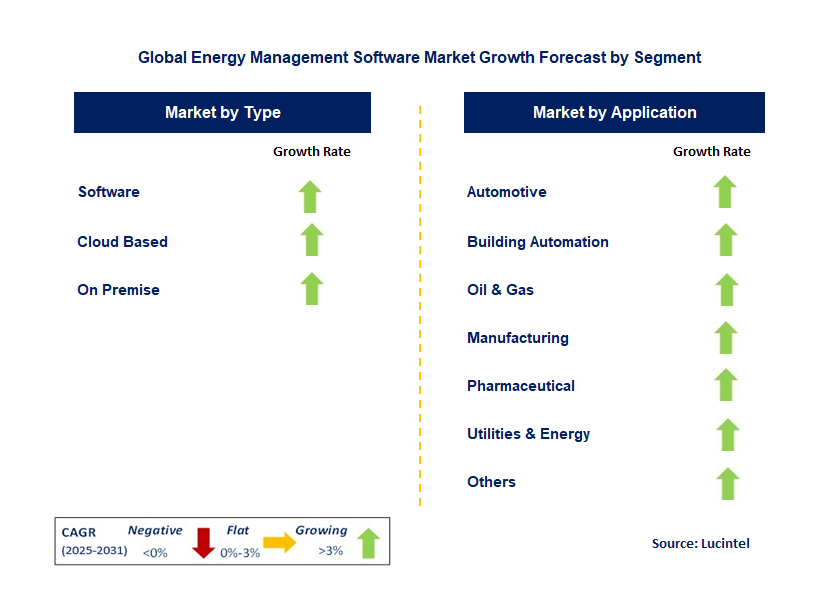
• Lucintel forecasts that, within the type category, cloud based is expected to witness the highest growth over the forecast period.
• Within the application category, utility & energy is expected to witness the highest growth.
• In terms of region, APAC is expected to witness the highest growth over the forecast period. Gain valuable insights for your business decisions with our comprehensive 150+ page report. Sample figures with some insights are shown below.
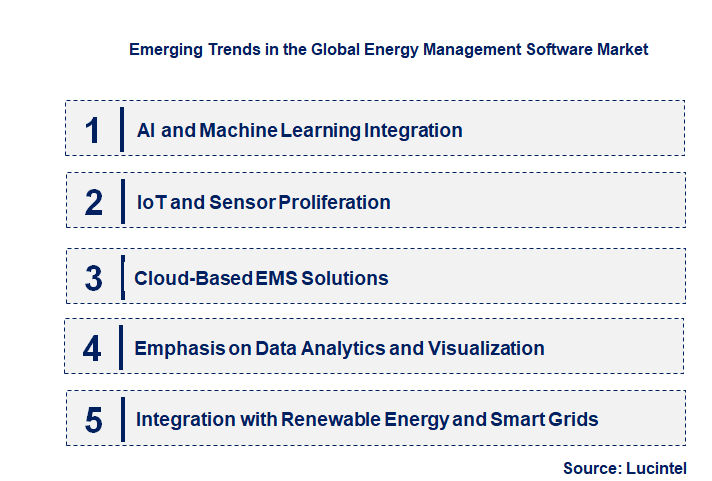
• AI and Machine Learning Integration: The integration of AI and ML algorithms into EMS is a prominent trend. These technologies enable predictive analytics for energy demand, anomaly detection in consumption patterns, and automated optimization of energy use in real-time. This leads to substantial energy savings, reduced waste, and enhanced operational efficiency across various industries.
• IoT and Sensor Proliferation: The widespread adoption of IoT devices and smart sensors is revolutionizing data collection for EMS. These devices provide granular, real-time data on energy consumption from various assets. This rich data enables precise monitoring, detailed analysis, and better-informed decision-making, significantly improving energy efficiency and facilitating proactive maintenance.
• Cloud-Based EMS Solutions: The shift towards cloud-based EMS platforms is gaining momentum. Cloud solutions offer scalability, remote accessibility, and reduced infrastructure costs for users. They facilitate real-time collaboration, data integration from disparate sources, and rapid deployment, making advanced energy management accessible to a wider range of businesses.
• Emphasis on Data Analytics and Visualization: Advanced data analytics and intuitive visualization tools are becoming critical components of EMS. These tools transform complex energy data into actionable insights, helping users identify inefficiencies, track energy-saving initiatives, and communicate performance to stakeholders effectively. This empowers informed decision-making and continuous improvement.
• Integration with Renewable Energy and Smart Grids: EMS is increasingly integrating with renewable energy sources and smart grid infrastructure. This trend enables better management of decentralized energy resources, demand response programs, and optimization of energy distribution. This supports grid stability, reduces reliance on fossil fuels, and accelerates the transition to a sustainable energy future. These trends are reshaping the energy management software market by making solutions more intelligent, interconnected, and user-friendly. They are enabling organizations to achieve greater energy efficiency, reduce costs, and meet their sustainability objectives, driving innovation and expanding the market‘s reach into new applications.
• Enhanced Predictive Analytics Capabilities: Recent developments involve more sophisticated predictive analytics driven by AI and machine learning. This impact allows EMS to forecast energy demand with greater accuracy, anticipate equipment failures, and proactively optimize energy usage. This leads to significant cost savings, reduced downtime, and improved overall operational efficiency.
• Increased IoT Sensor Integration: The proliferation of cost-effective IoT sensors has enabled more granular and real-time data collection from various energy-consuming assets. This development provides a more complete picture of energy consumption patterns, allowing for precise identification of inefficiencies and more effective implementation of energy-saving strategies.
• Rise of Cloud-Native Platforms: There‘s a notable shift towards developing cloud-native EMS platforms, offering enhanced scalability, flexibility, and accessibility. This development facilitates faster deployment, reduces IT overhead for users, and enables seamless integration with other enterprise systems, supporting widespread adoption across diverse organizations.
• Focus on Decarbonization and ESG Reporting: Recent developments emphasize software features that support decarbonization efforts and Environmental, Social, and Governance (ESG) reporting. EMS now helps organizations track carbon footprints, identify emission reduction opportunities, and generate comprehensive sustainability reports, aligning with corporate sustainability goals and regulatory compliance.
• Development of Specialized Solutions for Industries: The market has seen a rise in tailored EMS solutions designed for specific industries like manufacturing, healthcare, and commercial buildings. This development addresses unique energy consumption patterns and operational challenges of each sector, providing more relevant and effective energy management strategies and optimized workflows. These developments are impacting the energy management software market by making solutions more intelligent, accessible, and aligned with current sustainability goals. They empower organizations to gain deeper insights into their energy consumption, automate optimization processes, and ultimately achieve significant energy savings and environmental benefits.
• Industrial Energy Management: The industrial sector, with its high energy consumption, presents a major growth opportunity. EMS for manufacturing plants, refineries, and other heavy industries can optimize processes, schedule equipment operation, and implement demand response. This leads to substantial cost savings, reduced waste, and improved overall operational efficiency.
• Commercial Building Energy Management: Optimizing energy use in commercial buildings (offices, retail, hospitals) is a significant growth area. EMS integrates with building management systems to control HVAC, lighting, and other utilities. This enables real-time monitoring, intelligent automation, and occupant comfort while achieving considerable energy reductions and operational cost savings.
• Smart Grid and Utility Operations: The transition to smart grids and the increasing integration of renewable energy sources create opportunities for EMS in utility operations. Software helps manage distributed energy resources, optimize grid stability, forecast demand, and facilitate real-time energy trading. This enhances grid resilience and supports the energy transition.
• Residential and Home Energy Management: The growing adoption of smart homes and connected devices offers a niche for home energy management software. These solutions empower homeowners to monitor and control appliance usage, optimize heating/cooling, and integrate with renewable sources like rooftop solar. This promotes energy-saving habits and reduces household utility bills.
• Data Centers and IT Infrastructure: Data centers are massive energy consumers, making them a prime target for EMS. Software can optimize cooling systems, server utilization, and power distribution. This reduces operational expenditure, lowers carbon footprint, and improves the overall efficiency and reliability of critical IT infrastructure, crucial for digital transformation. These opportunities are impacting the energy management software market by driving specialized product development, fostering strategic partnerships between software providers and energy-intensive sectors, and expanding the overall market size. They underscore EMS as a critical tool for achieving energy efficiency and sustainability goals across the global economy.
• Ibm
• Schneider Electric
• Sap
• Iconics
• Urjanet
• Thinkstep
• Enablon
• Accuvio
• Broadcom
• Ul Ehs Sustainability
• Software
• Cloud Based
• On Premise
• Automotive
• Building Automation
• Oil & Gas
• Manufacturing
• Pharmaceutical
• Utilities & Energy
• Others
• North America
• Europe
• Asia Pacific
• The Rest of the World
• United States: The U.S. EMS market is experiencing substantial growth, fueled by stringent energy efficiency regulations and increasing corporate sustainability initiatives. There‘s a strong focus on integrating AI and IoT for real-time energy monitoring and predictive analytics, particularly in industrial and commercial buildings. This aims to reduce greenhouse gas emissions and optimize energy use.
• China: China‘s EMS market is expanding rapidly, driven by significant government investment in smart grid infrastructure and an increasing focus on industrial energy efficiency. The adoption of AI and IoT for real-time energy tracking has improved efficiency in manufacturing operations. Cloud-based solutions are gaining traction for remote monitoring and scalability.
• Germany: Germany‘s EMS market is highly influenced by its strong commitment to renewable energy integration and industrial efficiency. Developments focus on sophisticated software solutions that manage complex energy flows, optimize consumption in manufacturing, and support the integration of decentralized energy resources. Sustainability reporting and compliance are also key drivers.
• India: India‘s EMS market is growing steadily, propelled by rapid urbanization, increasing industrialization, and government initiatives for smart cities. There‘s a rising demand for EMS in manufacturing and commercial sectors to reduce operational costs and enhance resource utilization. Awareness campaigns and the adoption of smart solutions are contributing to market expansion.
• Japan: Japan‘s EMS market is characterized by an emphasis on high-quality, reliable solutions for industrial facilities and smart buildings. The market is seeing increased integration of EMS with building automation systems and a focus on optimizing energy consumption for precision manufacturing and smart infrastructure. Sustainability and energy efficiency targets are key drivers.


• Ibm
• Schneider Electric
• Sap
• Iconics
• Urjanet
• Thinkstep
• Enablon
• Accuvio
• Broadcom
• Ul Ehs Sustainability Q5. Which energy management software market segment will be the largest in future? Answer: Lucintel forecasts that, within the type category, cloud based is expected to witness the highest growth over the forecast period. Q6. In energy management software market, which region is expected to be the largest in next 5 years? Answer: In terms of region, APAC is expected to witness the highest growth over the forecast period. Q7. Do we receive customization in this report? Answer: Yes, Lucintel provides 10% customization without any additional cost.


Choose a license that fits your team. Instant PDF delivery.
Prices exclude taxes. Instant delivery. Custom licensing available on request.
Market Report · July 15, 2026
Market Report · June 26, 2026
Market Report · June 24, 2026
Trusted partner for strategic intelligence and business growth


Receive a complimentary market analysis tailored to your industry. Our analysts will identify key growth opportunities and competitive dynamics specific to your business.

Market size, growth rate, and key trend analysis for your specific sector.

Top competitor positioning and market share analysis.

Strategic recommendations backed by data-driven insights.
Get curated market intelligence and competitive moves straight to your inbox.
By subscribing, you agree to receive our monthly insights. Unsubscribe anytime.
Receive a complimentary market analysis tailored to your industry. Our analysts will identify key growth opportunities and competitive dynamics specific to your business.
Market size, growth rate, and key trend analysis for your specific sector.
Top competitor positioning and market share analysis.
Strategic recommendations backed by data-driven insights.
Get curated market intelligence, emerging trends, and competitive moves straight to your inbox each month.
By subscribing, you agree to receive our monthly insights. Unsubscribe anytime.
We'll send your sample report shortly.