
Market Report · May 18, 2026

This market report covers trends, opportunities, and forecasts in the global emission control market to 2031 by technology (diesel particulate filter (dpf), gasoline particulate filter (gpf), diesel oxidation catalyst (doc), selective catalytic reduction (scr), exhaust gas recirculation (egr), and others), end use industry (automotive, marine, aerospace, off-highway, and rolling stock), and region (North America, Europe, Asia Pacific, and the Rest of the World)
We'll send your sample report shortly.
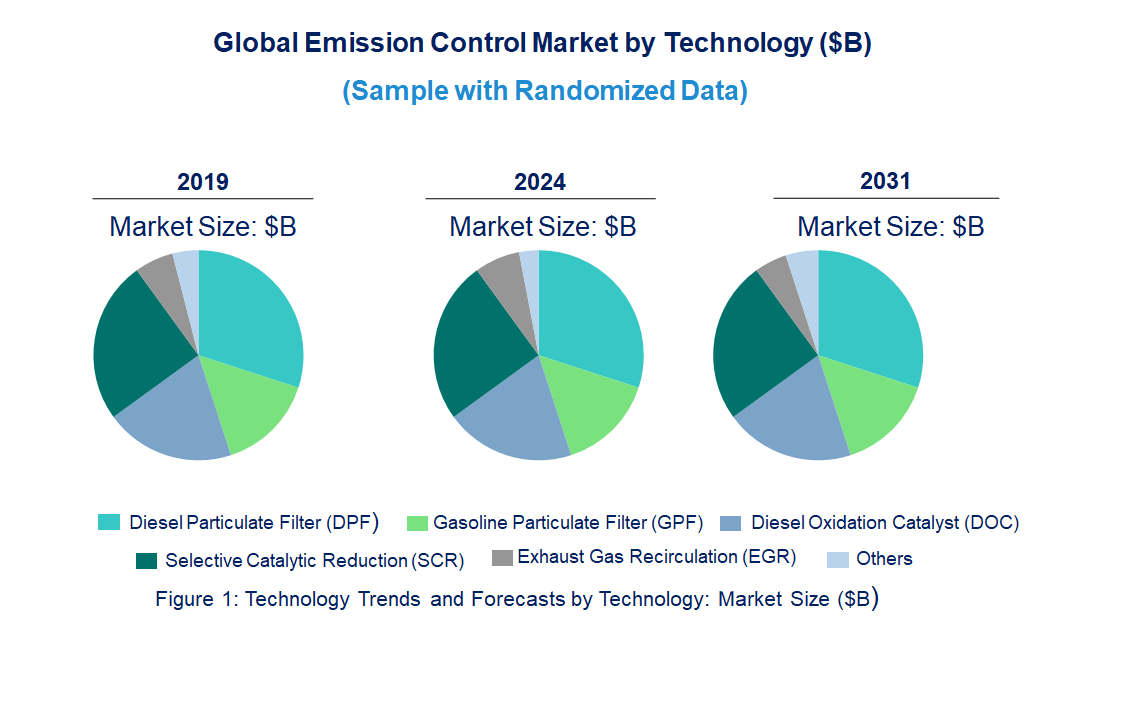
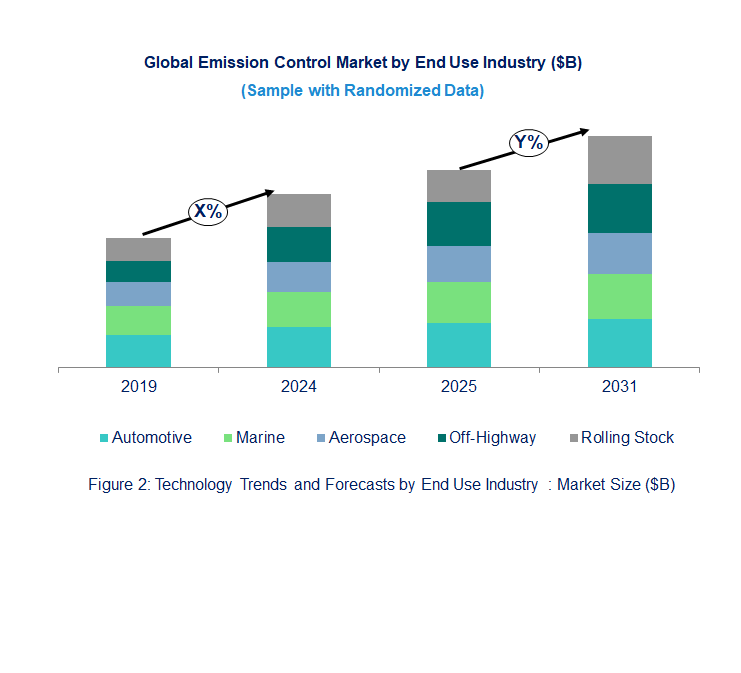
• Shift from Diesel to Gasoline Particulate Filters (DPF to GPF): Diesel engines have historically been the heart of particulate filtration technology, though the shift is now toward gasoline vehicle technology in the form of Gasoline Particulate Filters (GPFs). This reflects the tighter PM emission standards for gasoline engines, especially in Europe and North America.
• Incorporation of SCR with DOC: There is an increasing integration of Selective Catalytic Reduction (SCR) systems with Diesel Oxidation Catalysts (DOC) to address NOx and particulate matter (PM) emissions simultaneously. SCR technology uses a urea-based solution (DEF - Diesel Exhaust Fluid) to reduce NOx emissions, while DOC helps oxidize hydrocarbons and carbon monoxide, resulting in a cleaner exhaust.
• Increased Intensity in Exhaust Gas Recirculation Systems: There has been considerable progress in Exhaust Gas Recirculation (EGR) technology, where NOx emissions are minimized by the recirculation of a percentage of exhaust gases into the engine’s intake. In recent years, there has been a great focus on upgrading the efficiency of EGR systems that are mainly used for decreasing NOx emissions without reducing power and fuel efficiency.
• Electrification and Hybrid Powertrain Growth: The increased usage of electric and hybrid vehicles is transforming the emission control landscape. Although EVs have nearly zero emissions, hybrid vehicles, which combine an internal combustion engine with an electric motor, demand more sophisticated technologies like SCR, GPF, and EGR for handling decreased emissions.
• Smart Sensors and IoT in Emission Control Systems: The application of smart sensors and Internet of Things (IoT) technologies is increasingly common in emission control systems. The sensors monitor real-time data, allowing for better control of exhaust systems, optimizing their performance, and predicting maintenance needs. This trend allows emission systems to be more efficient and compliant with strict regulatory standards. These emerging trends represent a change in the emission control market, as there is a strong movement toward cleaner, more efficient technologies. From DPF to GPF and DOC integration with SCR, EGR progress, and growing vehicle electrification, all trends significantly enhance improvements in reducing emissions. With these technologies now enhanced through the application of smart sensors and IoT technologies, real-time monitoring and predictive abilities offer optimum performance. As these technologies continue to evolve, they will help industries comply with increasingly stringent emission regulations, ultimately contributing to a cleaner, more sustainable future for both the environment and industries worldwide.
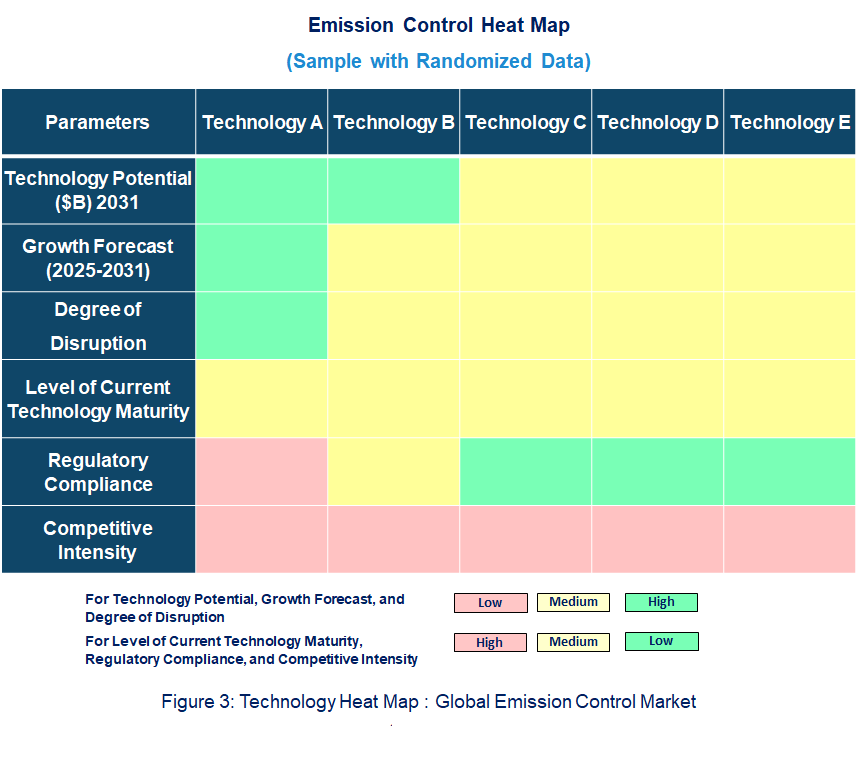
• Technology Potential: Emission control technologies hold significant promise for reducing carbon footprints. Innovations such as carbon capture and storage (CCS), advanced scrubbers, and catalytic converters have the potential to drastically reduce emissions. Additionally, emerging technologies like direct air capture (DAC) offer further opportunities for large-scale carbon removal, promoting sustainability across industries.
• Degree of Disruption: These technologies could cause major disruptions in the traditional energy and manufacturing sectors by enforcing cleaner production methods and improving energy efficiency. However, the transition may be challenging due to high upfront costs and difficulties in technological integration. The automotive industry, for example, is undergoing a paradigm shift with the increased adoption of electric vehicles and stricter emission standards.
• Level of Current Technology Maturity: Advanced emission control technologies, such as selective catalytic reduction (SCR) and diesel particulate filters (DPF), have already reached maturity and are widely applied in industrial practices today. However, emerging technologies such as CC and DAC are still being refined for greater commercial applicability.
• Regulatory Compliance: Stringent regulations, such as the Paris Agreement and regional standards like Euro 6, are pushing industries toward cleaner practices. Regulatory pressures are accelerating the development and adoption of advanced emission control technologies to ensure compliance and reduce carbon emissions. Emission control technology has a promising market, driven both by technological advances and intensified regulatory pressures. As these technologies mature, they are likely to become more affordable, helping industries meet emissions reduction targets and contribute to global sustainability.
• Corning: Corning has introduced new, high-performance substrates for catalytic converters and Diesel Particulate Filters (DPFs), improving their ability to reduce harmful emissions. The company’s innovations focus on increasing the longevity and efficiency of their emission control products, meeting stricter global standards, and supporting the shift to cleaner, more sustainable technologies.
• CORMETECH: CORMETECH has developed advanced SCR (Selective Catalytic Reduction) catalysts and solutions that help reduce nitrogen oxides (NOx) emissions from power plants and industrial sources. Their technologies are pivotal in enabling industries to comply with tightening environmental regulations and support cleaner energy generation practices.
• Clean Diesel Technologies: Clean Diesel Technologies has rolled out a new generation of catalytic converters and DPF systems designed for commercial vehicles. Their products aim to reduce particulate matter and NOx emissions, offering more efficient solutions to meet stringent Euro 6 and EPA standards, which are critical for the global transportation sector.
• Umicore: Umicore has made strides in developing new materials for emission control systems, focusing on platinum group metals (PGMs) used in catalytic converters. Their research on alternative materials and catalytic solutions aims to reduce reliance on expensive PGMs while maintaining high efficiency in controlling harmful emissions.
• Johnson Matthey: Johnson Matthey has introduced innovative clean air technologies, particularly in the automotive sector, focusing on the development of catalysts for electric vehicles (EVs). Their work on reducing emissions from hybrid and electric vehicles is helping the automotive industry meet evolving standards for zero-emissions and lower CO2 footprints.
• Clariant: Clariant has launched new adsorbents and catalysts for the automotive and industrial sectors, helping to meet tightening emission regulations. Their solutions focus on optimizing the energy efficiency of emission control systems, enhancing fuel economy while reducing harmful emissions from industrial processes and transportation.
• AeriNox: AeriNox is focused on air purification technologies that remove harmful pollutants from industrial exhaust systems. Their novel approach to NOx and particulate matter reduction using innovative filter systems has shown promise in enhancing air quality and helping industries meet stringent environmental standards. The recent technological developments from key players in the emission control market reflect the ongoing transformation of the industry, where innovation is at the forefront. These advancements, coupled with stricter regulatory demands, are shaping a more sustainable future, positioning these companies as leaders in the fight against air pollution and environmental degradation.
• Stringent Regulatory Standards: Growing environmental regulations globally, such as the Paris Agreement and local emissions standards (e.g., Euro 6, EPA Tier 3), are pushing industries to adopt advanced emission control technologies. These regulations are a major driver for innovation, forcing companies to develop more efficient and cost-effective solutions.
• Environmental Awareness and Consumer Demand: As consumers and stakeholders demand cleaner air and reduced environmental impacts, companies are increasingly prioritizing sustainability. This shift is prompting the adoption of cleaner technologies, such as electric vehicles (EVs) and renewable energy, creating new opportunities in the emission control sector.
• Technological Advancements: Innovations in catalytic converters, filtration systems, and carbon capture technologies are improving the performance of emission control systems. These advancements make it easier for industries to comply with regulations while reducing operational costs, driving market growth and the adoption of newer solutions. Challenges in the emission control market are:
• High Initial Costs: Many advanced emission control technologies, such as carbon capture and storage (CCS), require significant upfront investment. The high costs associated with developing and deploying these systems can deter industries, especially in developing regions, from adopting them. This cost barrier is particularly challenging for small and medium-sized enterprises (SMEs) that may not have the capital to invest in these technologies.
• Technological Complexity and Integration: Emission control systems, especially those based on cutting-edge technologies like direct air capture (DAC) or advanced SCR catalysts, can be complex to integrate with existing industrial processes. The need for specialized expertise, long integration timelines, and potential operational disruptions during the adoption phase can deter companies from upgrading their systems or adopting new solutions.
• Global Regulatory Disparities: While stringent emissions standards are being implemented in regions like the European Union and North America, enforcement in developing economies remains inconsistent. This creates a fragmented regulatory landscape, where companies in less-regulated regions may not feel the same urgency to adopt emission control technologies, slowing the global progress toward reducing emissions and making it challenging for global players to navigate diverse regulatory environments. The emission control market is experiencing substantial growth due to stringent regulatory requirements, increasing environmental awareness, and continuous technological advancements. However, cost barriers and infrastructure challenges need to be addressed to maximize the adoption of these solutions. By overcoming these hurdles, the market is poised for continued innovation and expansion, supporting global sustainability goals.
• Corning
• Cormetech
• Clean Diesel Technologies
• Umicore
• Johnson Matthey
• Clariant
• Technology Readiness by Technology Type: The readiness of emission control technologies varies across different types. Diesel particulate filters (DPF) are highly mature and widely adopted in diesel engines to meet regulatory particulate emissions standards. Gasoline particulate filters (GPF), a newer technology, are gaining traction, particularly in gasoline engines with direct injection systems. Diesel oxidation catalysts (DOC) are also mature but have limitations in reducing NOx or particulate emissions, facing competition from more advanced technologies like SCR and DPF. Selective catalytic reduction (SCR) is highly mature and plays a crucial role in NOx reduction for heavy-duty vehicles, with ongoing advancements to improve its efficiency and reduce costs. Exhaust gas recirculation (EGR) is a well-established technology but is limited in its ability to reduce NOx emissions on its own, often being used in combination with other systems like SCR for enhanced performance.
• Competitive Intensity and Regulatory Compliance: The emission control market is highly competitive, with technologies like DPF, GPF, DOC, SCR, and EGR in demand. SCR and EGR face strong competition due to their widespread applications in both light- and heavy-duty vehicles, with a focus on innovation and cost reduction. DPF and GPF have seen significant development to meet stringent Euro 6 and EPA standards. Regulatory compliance, driven by standards such as the Paris Agreement and Euro 6/7, forces technologies to continuously evolve, creating a dynamic competitive environment. However, challenges remain, with SCR struggling in heavy-duty sectors and EGR alone unable to meet NOx reduction targets.
• Disruption Potential by Technology Type: The disruption potential varies across emission control technologies. Diesel particulate filters (DPF) and gasoline particulate filters (GPF) are widely implemented to meet particulate reduction targets, showing moderate disruption in the automotive sector. Diesel oxidation catalysts (DOC) primarily address hydrocarbon and carbon monoxide reduction but do not cause major change. Selective catalytic reduction (SCR) has high disruption potential due to its use in heavy-duty transportation and industrial applications, particularly with tighter global emissions regulations. Exhaust gas recirculation (EGR) provides incremental improvement but does not disrupt markets as much as SCR. Emerging technologies like direct air capture and alternative fuels may significantly change emission control methods in the long term, depending on their cost-effectiveness and regulatory impact.
• Diesel Particulate Filter (DPF)
• Gasoline Particulate Filter (GPF)
• Diesel Oxidation Catalyst (DOC)
• Selective Catalytic Reduction (SCR)
• Exhaust Gas Recirculation (EGR)
• Others
• Automotive
• Marine
• Aerospace
• Off-Highway
• Rolling Stock
• North America
• Europe
• Asia Pacific
• The Rest of the World
• Latest Developments and Innovations in the Emission Control Technologies
• Companies / Ecosystems
• Strategic Opportunities by Technology Type


Choose a license that fits your team. Instant PDF delivery.
Prices exclude taxes. Instant delivery. Custom licensing available on request.
Market Report · May 18, 2026
Market Report · May 18, 2026
Market Report · May 18, 2026
Trusted partner for strategic intelligence and business growth


Receive a complimentary market analysis tailored to your industry. Our analysts will identify key growth opportunities and competitive dynamics specific to your business.

Market size, growth rate, and key trend analysis for your specific sector.

Top competitor positioning and market share analysis.

Strategic recommendations backed by data-driven insights.
Get curated market intelligence and competitive moves straight to your inbox.
By subscribing, you agree to receive our monthly insights. Unsubscribe anytime.
Receive a complimentary market analysis tailored to your industry. Our analysts will identify key growth opportunities and competitive dynamics specific to your business.
Market size, growth rate, and key trend analysis for your specific sector.
Top competitor positioning and market share analysis.
Strategic recommendations backed by data-driven insights.
Get curated market intelligence, emerging trends, and competitive moves straight to your inbox each month.
By subscribing, you agree to receive our monthly insights. Unsubscribe anytime.
We'll send your sample report shortly.