
Market Report · May 18, 2026

This market report covers trends, opportunities, and forecasts in the global emi/rfi filter market to 2031 by technology (power line emi/rfi filters, board mount emi/rfi filters, data line emi/rfi filters, and others), application (consumer electronics, automotive, aerospace and defense, healthcare, industrial, telecommunications, and others), and region (North America, Europe, Asia Pacific, and the Rest of the World)
We'll send your sample report shortly.
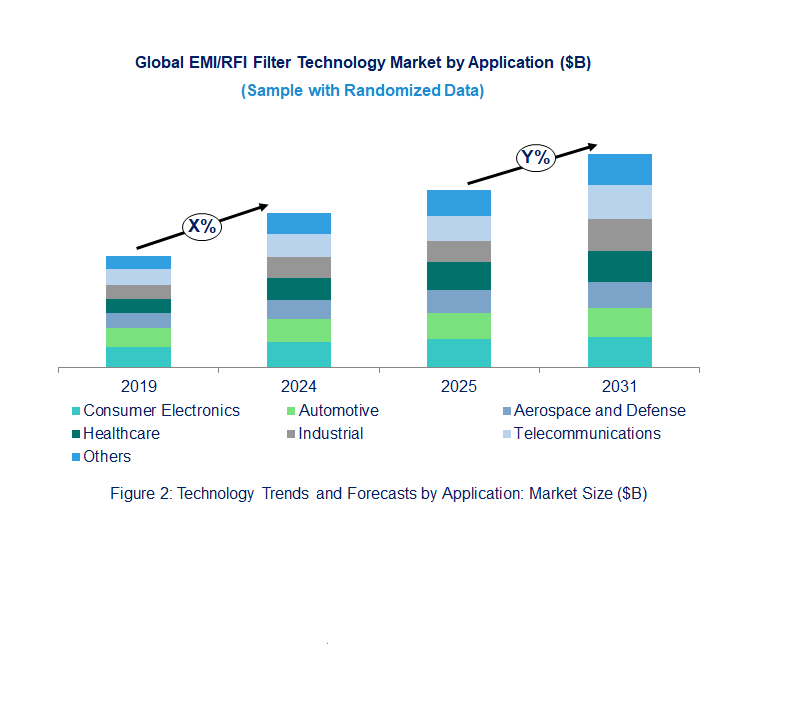
• Digital Signal Processing (DSP) Active Filters Integration: Due to the low cost and noise-free signal filtering capabilities offered by these filters, the integration of active filters with DSP systems is becoming a common market practice. Not only does the technology allow for a better signal-to-noise ratio, but it also enables end users to fine-tune their equipment to diverse interference conditions, which are the norm in today’s world.
• Designing Efficient EMI/RFI Filters for Shrunk Variants: There is an expanding trend for EMI/RFI filters to develop within small form factors while retaining effectiveness, as there has been an increase in the use of miniaturized and portable electronics. This trend is expected to grow with the increasing demand for sleeker and lighter consumer electronics, making way for new materials and filter geometry innovations, which will also allow for better placement in tighter locations.
• Implementation of Ceramics and Nano-Coating Materials: Advanced materials that enhance the efficacy of filters, especially in high-frequency applications, include ceramics and nano-coatings. These materials are more effective and more durable, with superior thermal properties needed to function in extreme environments such as the automotive and aerospace industries, where filters are exposed to harsh conditions.
• Transition to Fully Digital EMI/RFI Filters: The transition from analog to fully digital EMI/RFI filters makes it possible to effectively control and customize the characteristics of filters. Digital filters can be adapted to control interference under different circumstances, creating a more efficient and flexible approach for industries, especially telecommunications and healthcare systems.
• Growing Interest in Automotive EMI/RFI Filters: With technological development in the automotive sector revolving around electric vehicles (EVs) and autonomous vehicles, the growth of the market for EMI/RFI filters in this area is increasing. These filters are vital in promoting the functioning of electronic systems by preventing interference in vehicles, thus promoting the sophistication of in-vehicle electronics, including information, sensing, and powertrain components. The technology trends in the EMI/RFI filter market are enhancing creativity and change in various sectors. Active filters with DSP integration, miniaturization, advanced materials, digital filtering, and automotive applications are key areas of growth. As these technologies grow, they will address the performance, flexibility, and reliability of EMI/RFI filters designed for the future of industries dealing with high-frequency electronic devices and systems.
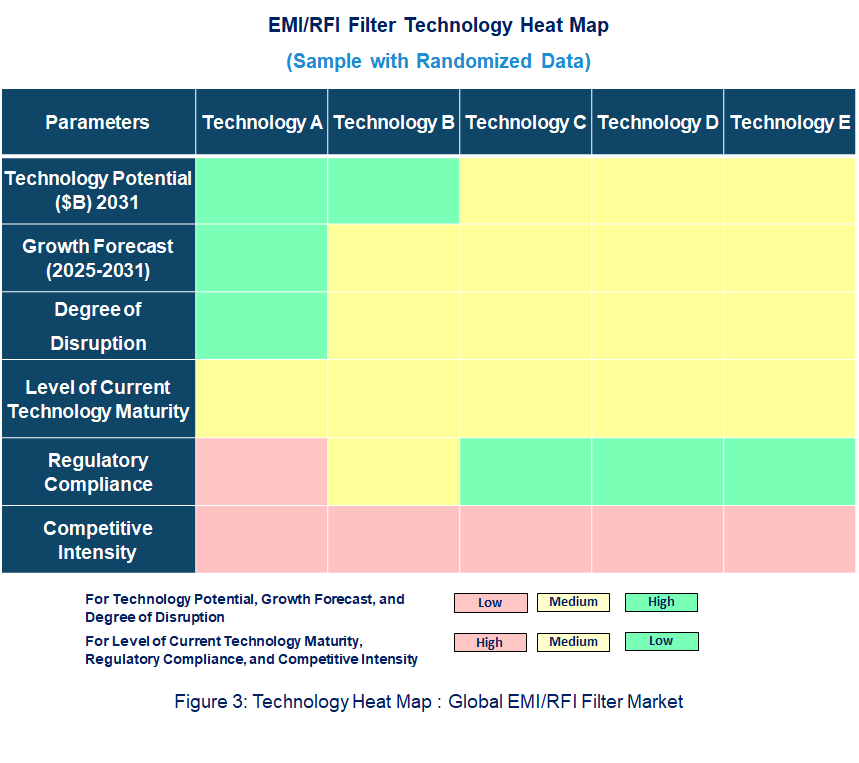
• Potential in Technology: There is great potential in terms of technology to build custom and flexible filters that can be programmed to tackle specific interference. This custom ability is particularly important as industries change and new challenges manifest with the increasing complexity of electronic systems.
• Degree of Disruption: The transition from analog to digital technologies is both radical and extremely disorienting. At the same time, the miniaturization of high-grade filters for compact devices is another area where there is likely to be significant disruption. This disruption is particularly evident in the automotive industry, where, due to electric vehicles (EVs) and autonomous systems, filters are becoming indispensable.
• Current Technology Maturity Level: Concerning the current state of technology, active and digital filters are evolving, especially with many applications in prototyping and early-stage adoption. However, the use of materials such as ceramics and nano-coatings tends to engage other industries, such as aerospace, which are advanced in such technologies.
• Regulatory Compliance: Finally, the issue of legal compliance is important with regard to the IEC, MIL-STD, and automotive filters defining the limits of these EMI/RFI filters. Quite a few companies must deal with these standards for their filters to be type-approved to certified levels.
• Murata: Murata has made advances by introducing new types of EMI/RFI filters that can be installed in small portable smart devices, automotive electronics, and industrial systems. These innovations improve signal integrity without increasing filter dimensions, which is a requirement in the increasing demand for smaller consumer electronics.
• Tusonix: In the field of automotive and industrial applications, Tusonix has developed robust EMI/RFI filters that can withstand severe constraints and are highly effective. Their filters can provide components and systems with noise- and interference-free outputs, a key requirement in areas of high-frequency and high-power inputs.
• Schaffner: Schaffner has developed its series of filters with an emphasis on EMI/RFI hardening of power lines, primarily in the scope of renewable energy systems and industrial automation. Their solutions are proven to work well in harmonic filtering and EMC requirements, where they are sought after as industries move forward into smart grids and automated technologies.
• TDK: TDK has been ahead of the curve in the integration of advanced materials like ferrites and ceramics into its EMI/RFI filter products, which have enhanced performance at higher frequencies. These innovations are especially important in telecommunications and consumer electronics, where interference must be kept at the lowest level possible to ensure data and system preservation.
• NEC TOKIN: NEC TOKIN has developed filters specific to the automotive industry, creating a niche for itself in the ever-growing need for a clean environment for electric motors and automated systems. Their filters help reinforce automotive standards regarding electromagnetic compatibility (EMC).
• NXP Semiconductors: NXP has designed high-efficiency EMI/RFI filters incorporated with their microcontroller and semiconductor products to offer better performance for automotive, industrial, and consumer electronics, providing cleaner power signals that facilitate high-level performance in high-speed data transmission systems.
• TE Connectivity: TE Connectivity has continued to innovate by creating more efficient EMI/RFI filters that focus on reducing signal interference. Their products are key to industries requiring stringent compliance with regulatory standards, including aerospace, military, and industrial sectors. As demand for high-speed data transmission increases, the focus on EMI/RFI filters will become critical for system integrity and overall performance. As new advancements in technology emerge, so too will more innovative filtering solutions, ensuring that the need for electromagnetic compatibility continues to be met across various industries.
• Growth of 5G and Wireless Communication: The growth of 5G networks and the need for effective wireless system communication technologies are some of the major factors propelling the demand for EMI/RFI filters and their systems. The filters are necessary for preventing unwanted interactions and maintaining signal fidelity as the communication system evolves, and as data transfer speed increases.
• Growing Electronics Market: The growth of consumer electronics such as mobile phones, laptops, and other electronic wearables drives demand for the EMI/RFI filter market. As these devices are miniaturized, the demand for reliable EMI/RFI shielding increases, optimizing device reliability and consumer satisfaction. Filters help mitigate the chances of signal loss.
• Growth of the Automotive Market: The introduction of electric vehicles (EVs), particularly with self-driving capabilities, and advancements in technology, is contributing to the growth of the automotive market. EMI/RFI filters are necessary to shield various critical components, such as navigation systems, sensors, and control units, to ensure proper functioning of automotive electronic systems and protect them from interference.
• Automation and IoT: With the transition to Industry 4.0 and the globalization of the internet, the demand for EMI/RFI filters across manufacturing ecosystems continues to grow. Filters are critical in preventing disturbances in heavily automated factories and connected devices, ensuring that the intended objectives are met. Robots will play an increasing role in industrial sectors as smart manufacturing systems become more popular.
• Growing Compliance Requirements: With the increasing focus on controlling electromagnetic emissions, demand for EMI/RFI filters across industries is expected to rise. Adhering to international standards, such as CEC EMI for EMC, across multiple industries, including healthcare, automotive, and telecommunications, is are major driver of market growth. Challenges:
• High Cost of Modern Filters: Given the development of high-performance EMI and RFI filters tailored to specific applications, the expenses may be relatively high for some companies. Such advanced filters often require significant investment in research and development (R&D) and manufacturing, which may deter adoption by smaller companies, thus hindering greater market growth in some regions.
• Technological Complexity: With the advancement of electronics and the introduction of advanced devices, there is an increased need for complex filter designs. As numerous sophisticated devices enter the market, filters catering to them require a high level of expertise and innovation, which poses a challenge for manufacturers in meeting market supply while maintaining product efficiency.
• Supply Chain Disruptions: Geopolitical conflicts, pandemics, and natural disasters pose issues for the global supply chain of electronic components, such as raw materials for EMI and RFI filters. These issues can affect delivery schedules, delay market growth, and increase operational costs. Advances in wireless communication, consumer electronics, automotive innovations, and industrial automation are the notable drivers of growth in the EMI/RFI filter market. Competition is intense, with challenges such as cost, complexity, and supply chain disruptions still existing. However, opportunities afforded by stricter regulation and the promise of more complex filtering technology are propelling the long-term development of the market. These factors contribute to an active and growing market for EMI/RFI filters.
• Murata
• Tusonix
• Schaffner
• TDK
• NEC TOKIN
• NXP Semiconductors
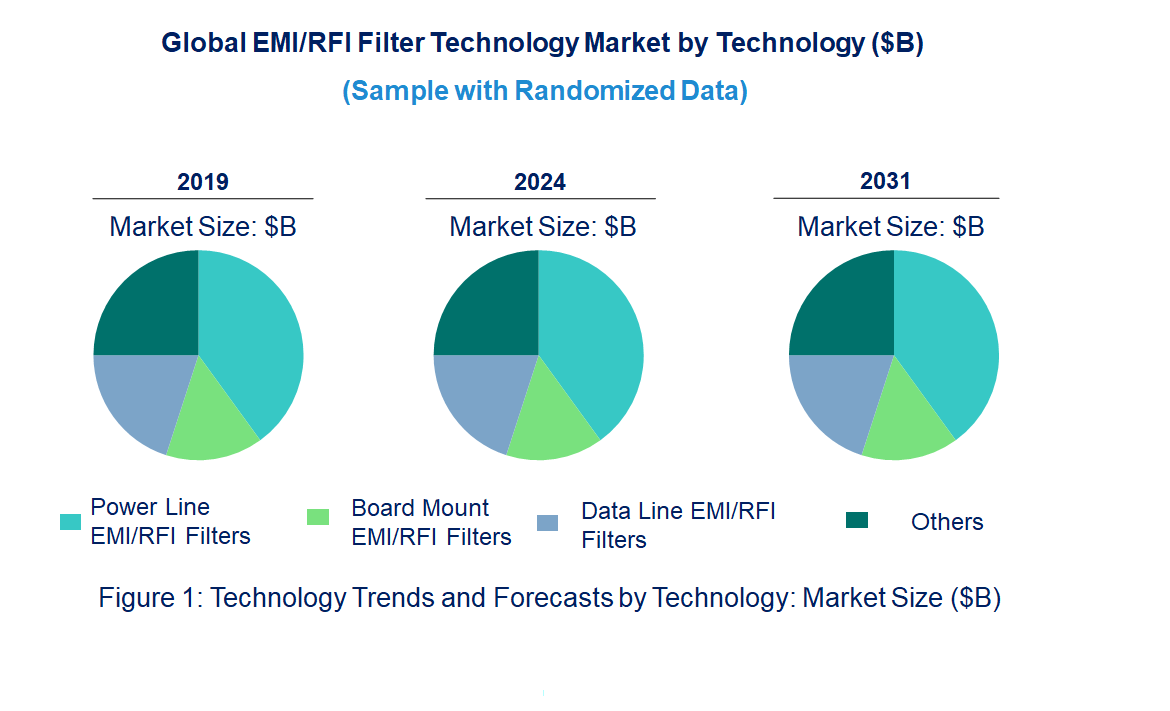
• Technology Readiness by Technology Type: Power Line EMI/RFI Filters are highly mature and widely adopted in industrial, commercial, and medical equipment to suppress electromagnetic interference from power supplies. Board Mount EMI/RFI Filters are moderately mature, integrated directly on PCBs for consumer electronics, automotive systems, and compact devices. Data Line EMI/RFI Filters are increasingly used for protecting high-speed communication lines (e.g., USB, Ethernet), with moderate to high maturity. Other technologies, like feedthrough capacitors and ferrite beads, are well-established and used for custom or application-specific filtering needs. Power Line filters face high competition among global players offering performance and safety-certified solutions. Board Mount filters are competitively driven by size, cost, and performance trade-offs. Data Line filters face growing demand due to expanding digital connectivity. Compliance with EMC/EMI standards (e.g., CISPR, FCC Part 15, MIL-STD-461) and safety certifications (UL, CE) is mandatory. Key applications include telecom, medical devices, industrial automation, automotive electronics, and consumer products.
• Competitive Intensity and Regulatory Compliance: EMI/RFI filter technology sees moderate to high competitive intensity, especially in Power Line and Board Mount filters, where players compete on miniaturization, frequency range, and certification. Companies like TDK, Murata, and TE Connectivity lead with a broad product portfolio and global compliance credentials. Data Line filters are experiencing rising competition due to the proliferation of IoT and high-speed communication devices. Regulatory compliance is strict, requiring adherence to global electromagnetic compatibility (EMC) regulations like FCC, CE, RoHS, and automotive-specific standards such as ISO 7637 and CISPR 25. Manufacturers must also ensure safety and reliability in mission-critical sectors like medical and aerospace, adding complexity to product development and certification.
• Disruption Potential by Technology Type: Power Line EMI/RFI Filters provide foundational disruption by ensuring electromagnetic compliance in high-voltage and industrial systems, enabling broader system interoperability. Board Mount EMI/RFI Filters disrupt PCB-level design by reducing component count and offering more compact EMI protection, which is critical in space-constrained electronics like wearables and EVs. Data Line EMI/RFI Filters are increasingly disruptive due to the exponential rise in data transmission and connected devices, requiring precision filtering without signal degradation. Other technologies like integrated shielding and active EMI suppression are emerging disruptors that complement traditional passive filters. Together, these technologies are advancing the shift toward smaller, faster, and more reliable electronic systems that comply with ever-stricter EMC standards across industries.
• Power Line EMI/RFI Filters
• Board Mount EMI/RFI Filters
• Data Line EMI/RFI Filters
• Others
• Consumer Electronics
• Automotive
• Aerospace and Defense
• Healthcare
• Industrial
• Telecommunications
• Others
• North America
• Europe
• Asia Pacific
• The Rest of the World
• Latest Developments and Innovations in the EMI/RFI Filter Technologies
• Companies / Ecosystems
• Strategic Opportunities by Technology Type


Choose a license that fits your team. Instant PDF delivery.
Prices exclude taxes. Instant delivery. Custom licensing available on request.
Market Report · May 18, 2026
Market Report · May 18, 2026
Market Report · May 18, 2026
Trusted partner for strategic intelligence and business growth


Receive a complimentary market analysis tailored to your industry. Our analysts will identify key growth opportunities and competitive dynamics specific to your business.

Market size, growth rate, and key trend analysis for your specific sector.

Top competitor positioning and market share analysis.

Strategic recommendations backed by data-driven insights.
Get curated market intelligence and competitive moves straight to your inbox.
By subscribing, you agree to receive our monthly insights. Unsubscribe anytime.
Receive a complimentary market analysis tailored to your industry. Our analysts will identify key growth opportunities and competitive dynamics specific to your business.
Market size, growth rate, and key trend analysis for your specific sector.
Top competitor positioning and market share analysis.
Strategic recommendations backed by data-driven insights.
Get curated market intelligence, emerging trends, and competitive moves straight to your inbox each month.
By subscribing, you agree to receive our monthly insights. Unsubscribe anytime.
We'll send your sample report shortly.