
Market Report · July 22, 2026

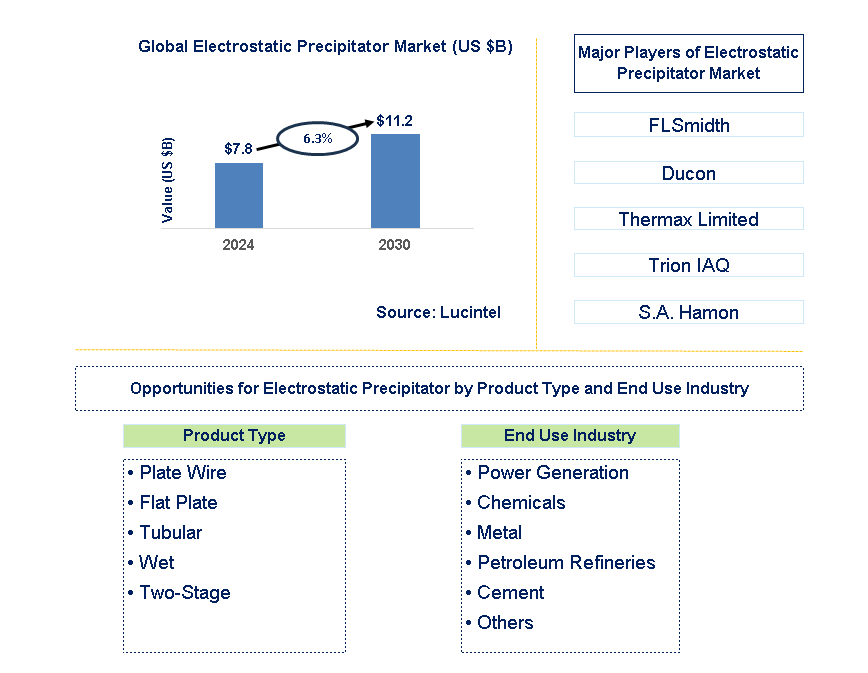
Key data points: The market size in 2031 = $12 billion, growth forecast = 6.3% annually for the next 7 years. Scroll below to get more insights. This market report covers trends, opportunities, and forecasts in the global electrostatic precipitator market to 2031 by product type (plate wire, flat plate, tubular, wet, and two-stage), end use industry (power generation, chemicals, metal, petroleum refineries, cement, and others), and region (North America, Europe, Asia Pacific, and the Rest of the World)
We'll send your sample report shortly.
• Lucintel forecasts that, within the product type category, wet is expected to witness highest growth over the forecast period.
• Within the end use industry category, power generation will remain the largest segment.
• In terms of regions, APAC is expected to witness highest growth over the forecast period. Gain valuable insights for your business decisions with our comprehensive 150+ page report.
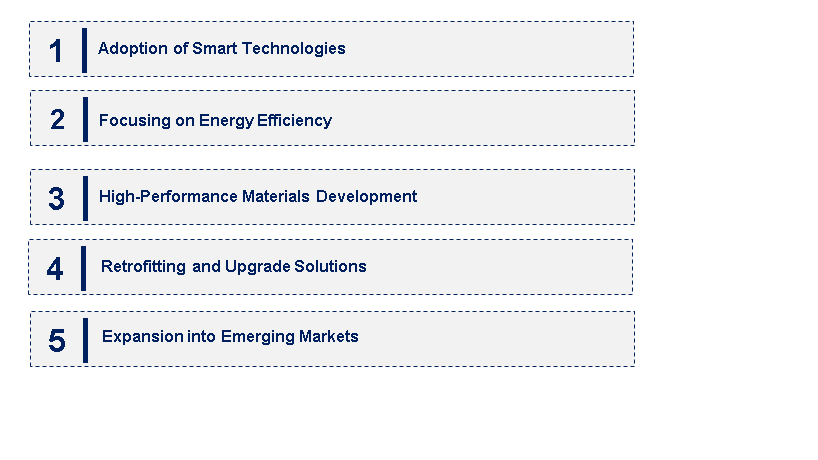
• Adoption of Smart Technologies: ESP systems increasingly integrate IoT and smart sensors for real-time monitoring and control. This integration improves system performance, enables predictive maintenance, reduces downtime, and enhances air pollution control efficiency.
• Focus on Energy Efficiency: Improving energy efficiency has become essential in ESP systems. Optimized power supplies and advanced electrode designs have emerged to reduce energy consumption while maintaining high dust collection efficiency, aligning with global sustainability goals.
• High-Performance Materials: The use of high-performance materials, driven by advances in material science, is on the rise in ESPs. These materials increase durability, resist corrosive environments, and extend system lifespan, making them suitable for challenging industrial applications.
• Retrofitting and Upgrade Solutions: Many industries are upgrading existing ESP systems by adding components or technologies to improve performance and meet regulatory standards, thus avoiding the need to replace older systems entirely.
• Expansion into Emerging Markets: Rapid industrialization and stricter environmental regulations in emerging markets have increased demand for ESP systems. Companies are developing affordable, scalable solutions to meet these needs. The field of electrostatic precipitators is being transformed by trends such as smart technology integration, energy efficiency improvements, advanced materials, retrofit solutions, and market expansion. These trends promote innovation, enhance system efficiencies, and respond to changing environmental and industrial requirements.
• Advanced Filtration Technologies: New filtration technologies, such as high-efficiency particulate air (HEPA) filters and electrostatic enhancements, have improved dust collection efficiency in ESP systems. These advancements help industries meet stricter environmental regulations and improve air quality.
• Energy-Efficient Power Supplies: Recent work on power supply technology for ESPs has focused on enhancing energy efficiency. Variable frequency drives and improved electrode designs reduce energy consumption while maintaining high performance.
• Smart Monitoring and Control Systems: The adoption of smart monitoring and control systems in ESPs is now common. These systems utilize IoT and real-time data analytics to optimize performance, predict maintenance needs, and ensure regulatory compliance.
• Retrofit Solutions for Existing Systems: Companies are offering retrofit solutions to enhance the performance of existing ESP systems or meet new regulatory requirements, giving a second life to older installations.
• Expansion in Emerging Markets: Rapid industrialization and tighter environmental regulations in emerging markets have fueled demand for ESP systems. This growing demand has prompted companies to develop cost-effective, scalable solutions for these regions. Recent developments, including advanced filtration technologies, energy-efficient power supplies, smart control systems, retrofit solutions, and market expansion, are driving innovation in air pollution control across the electrostatic precipitator market.
• Advanced Efficiency Solutions: Developing ESP systems with enhanced efficiency presents a significant growth opportunity. Improved electrode design, power supply systems, and filtration materials can enhance dust collection and energy efficiency, making these systems appealing to industries with stringent emission control requirements.
• Intelligent ESP Technologies: Investing in intelligent ESP technologies with IoT integration and real-time monitoring provides growth potential. These advancements improve process control, enable predictive maintenance, and optimize operations to meet modern industry needs.
• Retrofit and Upgrade Services: Retrofitting existing ESPs offers a valuable business opportunity. Upgrading older systems allows industries to improve performance and meet revised environmental regulations without purchasing new systems.
• Expansion into Emerging Markets: Entering emerging markets with growing industrial activities and stricter environmental regulations offers substantial growth prospects. Providing scalable, cost-effective ESP solutions tailored to the demands of these regions can yield significant returns.
• Development of Sustainable Solutions: Developing sustainable ESP solutions by using environmentally friendly materials and technologies aligns with global environmental objectives. Eco-friendly products attract environmentally conscious customers and help companies meet green regulations. Key strategic growth opportunities in the electrostatic precipitator market include advanced efficiency solutions, smart technology investment, retrofit services, expansion into emerging markets, and sustainable product development. These strategies aim to enhance market reach, improve product offerings, and address changing industrial and regulatory needs.
• Technological Advancements: ESP technology has seen continuous improvements, including advanced filtration materials and smart control systems, which increase performance and efficiency. These developments help meet strict environmental regulations and improve air quality in industrial applications.
• Stricter Environmental Regulations: Demand for efficient ESP systems is driven by increasingly stringent environmental regulations. Companies are investing in advanced ESP technologies to meet emission standards and reduce environmental impact.
• Growing Industrialization: Rapid industrialization, especially in emerging markets, boosts demand for ESP systems. As industries expand, the need for effective air pollution control solutions increases, driving market growth.
• Energy Efficiency Demands: Emphasis on energy efficiency in ESP design is increasing. Innovations that consume less power while delivering high performance allow companies to achieve operational cost savings and meet sustainability targets.
• Technological Integration: Real-time monitoring and control, achieved through IoT and smart technology integration, enhance the operational efficiency and maintenance of ESP systems. These technologies are increasingly favored for managing complex industrial processes. Challenges in the electrostatic precipitator market include:
• High Initial Costs: High initial costs associated with sophisticated ESP systems, including technology development, installation, and maintenance, can hinder adoption.
• Maintenance and Operational Complexity: Maintaining or operating ESP systems requires specialized skills and knowledge, making them complex and raising operational expenses and downtime risks.
• Regulatory Compliance Costs: Compliance with evolving environmental regulations can be costly, as companies must invest in technology upgrades and process adjustments, straining budgets. Drivers such as technological advancements, stricter regulations, industrial growth, energy efficiency demands, and technological integration shape the electrostatic precipitator (ESP) market. Challenges include high initial costs, maintenance complexity, and regulatory compliance costs. Balancing these factors is essential for growth and competitiveness in the market.
• FLSmidth
• Ducon
• Thermax Limited
• Trion IAQ
• S.A. Hamon
• John Wood Group
• Siemens
• Babcock & Wilcox Enterprises
• General Electric
• Mitsubishi Power
• Plate Wire
• Flat Plate
• Tubular
• Wet
• Two-Stage
• Power Generation
• Chemicals
• Metal
• Petroleum Refineries
• Cement
• Others
• North America
• Europe
• Asia Pacific
• The Rest of the World
• United States: In the US, efforts are concentrated on upgrading ESP systems to meet stringent environmental regulations. Improvements include stronger electrostatic fields and enhanced collection efficiencies. Firms are investing in retrofit technologies to enhance performance and minimize emissions, aligning with regulatory pressures and sustainability demands.
• China: ESP adoption in China has grown significantly due to rapid industrialization and strict air quality regulations. New features include advanced materials and automation technologies, improving effectiveness and ease of maintenance. The government is modernizing this sector to address severe air pollution and enhance public health.
• Germany: Germany leads in implementing high-efficiency ESP systems that use advanced filtration technology. Recent advancements include high-performance materials and smart controls, optimizing energy utilization and system reliability. These efforts reflect Germany’s commitment to reducing industrial emissions and advancing environmental protection technology.
• India: In India, industries are increasing investments in ESPs to meet new environmental standards. Local industrial-specific solutions have been developed to improve dust collection efficiency and lower operational costs, driven by growing environmental awareness and regulatory measures.
• Japan: Japan is advancing its ESP industry by focusing on high-precision, energy-efficient models. Recent innovations have introduced IoT-enabled, state-of-the-art ESP systems that support real-time monitoring and optimization for improved performance. These technological advancements align with Japan’s greenhouse gas reduction targets and high environmental standards.


• FLSmidth
• DUCON
• Thermax Limited
• Trion IAQ
• S.A. Hamon
• John Wood Group
• Siemens
• Babcock & Wilcox Enterprises
• General Electric
• Mitsubishi Power Q6. Which electrostatic precipitator market segment will be the largest in future? Answer: Lucintel forecasts that wet is expected to witness highest growth over the forecast period. Q7. In electrostatic precipitator market, which region is expected to be the largest in next 5 years? Answer: APAC is expected to witness highest growth over the forecast period. Q.8 Do we receive customization in this report? Answer: Yes, Lucintel provides 10% customization without any additional cost.


Choose a license that fits your team. Instant PDF delivery.
Prices exclude taxes. Instant delivery. Custom licensing available on request.
Market Report · July 22, 2026
Market Report · July 22, 2026
Market Report · July 17, 2026
Trusted partner for strategic intelligence and business growth


Receive a complimentary market analysis tailored to your industry. Our analysts will identify key growth opportunities and competitive dynamics specific to your business.

Market size, growth rate, and key trend analysis for your specific sector.

Top competitor positioning and market share analysis.

Strategic recommendations backed by data-driven insights.
Get curated market intelligence and competitive moves straight to your inbox.
By subscribing, you agree to receive our monthly insights. Unsubscribe anytime.
Receive a complimentary market analysis tailored to your industry. Our analysts will identify key growth opportunities and competitive dynamics specific to your business.
Market size, growth rate, and key trend analysis for your specific sector.
Top competitor positioning and market share analysis.
Strategic recommendations backed by data-driven insights.
Get curated market intelligence, emerging trends, and competitive moves straight to your inbox each month.
By subscribing, you agree to receive our monthly insights. Unsubscribe anytime.
We'll send your sample report shortly.