
Market Report · July 29, 2026

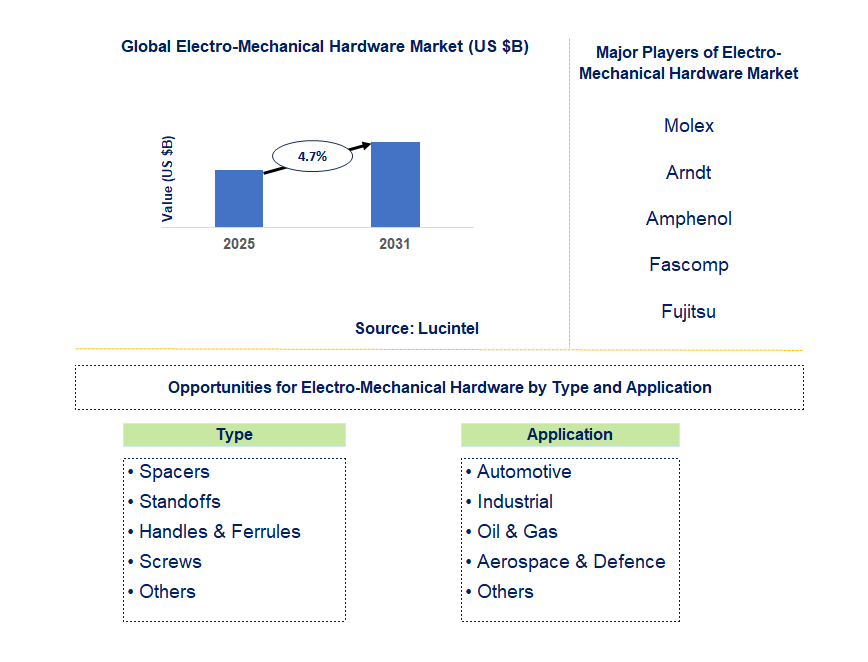
Key data points: The growth forecast = 4.7% annually for the next 7 years. Scroll below to get more insights. This market report covers Trends, opportunity and forecast in electro-mechanical hardware market to 2031 by type (spacers, standoffs, handles & ferrules, screws, and others), application (automotive, industrial, oil & gas, aerospace & defence, and others), and region (North America, Europe, Asia Pacific, and the Rest of the World)
We'll send your sample report shortly.
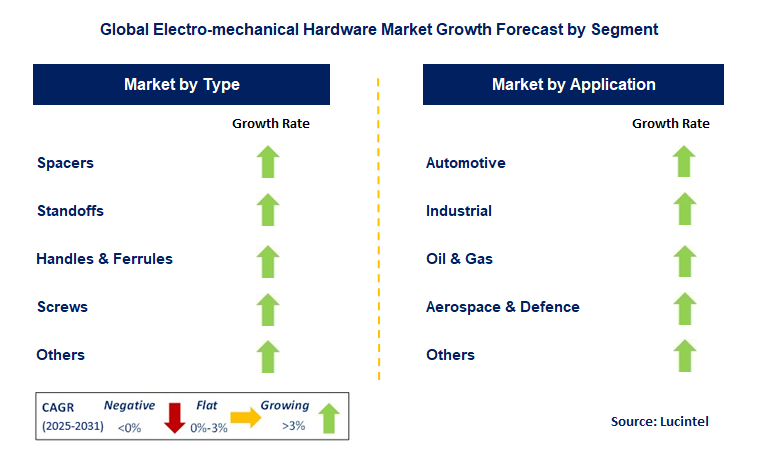
• Lucintel forecasts that, within the type category, the spacer is expected to witness the highest growth over the forecast period.
• Within the application category, automotive is expected to witness the highest growth.
• In terms of region, APAC is expected to witness the highest growth over the forecast period. Gain valuable insights for your business decisions with our comprehensive 150+ page report. Sample figures with some insights are shown below.
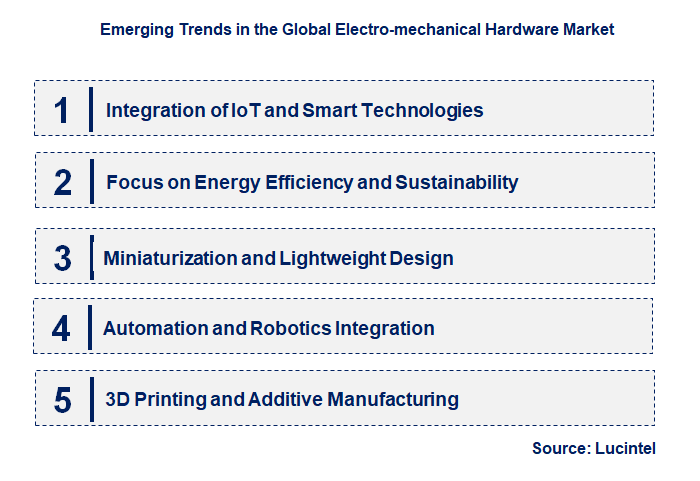
• Integration of IoT and Smart Technologies: The integration of the Internet of Things (IoT) and smart technologies is revolutionizing electro-mechanical hardware. Devices are becoming more connected, allowing for real-time monitoring, predictive maintenance, and data collection. Manufacturers are embedding sensors and smart controllers into electro-mechanical systems to enhance performance and provide valuable insights. This trend enables users to optimize machine operation, reduce downtime, and improve efficiency. The continued development of IoT technology and smart integration will make electro-mechanical systems more intelligent, adaptable, and responsive to dynamic industrial environments.
• Focus on Energy Efficiency and Sustainability: Energy-efficient and sustainable electro-mechanical solutions are becoming a major focus as industries aim to reduce their carbon footprint and comply with stringent environmental regulations. Manufacturers are incorporating energy-saving technologies like variable speed drives, efficient motors, and low-power systems into electro-mechanical hardware. Additionally, the demand for sustainable materials, such as recyclable components, is on the rise. This trend supports the global push towards greener manufacturing practices, helping companies not only reduce operational costs but also meet environmental standards and improve their sustainability credentials.
• Miniaturization and Lightweight Design: Miniaturization and lightweight design are key trends in the electro-mechanical hardware market, driven by the growing need for compact, portable, and efficient solutions. As industries like robotics, aerospace, and consumer electronics evolve, the demand for smaller, lighter, and more powerful components is increasing. Advances in materials science and manufacturing techniques enable the development of high-performance electro-mechanical systems that retain strength while reducing size and weight. This trend is vital for applications where space and weight constraints are crucial, such as wearable devices, drones, and mobile robotics.
• Automation and Robotics Integration: The rise of automation and robotics is having a profound impact on the electro-mechanical hardware market. As industries move towards greater automation to enhance productivity and reduce labor costs, the demand for high-performance electro-mechanical components used in robotic systems is growing. Components such as actuators, sensors, and motors are being developed to meet the precise needs of robotic applications. Automation is transforming manufacturing processes, leading to smarter, more efficient production lines. This trend is also contributing to the evolution of collaborative robots (cobots) that work alongside humans in shared workspaces.
• 3D Printing and Additive Manufacturing: 3D printing and additive manufacturing technologies are enabling a new era of custom-designed electro-mechanical hardware. These technologies allow for rapid prototyping, reduced waste, and the production of complex, intricate components that were once difficult or expensive to manufacture using traditional methods. The growing adoption of 3D printing in the electro-mechanical sector is leading to cost-effective, on-demand production, particularly for low-volume and bespoke applications. This trend is facilitating innovation, speeding up the product development cycle, and enabling companies to offer more personalized and efficient solutions to their customers. The electro-mechanical hardware market is being reshaped by trends like IoT integration, energy efficiency, miniaturization, automation, and additive manufacturing. These trends are driving innovation, improving operational efficiencies, and meeting the evolving needs of industries ranging from robotics and consumer electronics to renewable energy and manufacturing. As businesses continue to demand smarter, greener, and more cost-effective solutions, electro-mechanical hardware is becoming increasingly versatile and advanced. The continuous advancements in materials, connectivity, and manufacturing technologies are ensuring that the market will remain dynamic, with companies focusing on sustainability, performance, and flexibility to stay competitive.
• Advancements in Automation and Robotics: The surge in industrial automation is a key driver of the electro-mechanical hardware market. With the rise of Industry 4.0, automation systems that require precision components such as actuators, sensors, and controllers are in high demand. The development of collaborative robots (cobots) has been particularly impactful, with electro-mechanical systems enabling enhanced human-robot interaction. This trend is driving increased investment in R&D for more efficient, cost-effective, and safer electro-mechanical solutions that can be used across various sectors, from manufacturing to logistics, enhancing operational efficiency and reducing human error.
• Energy-Efficient Electro-mechanical Components: With sustainability becoming a top priority, there is a growing demand for energy-efficient electro-mechanical hardware solutions. Innovations in electric motors, energy storage systems, and other components have led to a reduction in energy consumption and an overall decrease in the carbon footprint of production facilities. For instance, the use of high-efficiency motors and regenerative braking systems in industrial applications has enabled manufacturers to achieve significant energy savings. This trend is reshaping the industry as companies invest in green technologies to comply with environmental regulations and reduce operating costs.
• Integration of Smart Systems in Electro-mechanical Hardware: The integration of smart technologies into electro-mechanical hardware is transforming industries by enabling real-time monitoring, predictive maintenance, and enhanced performance. Components such as sensors, IoT-enabled devices, and data analytics tools are being incorporated into electro-mechanical systems, making them smarter and more connected. In sectors like automotive and industrial manufacturing, this integration allows for faster decision-making, increased uptime, and better performance. The continuous flow of data and advanced algorithms help improve the reliability and longevity of electro-mechanical systems, resulting in optimized operations across diverse applications.
• Miniaturization of Electro-mechanical Components: As industries demand smaller, lighter, and more powerful systems, miniaturization of electro-mechanical hardware has become a prominent trend. Smaller components such as miniature motors, actuators, and sensors are being developed to cater to the growing need for compact, high-performance systems. This trend is particularly significant in sectors like consumer electronics, medical devices, and automotive. The miniaturization of electro-mechanical systems allows for more flexible and portable designs while maintaining the efficiency and functionality of larger counterparts, opening up new possibilities for innovation in various product categories.
• Advancements in Electric Vehicle (EV) Technologies: The rapid growth of the electric vehicle (EV) market has significantly boosted demand for electro-mechanical hardware. Components like electric motors, battery management systems, and power electronics are critical to the performance of EVs, and as such, there has been substantial innovation in these areas. Advances in motor design and the development of high-capacity batteries have improved the efficiency and performance of EVs, making them more competitive with traditional vehicles. The growing adoption of EVs worldwide is accelerating investment in electro-mechanical systems, contributing to the market’s expansion and innovation. These recent developments highlight the significant transformation occurring in the electro-mechanical hardware market, with advancements in automation, energy efficiency, smart technologies, miniaturization, and electric vehicle applications driving growth. As companies invest in new technologies to meet consumer demands for sustainable, high-performance systems, the market is expected to continue evolving. The integration of smarter, more efficient components is reshaping industries, creating new opportunities for innovation, and establishing the foundation for future technological advancements.
• Robotics and Automation: Robotics and automation are key growth areas in the electro-mechanical hardware market. With industries increasingly adopting automated processes to reduce costs and improve productivity, the demand for high-precision electro-mechanical components such as actuators, motors, and sensors is skyrocketing. Collaborative robots (cobots), which work alongside humans, are gaining traction across manufacturing, healthcare, and logistics. These robots require sophisticated electro-mechanical hardware that ensures reliability and adaptability in dynamic environments. This growth opportunity enables manufacturers to innovate and develop tailored solutions for automation and robotics systems, driving increased efficiency and new business models.
• Electric Vehicles (EVs) and Automotive Industry: The shift towards electric vehicles (EVs) is driving significant demand for advanced electro-mechanical hardware in the automotive sector. As automakers invest in EVs, the need for high-performance electric motors, powertrain components, and energy-efficient systems is growing. Additionally, the development of autonomous vehicles is creating further opportunities for electro-mechanical hardware suppliers to provide systems for precise motion control, sensors, and actuators. This trend presents a significant opportunity for companies to expand their product lines and integrate more advanced solutions that align with the growing demand for sustainable and intelligent automotive systems.
• Renewable Energy and Smart Grids: The renewable energy sector, including solar, wind, and hydroelectric power, presents substantial growth opportunities for electro-mechanical hardware. These technologies require reliable and efficient hardware for energy generation, storage, and transmission. Wind turbines, solar panels, and grid infrastructure are increasingly incorporating advanced electro-mechanical systems to improve performance and reduce maintenance costs. Additionally, smart grids that integrate renewable energy sources with advanced sensors and control systems are gaining popularity. Companies in the electro-mechanical hardware market can capitalize on this demand by providing energy-efficient, durable, and smart solutions for the renewable energy and smart grid sectors.
• Consumer Electronics and Wearables: The consumer electronics and wearables sector is experiencing rapid growth, creating opportunities for electro-mechanical hardware manufacturers to develop compact, lightweight, and high-performance components. As demand for devices like smartphones, smartwatches, and fitness trackers increases, companies need to provide miniaturized motors, sensors, and actuators that optimize performance while conserving energy. Additionally, the integration of electro-mechanical systems into the Internet of Things (IoT) is expanding this market. By providing innovative solutions for consumer electronics, companies can tap into a thriving market that requires cutting-edge electro-mechanical hardware solutions.
• Industrial Equipment and Manufacturing: The industrial equipment sector, including machinery, factory automation, and material handling systems, is undergoing a transformation towards smart manufacturing and Industry 4.0. Electro-mechanical hardware plays a pivotal role in these advancements, providing the components needed for precise control, robotics, and data integration. Companies offering high-quality motors, sensors, and controllers can tap into this booming market by providing solutions that enhance the efficiency, flexibility, and sustainability of industrial operations. With a focus on automation, predictive maintenance, and optimization, this growth opportunity presents substantial potential for electro-mechanical hardware providers to expand in industrial applications. The electro-mechanical hardware market is positioned for significant growth, driven by opportunities across diverse applications such as robotics, electric vehicles, renewable energy, consumer electronics, and industrial equipment. As industries continue to embrace automation, sustainability, and advanced technologies, the demand for high-performance, energy-efficient, and smart electro-mechanical components is increasing. Companies that can innovate and tailor their products to meet the evolving needs of these sectors will be well-positioned to capitalize on these strategic growth opportunities. By focusing on these key applications, businesses can enhance their competitive edge and unlock new revenue streams in the expanding electro-mechanical hardware landscape.
• Molex
• Arndt
• Amphenol
• Fascomp
• Fujitsu
• Keystone Electronics
• RAF Electronic Hardware
• Spacers
• Standoffs
• Handles & Ferrules
• Screws
• Others
• Automotive
• Industrial
• Oil & Gas
• Aerospace & Defence
• Others
• North America
• Europe
• Asia Pacific
• The Rest of the World
• United States: In the United States, the electro-mechanical hardware market is benefitting from rapid innovations in automation and robotics. Companies are investing heavily in R&D to develop advanced motion control systems, sensors, and actuators that can be seamlessly integrated into smart manufacturing systems. The aerospace and automotive industries are key drivers of demand for high-precision electro-mechanical systems. Additionally, the adoption of Industry 4.0 technologies has led to a growing need for electro-mechanical hardware that enables real-time monitoring and predictive maintenance. The U.S. is also embracing sustainable solutions, focusing on energy-efficient systems and reducing the environmental footprint of electro-mechanical components.
• China: The Chinese electro-mechanical hardware market is growing rapidly, fueled by the country's push for technological self-reliance and its massive manufacturing base. The government’s "Made in China 2025" initiative is driving investment in high-tech industries, including robotics, automation, and AI. Chinese manufacturers are producing advanced electromechanical components that are used in industries such as automotive, electronics, and heavy machinery. Furthermore, China is focusing on the development of electric vehicles (EVs), which has created significant demand for high-performance electro-mechanical systems, such as electric motors, battery systems, and advanced control units, contributing to the market’s expansion.
• Germany: Germany has long been a leader in the electro-mechanical hardware market, particularly in industrial automation and manufacturing. The country’s robust engineering sector is driving advancements in precision mechanics and electronic integration. German companies are known for their innovation in producing highly durable and efficient electro-mechanical systems, especially for sectors like automotive, robotics, and aerospace. The rise of the Industry 4.0 paradigm has spurred demand for smart, interconnected systems that enhance factory automation and improve operational efficiency. Additionally, Germany is prioritizing the development of energy-efficient electro-mechanical components in line with its commitment to sustainability and green technology.
• India: The Indian electro-mechanical hardware market is evolving rapidly due to the country’s growing focus on automation and infrastructure development. As India embraces smart cities, there is an increasing demand for electro-mechanical systems in urban planning, transportation, and energy distribution. The automotive sector is also experiencing growth, with rising demand for electric vehicles (EVs) and their associated electro-mechanical components, such as battery management systems, electric motors, and controllers. Moreover, India is fostering a robust manufacturing sector with the implementation of "Make in India" initiatives, further driving the need for advanced electro-mechanical hardware in various applications across industries.
• Japan: Japan continues to be a major player in the electro-mechanical hardware market, driven by its strong industrial base and technological expertise. The country's focus on robotics and automation has spurred advancements in electro-mechanical components such as actuators, sensors, and motors. Japan is a leader in producing high-precision electro-mechanical systems, especially for the automotive and electronics industries. Additionally, Japan’s investment in smart factories, artificial intelligence, and the Internet of Things (IoT) is accelerating demand for electro-mechanical systems that enable real-time data processing, enhanced performance, and energy efficiency. The nation is also pioneering the development of lightweight materials for these systems.


• Molex
• Arndt
• Amphenol
• Fascomp
• Fujitsu
• Keystone Electronics
• RAF Electronic Hardware Q5. Which electro-mechanical hardware market segment will be the largest in future? Answer: Lucintel forecasts that the spacer is expected to witness the highest growth over the forecast period. Q6. In electro-mechanical hardware market, which region is expected to be the largest in next 5 years? Answer: APAC is expected to witness the highest growth over the forecast period. Q7. Do we receive customization in this report? Answer: Yes, Lucintel provides 10% customization without any additional cost.


Choose a license that fits your team. Instant PDF delivery.
Prices exclude taxes. Instant delivery. Custom licensing available on request.
Market Report · July 29, 2026
Market Report · July 20, 2026
Market Report · July 20, 2026
Trusted partner for strategic intelligence and business growth


Receive a complimentary market analysis tailored to your industry. Our analysts will identify key growth opportunities and competitive dynamics specific to your business.

Market size, growth rate, and key trend analysis for your specific sector.

Top competitor positioning and market share analysis.

Strategic recommendations backed by data-driven insights.
Get curated market intelligence and competitive moves straight to your inbox.
By subscribing, you agree to receive our monthly insights. Unsubscribe anytime.
Receive a complimentary market analysis tailored to your industry. Our analysts will identify key growth opportunities and competitive dynamics specific to your business.
Market size, growth rate, and key trend analysis for your specific sector.
Top competitor positioning and market share analysis.
Strategic recommendations backed by data-driven insights.
Get curated market intelligence, emerging trends, and competitive moves straight to your inbox each month.
By subscribing, you agree to receive our monthly insights. Unsubscribe anytime.
We'll send your sample report shortly.