
Market Report · July 31, 2026

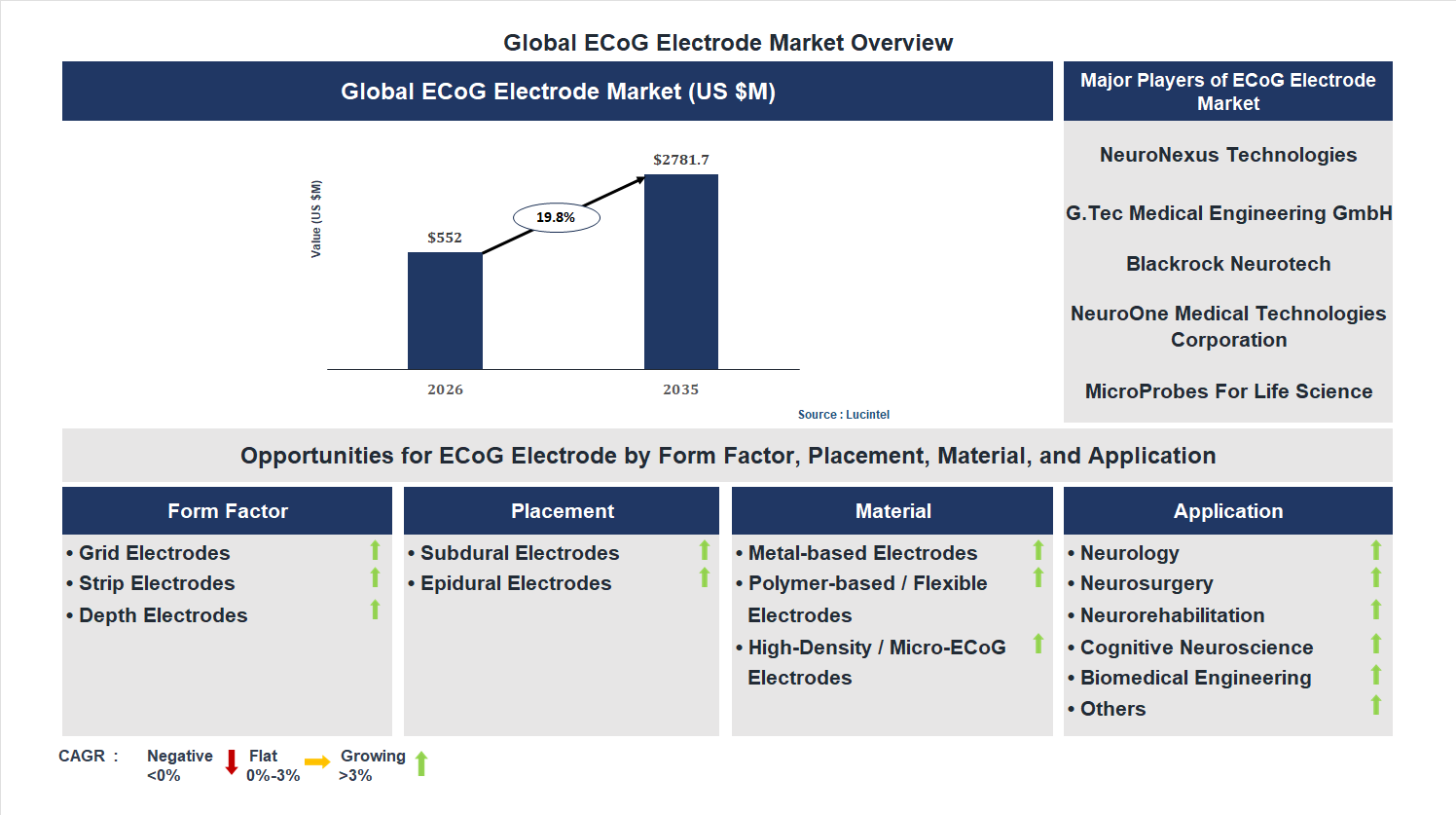
Key data points: The market size in 2035 = $2781.7 million, growth forecast = 19.8% annually for the next 8 years. Scroll below to get more insights. This market report covers trends, opportunities and forecasts in ECoG electrode market to 2035 by form factor (grid electrodes, strip electrodes, and depth electrodes), placement (subdural electrodes and epidural electrodes), material (metal-based electrodes, polymer-based / flexible electrodes, and high-density / micro-ECoG electrodes), application (neurology, neurosurgery, neurorehabilitation, cognitive neuroscience, biomedical engineering, and others), and region (North America, Europe, Asia Pacific, and the Rest of the World)
We'll send your sample report shortly.
• Lucintel forecasts that, within the form factor category, depth electrode is expected to witness the highest growth over the forecast period.
• Within the application category, neurosurgery is expected to witness the highest growth.
• In terms of region, APAC is expected to witness the highest growth over the forecast period. Gain valuable insights for your business decisions with our comprehensive 150+ page report. Sample figures with some insights are shown below.
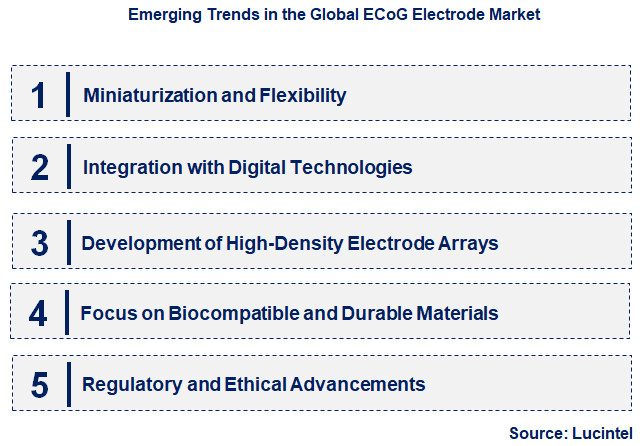
• Miniaturization and Flexibility: The trend toward smaller, more flexible electrodes enhances patient comfort and surgical precision. Advances in materials like biocompatible polymers and flexible electronics allow electrodes to conform to brain surfaces, reducing tissue damage and improving signal quality. This miniaturization facilitates minimally invasive procedures and broadens application possibilities, including chronic monitoring and brain-computer interfaces. As a result, clinicians can achieve more accurate diagnostics and interventions with less invasive techniques, ultimately improving patient outcomes and expanding market opportunities.
• Integration with Digital Technologies: The incorporation of digital health tools, such as wireless data transmission and real-time analytics, is transforming ECoG monitoring. Wireless electrodes eliminate the need for cumbersome cables, increasing patient mobility and comfort during long-term monitoring. Advanced software platforms enable real-time data analysis, pattern recognition, and remote monitoring, which enhance diagnostic accuracy and facilitate telemedicine. This integration is driving the development of smarter, more efficient neuromonitoring systems, expanding their use in both clinical and research settings, and opening new revenue streams for market players.
• Development of High-Density Electrode Arrays: The demand for high-density electrode arrays is increasing to capture more detailed neural signals. These arrays provide higher spatial resolution, enabling precise mapping of brain activity and better localization of epileptogenic zones or functional areas. Innovations in microfabrication techniques allow for larger arrays with minimal size and weight, improving the quality of data collected. This trend is crucial for advancing personalized medicine, improving surgical outcomes, and supporting neuroscientific research, thereby fueling market growth and technological innovation.
• Focus on Biocompatible and Durable Materials: The market is witnessing a shift toward using advanced biocompatible and durable materials to enhance electrode longevity and reduce adverse tissue reactions. Materials such as platinum, iridium oxide, and novel polymers are being optimized for stability and conductivity. These improvements extend the lifespan of electrodes, making them suitable for chronic implantation and long-term monitoring. Enhanced biocompatibility minimizes inflammation and tissue damage, leading to safer procedures and better patient experiences. This focus on material science is critical for expanding the clinical applications of ECoG electrodes and increasing their market adoption.
• Regulatory and Ethical Advancements: As ECoG technology becomes more sophisticated, regulatory frameworks are evolving to ensure safety and efficacy. Increased collaboration between industry stakeholders and regulatory bodies is streamlining approval processes for new devices. Ethical considerations, especially regarding data privacy and patient consent, are gaining prominence with the rise of digital and wireless solutions. These developments foster greater trust and facilitate market entry for innovative products. Clearer regulations and ethical standards are essential for sustainable growth, encouraging innovation while safeguarding patient rights and safety. In summary, these emerging trends are collectively reshaping the ECoG electrode market by enhancing device performance, expanding clinical applications, and improving patient experiences. The focus on miniaturization, digital integration, high-density arrays, advanced materials, and regulatory clarity is driving innovation, increasing market competitiveness, and opening new avenues for research and treatment. As these trends continue to evolve, they will significantly influence the future landscape of neuromonitoring and neurodiagnostics.
• Growing demand for high-resolution brain monitoring: The need for precise, real-time neural data is increasing, leading to the development of advanced ECoG electrodes that offer better spatial resolution and signal fidelity. This growth is driven by applications in epilepsy, brain mapping, and neuroprosthetics, which require detailed neural activity insights. As clinical and research applications expand, the market benefits from innovations that improve electrode performance, durability, and patient outcomes, fostering increased adoption and investment.
• Technological advancements in electrode design: Innovations such as flexible, biocompatible materials and miniaturized electrodes are revolutionizing the ECoG market. These advancements enable less invasive procedures, reduce patient discomfort, and improve signal quality. Enhanced electrode designs also facilitate long-term implantation, expanding their use in chronic monitoring and neurostimulation therapies. These technological improvements are attracting more healthcare providers and researchers, thereby accelerating market growth and opening new avenues for personalized neurotherapies.
• Rising adoption of brain-computer interfaces (BCIs): The integration of ECoG electrodes with BCI technology is creating new opportunities for communication and control in disabled patients. This trend is driven by advancements in neural decoding algorithms and portable BCI systems. As BCI applications grow in neurorehabilitation, gaming, and assistive devices, the demand for high-quality ECoG electrodes increases. This synergy is fostering market expansion, encouraging innovation, and attracting investments in neurotechnology startups and research initiatives.
• Increasing focus on neurodiagnostics and neuromodulation: ECoG electrodes are increasingly used for diagnosing neurological disorders and delivering targeted neuromodulation therapies. The rise in epilepsy surgeries, brain tumor mapping, and deep brain stimulation procedures is fueling demand. Improved electrode sensitivity and stability enhance diagnostic accuracy and therapeutic efficacy. This focus on personalized medicine and minimally invasive procedures is expanding the market, with healthcare providers seeking advanced solutions to improve patient outcomes and reduce treatment costs.
• Expansion of research and clinical applications: Growing investments in neuroscience research and clinical trials are driving demand for ECoG electrodes. Their use in understanding brain function, developing new treatments, and advancing neurotechnology is expanding rapidly. Increased funding from government agencies and private organizations supports innovation in electrode materials and configurations. This expansion is fostering a competitive market landscape, encouraging product development, and broadening the scope of ECoG applications across various neurological conditions. The overall impact of these developments is significantly transforming the ECoG electrode market by enhancing device performance, expanding application areas, and fostering innovation. This growth is leading to improved patient outcomes, more personalized treatments, and increased investment in neurotechnology, positioning the market for sustained expansion and technological leadership.
• Expansion into Brain-Computer Interface Applications: The growing demand for BCIs in medical and non-medical fields presents a major growth avenue. ECoG electrodes are crucial for high-fidelity brain signal acquisition, enabling advanced communication and control systems for paralyzed patients and augmentative devices. As BCI technology matures, the need for reliable, high-quality electrodes increases, fostering innovation in electrode materials and configurations. This expansion is expected to significantly boost market revenue and adoption across healthcare, gaming, and military sectors.
• Development of High-Density and Flexible Electrodes for Enhanced Resolution: The demand for more detailed brain activity mapping drives the development of high-density, flexible ECoG electrodes. These electrodes offer improved spatial resolution, enabling precise localization of neural signals. Innovations in materials like flexible polymers and nanomaterials facilitate better conformity to brain surfaces, reducing tissue damage and improving signal quality. This opportunity caters to both clinical diagnostics and neuroscience research, fostering more accurate brain mapping and personalized treatment strategies.
• Integration of ECoG Electrodes with Digital and Wireless Technologies: The integration of ECoG electrodes with wireless data transmission and digital platforms is transforming neuro-monitoring. Wireless electrodes eliminate the need for cumbersome wiring, increasing patient comfort and mobility during long-term monitoring. Digital integration allows real-time data analysis, remote diagnostics, and seamless connectivity with healthcare systems. This technological convergence enhances clinical workflows, supports telemedicine, and broadens application scopes, creating a significant growth opportunity for market players focusing on smart, connected neurotechnology solutions.
• Focus on Biocompatible and Durable Electrode Materials: The development of biocompatible, durable materials is critical for long-term implantation and reliable performance of ECoG electrodes. Innovations include using advanced polymers, ceramics, and nanomaterials that resist corrosion, minimize immune response, and maintain signal integrity over time. These improvements extend electrode lifespan, reduce complications, and enable chronic monitoring in neurological disorders. The focus on material science is expected to open new markets in long-term neuro-monitoring and implantable devices, driving market growth.
• Rising Adoption in Neurosurgical and Diagnostic Procedures: Increasing use of ECoG electrodes in neurosurgical procedures, such as epilepsy surgery and tumor resection, offers substantial growth potential. Precise brain mapping during surgery improves outcomes and reduces complications. Additionally, ECoG-based diagnostics aid in understanding complex neurological conditions. The rising prevalence of neurological disorders and technological advancements in surgical tools are fueling adoption. This trend is expected to expand the market, with more hospitals and clinics integrating ECoG solutions into standard neurosurgical and diagnostic protocols. The overall market outlook is positively influenced by these opportunities, promising technological innovation, expanded applications, and increased adoption. As the ECoG electrode market evolves, it will likely see enhanced performance, broader clinical use, and integration with emerging neurotechnologies, ultimately improving patient outcomes and advancing neuroscience research.
• Technological Innovation: The development of advanced ECoG electrodes with improved biocompatibility, signal quality, and durability is a major driver. These innovations enable more accurate brain activity monitoring, which is crucial for epilepsy diagnosis and brain research. As technology progresses, manufacturers can offer more sophisticated products, expanding clinical applications and improving patient outcomes. The integration of wireless and miniaturized electrodes further enhances usability and patient comfort, fueling market growth.
• Rising Prevalence of Neurological Disorders: The increasing incidence of epilepsy, brain tumors, and other neurological conditions is a significant driver. Accurate brain activity monitoring is essential for diagnosis and treatment planning, leading to a higher demand for ECoG electrodes. As neurological disorders become more prevalent globally, healthcare providers seek reliable tools to improve patient management, thereby expanding the market.
• Growing Adoption of Minimally Invasive Surgeries: The shift towards minimally invasive neurosurgical procedures is boosting demand for ECoG electrodes. These procedures require precise brain mapping, which ECoG electrodes facilitate. The benefits of reduced recovery time, lower complication rates, and improved surgical outcomes make ECoG electrodes a preferred choice, encouraging hospitals and clinics to adopt these technologies.
• Increasing Investment in Brain Research: Funding from government agencies, research institutions, and private organizations is accelerating innovation in brain mapping and neurotechnology. ECoG electrodes are vital tools in neuroscience research, enabling detailed brain activity analysis. This investment not only enhances product development but also broadens the scope of clinical and research applications, further propelling market growth. The challenges in the ECoG electrode market are:
• Regulatory and Approval Barriers: Stringent regulatory requirements for medical devices, especially those implanted in the brain, can delay product launches and increase costs. Navigating complex approval processes by agencies like the FDA or EMA requires extensive clinical data, which can be time-consuming and expensive. These barriers may hinder innovation and slow down the introduction of new, improved ECoG electrodes to the market.
• High Cost of Devices and Procedures: The advanced technology involved in ECoG electrodes and the specialized surgical procedures they require contribute to high costs. This can limit accessibility, especially in developing regions with constrained healthcare budgets. Reimbursement issues and cost-effectiveness concerns further restrict widespread adoption, impacting market growth.
• Ethical and Safety Concerns: Implanting electrodes in the brain raises ethical questions related to patient safety, data privacy, and long-term effects. Potential complications such as infections, tissue damage, or device failure pose safety risks. These concerns necessitate rigorous testing and monitoring, which can slow market expansion and require ongoing regulatory oversight to ensure patient safety. In summary, the ECoG electrode market is shaped by rapid technological advancements, increasing neurological disorder prevalence, and a growing focus on minimally invasive procedures. However, regulatory hurdles, high costs, and safety concerns present significant challenges. These factors collectively influence market dynamics, requiring stakeholders to innovate within regulatory frameworks while addressing cost and safety issues. Overall, the markets growth prospects remain promising, driven by technological progress and unmet clinical needs, but it must navigate these challenges to realize its full potential.
• NeuroNexus Technologies
• G.Tec Medical Engineering GmbH
• Blackrock Neurotech
• NeuroOne Medical Technologies Corporation
• MicroProbes For Life Science
• Ripple Neuro
• Ad‑Tech Medical Instrument Corporation
• PMT Corporation
• Integra LifeSciences Holdings Corporation
• CorTec GmbH
• Grid Electrodes
• Strip Electrodes
• Depth Electrodes
• Subdural Electrodes
• Epidural Electrodes
• Metal-based Electrodes
• Polymer-based / Flexible Electrodes
• High-Density / Micro-ECoG Electrodes
• Neurology
• Neurosurgery
• Neurorehabilitation
• Cognitive Neuroscience
• Biomedical Engineering
• Others
• North America
• Europe
• Asia Pacific
• The Rest of the World
• United States: The US leads in ECoG electrode innovation, with major investments from biotech firms and research institutions. Recent advancements include wireless ECoG systems that improve patient mobility and data collection. The FDA has approved several new devices, boosting market growth. Additionally, collaborations between tech giants and healthcare providers are accelerating the development of personalized neuro-monitoring solutions. The US also sees increased clinical trials focusing on epilepsy and brain tumor treatments, further expanding the application scope of ECoG electrodes.
• China: China has rapidly expanded its neurotechnology sector, with government initiatives supporting ECoG research and manufacturing. Recent developments include the launch of domestically produced high-density electrodes that offer better spatial resolution. Chinese companies are also focusing on cost-effective solutions to increase accessibility in rural and underserved areas. The country’s growing clinical research infrastructure is facilitating large-scale trials, especially in stroke and neurodegenerative disease management, positioning China as a key player in affordable ECoG solutions.
• Germany: Germany emphasizes high-quality, precision-engineered ECoG electrodes, driven by its strong medical device manufacturing sector. Recent innovations include biocompatible, long-lasting electrodes with enhanced signal fidelity. Germany’s regulatory environment ensures rigorous testing, leading to highly reliable products. The country is also investing in minimally invasive electrode designs to reduce patient discomfort. Collaborations between universities and industry are fostering advancements in electrode materials and integration with other neurotechnologies, supporting Germany’s reputation for medical innovation.
• India: India’s ECoG market is emerging, with a focus on affordable and scalable solutions to meet increasing neurological healthcare needs. Recent developments include the development of low-cost, disposable electrodes suitable for widespread clinical use. The government’s push for healthcare infrastructure expansion and research funding is encouraging local innovation. Indian startups are exploring portable and wireless ECoG systems to improve accessibility in remote areas. The country’s growing neuroclinical research is helping to adapt ECoG technology for diverse neurological conditions prevalent in the region.
• Japan: Japan continues to advance ECoG technology through its focus on miniaturization and integration with robotic systems. Recent innovations include flexible, ultra-thin electrodes that conform to brain tissue, reducing invasiveness. Japan’s strong robotics industry is integrating ECoG sensors into neuroprosthetics and assistive devices. The country’s emphasis on aging populations has driven research into neurodegenerative disease monitoring. Regulatory support and collaborations between academia and industry are fostering the development of next-generation ECoG solutions aimed at improving the quality of life for patients with neurological disorders.


• NeuroNexus Technologies
• G.Tec Medical Engineering GmbH
• Blackrock Neurotech
• NeuroOne Medical Technologies Corporation
• MicroProbes For Life Science
• Ripple Neuro
• Ad‑Tech Medical Instrument Corporation
• PMT Corporation
• Integra LifeSciences Holdings Corporation
• CorTec GmbH Q5. Which ECoG electrode market segment will be the largest in future? Answer: Lucintel forecasts that, within the form factor category, depth electrode is expected to witness the highest growth over the forecast period. Q6. In ECoG electrode market, which region is expected to be the largest in next 5 years? Answer: In terms of region, APAC is expected to witness the highest growth over the forecast period. Q7. Do we receive customization in this report? Answer: Yes, Lucintel provides 10% customization without any additional cost.


Choose a license that fits your team. Instant PDF delivery.
Prices exclude taxes. Instant delivery. Custom licensing available on request.
Market Report · July 31, 2026
Market Report · July 31, 2026
Market Report · July 31, 2026
Trusted partner for strategic intelligence and business growth


Receive a complimentary market analysis tailored to your industry. Our analysts will identify key growth opportunities and competitive dynamics specific to your business.

Market size, growth rate, and key trend analysis for your specific sector.

Top competitor positioning and market share analysis.

Strategic recommendations backed by data-driven insights.
Get curated market intelligence and competitive moves straight to your inbox.
By subscribing, you agree to receive our monthly insights. Unsubscribe anytime.
Receive a complimentary market analysis tailored to your industry. Our analysts will identify key growth opportunities and competitive dynamics specific to your business.
Market size, growth rate, and key trend analysis for your specific sector.
Top competitor positioning and market share analysis.
Strategic recommendations backed by data-driven insights.
Get curated market intelligence, emerging trends, and competitive moves straight to your inbox each month.
By subscribing, you agree to receive our monthly insights. Unsubscribe anytime.
We'll send your sample report shortly.