
Market Report · July 15, 2026

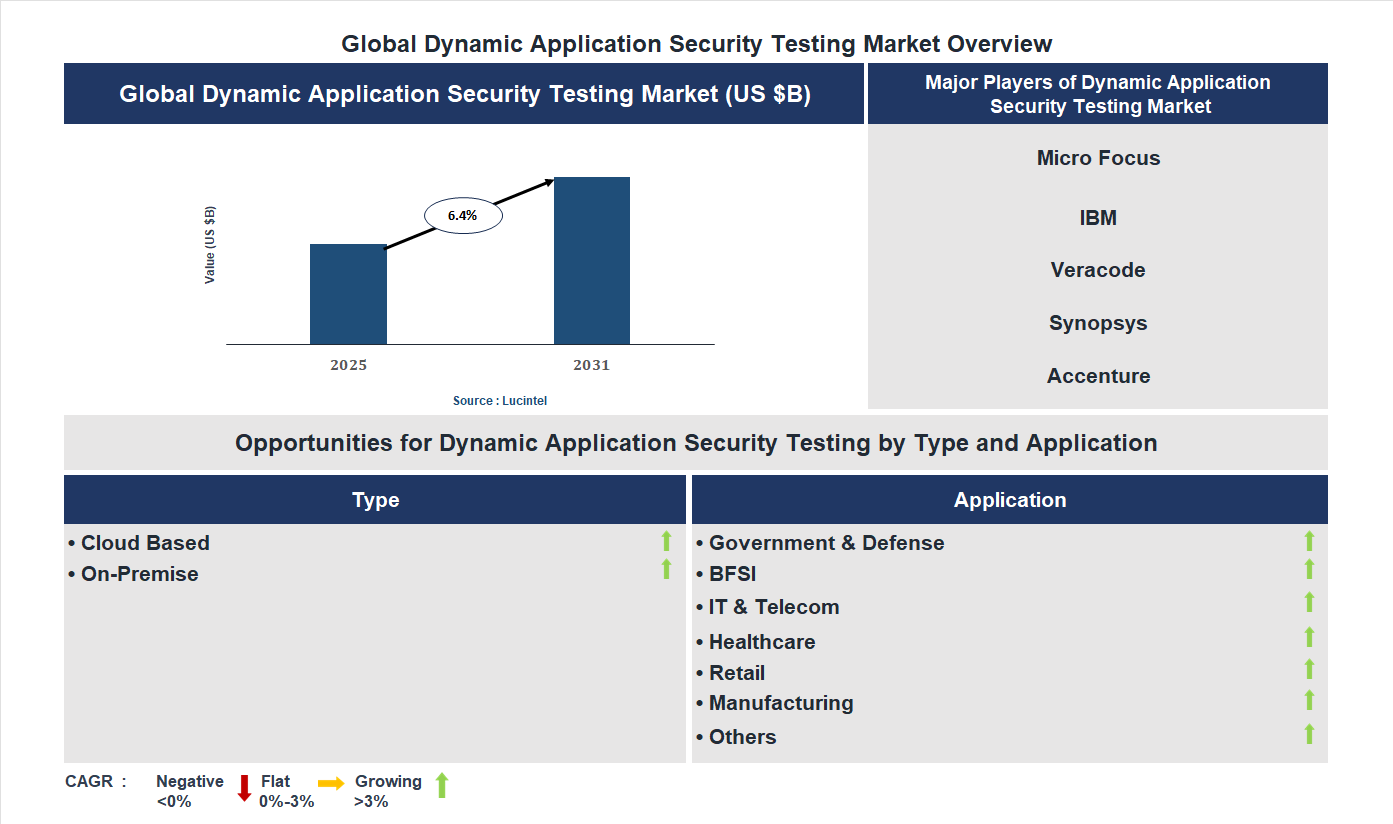
Key data points: The growth forecast = 6.4% annually for the next 7 years. Scroll below to get more insights. This market report covers trends, opportunities and forecasts in dynamic application security testing market to 2031 by type (cloud based and on-premise), application (government & defense, BFSI, IT & telecom, healthcare, retail, manufacturing, and others), and region (North America, Europe, Asia Pacific, and the Rest of the World)
We'll send your sample report shortly.
• Lucintel forecasts that, within the type category, cloud based is expected to witness higher growth over the forecast period.
• Within the application category, BFSI is expected to witness the highest growth.
• In terms of region, APAC is expected to witness the highest growth over the forecast period. Gain valuable insights for your business decisions with our comprehensive 150+ page report. Sample figures with some insights are shown below.
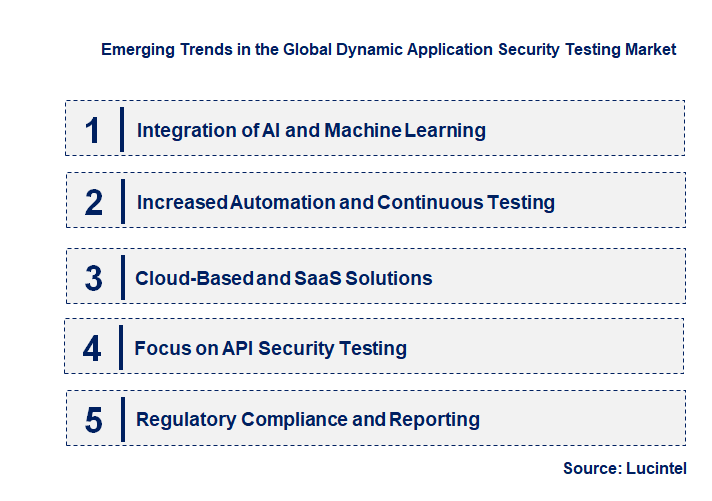
• Integration of AI and Machine Learning: The incorporation of AI and machine learning into DAST tools is revolutionizing vulnerability detection. These technologies enable automated analysis of complex code patterns, reduce false positives, and improve detection accuracy. AI-driven solutions can adapt to emerging threats and provide real-time insights, making security testing more efficient and predictive. This trend enhances the ability of organizations to identify vulnerabilities early, streamline remediation processes, and maintain a proactive security posture in an evolving threat landscape.
• Increased Automation and Continuous Testing: Automation is becoming a core feature of DAST solutions, facilitating continuous security testing throughout the software development lifecycle. Automated scans can be integrated into CI/CD pipelines, enabling developers to identify and fix vulnerabilities in real-time. This trend reduces manual effort, accelerates release cycles, and ensures that security is embedded into every stage of development. Continuous testing helps organizations maintain a strong security posture, adapt quickly to new threats, and comply with regulatory standards more effectively.
• Cloud-Based and SaaS Solutions: The shift towards cloud-based DAST solutions is gaining momentum, driven by the need for scalable, flexible, and cost-effective security testing. SaaS platforms offer easy deployment, regular updates, and seamless integration with cloud-native applications. This trend allows organizations of all sizes to access advanced security testing without significant infrastructure investments. Cloud-based DAST solutions also support remote and distributed teams, enhancing collaboration and ensuring consistent security practices across diverse environments.
• Focus on API Security Testing: As APIs become central to modern application architectures, the demand for specialized API security testing tools is rising. These tools assess vulnerabilities specific to APIs, such as authentication flaws, data leaks, and injection attacks. The trend emphasizes the importance of securing APIs to prevent breaches and data loss. Enhanced API testing capabilities are integrated into DAST solutions, providing comprehensive coverage and helping organizations safeguard their interconnected systems in an increasingly API-driven digital landscape.
• Regulatory Compliance and Reporting: Stringent regulatory standards like GDPR, HIPAA, and PCI DSS are driving the adoption of advanced DAST solutions that facilitate compliance. These tools offer detailed reporting, audit trails, and documentation features that simplify regulatory adherence. The trend underscores the importance of transparency and accountability in application security. Organizations are increasingly investing in DAST solutions that not only identify vulnerabilities but also generate compliance-ready reports, reducing legal and financial risks associated with security breaches and non-compliance. In summary, these emerging trends are significantly reshaping the Dynamic Application Security Testing market by making security testing more intelligent, automated, scalable, and aligned with regulatory demands. They enable organizations to adopt a proactive security approach, improve vulnerability management, and ensure resilient application environments in an increasingly complex digital world.
• Technological Advancements: Integration of AI and Machine Learning : The incorporation of AI and machine learning into DAST tools has improved vulnerability detection accuracy and reduced false positives, enabling faster and more reliable security assessments. This innovation enhances the ability to identify complex security flaws, thereby strengthening overall application security and reducing potential breach risks.
• Cloud-Based DAST Solutions: Growing Adoption of Cloud Platforms : Cloud-based DAST solutions are gaining popularity due to their scalability, cost-effectiveness, and ease of deployment. This shift allows organizations to perform continuous security testing without significant infrastructure investments, facilitating real-time vulnerability management and supporting remote and distributed workforces.
• Strategic Partnerships and Collaborations: Industry Alliances for Enhanced Security : Major cybersecurity firms are forming alliances with technology providers to develop integrated DAST solutions. These collaborations improve product capabilities, expand market reach, and foster innovation, ultimately providing more comprehensive security offerings to clients across sectors.
• Regulatory and Compliance Influences: New Standards and Mandates : Evolving regulatory frameworks, such as GDPR and CCPA, are emphasizing the importance of application security. Compliance requirements are driving organizations to adopt advanced DAST tools to meet legal standards, thereby increasing market demand and encouraging product innovation.
• Market Expansion in Emerging Economies: Increasing Digital Adoption : Emerging economies are witnessing rapid digital transformation, leading to heightened cybersecurity concerns. The expansion of DAST solutions into these regions is driven by rising internet penetration and digital infrastructure investments, opening new growth opportunities for vendors. In summary, these recent developments are significantly impacting the dynamic application security testing market by enhancing technological capabilities, expanding deployment options, fostering strategic collaborations, aligning with regulatory standards, and opening new geographic markets. Collectively, they are driving market growth, improving security efficacy, and broadening the scope of application security solutions worldwide.
• Banking and Financial Services: The banking sector is a primary adopter of DAST solutions due to the sensitive nature of financial data. Implementing DAST helps banks identify vulnerabilities in online banking platforms, payment gateways, and mobile apps, reducing fraud risks and ensuring compliance with regulations like PCI DSS. This growth enhances customer trust and prevents costly breaches, positioning DAST as a critical security tool in financial institutions.
• Healthcare: The healthcare industry handles vast amounts of sensitive patient data, making security paramount. DAST enables healthcare providers to detect vulnerabilities in electronic health record systems, telemedicine platforms, and patient portals. Strengthening security measures helps prevent data breaches, comply with HIPAA regulations, and protect patient privacy. This application of DAST is vital for maintaining trust and avoiding legal penalties.
• Retail: The retail sector relies heavily on e-commerce platforms and mobile applications, which are frequent targets for cyberattacks. DAST helps retailers identify security flaws in their online storefronts, payment systems, and customer apps. By ensuring secure transactions and safeguarding customer data, retailers can enhance brand reputation, reduce fraud, and comply with PCI standards, driving growth in this application.
• Government: Governments utilize DAST to secure public sector applications, citizen portals, and infrastructure systems. Protecting sensitive government data from cyber threats is crucial for national security and public trust. DAST assists in identifying vulnerabilities in government websites and digital services, ensuring compliance with cybersecurity policies and preventing cyber espionage or sabotage.
• Technology: The technology sector, including software developers and cloud service providers, adopts DAST to secure their applications and platforms. Integrating DAST into development pipelines helps identify vulnerabilities early, reducing remediation costs and accelerating time-to-market. This application supports innovation while maintaining high security standards, fostering growth in the tech industry. In summary, these key applications are significantly impacting the DAST market by driving demand for advanced security solutions. As cyber threats become more sophisticated, industries are increasingly investing in DAST to protect their assets, ensure compliance, and maintain customer trust. This growth is expected to continue, shaping the future landscape of application security.
• Technological Innovation: The rapid evolution of AI, machine learning, and automation in cybersecurity tools is a major driver. These technologies enable faster, more accurate vulnerability detection during application testing, reducing manual effort and increasing efficiency. As organizations seek proactive security measures, the integration of advanced tech in DAST solutions becomes crucial. This continuous innovation enhances the effectiveness of security testing, making it a key factor in market expansion.
• Increasing Cybersecurity Threats: The surge in cyberattacks, data breaches, and sophisticated hacking techniques has heightened the need for dynamic testing solutions. Organizations across industries are prioritizing application security to protect sensitive data and maintain customer trust. This growing threat landscape directly fuels demand for DAST tools that can identify vulnerabilities in real-time, thereby driving market growth.
• Regulatory Compliance and Data Privacy Laws: Stringent regulations such as GDPR, HIPAA, and PCI DSS require organizations to implement comprehensive security measures. DAST solutions help companies meet these compliance standards by identifying security gaps before they can be exploited. The increasing emphasis on data privacy and regulatory adherence acts as a catalyst for market expansion, encouraging organizations to adopt advanced testing tools.
• Digital Transformation and Cloud Adoption: The shift towards cloud-based applications and digital platforms has expanded the attack surface for cyber threats. Organizations are adopting DAST solutions to ensure security across diverse environments, including SaaS and hybrid cloud setups. This trend necessitates scalable, flexible testing tools, thereby propelling the growth of the DAST market as businesses seek to secure their digital assets. The challenges facing this Market include:-
• Evolving Threat Landscape: Cyber threats are becoming more sophisticated and targeted, making it difficult for DAST tools to keep pace. Attackers continuously develop new techniques to bypass security measures, requiring vendors to constantly update and enhance their solutions. This dynamic environment complicates vulnerability detection and increases the risk of undetected threats, posing a significant challenge to the effectiveness of DAST solutions.
• High Implementation and Operational Costs: Deploying and maintaining DAST solutions can be expensive, especially for small and medium-sized enterprises. Costs associated with licensing, integration, training, and ongoing management can be prohibitive. These financial barriers limit adoption among budget-constrained organizations, thereby restraining market growth and reducing the reach of advanced security testing.
• Regulatory and Compliance Complexities: While regulations drive demand, they also introduce complexities. Different regions have varying standards, and keeping up with evolving legal requirements demands continuous updates and customization of DAST tools. This regulatory complexity increases operational burdens and costs for organizations, potentially hindering widespread adoption and creating barriers for vendors to develop universally compliant solutions. In summary, the dynamic application security testing market is shaped by technological advancements, increasing cyber threats, regulatory pressures, and digital transformation trends. These drivers foster growth by enhancing security capabilities and compliance adherence. Conversely, challenges such as evolving threats, high costs, and regulatory complexities pose obstacles that could slow market expansion. Overall, the market's trajectory will depend on how effectively stakeholders address these challenges while leveraging technological innovations and increasing cybersecurity awareness. The interplay of these factors will determine the pace and scope of future growth in the DAST landscape.
• Micro Focus
• IBM
• Veracode
• Synopsys
• Accenture
• Pradeo
• Rapid7
• Tieto
• Trustwave
• WhiteHat Security
• Cloud Based
• On-Premise
• Government & Defense
• BFSI
• IT & Telecom
• Healthcare
• Retail
• Manufacturing
• Others
• North America
• Europe
• Asia Pacific
• The Rest of the World
• United States: The US market has seen rapid adoption of AI-powered DAST tools, enhancing vulnerability detection capabilities. Major tech firms are integrating DAST into their DevSecOps pipelines, emphasizing automation and continuous testing. Regulatory pressures and data privacy laws are also driving investments in advanced security solutions. Startups focusing on machine learning for threat detection are gaining prominence, and collaborations between cybersecurity firms and cloud providers are expanding the market's scope.
• China: China's DAST market is expanding with government initiatives promoting cybersecurity resilience. Local companies are developing cost-effective, scalable testing solutions tailored for domestic enterprises. There is a notable increase in the adoption of AI and big data analytics to improve testing accuracy. The market is also witnessing increased investments from state-backed funds, aiming to bolster national cybersecurity infrastructure and reduce reliance on foreign technology.
• Germany: The German market emphasizes compliance with stringent EU data protection regulations, such as GDPR, influencing DAST development. Companies are adopting integrated security testing platforms that combine DAST with other security measures. Innovation is driven by a focus on industrial cybersecurity, with solutions tailored for manufacturing and critical infrastructure sectors. Collaboration between academia and industry is fostering advanced research in automated vulnerability detection.
• India: The Indian DAST market is experiencing rapid growth due to rising digital transformation initiatives across sectors. Local firms are developing affordable, scalable testing tools suitable for small and medium-sized enterprises. There is a surge in demand for cloud-based DAST solutions, driven by increased adoption of SaaS applications. Government initiatives promoting cybersecurity awareness are also encouraging enterprises to invest in application security testing.
• Japan: Japan's market is characterized by a focus on integrating DAST with existing security frameworks to enhance overall cybersecurity posture. Companies are investing in AI-driven testing solutions to address sophisticated cyber threats. The market is also witnessing increased adoption of automated testing tools in financial and manufacturing sectors. Regulatory compliance and the need for high reliability in critical systems are key drivers of recent developments.


• Micro Focus
• IBM
• Veracode
• Synopsys
• Accenture
• Pradeo
• Rapid7
• Tieto
• Trustwave
• WhiteHat Security Q5. Which dynamic application security testing market segment will be the largest in future? Answer: Lucintel forecasts that, within the type category, cloud based is expected to witness higher growth over the forecast period. Q6. In dynamic application security testing market, which region is expected to be the largest in next 5 years? Answer: In terms of region, APAC is expected to witness the highest growth over the forecast period. Q7. Do we receive customization in this report? Answer: Yes, Lucintel provides 10% customization without any additional cost.


Choose a license that fits your team. Instant PDF delivery.
Prices exclude taxes. Instant delivery. Custom licensing available on request.
Market Report · July 15, 2026
Market Report · June 26, 2026
Market Report · June 24, 2026
Trusted partner for strategic intelligence and business growth


Receive a complimentary market analysis tailored to your industry. Our analysts will identify key growth opportunities and competitive dynamics specific to your business.

Market size, growth rate, and key trend analysis for your specific sector.

Top competitor positioning and market share analysis.

Strategic recommendations backed by data-driven insights.
Get curated market intelligence and competitive moves straight to your inbox.
By subscribing, you agree to receive our monthly insights. Unsubscribe anytime.
Receive a complimentary market analysis tailored to your industry. Our analysts will identify key growth opportunities and competitive dynamics specific to your business.
Market size, growth rate, and key trend analysis for your specific sector.
Top competitor positioning and market share analysis.
Strategic recommendations backed by data-driven insights.
Get curated market intelligence, emerging trends, and competitive moves straight to your inbox each month.
By subscribing, you agree to receive our monthly insights. Unsubscribe anytime.
We'll send your sample report shortly.