
Market Report · May 18, 2026

This market report covers trends, opportunities, and forecasts in the global dual channel comparator market to 2031 by technology (dual channel power comparator, dual channel differential comparator, and dual channel voltage comparator), application (signal processing, voltage comparison, current detection, and others), and region (North America, Europe, Asia Pacific, and the Rest of the World)
We'll send your sample report shortly.
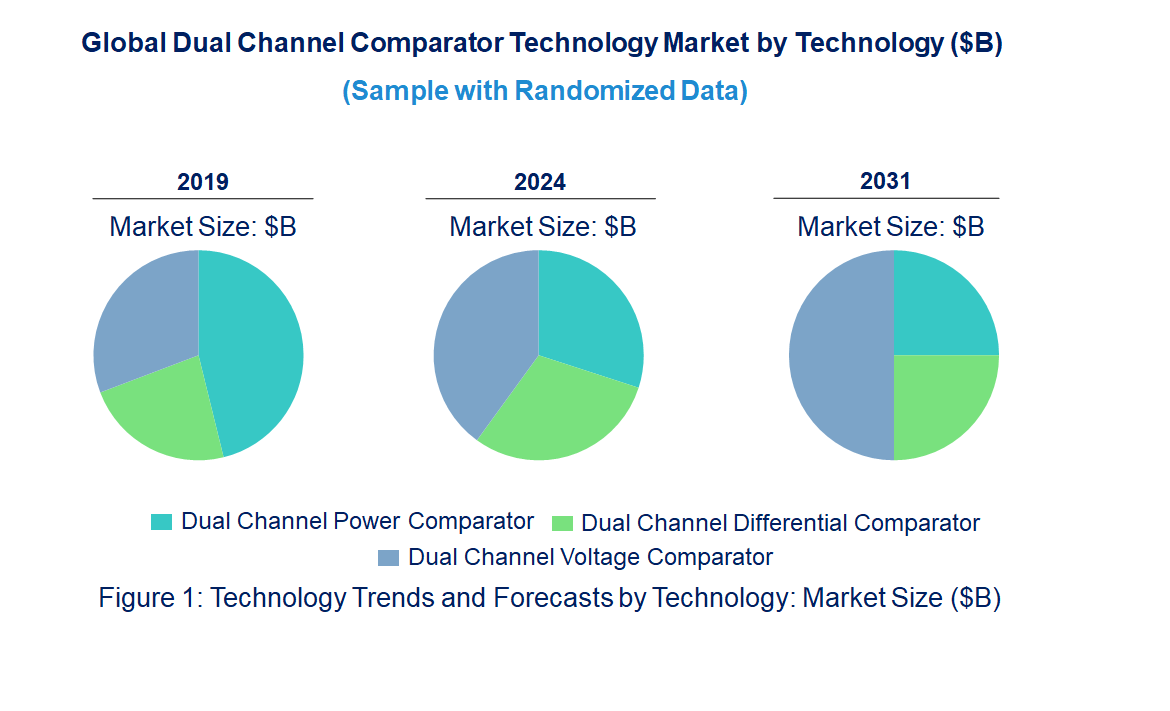
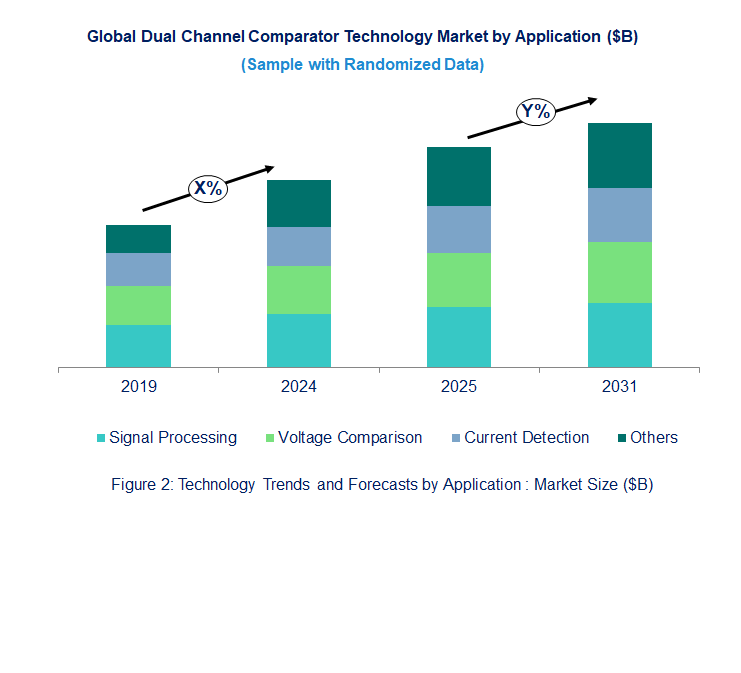
• Transition from Bipolar to CMOS Technology: The shift from conventional Bipolar Junction Transistors (BJTs) to CMOS comparators is highly beneficial, with characteristics such as low power, high speed, and excellent scalability, which are very desirable for energy-efficient and high-speed applications.
• Higher Precision and Accuracy: There is an increasing need for comparators with low offset voltage and low noise characteristics. This trend ensures high precision in signal detection and processing, which is crucial in applications requiring exact measurements and reliability.
• Integration with Digital Interfaces: There is a trend of integrating comparators with digital communication interfaces like SPI, I2C, and UART. This integration allows real-time data processing, control, and monitoring in consumer electronics, automotive, and industrial sectors.
• Miniaturized and Integrated Designs: Miniaturization with high-density comparators opens up more compact designs, which find their application in consumer electronics and automotive applications where space plays a major role.
• Improved Temperature Stability and Robustness to Environmental Conditions: Comparators that work consistently over a wide range of temperatures and environmental conditions, ensuring performance in industrial, automotive, and aerospace applications, are being emphasized. These technological trends are pushing the dual channel comparator market toward greater efficiency, higher precision, and better integration. The transition to CMOS-based designs, miniaturization, enhanced digital compatibility, and improved environmental resilience are molding the industry landscape, thereby making comparators more suitable for demanding applications across sectors like automotive, consumer electronics, and industrial automation.
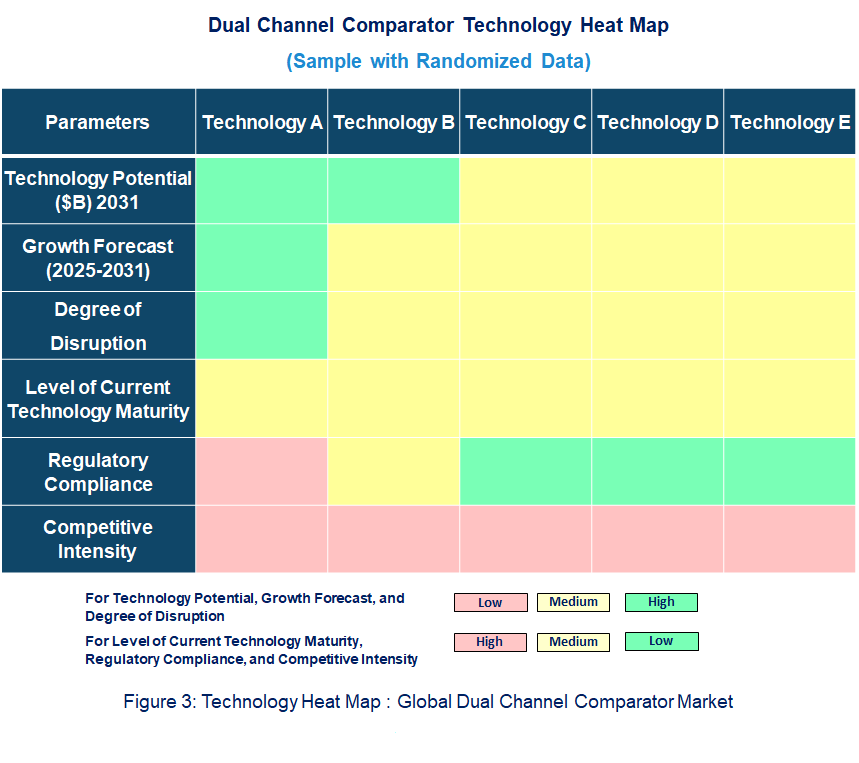
• Technology Potential: Dual channel comparators are highly promising candidates for high-speed and low-power signal processing applications. Improved CMOS technology and integration facilitate comparators that respond more promptly, are more precise, and consume less power. This promise is highly required in modern electronics, automotive, and communication devices.
• Level of Disruption: The move from BJT-based comparators to CMOS-based designs represents a disruptive change. CMOS comparators provide greater scalability, integration, and energy efficiency. Additionally, digital interface integration allows better compatibility with smart devices and real-time data processing, fundamentally transforming system architectures across multiple industries.
• Level of Current Technology Maturity: The current maturity in technology features well-established designs based on CMOS, giving high speed, low offset, and energy efficiency in performance. Comparators have increasingly come with inbuilt features for low noise, temperature stability, and compatibility with digital communication, according to different industrial and consumer requirements.
• Regulatory Compliance: Industry standards/certifications of dual channel comparators include ISO, RoHS, and CE to prove compliance with environmental regulations on electrical safety and performance standards. Compliance with such a standard ensures their usage within critical applications in automotive markets, industrial markets, and consumer electronics.
• Texas Instruments: Texas Instruments continues the development of advanced CMOS-based dual-channel comparators with low offset voltage and high-speed response. Their latest designs are developed to deliver higher performance with reduced power consumption for automotive, industrial, and consumer electronics applications.
• Analog Devices: Analog Devices has released comparators with improved noise immunity and higher switching speeds. Their integrated digital interfaces and precision components ensure superior signal detection and processing, which are critical in industrial and high-performance consumer electronics.
• ROHM Semiconductor: ROHM has made energy efficiency the priority in comparators. Advanced CMOS technologies are utilized in the design of the comparators, which means that these have better temperature stability and immunity to noise for reliable performance in a wide range of environmental and operational conditions.
• Holtek: Holtek has released comparators that integrate with microcontroller systems. They are optimized for consumer electronics and industrial applications, featuring compact designs and reliable performance.
• Corebai: Corebai has been emphasizing miniaturization and integration, producing high-performance comparators that are low in power. The designs are focused on mobile and IoT applications and assure long battery life along with compact form factors.
• MC Devices: MC Devices developed high-speed comparators with better thermal stability. Their offerings were aimed at applications requiring fast signal processing and accuracy in automotive and communication technologies.
• Samil Tech: Samil Tech has been refining comparators to focus on cost efficiency with robust performance. The product lines are focused on mass-market applications while still upholding stringent performance and reliability standards. The pursuit of speed, energy efficiency, and integration is driving recent advancements in dual channel comparator technology. Companies such as Texas Instruments, Analog Devices, ROHM, Holtek, Corebai, MC Devices, and Samil Tech have been pushing the market to achieve performance, compact designs, and environmental resilience so that their applications can thrive in a wide range of industrial, automotive, and consumer applications.
• Increased high-speed processing: The demand for faster signal detection and response in the automotive and consumer electronics sectors drives the need for faster comparators with greater accuracy. This allows better performance and real-time data processing within systems, which is needed in modern applications.
• Innovations in Energy Efficiency: Energy-conscious designs are now at the forefront. Companies are looking at comparators that do not consume much power with high-efficiency CMOS technology, ensuring longer battery life and reducing operational costs for a wide range of consumer electronics and IoT devices.
• Digital Interfaces: Currently, this comparison amplifier is geared toward coupling with either analog converters or digital interfaces and microcontrollers, so trends are rising nowadays. For compact consumer as well as for industrial devices, it is optimal for their design processes to reduce footprint communication between components, etc.
• Automobile: The rise of ADAS and EV applications increases comparators' robustness to meet the system's expectations. ADAS and Electric vehicles demand faster, very efficient signal processing circuits that offer reliability in conditions of fluctuations in environmental requirements.
• CMOS Technology Advancements in Technology: Improvements in CMOS technology are continuous, and better thermal stability, higher integration, and lower noise levels ensure reliable performance and adaptability across industrial and consumer electronics applications. Challenges
• High Cost of Advanced Comparator Designs: The cost of developing advanced, high-speed dual channel comparators can be prohibitively high, especially for small to medium-sized companies. These costs can limit the accessibility of the technology for certain market segments.
• Complexity in Integration: As systems become more complex, integrating dual channel comparators with other technologies can present challenges. Design compatibility issues, along with the need for specialized expertise, can hinder adoption, especially in emerging markets. The growth opportunities in the dual-channel comparator technology market will be shaped by a combination of the need for speed, energy efficiency, compact integration, and adaptability to automotive and industrial environments. These opportunities are driving enhancements to technology, fostering competition, and ensuring better system performance, reliability, and cost efficiency across a wide range of applications.
• Texas Instruments
• Analog Devices
• Rohm Semiconductor
• Holtek
• Corebai
• Mc Devices
• Technology Readiness by Technology Type: The dual channel power comparator is well adapted for high-efficiency applications - renewable energy inverters, battery management systems, or power electronics. Low-power technology and fast response are involved with this technology. The application-based Dual Channel Differential Comparator version is very much adapted in high-precision industrial sensor networks, signal processing, or automobiles and telecommunication systems using low noise immunity and enhanced precision characteristics. This technology is appropriate for applications requiring high signal integrity and robustness. The Dual Channel Voltage Comparator is essential in consumer electronics, telecommunications, automotive voltage monitoring, industrial control systems, and renewable energy applications for its precise voltage detection and operational stability. The technology has matured to a high level with improvements in CMOS technology, digital integration, and high-speed processing. Key companies concentrate on reducing power consumption, integration size, and cost, ensuring that these comparators are adaptable to compact, energy-efficient systems and environmentally compliant products. Across the industries, these technologies help in the development of compact, reliable, high-speed systems, optimizing performance and ensuring compliance with global regulatory and operational standards.
• Competitive Intensity and Regulatory Compliance: In high demand for performance and price efficiency, the dual channel power comparators, dual channel differential comparators, and dual channel voltage comparators are in fierce demand. Texas Instruments, Analog Devices, and ROHM Semiconductor companies propel advancement in technology to bring customers greater speed, accuracy, and integration abilities. Power Comparators must also follow strict energy efficiency norms and battery life specifications, whereas Differential Comparators are supposed to conform to high-precision standards for industrial applications. Safety and environmental standards for Voltage Comparators in consumer electronics and automotive applications are mandated for the market. Regulatory compliance, primarily, focuses on energy efficiency, noise immunity, and stable operation in a variety of operational environments. Suppliers must ensure conformity to modern microcontroller interfaces and digital communication protocols. These comparators are integrated into renewable energy and automotive applications, further increasing competition. Compliance with IEC standards, ISO certifications, and RoHS guidelines is required across markets. Manufacturers continue to innovate and reduce size, cost, and environmental impact. The competitive landscape continues to improve and pushes the development of state-of-the-art comparators. As demand increases, remaining compliant with the evolving global standards ensures long-term market relevance.
• Disruption Potential by Technology Type: The disruption potential with dual channel power comparators, dual channel differential comparators, and dual channel voltage comparators is with the ability to replace slow, less efficient designs with faster and more reliable, compact designs. The power comparator provides high-efficiency energy-sensitive applications, key for battery-driven devices. The differential comparator offers high immunity to noise and accuracy, making it suitable for high-precision industrial sensors and signal processing. A voltage comparator enables accurate monitoring of voltage and robust operation in consumer electronics and telecommunications. They are the innovations that are going to reach the limits of speed, accuracy, and energy. Innovations in CMOS and digital integration amplify their powers. They also integrate perfectly with microcontrollers and IoT products, making designs smarter and much more compact. All new applications will be driven into the automotive, consumer electronics, and industrial sectors by these comparators. They can seamlessly integrate into energy-efficient systems and compact electronics. There is a promise of the older, bulkier design's replacement with sleeker designs at lower costs. This lot of comparators together drive systemic efficiency, performance, and working reliability.
• Dual Channel Power Comparator
• Dual Channel Differential Comparator
• Dual Channel Voltage Comparator
• Signal Processing
• Voltage Comparison
• Current Detection
• Others
• North America
• Europe
• Asia Pacific
• The Rest of the World
• Latest Developments and Innovations in the Dual Channel Comparator Technologies
• Companies / Ecosystems
• Strategic Opportunities by Technology Type


Choose a license that fits your team. Instant PDF delivery.
Prices exclude taxes. Instant delivery. Custom licensing available on request.
Market Report · May 18, 2026
Market Report · May 18, 2026
Market Report · May 18, 2026
Trusted partner for strategic intelligence and business growth


Receive a complimentary market analysis tailored to your industry. Our analysts will identify key growth opportunities and competitive dynamics specific to your business.

Market size, growth rate, and key trend analysis for your specific sector.

Top competitor positioning and market share analysis.

Strategic recommendations backed by data-driven insights.
Get curated market intelligence and competitive moves straight to your inbox.
By subscribing, you agree to receive our monthly insights. Unsubscribe anytime.
Receive a complimentary market analysis tailored to your industry. Our analysts will identify key growth opportunities and competitive dynamics specific to your business.
Market size, growth rate, and key trend analysis for your specific sector.
Top competitor positioning and market share analysis.
Strategic recommendations backed by data-driven insights.
Get curated market intelligence, emerging trends, and competitive moves straight to your inbox each month.
By subscribing, you agree to receive our monthly insights. Unsubscribe anytime.
We'll send your sample report shortly.