
Market Report · July 16, 2026

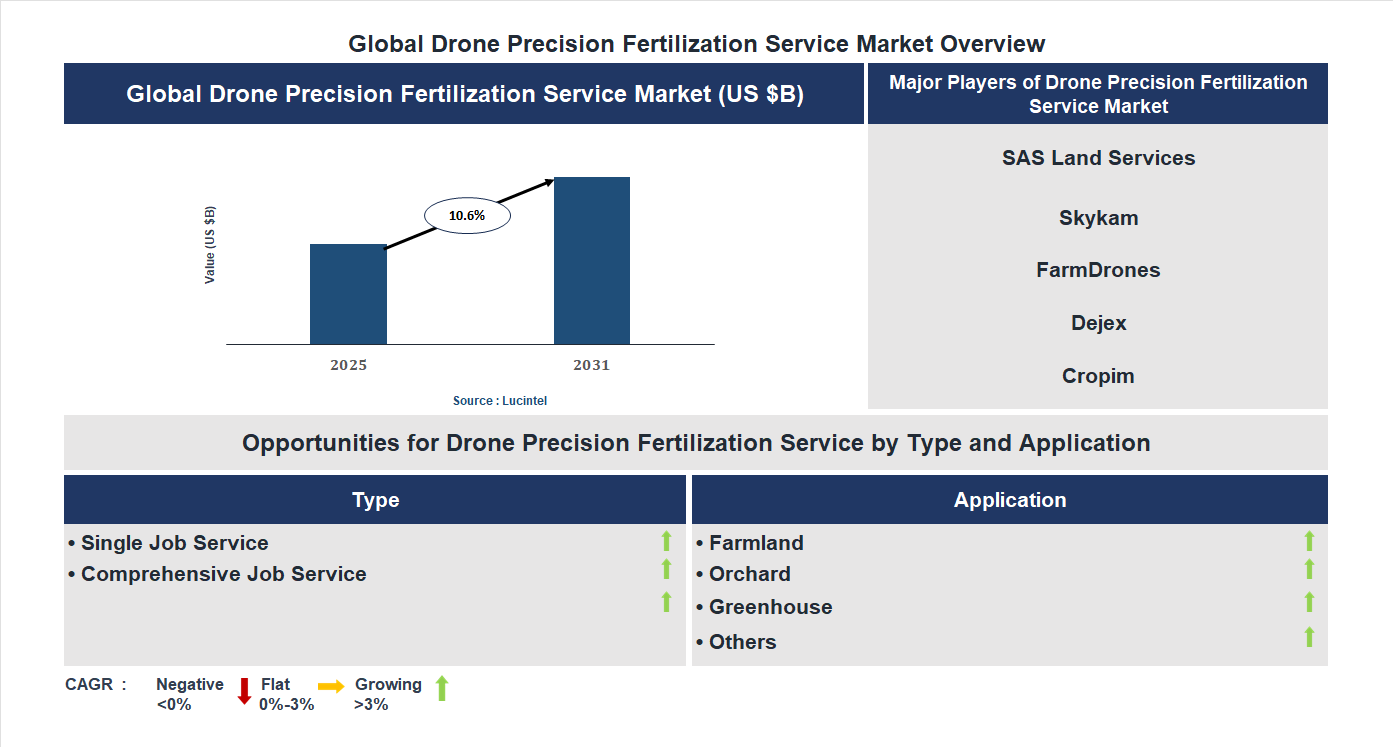
Key data points: The growth forecast = 10.6% annually for the next 7 years. Scroll below to get more insights. This market report covers trends, opportunities and forecasts in drone precision fertilization service market to 2031 by type (single job service and comprehensive job service), application (farmland, orchard, greenhouse, and others), and region (North America, Europe, Asia Pacific, and the Rest of the World)
We'll send your sample report shortly.
• Lucintel forecasts that, within the type category, comprehensive job service is expected to witness higher growth over the forecast period.
• Within the application category, farmland is expected to witness the highest growth.
• In terms of region, APAC is expected to witness the highest growth over the forecast period. Gain valuable insights for your business decisions with our comprehensive 150+ page report. Sample figures with some insights are shown below.
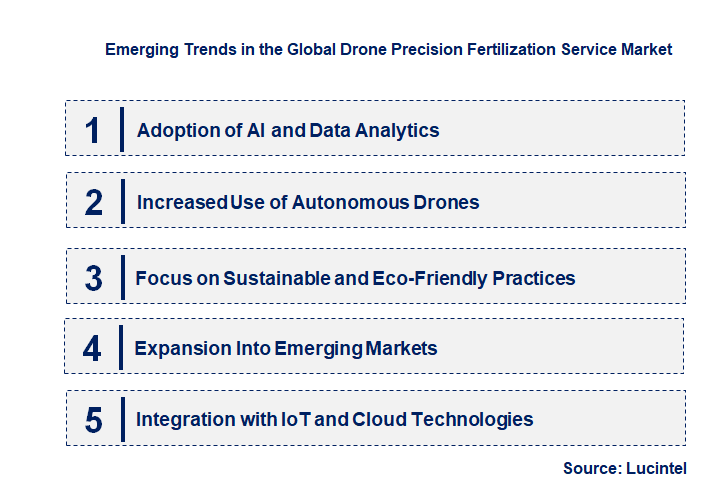
• Adoption of AI and Data Analytics: Integration of artificial intelligence and data analytics enhances drone precision fertilization by enabling real-time crop health monitoring and targeted nutrient application. This trend improves efficiency, reduces waste, and optimizes crop yields. AI-driven insights allow farmers to make informed decisions, leading to better resource management and environmental sustainability. As technology advances, the use of AI in drone services is expected to become more sophisticated, further transforming precision agriculture practices.
• Increased Use of Autonomous Drones: The deployment of autonomous drones equipped with advanced navigation and sensing technologies is revolutionizing fertilization services. These drones can operate with minimal human intervention, covering large fields quickly and accurately. Autonomous systems improve operational efficiency, reduce labor costs, and enable timely fertilization, which is critical for crop health. The trend toward automation is also facilitating scalable solutions for large-scale farming operations, making precision fertilization more accessible and cost-effective.
• Focus on Sustainable and Eco-Friendly Practices: There is a growing emphasis on environmentally sustainable farming methods, with drone fertilization playing a key role. Drones enable precise application of fertilizers, minimizing runoff and reducing chemical usage. This trend aligns with global efforts to promote eco-friendly agriculture and meet regulatory standards. The adoption of sustainable practices not only benefits the environment but also enhances the marketability of produce, appealing to eco-conscious consumers and supporting long-term agricultural productivity.
• Expansion into Emerging Markets: The market is witnessing increased adoption of drone fertilization services in emerging economies where traditional farming methods dominate. Technological advancements and decreasing costs are making drone services more accessible in these regions. This expansion helps improve crop yields, reduce labor shortages, and modernize agriculture practices. As infrastructure develops and awareness grows, emerging markets are poised to become significant growth drivers, broadening the global footprint of drone-based precision fertilization.
• Integration with IoT and Cloud Technologies: The convergence of drone services with Internet of Things (IoT) devices and cloud computing is creating a connected agricultural ecosystem. Data collected by drones can be stored, analyzed, and shared via cloud platforms, enabling comprehensive farm management. This integration facilitates predictive analytics, automated reporting, and decision-making support, leading to more efficient fertilization schedules. The trend enhances transparency, traceability, and data-driven insights, empowering farmers to optimize inputs and improve overall farm productivity. In summary, these emerging trends are fundamentally reshaping the drone precision fertilization service market by making operations more efficient, sustainable, and scalable. The integration of advanced technologies like AI, IoT, and automation is driving innovation, expanding market reach, and promoting environmentally responsible practices. As these developments continue, the market is set to become more sophisticated, accessible, and integral to modern agriculture, ultimately supporting global food security and sustainable farming initiatives.
• Technological Advancements: Integration of AI and machine learning in drones has enhanced precision and operational efficiency, enabling real-time data analysis and targeted fertilization, which improves crop health and reduces waste.
• Regulatory Frameworks: Governments are establishing clearer regulations and safety standards for drone operations, facilitating wider adoption and commercial deployment of drone fertilization services across various regions.
• Market Expansion: The service scope is broadening beyond traditional crops to include specialty crops, orchards, and vineyards, driven by increasing demand for customized fertilization solutions tailored to specific crop needs.
• Cost Reduction and Accessibility: Innovations in drone design and battery technology have lowered operational costs, making drone fertilization services more accessible to small and medium-sized farms, thus expanding market reach.
• Sustainability Initiatives: Emphasis on environmentally friendly practices has led to the adoption of drone services that optimize fertilizer use, reduce runoff, and minimize ecological footprint, aligning with global sustainability goals. In summary, these developments are significantly transforming the drone precision fertilization service market by enhancing technological capabilities, expanding regulatory support, broadening application areas, reducing costs, and promoting sustainable agriculture. These factors collectively contribute to increased adoption, improved crop management, and a more sustainable future for agriculture.
• Large-Scale Farming: Enhanced efficiency and cost savings : Drones enable large-scale farms to apply fertilizers precisely, reducing waste and labor costs while increasing crop yields. This technology allows for timely interventions, improving overall productivity and profitability for extensive agricultural operations.
• Horticulture: Improved crop management and quality : In horticulture, drones facilitate targeted fertilization, leading to healthier plants and higher-quality produce. This precision approach minimizes chemical runoff and promotes sustainable practices, benefiting both growers and consumers.
• Organic Farming: Supporting sustainable practices : Organic farmers leverage drone technology to apply natural fertilizers accurately, maintaining soil health and crop integrity. This promotes eco-friendly farming methods and meets consumer demand for organic produce.
• Plantation Management: Efficient resource utilization : Drones assist in managing plantations such as tea, coffee, and rubber by providing detailed aerial data for targeted fertilization. This results in optimized resource use, reduced environmental impact, and increased yield quality.
• Research and Development: Data-driven innovation : Research institutions utilize drone data to study crop responses and develop new fertilization techniques. This accelerates innovation, improves understanding of crop needs, and supports sustainable agricultural development. In summary, these growth opportunities are significantly impacting the drone precision fertilization service market by enhancing operational efficiency, promoting sustainability, and enabling data-driven decision-making. As adoption increases across diverse applications, the market is poised for substantial expansion, transforming modern agriculture into more precise, eco-friendly, and productive systems.
• Technological Advancements: The rapid development of drone technology, including improved battery life, payload capacity, and GPS accuracy, has made drone-based fertilization more efficient and accessible. These innovations enable precise application, reducing waste and environmental impact. As technology continues to evolve, operational costs decrease, and adoption rates increase among farmers seeking sustainable solutions. The integration of AI and data analytics further enhances decision-making, making drone services more attractive and reliable for large-scale agricultural operations.
• Growing Demand for Sustainable Agriculture: Increasing awareness of environmental issues and the need to optimize resource use are driving demand for precision fertilization. Drones offer targeted application, minimizing chemical runoff and reducing fertilizer wastage. Governments and organizations are promoting eco-friendly farming practices, encouraging farmers to adopt drone services. This trend aligns with global efforts to improve crop yields sustainably, making drone fertilization a vital component of modern agriculture.
• Cost Efficiency and Time Savings: Drones significantly reduce the time and labor required for fertilization compared to traditional methods. They can quickly cover large areas with minimal human intervention, leading to faster application cycles. Cost savings are realized through reduced labor costs, lower fertilizer usage, and minimized crop damage. These efficiencies make drone services economically viable for farmers, especially in regions with labor shortages or high operational costs, thereby expanding market adoption.
• Supportive Regulatory Environment: Governments worldwide are recognizing the benefits of drone technology and are establishing regulations to facilitate their use in agriculture. Policies related to drone registration, flight permissions, and safety standards are becoming more streamlined, encouraging market growth. Subsidies, grants, and pilot programs further incentivize farmers and service providers to adopt drone fertilization, fostering innovation and expanding the market reach. The challenges facing this drone precision fertilization service market include:-
• High Initial Investment Costs: The adoption of drone technology requires significant capital expenditure on equipment, training, and maintenance. Small and medium-sized farmers may find these costs prohibitive, limiting market penetration. Additionally, the need for specialized skills to operate and maintain drones can pose barriers, especially in developing regions where technical expertise is scarce. Overcoming these financial and skill barriers is crucial for widespread adoption.
• Regulatory Restrictions and Airspace Limitations: Despite supportive policies in some regions, regulatory hurdles remain a significant challenge. Restrictions on drone flight altitudes, no-fly zones, and licensing requirements can delay deployment and increase operational complexity. Variability in regulations across countries complicates international market expansion. Compliance costs and bureaucratic procedures may hinder rapid adoption, especially for service providers operating across multiple jurisdictions.
• Technological Limitations and Reliability Issues: Current drone technology faces challenges such as limited battery life, payload capacity, and susceptibility to weather conditions. These limitations can affect operational efficiency and reliability, especially in large or rugged terrains. Technical failures or inaccuracies in application can lead to crop damage or reduced yields, undermining confidence among farmers. Continuous innovation and robust testing are necessary to address these issues and ensure consistent service quality. In summary, the drone precision fertilization service market is driven by technological innovations, sustainability demands, cost efficiencies, and supportive policies. However, high costs, regulatory complexities, and technological limitations pose significant hurdles. The interplay of these factors will shape the market’s growth trajectory, requiring stakeholders to innovate, collaborate, and adapt to overcome challenges. Overall, the market holds substantial potential for transforming modern agriculture, provided these drivers and challenges are effectively managed.
• SAS Land Services
• Skykam
• FarmDrones
• Dejex
• Cropim
• Swarm Ops
• Drone AG
• RANTIZO
• AcuSpray
• Toll Uncrewed Systems
• Single Job Service
• Comprehensive Job Service
• Farmland
• Orchard
• Greenhouse
• Others
• North America
• Europe
• Asia Pacific
• The Rest of the World
• United States: The US market has seen significant adoption of drone technology for precision fertilization, supported by strong technological infrastructure and government grants. Major companies are developing advanced drone systems with AI capabilities for targeted application, improving crop management efficiency. The focus is on integrating drone data with farm management software, enabling real-time decision-making. Additionally, regulatory frameworks are evolving to facilitate commercial drone operations, boosting market growth. The US also emphasizes sustainable practices, encouraging farmers to adopt environmentally friendly fertilization methods using drones.
• China: China is rapidly expanding its drone fertilization services, driven by government policies promoting smart agriculture and rural modernization. Domestic drone manufacturers are leading innovation, offering cost-effective solutions tailored to large-scale farming. The country’s focus on increasing food security has accelerated adoption, with extensive government subsidies and pilot programs. Chinese farmers are increasingly utilizing drones for precise nutrient application, reducing waste and environmental impact. The market is also characterized by collaborations between tech firms and agricultural cooperatives, fostering widespread adoption across diverse regions.
• Germany: Germany’s market is characterized by high technological standards and a focus on sustainability. The country emphasizes eco-friendly drone solutions that minimize chemical runoff and soil disturbance. Leading firms are integrating drone fertilization with precision agriculture tools, such as GPS-guided systems and soil sensors. Regulatory frameworks are well-established, ensuring safe drone operations. The German market also benefits from strong research institutions and collaborations with agricultural universities, promoting innovation. Farmers are adopting drone services to optimize input use, improve crop yields, and meet stringent environmental regulations.
• India: India is witnessing a surge in drone fertilization services, supported by government initiatives aimed at modernizing agriculture and increasing productivity. The country’s large farming population benefits from affordable drone solutions designed for diverse crop types and terrains. Startups and tech companies are developing low-cost, easy-to-operate drones to reach remote and smallholder farms. The government’s push for digital agriculture and subsidies for drone adoption are accelerating market growth. Indian farmers are increasingly using drones for targeted fertilization, which helps reduce input costs and improve crop health amid resource constraints.
• Japan: Japan’s market for drone fertilization is driven by advanced technology adoption and a focus on sustainable farming practices. The country emphasizes precision agriculture to address labor shortages and environmental concerns. Leading firms are deploying high-precision drones equipped with sensors for accurate nutrient application. Regulatory policies support safe drone operations, and collaborations with research institutions foster innovation. Japanese farmers are adopting drone services to enhance productivity, especially in rice paddies and specialty crops. The market is also characterized by integration with other smart farming technologies, promoting efficient and eco-friendly agricultural practices.


• SAS Land Services
• Skykam
• FarmDrones
• Dejex
• Cropim
• Swarm Ops
• Drone AG
• RANTIZO
• AcuSpray
• Toll Uncrewed Systems Q5. Which drone precision fertilization service market segment will be the largest in future? Answer: Lucintel forecasts that, within the type category, comprehensive job service is expected to witness higher growth over the forecast period. Q6. In drone precision fertilization service market, which region is expected to be the largest in next 5 years? Answer: In terms of region, APAC is expected to witness the highest growth over the forecast period. Q7. Do we receive customization in this report? Answer: Yes, Lucintel provides 10% customization without any additional cost.


Choose a license that fits your team. Instant PDF delivery.
Prices exclude taxes. Instant delivery. Custom licensing available on request.
Market Report · July 16, 2026
Market Report · May 18, 2026
Market Report · May 18, 2026
Trusted partner for strategic intelligence and business growth


Receive a complimentary market analysis tailored to your industry. Our analysts will identify key growth opportunities and competitive dynamics specific to your business.

Market size, growth rate, and key trend analysis for your specific sector.

Top competitor positioning and market share analysis.

Strategic recommendations backed by data-driven insights.
Get curated market intelligence and competitive moves straight to your inbox.
By subscribing, you agree to receive our monthly insights. Unsubscribe anytime.
Receive a complimentary market analysis tailored to your industry. Our analysts will identify key growth opportunities and competitive dynamics specific to your business.
Market size, growth rate, and key trend analysis for your specific sector.
Top competitor positioning and market share analysis.
Strategic recommendations backed by data-driven insights.
Get curated market intelligence, emerging trends, and competitive moves straight to your inbox each month.
By subscribing, you agree to receive our monthly insights. Unsubscribe anytime.
We'll send your sample report shortly.