Dehydrated Food Market Report: Trends, Forecast and Competitive Analysis to 2035

Key data points: The market size in 2035 = $534 billion, growth forecast = 6.3% annually for the next 8 years. Scroll below to get more insights. This market report covers trends, opportunities and forecasts in dehydrated food market to 2035 by drying technology (spray-dried, freeze-dried, vacuum-dried, sun / solar-dried, and others), product category (fruit & vegetable, meat & seafood, dairy & eggs, instant coffee & other beverage, prepared meal & soup, spices, herb, & seasoning, and nutraceutical & functional powder), nature (conventional and organic), end use (industrial packaged food, foodservice, retail, specialty stores, convenience stores, online retail stores, and others), and region (North America, Europe, Asia Pacific, and the Rest of the World)

Publisher: Lucintel Last Updated: July 2026
See Pricing

Download Sample Report

| ✨ New Download Sample report — Get instant insights! | ✨ New Download Sample report — Get instant insights!

Dehydrated Food Market Report: Trends, Forecast and Competitive Analysis to 2035

Dehydrated Food Market

The future of the global dehydrated food market looks promising with opportunities in the industrial packaged food, foodservice, retail, specialty store, convenience store, and online retail store markets. The global dehydrated food market is expected to reach an estimated $534 billion by 2035 with a CAGR of 6.3% from 2026 to 2035. The major drivers for this market are the increasing demand for convenient food products, the rising adoption of long shelf life foods, and the growing consumption of ready to eat meals.

  • Lucintel forecasts that, within the drying technology category, spray-dried is expected to witness the highest growth over the forecast period due to the cost efficiency and large-scale production advantages.
  • Within the end use category, industrial packaged food is expected to witness the highest growth due to the rising demand for convenient and long shelf-life foods.
  • In terms of regions, APAC will remain the largest region over the forecast period due to the strong processed food manufacturing and consumption base.

Gain valuable insights for your business decisions with our comprehensive 150+ page report. Sample figures with some insights are shown below.
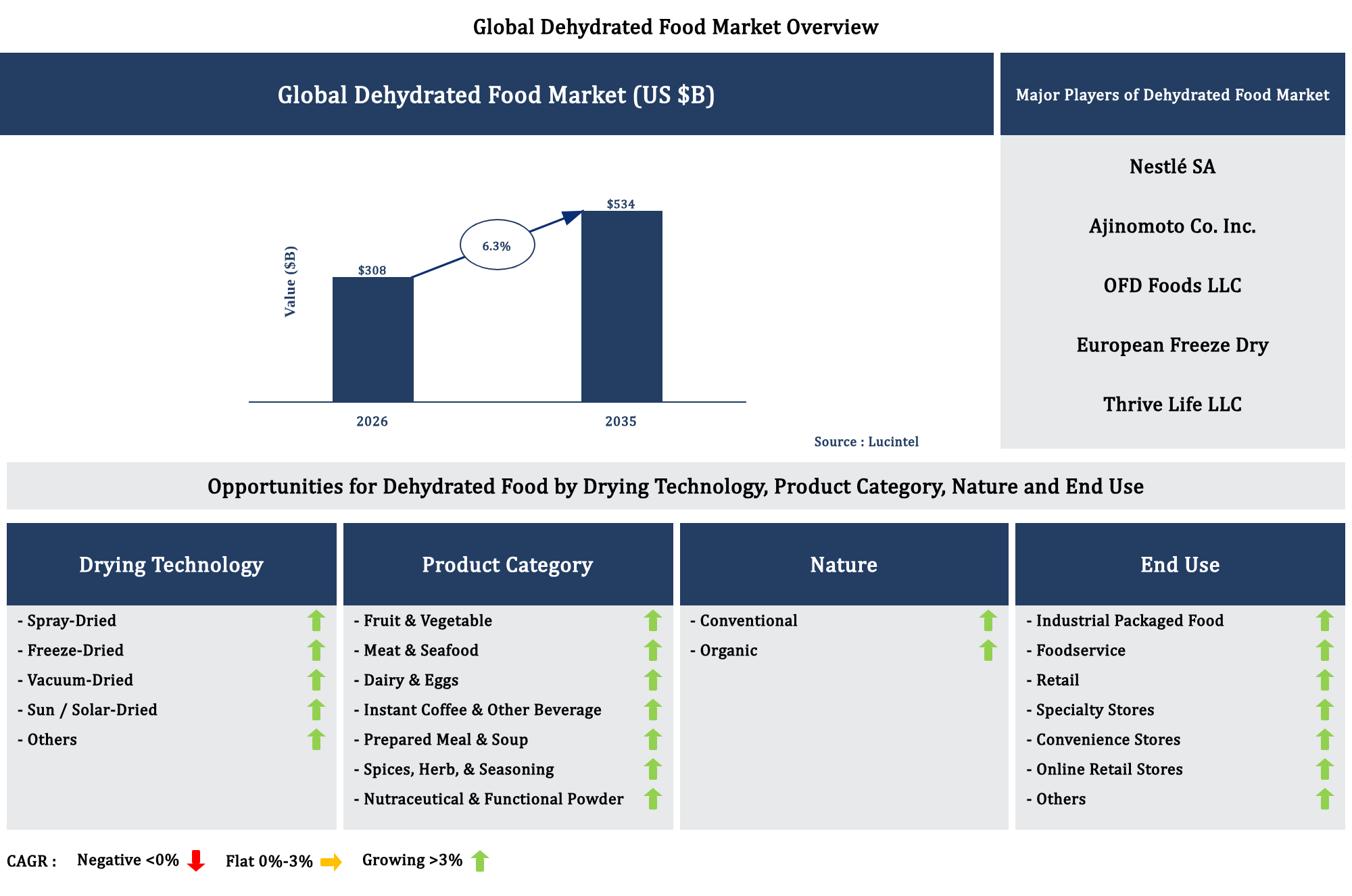
Dehydrated Food Market

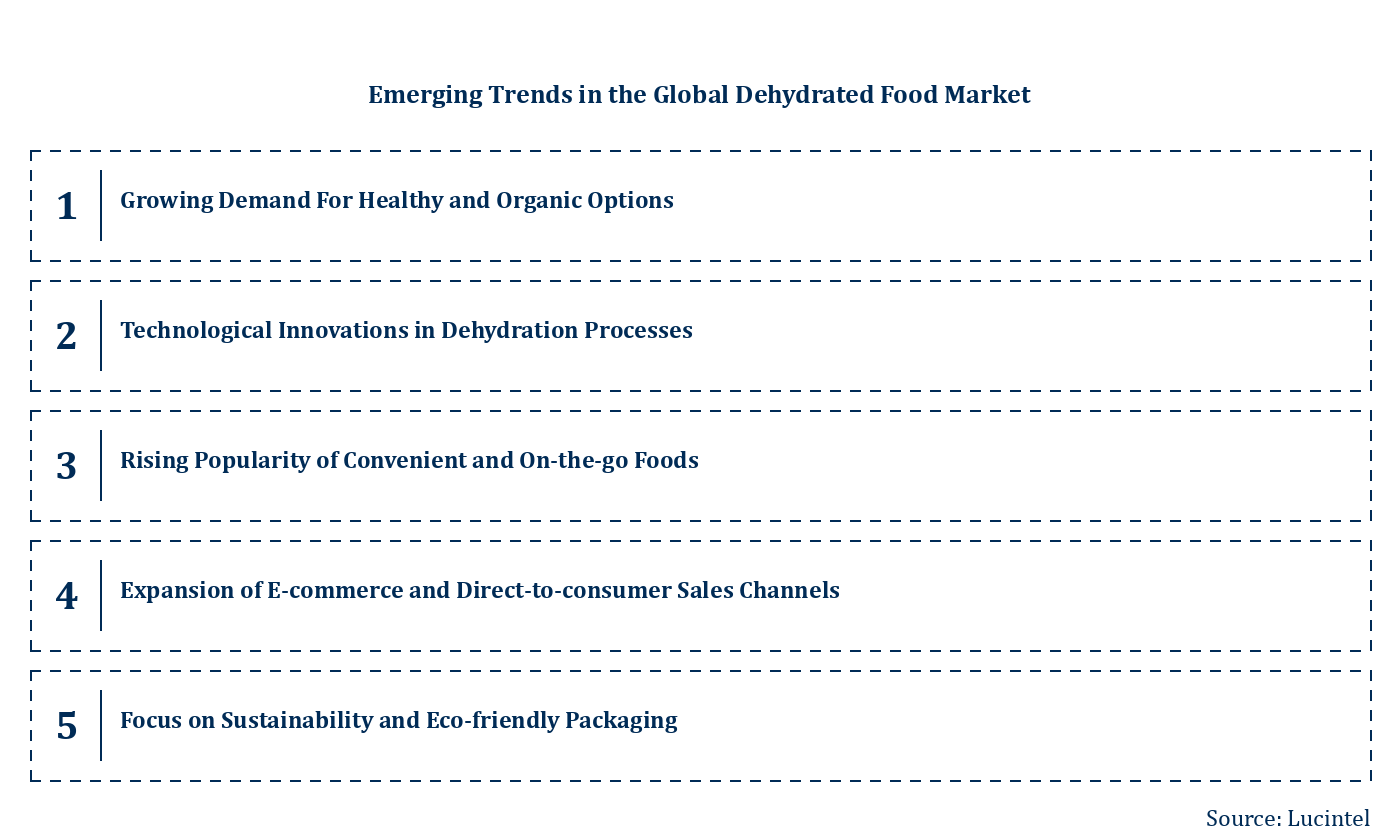
Emerging Trends in the Dehydrated Food Market

The dehydrated food market is experiencing rapid growth driven by changing consumer preferences, technological advancements, and increasing demand for convenient, long-lasting food options. As consumers seek healthier, portable, and sustainable food solutions, industry players are innovating to meet these needs. The markets evolution is also influenced by global supply chain dynamics and environmental considerations. These developments are reshaping the landscape, creating new opportunities and challenges for manufacturers, retailers, and consumers alike. Understanding these key trends is essential for stakeholders aiming to capitalize on the markets potential and adapt to its shifting dynamics.

  • Growing Demand for Healthy and Organic Options: Consumers are increasingly prioritizing health and wellness, leading to a surge in demand for organic, non-GMO, and clean-label dehydrated foods. This trend encourages manufacturers to source high-quality ingredients and adopt transparent labeling practices, which enhances consumer trust and loyalty. The focus on health benefits also drives innovation in product formulations, including superfoods and functional ingredients, thereby expanding market offerings and catering to health-conscious demographics.
  • Technological Innovations in Dehydration Processes: Advances in dehydration technology, such as freeze-drying and vacuum drying, are improving product quality, shelf life, and nutritional retention. These innovations enable the production of more diverse and premium products, including gourmet and specialty items. Enhanced efficiency and energy savings in dehydration processes also reduce costs and environmental impact, making products more sustainable and appealing to eco-conscious consumers. This technological progress is crucial for meeting evolving consumer expectations and competitive market demands.
  • Rising Popularity of Convenient and On-the-Go Foods: Busy lifestyles and urbanization are fueling demand for portable, ready-to-eat dehydrated foods. Snack packs, meal components, and instant ingredients are gaining popularity across retail channels. Manufacturers are developing innovative packaging solutions to enhance portability and shelf stability, catering to consumers seeking quick, nutritious options. This trend is expanding the market beyond traditional segments, including outdoor activities, travel, and emergency preparedness, thereby increasing overall market size and diversity.
  • Expansion of E-commerce and Direct-to-Consumer Sales Channels: The growth of online retail platforms is transforming how dehydrated foods are marketed and sold. E-commerce offers a wider reach, personalized marketing, and direct engagement with consumers, facilitating niche product offerings and subscription models. Digital channels also enable better consumer education about product benefits and usage. This shift enhances market accessibility, reduces distribution costs, and accelerates product innovation cycles, making it easier for consumers to discover and purchase a variety of dehydrated food options from the comfort of their homes.
  • Focus on Sustainability and Eco-Friendly Packaging: Environmental concerns are prompting manufacturers to adopt sustainable practices, including biodegradable packaging and eco-friendly sourcing. Consumers are increasingly favoring brands that demonstrate environmental responsibility, influencing purchasing decisions. Companies are investing in recyclable materials and reducing packaging waste to align with sustainability goals. This trend not only enhances brand reputation but also meets regulatory requirements and consumer expectations, ultimately driving market growth by appealing to environmentally conscious buyers and promoting responsible consumption.

These trends are collectively reshaping the dehydrated food market by emphasizing health, innovation, convenience, digital engagement, and sustainability. They are fostering a more dynamic, consumer-centric industry that is poised for continued growth and diversification, responding effectively to evolving market demands and societal values.
Dehydrated Food Market by country

Recent Developments in the Dehydrated Food Market

The dehydrated food market is experiencing rapid growth driven by increasing consumer demand for convenient, long-lasting, and nutritious food options. Innovations in dehydration technology and expanding applications across retail, foodservice, and emergency supplies are fueling market expansion. Additionally, rising health consciousness and environmental concerns are prompting shifts toward sustainable and minimally processed foods. These developments are reshaping the industry landscape, creating new opportunities for manufacturers and suppliers to meet evolving consumer preferences and global market demands.

  • Growing Demand for Convenience Foods: Consumers seek easy-to-prepare, portable, and shelf-stable dehydrated foods, boosting sales across retail and foodservice sectors. This trend is driven by busy lifestyles and the need for quick nutrition solutions, leading to increased product innovation and market penetration.
  • Technological Advancements in Dehydration Processes: Innovations such as freeze-drying and vacuum dehydration improve product quality, flavor retention, and nutrient preservation. These advancements enable manufacturers to offer higher-quality products, expand product varieties, and reduce processing costs, thereby enhancing competitiveness and market growth.
  • Expansion Into Emerging Markets: Increasing urbanization and rising disposable incomes in developing regions are opening new opportunities for dehydrated food products. Companies are tailoring offerings to local tastes and investing in distribution channels, which accelerates market penetration and diversifies revenue streams.
  • Rising Health Consciousness and Clean-label Trends: Consumers favor minimally processed, natural, and preservative-free dehydrated foods. This shift encourages brands to develop organic, non-GMO, and additive-free options, fostering product differentiation and capturing health-conscious market segments.
  • Growing Applications in Emergency Preparedness and Outdoor Activities: The portability and long shelf life of dehydrated foods make them ideal for disaster relief, military, and outdoor recreation markets. This expanding application base drives demand, encourages innovation, and supports steady market growth.

The overall impact of these developments is a dynamic, expanding dehydrated food market characterized by innovation, diversification, and increased consumer engagement. Market players are better positioned to meet diverse needs, resulting in higher sales, broader geographic reach, and sustained industry growth.

Strategic Growth Opportunities in the Dehydrated Food Market

The dehydrated food market is experiencing rapid growth driven by increasing consumer demand for convenient, long-lasting, and nutritious food options. Innovations in dehydration technology and expanding applications across retail, foodservice, and emergency supplies are fueling market expansion. Additionally, rising health consciousness and environmental concerns are prompting shifts toward sustainable and minimally processed foods. These developments are reshaping the industry landscape, creating new opportunities for manufacturers and suppliers to meet evolving consumer preferences and global market demands.

  • Growing Demand for Convenience Foods: Consumers seek easy-to-prepare, portable, and shelf-stable dehydrated foods, boosting sales across retail and foodservice sectors. This trend is driven by busy lifestyles and the need for quick nutrition solutions, leading to increased product innovation and market penetration.
  • Technological Advancements in Dehydration Processes: Innovations such as freeze-drying and vacuum dehydration improve product quality, flavor retention, and nutrient preservation. These advancements enable manufacturers to offer higher-quality products, expand product varieties, and reduce processing costs, thereby enhancing competitiveness and market growth.
  • Expansion Into Emerging Markets: Increasing urbanization and rising disposable incomes in developing regions are opening new opportunities for dehydrated food products. Companies are tailoring offerings to local tastes and investing in distribution channels, which accelerates market penetration and diversifies revenue streams.
  • Rising Health Consciousness and Clean-label Trends: Consumers favor minimally processed, natural, and preservative-free dehydrated foods. This shift encourages brands to develop organic, non-GMO, and additive-free options, fostering product differentiation and capturing health-conscious market segments.
  • Growing Applications in Emergency Preparedness and Outdoor Activities: The portability and long shelf life of dehydrated foods make them ideal for disaster relief, military, and outdoor recreation markets. This expanding application base drives demand, encourages innovation, and supports steady market growth.

The overall impact of these developments is a dynamic, expanding dehydrated food market characterized by innovation, diversification, and increased consumer engagement. Market players are better positioned to meet diverse needs, resulting in higher sales, broader geographic reach, and sustained industry growth.

Dehydrated Food Market Drivers and Challenges

The dehydrated food market is influenced by a variety of technological, economic, and regulatory factors that shape its growth and development. Advances in dehydration technology have improved product quality and shelf life, making these foods more appealing to consumers. Economic factors such as rising disposable incomes and changing lifestyles have increased demand for convenient, long-lasting food options. Regulatory standards ensure safety and quality, fostering consumer trust and market expansion. Additionally, environmental concerns and sustainability initiatives are prompting innovations in packaging and sourcing. Together, these drivers and challenges create a dynamic environment that impacts market trends, competitiveness, and future growth prospects.

The factors responsible for driving the dehydrated food market include:-

  • Technological Advancements: The development of innovative dehydration techniques, such as freeze-drying and vacuum dehydration, has significantly improved product quality, flavor retention, and nutritional value. These advancements enable manufacturers to produce a wider variety of dehydrated foods with longer shelf lives, appealing to health-conscious and convenience-seeking consumers. Enhanced packaging technologies also help preserve freshness and prevent contamination, further boosting consumer confidence. As technology continues to evolve, the market benefits from increased efficiency, reduced costs, and expanded product offerings, fueling overall growth.
  • Rising Consumer Demand for Convenience Foods: Modern lifestyles, characterized by busy schedules and urbanization, have increased the demand for ready-to-eat and easy-to-prepare foods. Dehydrated foods offer a practical solution due to their portability, long shelf life, and minimal preparation requirements. Consumers are increasingly seeking healthy, natural, and preservative-free options, which dehydrated foods can provide when produced with quality ingredients. This shift in consumer preferences is driving manufacturers to innovate and expand their product lines, thereby boosting market growth and penetration across various regions.
  • Growing Health and Wellness Trends: Consumers are becoming more health-conscious, seeking nutritious and minimally processed foods. Dehydrated foods retain most of their original nutrients, making them attractive options for health-focused markets. The demand for organic, non-GMO, and allergen-free dehydrated products is rising, encouraging producers to adopt cleaner labels and sustainable sourcing practices. This trend not only expands the consumer base but also encourages innovation in product development, such as functional foods with added vitamins or minerals, further propelling market expansion.
  • Expansion of E-commerce and Retail Channels: The proliferation of online shopping platforms has made dehydrated foods more accessible to a global audience. E-commerce provides a convenient channel for consumers to explore a wide variety of products, compare prices, and access specialty items. Retail chains and supermarkets are also increasing shelf space for dehydrated foods, driven by consumer demand for convenience and health products. This expansion enhances market visibility, broadens customer reach, and accelerates sales growth, supporting overall market development.
  • Increasing Focus on Sustainability and Eco-friendly Packaging: Environmental concerns are prompting manufacturers to adopt sustainable practices, including eco-friendly sourcing and biodegradable packaging. Consumers are increasingly favoring brands that demonstrate environmental responsibility, influencing purchasing decisions. Innovations in packaging that reduce waste and energy consumption are gaining traction, aligning with global sustainability goals. This focus not only enhances brand reputation but also meets regulatory requirements, fostering long-term market stability and growth.

The challenges facing this dehydrated food market include:-

  • Regulatory and Quality Standards: Stringent regulations regarding food safety, labeling, and ingredient sourcing pose compliance challenges for manufacturers. Variations across regions can complicate international trade and market entry. Ensuring consistent quality and safety standards requires significant investment in testing, certification, and quality control processes, which can increase costs and slow product development. Non-compliance risks include legal penalties, product recalls, and damage to brand reputation, making regulatory adherence a critical challenge for sustained growth.
  • Supply Chain Disruptions: The dehydrated food industry relies heavily on raw material availability, transportation, and logistics. Disruptions caused by geopolitical tensions, pandemics, or climate change can lead to shortages, delays, and increased costs. These issues impact production schedules and inventory management, potentially leading to lost sales and reduced profitability. Developing resilient supply chains and diversifying sourcing strategies are essential but require substantial investment and planning, posing ongoing challenges for market players.
  • Market Competition and Price Pressures: The increasing number of players in the dehydrated food sector intensifies competition, leading to price wars and margin compression. Differentiating products through quality, branding, and innovation becomes crucial but challenging in a crowded marketplace. Additionally, fluctuating raw material prices and rising operational costs can further squeeze profit margins. Maintaining competitive pricing while ensuring product quality and innovation is a delicate balance that companies must navigate to sustain growth and market share.

In summary, the dehydrated food market is shaped by technological innovations, changing consumer preferences, and sustainability initiatives, which collectively drive growth. However, regulatory complexities, supply chain vulnerabilities, and intense competition pose significant challenges. Navigating these factors requires strategic planning, innovation, and compliance to capitalize on emerging opportunities. Overall, the markets future depends on how effectively industry players adapt to these drivers and challenges, ensuring sustainable growth and consumer trust.

List of Dehydrated Food Market Companies

Companies in the market compete on the basis of product quality offered. Major players in this market focus on expanding their manufacturing facilities, R&D investments, infrastructural development, and leverage integration opportunities across the value chain. Through these strategies dehydrated food market companies cater increasing demand, ensure competitive effectiveness, develop innovative products & technologies, reduce production costs, and expand their customer base. Some of the dehydrated food market companies profiled in this report include-

  • Nestlé SA
  • Ajinomoto Co. Inc.
  • OFD Foods LLC
  • European Freeze Dry
  • Thrive Life LLC
  • Harmony House Foods Inc.
  • Nutristore
  • LYOFOOD Sp. z o.o.
  • Kerry Group plc
  • Chaucer Foods Ltd.

Dehydrated Food Market by Segment

The study includes a forecast for the global dehydrated food market by drying technology, product category, nature, end use, and region.

  • Dehydrated Food Market by Drying Technology [Value from 2019 to 2035]:
    • Spray-Dried
    • Freeze-Dried
    • Vacuum-Dried
    • Sun / Solar-Dried
    • Others
  • Dehydrated Food Market by Product Category [Value from 2019 to 2035]:
    • Fruit & Vegetable
    • Meat & Seafood
    • Dairy & Eggs
    • Instant Coffee & Other Beverage
    • Prepared Meal & Soup
    • Spices, Herb, & Seasoning
    • Nutraceutical & Functional Powder
  • Dehydrated Food Market by Nature [Value from 2019 to 2035]:
    • Conventional
    • Organic
  • Dehydrated Food Market by End Use [Value from 2019 to 2035]:
    • Industrial Packaged Food
    • Foodservice
    • Retail
    • Specialty Stores
    • Convenience Stores
    • Online Retail Stores
    • Others
  • Dehydrated Food Market by Region [Value from 2019 to 2035]:
    • North America
    • Europe
    • Asia Pacific
    • The Rest of the World

Country Wise Outlook for the Dehydrated Food Market

The dehydrated food market has experienced significant growth globally, driven by increasing consumer demand for convenient, long-lasting, and nutritious food options. Innovations in dehydration technology, rising health consciousness, and the expanding outdoor and travel sectors have contributed to this trend. Countries are focusing on product diversification, sustainable packaging, and expanding distribution channels to capture market share. The market's evolution reflects changing lifestyles and preferences, with a notable shift towards organic and clean-label products. As the market continues to grow, regional developments are shaping the competitive landscape, with each country adopting unique strategies to meet consumer needs and regulatory standards.

  • United States: The US dehydrated food market has seen rapid expansion, driven by the popularity of outdoor activities and health-conscious consumers. Companies are innovating with organic, gluten-free, and plant-based options, expanding product lines to include snacks, meals, and ingredients. E-commerce sales have surged, and sustainable packaging initiatives are gaining traction. The market is also benefiting from increased demand for emergency preparedness foods and convenience products, with major players investing in R&D to improve flavor and nutritional content.
  • China: China's dehydrated food market is experiencing robust growth due to rising disposable incomes and urbanization. Traditional consumption of dried foods is evolving with modern packaging and branding, appealing to younger consumers. The focus is on functional products such as energy bars and health supplements. Local companies are expanding their product portfolios, emphasizing natural ingredients and health benefits. E-commerce platforms are playing a crucial role in distribution, and government policies supporting food safety and innovation are fostering market development.
  • Germany: The German market emphasizes organic and sustainable dehydrated foods, aligning with the country's strong environmental consciousness. Innovations include biodegradable packaging and minimally processed products. The demand for convenient, healthy snacks and meal components is increasing, especially among working professionals and outdoor enthusiasts. German companies are investing in quality assurance and certifications to meet strict EU regulations. The market also sees growth in specialty products catering to dietary restrictions, such as gluten-free and vegan options.
  • India: The dehydrated food market in India is expanding rapidly, driven by urbanization, changing lifestyles, and a growing middle class. Traditional dried foods like snacks and spices are being modernized with improved packaging and branding. There is a rising demand for health-oriented products, including dehydrated fruits and vegetables. Local manufacturers are focusing on affordability and regional flavors to capture diverse consumer preferences. E-commerce and retail outlets are key distribution channels, and government initiatives promoting food processing are supporting industry growth.
  • Japan: Japan's dehydrated food market is characterized by innovation and a focus on health and convenience. The market caters to busy urban populations and the aging demographic seeking nutritious, easy-to-prepare foods. Products include dehydrated soups, rice meals, and health supplements. Japanese companies emphasize high-quality ingredients, safety, and functional benefits such as added vitamins and minerals. Sustainability practices, including eco-friendly packaging, are increasingly adopted. The market also benefits from a strong culture of food innovation and a preference for premium, artisanal products.

Features of the Dehydrated Food Market

  • Market Size Estimates: Dehydrated food market size estimation in terms of value ($B).
  • Trend and Forecast Analysis: Market trends (2019 to 2025) and forecast (2026 to 2035) by various segments and regions.
  • Segmentation Analysis: Dehydrated food market size by various segments, such as by drying technology, product category, nature, end use, and region in terms of value ($B).
  • Regional Analysis: Dehydrated food market breakdown by North America, Europe, Asia Pacific, and Rest of the World.
  • Growth Opportunities: Analysis of growth opportunities in different drying technologies, product categories, nature, end uses, and regions for the dehydrated food market.
  • Strategic Analysis: This includes M&A, new product development, and competitive landscape of the dehydrated food market.
  • Analysis of competitive intensity of the industry based on Porter’s Five Forces model.

Top 5 Companies

  • Nestlé SA
  • Ajinomoto Co. Inc.
  • OFD Foods LLC
  • European Freeze Dry
  • Thrive Life LLC

Table of Contents

1. Executive Summary
15.1 Competitive Analysis Overview

List of Figures

List of Tables

Table 5.1: Attractiveness Analysis for the Global Dehydrated Food Market by Product Category Table 5.2: Market Size and CAGR of Various Product Category in the Global Dehydrated Food Market (2019-2025) Table 5.3: Market Size and CAGR of Various Product Category in the Global Dehydrated Food Market (2026-2035) Table 5.4: Trends of Fruit & Vegetable in the Global Dehydrated Food Market (2019-2025) Table 5.5: Forecast for Fruit & Vegetable in the Global Dehydrated Food Market (2026-2035) Table 5.6: Trends of Meat & Seafood in the Global Dehydrated Food Market (2019-2025) Table 5.7: Forecast for Meat & Seafood in the Global Dehydrated Food Market (2026-2035) Table 5.8: Trends of Dairy & Eggs in the Global Dehydrated Food Market (2019-2025) Table 5.9: Forecast for Dairy & Eggs in the Global Dehydrated Food Market (2026-2035) Table 5.10: Trends of Instant Coffee & Other Beverage in the Global Dehydrated Food Market (2019-2025) Table 5.11: Forecast for Instant Coffee & Other Beverage in the Global Dehydrated Food Market (2026-2035) Table 5.12: Trends of Prepared Meal & Soup in the Global Dehydrated Food Market (2019-2025) Table 5.13: Forecast for Prepared Meal & Soup in the Global Dehydrated Food Market (2026-2035) Table 5.14: Trends of Spices, Herb, & Seasoning in the Global Dehydrated Food Market (2019-2025) Table 5.15: Forecast for Spices, Herb, & Seasoning in the Global Dehydrated Food Market (2026-2035) Table 5.16: Trends of Nutraceutical & Functional Powder in the Global Dehydrated Food Market (2019-2025) Table 5.17: Forecast for Nutraceutical & Functional Powder in the Global Dehydrated Food Market (2026-2035)"
Table 7.1: Attractiveness Analysis for the Global Dehydrated Food Market by End Use Table 7.2: Market Size and CAGR of Various End Use in the Global Dehydrated Food Market (2019-2025) Table 7.3: Market Size and CAGR of Various End Use in the Global Dehydrated Food Market (2026-2035) Table 7.4: Trends of Industrial Packaged Food in the Global Dehydrated Food Market (2019-2025) Table 7.5: Forecast for Industrial Packaged Food in the Global Dehydrated Food Market (2026-2035) Table 7.6: Trends of Foodservice in the Global Dehydrated Food Market (2019-2025) Table 7.7: Forecast for Foodservice in the Global Dehydrated Food Market (2026-2035) Table 7.8: Trends of Retail in the Global Dehydrated Food Market (2019-2025) Table 7.9: Forecast for Retail in the Global Dehydrated Food Market (2026-2035) Table 7.10: Trends of Specialty Stores in the Global Dehydrated Food Market (2019-2025) Table 7.11: Forecast for Specialty Stores in the Global Dehydrated Food Market (2026-2035) Table 7.12: Trends of Convenience Stores in the Global Dehydrated Food Market (2019-2025) Table 7.13: Forecast for Convenience Stores in the Global Dehydrated Food Market (2026-2035) Table 7.14: Trends of Online Retail Stores in the Global Dehydrated Food Market (2019-2025) Table 7.15: Forecast for Online Retail Stores in the Global Dehydrated Food Market (2026-2035) Table 7.16: Trends of Others in the Global Dehydrated Food Market (2019-2025) Table 7.17: Forecast for Others in the Global Dehydrated Food Market (2026-2035)

Methodology

Lucintel has been in the business of market research and management consulting since 2000 and has published over 1000 market intelligence reports in various markets / applications and served over 1,000 clients worldwide. This study is a culmination of four months of full-time effort performed by Lucintel's analyst team. The analysts used the following sources for the creation and completion of this valuable report:

  • In-depth interviews of the major players in this market
  • Detailed secondary research from competitors' financial statements and published data
  • Extensive searches of published works, market, and database information pertaining to industry news, company press releases, and customer intentions
  • A compilation of the experiences, judgments, and insights of Lucintel's professionals, who have analyzed and tracked this market over the years.

Extensive research and interviews are conducted across the supply chain of this market to estimate market share, market size, trends, drivers, challenges, and forecasts. Below is a brief summary of the primary interviews that were conducted by job function for this report.

Lucintel's methodology for market research

Thus, Lucintel compiles vast amounts of data from numerous sources, validates the integrity of that data, and performs a comprehensive analysis. Lucintel then organizes the data, its findings, and insights into a concise report designed to support the strategic decision-making process. The figure below is a graphical representation of Lucintel's research process.

Primary interviews by job function

Buy Now

Choose a license that fits your team. Instant PDF delivery.

Market Report

1 User PDF

$4,850
Buy Now

Market Report

2-5 Users PDF

$6,700
Buy Now

Market Report

Corporate PDF

$8,850
Buy Now

Market Report

Global PDF

$10,000
Buy Now

Prices exclude taxes. Instant delivery. Custom licensing available on request.

Frequently Asked Questions

What is the dehydrated food market size?
The global dehydrated food market is expected to reach an estimated $534 billion by 2035.
What is the growth forecast for dehydrated food market?
The global dehydrated food market is expected to grow with a CAGR of 6.3% from 2026 to 2035.
What are the major drivers influencing the growth of the dehydrated food market?
The major drivers for this market are the increasing demand for convenient food products, the rising adoption of long shelf life foods, and the growing consumption of ready to eat meals.
What are the major segments for dehydrated food market?
The future of the dehydrated food market looks promising with opportunities in the industrial packaged food, foodservice, retail, specialty store, convenience store, and online retail store markets.
Who are the key dehydrated food market companies?

Some of the key dehydrated food companies are as follows:

  • Nestlé SA
  • Ajinomoto Co. Inc.
  • OFD Foods LLC
  • European Freeze Dry
  • Thrive Life LLC
  • Harmony House Foods Inc.
  • Nutristore
  • LYOFOOD Sp. z o.o.
  • Kerry Group plc
  • Chaucer Foods Ltd.
Which dehydrated food market segment will be the largest in future?
Lucintel forecasts that, within the drying technology category, spray-dried is expected to witness the highest growth over the forecast period.
In dehydrated food market, which region is expected to be the largest in next 8 years?
In terms of region, APAC will remain the largest region over the forecast period.
Do we receive customization in this report?
Yes, Lucintel provides 10% customization without any additional cost.

Key Questions

  • What are some of the most promising, high-growth opportunities for the dehydrated food market by drying technology (spray-dried, freeze-dried, vacuum-dried, sun / solar-dried, and others), product category (fruit & vegetable, meat & seafood, dairy & eggs, instant coffee & other beverage, prepared meal & soup, spices, herb, & seasoning, and nutraceutical & functional powder), nature (conventional and organic), end use (industrial packaged food, foodservice, retail, specialty stores, convenience stores, online retail stores, and others), and region (North America, Europe, Asia Pacific, and the Rest of the World)?
  • Which segments will grow at a faster pace and why?
  • Which region will grow at a faster pace and why?
  • What are the key factors affecting market dynamics? What are the key challenges and business risks in this market?
  • What are the business risks and competitive threats in this market?
  • What are the emerging trends in this market and the reasons behind them?
  • What are some of the changing demands of customers in the market?
  • What are the new developments in the market? Which companies are leading these developments?
  • Who are the major players in this market? What strategic initiatives are key players pursuing for business growth?
  • What are some of the competing products in this market and how big of a threat do they pose for loss of market share by material or product substitution?
  • What M&A activity has occurred in the last 5 years and what has its impact been on the industry?
Why Choose Us

The Lucintel Advantage

Trusted partner for strategic intelligence and business growth

25+ Years Excellence

25+ Years Excellence

Quarter century of proven expertise in management consulting and market research across global markets.
Game-Changer Ideas

Game-Changer Ideas

Innovative strategies and actionable insights that help clients become the smartest in their industry.
Global Reach

Global Reach

Extensive coverage across 50+ industries and markets worldwide with localized expertise.
Start Your Growth Journey

Get Your Free
Market Intelligence
Briefing

Receive a complimentary market analysis tailored to your industry. Our analysts will identify key growth opportunities and competitive dynamics specific to your business.

Custom Market Snapshot

Market size, growth rate, and key trend analysis for your specific sector.

Competitive Landscape Overview

Top competitor positioning and market share analysis.

Growth Opportunity Identification

Strategic recommendations backed by data-driven insights.

Subscribe

Subscribe to our Newsletter

Get curated market intelligence and competitive moves straight to your inbox.

By subscribing, you agree to receive our monthly insights. Unsubscribe anytime.

Industry Trends Market Signals Opportunities Competitor Moves