
Market Report · May 18, 2026

This market report covers trends, opportunities, and forecasts in the global decorative lamp in the led driver market to 2031 by technology (driver ic and discrete component), application (general lighting, automotive lighting, and backlighting), and region (North America, Europe, Asia Pacific, and the Rest of the World)
We'll send your sample report shortly.
![Decorative Lamp in the LED Driver Market by Application [Value from 2019 to 2031]:](https://lucintel.com/images/Decorative-Lamp-in-the-LED-Driver-Technology-Market-Segment.png "Decorative Lamp in the LED Driver Market by Application [Value from 2019 to 2031]:")
• Intelligent and Integrated Inbuilt Lighting: Thanks to newer technologies such as IoT, which have been embedded within LED drivers, decorative devices have evolved into multifunctional devices. These technologies enable users to operate and personalize their lights from a distance, providing a high level of convenience, energy efficiency, and integration with existing automation systems.
• Advanced Power Management Solutions: Since energy consumption and sustainability have been ongoing issues, there has been a marketing trend to emphasize the development of energy-efficient LED drivers. These drivers improve the efficiency of decorative lamps by controlling energy usage and minimizing waste. This change helps reduce operational costs for consumers while promoting sustainability on a global scale.
• Adaptive Light Emission Properties: The widespread and increasing adoption of decorative lamps is driven by the growing need for flexibility in lighting features. With increased innovation in LED drivers, the scope of control over brightness and color temperature has expanded, making it easier for users to define specific lighting scenarios. This trend is particularly common among both domestic and commercial users, where ambient light is used as a design tool.
• Miniaturization and Integration of Components: As consumers increasingly favor more elegant and sophisticated light fittings, manufacturers are focusing on integrating multiple functions into a single LED driver. The miniaturization trend, which reduces the number of decorative lamp components, enhances the safety, design, and ease of installation.
• Wireless Control and Remote Control of LED Drivers: The use of wireless control in the decorative lamp LED driver market is expanding due to its application in smartphones, voice assistants, and other wireless control platforms. This enhances convenience and interaction with users, offering greater flexibility in both commercial and residential lighting applications. These emerging trends are revolutionizing the decorative lamp LED driver market by adapting to customer needs and becoming more efficient and intelligent. The push towards sustainability through smart integration designs and miniaturized components is not only enhancing operational efficiencies but also continuing to offer greater personalization and user-friendly lighting systems. As these innovations continue to change the market, further developments are expected in the broader decorative lighting industry, where styles and functionalities vary greatly.
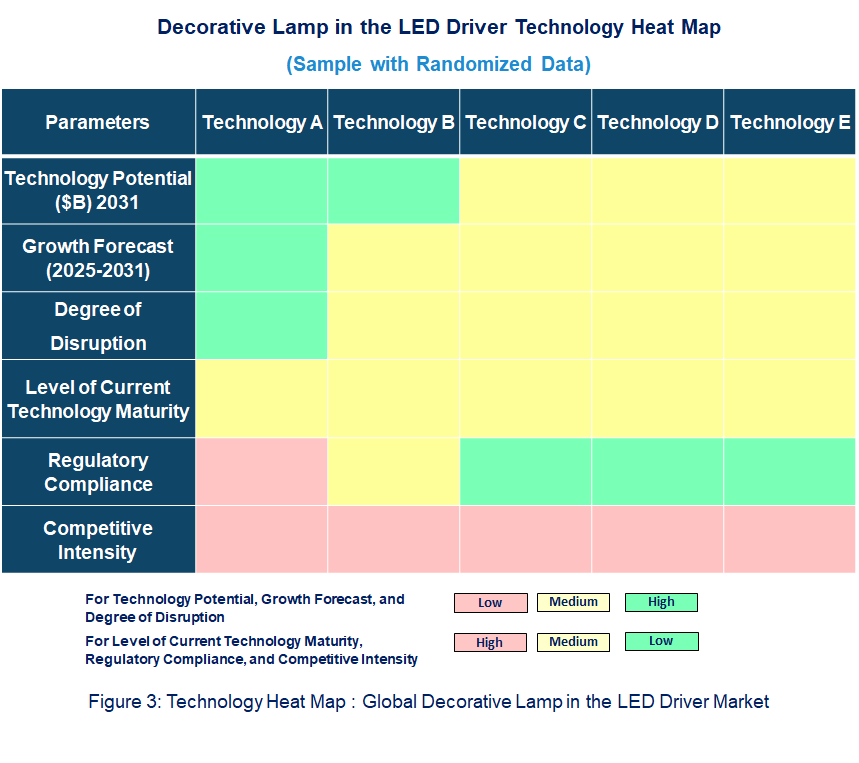
• Potential in Technology: LED drivers are progressing to incorporate features such as dimming, color tuning, and IoT capabilities, offering greater flexibility and personalization in decorative lighting. These features have the potential to transform both commercial and residential environments by enhancing user control, enabling energy savings, and creating immersive lighting experiences.
• Degree of Disruption: The extent of change is high because existing systems are still being adapted to these innovations. The market adoption of LED lamps in place of incandescent or fluorescent lamps is reshaping the market. The presence of smart systems is also likely to change the way decorative lamps are used and controlled.
• Current Technology Maturity Level: The current technology level remains moderate, with smart and efficient LED drivers already widely available. However, the market is still in its early stages. The development of fully functional, adaptive, and wireless-integrated lighting systems is underway. There are continuous advancements in power efficiency, connectivity, and miniaturization to create more robust and advanced solutions.
• Regulatory Compliance: With the world tightening energy standards and considering environmental aspects, the importance of regulatory compliance is growing. In this competitive market, manufacturers must ensure that LED drivers comply with regulations such as RoHS (Restriction of Hazardous Substances) and energy rating standards.
• ACE LEDS: ACE LEDS has focused its efforts on expanding its energy-efficient LED drivers, incorporating dimming and color-tuning functions in decorative and general-purpose lighting solutions for both residential and commercial markets. The company meets the rising demand for decorative lamps, offering small, efficient solutions that provide better control and reduced energy usage.
• Microchip Technology: Microchip Technology has excelled in developing its LED driver solutions, particularly for smart lighting applications. Their power management ICs have enhanced the efficiency of LED drivers. The company is also increasing its IoT-based lighting solutions, allowing users to control lighting remotely via smartphones and integrate with other home automation systems.
• Cree LED: Cree LED has led advancements in LED drivers, focusing on performance and energy efficiency. Recent products offer improved stroboscopic effects and better heat dissipation. Cree’s innovations increase the operational lifespan and energy efficiency of decorative lamps, reducing recovery costs for users while enhancing sustainability.
• GE Current: GE Current, a subsidiary of General Electric, has innovated its LED driver technology by focusing on adaptive LED drivers and intelligent lighting systems. Their smart LED drivers are wirelessly controlled, allowing real-time adjustments to lighting conditions while saving energy. This is particularly beneficial in decorative lighting applications for both homes and offices.
• Signify Holdings: Formerly Philips Lighting, Signify Holdings has made significant strides in smart lighting technologies, developing advanced LED drivers suitable for use in connected lighting systems. Signify has introduced energy-efficient LED drivers and integrated them with smart home automation platforms like Google and Alexa, making it easier for users to control decorative lighting. These changes in demand by key players in the LED driver market are significantly expanding and transforming the potential of decorative lighting, with energy savings, interconnectivity, and individualization of the final product being the major shifts. In this highly competitive market, companies are focusing on intelligent controls, IoT integration, and energy-efficient compliance technologies to meet the market demand for decorative lamps in the LED industry.
• Rising Demand for Energy Efficiency: The trend towards energy-saving solutions has led to the adoption of LED drivers in the decorative lamp market. With market regulations and consumer preferences for sustainable products, LED lighting, known for its lower energy consumption and longevity, has become widely accepted in decorative lighting.
• Development of Smart Lighting and IoT-Connected Devices: IoT and smart technologies are disrupting the decorative lighting market. With smart LED drivers, consumers can control their lighting environments with features like remote control, voice activation, and scheduling, increasing the popularity of LED decorative lamps in residential and commercial markets.
• Reducing Costs and Enhancements in Longevity: The manufacturing process for LED drivers has become cheaper, leading to lower prices for LED decorative lamps, as the technology has matured. Additionally, advancements in materials and technology have improved the lifespan of LED drivers, resulting in better lighting solutions for decorative purposes.
• Increasing Use of Green Building Information Modeling and Other Green Building Techniques: The popularity of green building certifications, such as LEED, has driven the demand for energy-efficient lighting systems, including decorative LED lamps. Promotional efforts and regulatory requirements are boosting the demand for low-energy lighting options, benefiting the LED driver market in decorative lighting. Challenges:
• Initial High Cost of Implementation: Although LED drivers and advanced fixtures offer long-term savings, the higher upfront costs can be a barrier for consumers in retail and residential markets. This may hinder the adoption of LED-based decorative lighting systems in more price-sensitive markets.
• Technological Integration and Complexity: Design cycles for LED drivers are accelerating due to rapid innovation and changing market trends. Manufacturers must constantly adjust designs to accommodate new technologies such as IoT or color-changing features, making it challenging for new entrants to bring usable, convenient products to market.
• Regulatory Compliance and Standards: Regulatory requirements encourage innovation, but keeping up with changing energy efficiency certifications in different regions can be difficult. Companies must ensure compliance with standards such as RoHS, UL, and CE, which may result in added time, resources, and costs during product development.
• Competition from Alternative Lighting Technologies: While LEDs are the preferred lighting choice, other technologies, such as OLEDs and newer versions of halogen and incandescent alternatives, are gaining traction. These technologies offer advantages such as better color rendering or lower costs, creating barriers to widespread adoption of LED-based decorative lamps. The decorative lamp LED driver market has seen significant growth driven by demand for energy-efficient and smart lighting solutions with sustainable building practices. However, challenges such as high initial costs, technological complexity, regulatory compliance, and competition from other technologies continue to shape the market. These drivers and challenges are pushing the industry toward more innovative, user-focused LED lighting designs, contributing to the development of the decorative lighting market.
• ACE LEDS
• Microchip Technology
• Cree LED
• GE Current
• Signify Holdings
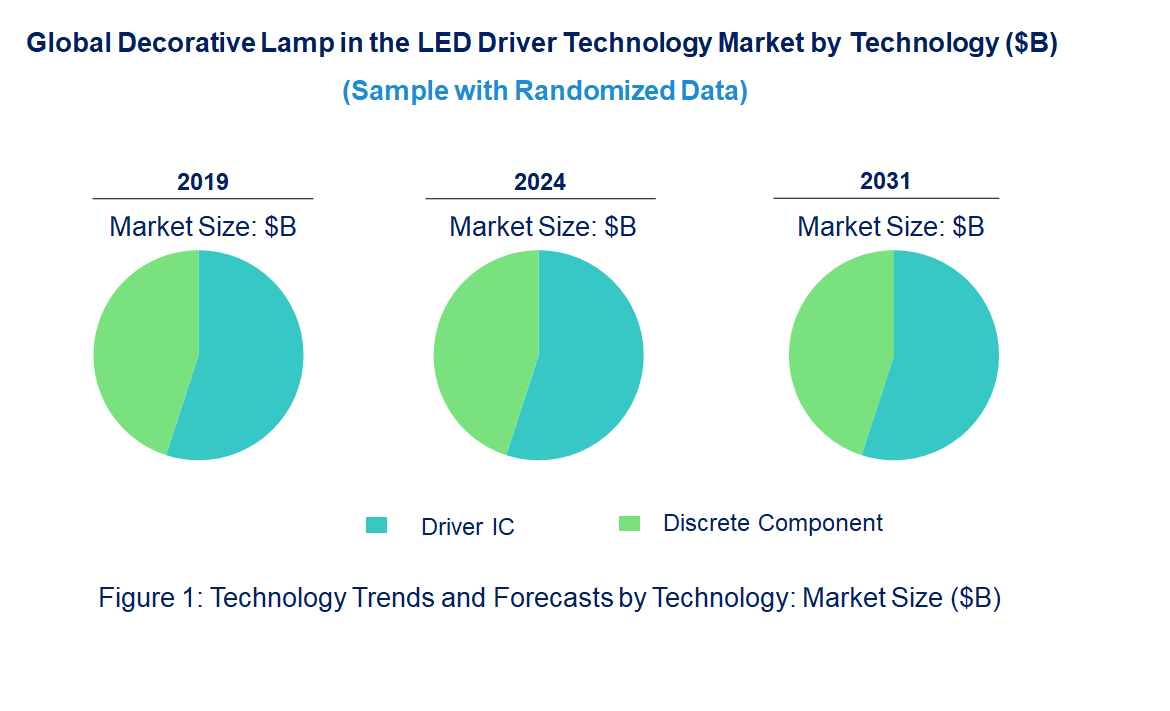
• Technology Readiness by Technology Type: The technology readiness of different components in the LED driver market varies depending on the level of integration and complexity. Driver ICs are highly mature, offering enhanced features and integration capabilities, with key applications in smart and decorative lighting. Discrete Components remain dominant in traditional designs but are less mature in comparison, offering limited scalability in IoT and advanced features. Driver ICs lead in technology readiness, with high compliance with regulatory policies and energy-saving standards, including Energy Star. Discrete Components, while better for customization, may struggle to comply with new energy regulations, as energy-efficient solutions take precedence. Both technologies face competitive pressure, but their functionalities remain separate in the market, with driver ICs being more widely adopted in new generations of decorative lighting solutions.
• Competitive Intensity and Regulatory Compliance: The decorative lamp LED driver market is characterized by intense competition and a rapidly growing demand for innovative, high-quality, energy-efficient solutions. Driver ICs are under the highest competitive pressure, with competitors striving to provide better and more efficient solutions. Compliance with regulatory policies is critical, especially with energy efficiency standards such as EU RoHS and Energy Star. Discrete Components are still essential in markets with custom requirements, but they are being overshadowed by integrated alternatives. Manufacturers must ensure compliance with international standards such as CE, UL, and other energy certifications, which drive innovation and cost management in this competitive market.
• Disruption Potential by Technology Type: Advancements in driver ICs and discrete components are enabling significant disruptions in the decorative lamp segment of the LED driver market. Driver ICs: These components provide compact and integrated solutions that considerably reduce size and complexity. Their integration allows for advanced features such as dimming, color tuning, and smart controls, which disrupt traditional, separate driver designs. Discrete Components: While still dominant, discrete components are being disrupted by integrated and more compact driver ICs. However, they offer customization and robust properties that are essential in specific applications. The adoption of digital IoT-enabLED driver ICs is pushing boundaries that disrupt the static designs of lighting systems. This innovation enhances user control and customization, unlocking new markets in both residential and commercial settings. The transition from analog circuits to digital circuits in LED drivers increases the use of integrated circuits, enhancing precision and efficiency. This shift disrupts the reliance on conventional electronic components.
• Driver IC
• Discrete Component
• General Lighting
• Automotive Lighting
• Backlighting
• North America
• Europe
• Asia Pacific
• The Rest of the World
• Latest Developments and Innovations in the Decorative Lamp in the LED Driver Technologies
• Companies / Ecosystems
• Strategic Opportunities by Technology Type


Choose a license that fits your team. Instant PDF delivery.
Prices exclude taxes. Instant delivery. Custom licensing available on request.
Market Report · May 18, 2026
Market Report · May 18, 2026
Market Report · May 18, 2026
Trusted partner for strategic intelligence and business growth


Receive a complimentary market analysis tailored to your industry. Our analysts will identify key growth opportunities and competitive dynamics specific to your business.

Market size, growth rate, and key trend analysis for your specific sector.

Top competitor positioning and market share analysis.

Strategic recommendations backed by data-driven insights.
Get curated market intelligence and competitive moves straight to your inbox.
By subscribing, you agree to receive our monthly insights. Unsubscribe anytime.
Receive a complimentary market analysis tailored to your industry. Our analysts will identify key growth opportunities and competitive dynamics specific to your business.
Market size, growth rate, and key trend analysis for your specific sector.
Top competitor positioning and market share analysis.
Strategic recommendations backed by data-driven insights.
Get curated market intelligence, emerging trends, and competitive moves straight to your inbox each month.
By subscribing, you agree to receive our monthly insights. Unsubscribe anytime.
We'll send your sample report shortly.