
Market Report · July 24, 2026

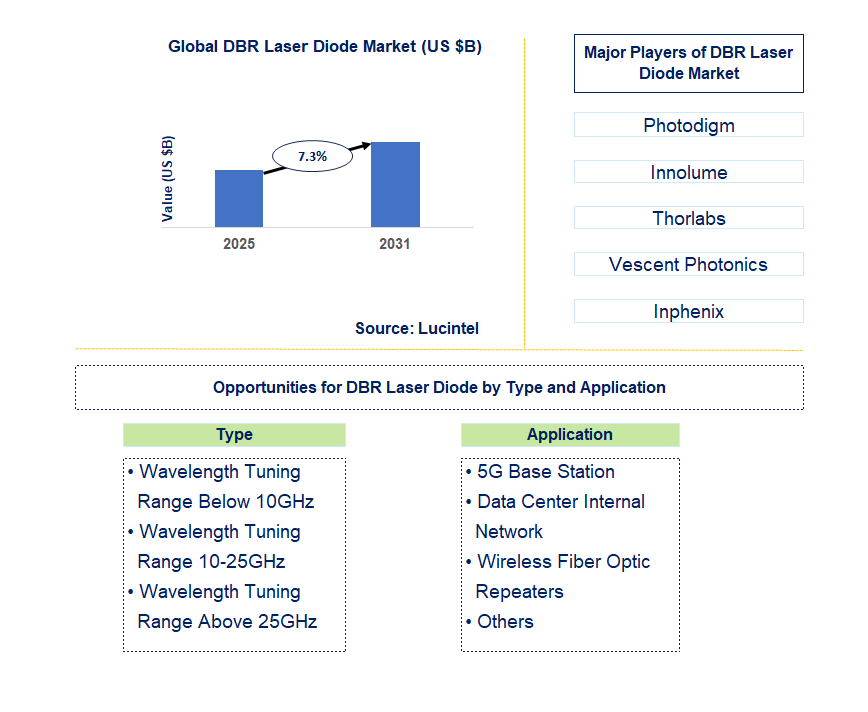
Key data points: The growth forecast = 7.3% annually for the next 7 years. Scroll below to get more insights. This market report covers Trends, opportunity and forecast in dbr laser diode market to 2031 by type (wavelength tuning range below 10ghz, wavelength tuning range 10-25ghz, and wavelength tuning range above 25ghz), application (5g base station, data center internal network, wireless fiber optic repeaters, and others), and region (North America, Europe, Asia Pacific, and the Rest of the World)
We'll send your sample report shortly.
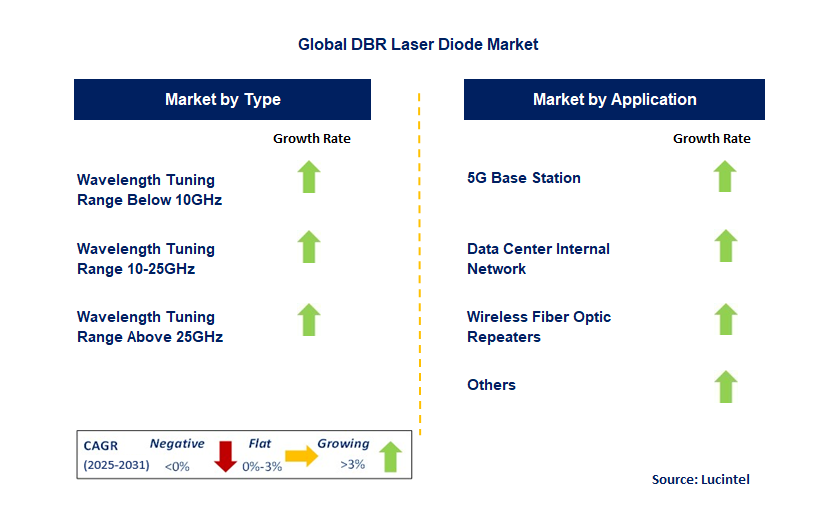
• Lucintel forecasts that, within the type category, wavelength tuning range above 25ghz is expected to witness the highest growth over the forecast period due to increasing demand for high-performance, high-speed communication systems, advanced sensing, and optical networks.
• Within the application category, 5g base station is expected to witness the highest growth due to the need for high-speed backhaul and low-latency optical communication in 5g networks continues to drive strong demand for dbr laser diodes.
• In terms of region, APAC is expected to witness the highest growth over the forecast period due to the highest share due to the rapid development of 5g, telecom infrastructure, and data centers. Gain valuable insights for your business decisions with our comprehensive 150+ page report. Sample figures with some insights are shown below.
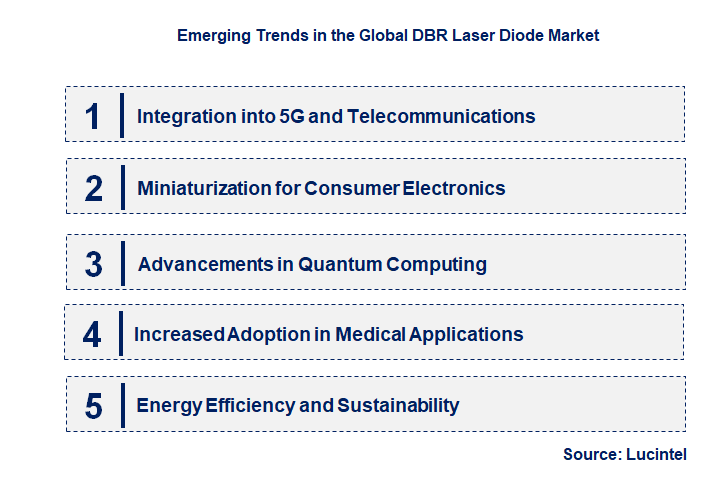
• Integration into 5G and Telecommunications Infrastructure: With the global rollout of 5G networks, DBR laser diodes are becoming critical components in telecommunications infrastructure. They are being used for their ability to provide stable and high-quality signals in fiber-optic networks. The demand for high-speed data transfer and low-latency communication systems is driving the adoption of DBR lasers in optical communication systems, ensuring enhanced performance and efficiency in 5G infrastructure.
• Miniaturization for Consumer Electronics: As consumer electronics become smaller and more compact, DBR laser diodes are being miniaturized to meet the space constraints of devices like smartphones, wearables, and virtual reality (VR) systems. This trend is pushing manufacturers to develop more efficient and smaller DBR diodes without sacrificing performance. The miniaturization trend is enabling broader applications in portable and compact consumer electronics, where precise and stable light sources are essential for functionality.
• Advancements in Quantum Computing: DBR laser diodes are being explored for use in quantum computing, where precise control of light is necessary for the manipulation of quantum bits (qubits). Research into integrating DBR diodes into quantum computing systems is expanding, with their wavelength stability and tenability making them an attractive option for quantum information processing. This trend could potentially drive growth in the semiconductor and laser diode markets as quantum technologies develop.
• Increased Adoption in Medical Applications: DBR laser diodes are increasingly used in medical devices, particularly in diagnostic equipment and therapies like laser surgery. Their high wavelength stability and tenability are critical for providing accurate and controlled treatments. Innovations in biomedical lasers are driving demand for DBR diodes in endoscopic imaging, diagnostic instruments, and targeted therapies, with the trend pointing toward more precise and minimally invasive treatments.
• Energy Efficiency and Sustainability: The demand for energy-efficient lasers is growing, particularly in industries focused on reducing carbon footprints and operational costs. DBR laser diodes, known for their efficient performance and low power consumption, are increasingly favored in applications such as telecommunications, automotive, and industrial lasers. As industries continue to prioritize sustainability, DBR diodes offer a cost-effective solution for maintaining high performance while minimizing energy usage. Emerging trends in the DBR laser diode market are reshaping the landscape by driving technological innovations in telecommunications, consumer electronics, medical devices, quantum computing, and sustainability. These trends are pushing manufacturers to improve performance while meeting the growing demands for energy efficiency, precision, and miniaturization. The DBR laser diode market is expected to continue evolving as these trends become more pronounced in various high-tech industries.
• Improved Wavelength Stability and Precision: Recent advancements in DBR laser diode technology have focused on enhancing wavelength stability and precision. This development is crucial for applications that require consistent performance, such as telecommunications, spectroscopy, and sensor systems. Companies are investing in new fabrication methods and materials to improve the temperature and electrical tuning of DBR lasers, ensuring their reliability in critical applications.
• Integration with Advanced Telecommunication Networks: As 5G and next-generation optical networks proliferate, DBR laser diodes have been integrated into these high-speed communication systems. These diodes are now being optimized for high-speed data transmission, enabling faster and more efficient fiber-optic networks. The increasing demand for broadband and low-latency connections has accelerated the adoption of DBR diodes in the backbone of global telecommunications infrastructure.
• Advancements in Laser Diode Packaging: New packaging techniques for DBR laser diodes are enhancing the performance and durability of these components. Researchers are focusing on creating more efficient thermal management systems and compact designs to improve the reliability and lifespan of the diodes. These advancements are essential for applications in automotive, consumer electronics, and industrial automation, where DBR diodes need to operate efficiently under demanding conditions.
• Cost Reduction through Manufacturing Improvements: Recent developments in DBR laser diode manufacturing processes have led to significant cost reductions. Innovations in automation and materials sourcing have helped lower the production costs of high-performance DBR lasers, making them more accessible for a wider range of industries. These cost reductions are expected to drive the broader adoption of DBR lasers in applications such as medical devices, consumer electronics, and industrial lasers.
• Research in Quantum Technologies: Research into the application of DBR laser diodes in quantum computing and communication has been growing. Researchers are exploring how the precision and stability of DBR lasers can be used for manipulating qubits in quantum computers. While still in the early stages, these developments hold significant potential for future breakthroughs in quantum technologies, making DBR lasers a promising component in next-generation computing systems. Recent developments in the DBR laser diode market highlight key improvements in wavelength stability, manufacturing processes, and cost efficiency. These advancements are expanding the application areas for DBR laser diodes, particularly in telecommunications, medical devices, quantum computing, and consumer electronics. As these technologies continue to evolve, DBR laser diodes will play an increasingly critical role in high-tech industries worldwide.
• Telecommunications and 5G Networks: The global rollout of 5G infrastructure is one of the most significant growth opportunities for DBR laser diodes. As telecommunication companies build high-speed fiber-optic networks to support 5G, the need for stable, high-performance lasers for optical transmission becomes critical. DBR lasers are ideal for these applications due to their wavelength stability and low power consumption, making them essential for supporting next-generation broadband communication systems.
• Medical Laser Systems: DBR laser diodes are becoming increasingly important in medical diagnostics and treatments, such as laser surgery, endoscopy, and diagnostic imaging. The precision and tunability of DBR lasers enable more accurate and minimally invasive procedures, opening up new growth opportunities in the healthcare sector. As the demand for advanced medical technologies increases, DBR lasers will be at the forefront of innovations in medical laser systems.
• Consumer Electronics (AR/VR and Smartphones): The demand for high-performance DBR laser diodes in consumer electronics, particularly in augmented and virtual reality (AR/VR) systems and smartphones, is growing. As devices become smaller and more compact, the need for miniaturized, energy-efficient, and stable lasers is driving the adoption of DBR laser diodes. This trend is particularly strong in applications like optical sensors, laser displays, and lidar systems.
• Industrial Automation and Sensors: DBR laser diodes are being increasingly used in industrial automation for precise measurements, scanning, and manufacturing processes. Their reliability and precision make them ideal for high-speed production lines, robotics, and sensor systems. As industries move toward smarter and more efficient production techniques, DBR laser diodes are becoming integral to automation and sensor applications.
• Quantum Technologies and Communications: The emerging field of quantum technologies presents a long-term growth opportunity for DBR laser diodes. Their precision and stability make them promising components for quantum computing and secure communication systems. As research into quantum technologies advances, DBR laser diodes could become a critical enabler of next-generation quantum devices. Strategic growth opportunities in the DBR laser diode market are abundant, particularly in telecommunications, medical systems, consumer electronics, industrial automation, and quantum technologies. As these industries grow and evolve, DBR laser diodes will continue to play an essential role in enabling high-performance, energy-efficient, and precise technologies. Manufacturers and service providers that can capitalize on these growth opportunities will be well-positioned to lead the market.
• Photodigm
• Innolume
• Thorlabs
• Vescent Photonics
• Inphenix
• Toptica
• Ld-Pd
• Wavelength Tuning Range Below 10Ghz
• Wavelength Tuning Range 10-25Ghz
• Wavelength Tuning Range Above 25Ghz
• 5G Base Station
• Data Center Internal Network
• Wireless Fiber Optic Repeaters
• Others
• North America
• Europe
• Asia Pacific
• The Rest of the World
• United States: In the U.S., DBR laser diode development is largely driven by innovations in telecommunications and data centers, where high-speed data transfer is paramount. The recent focus has been on improving the performance and energy efficiency of DBR diodes to meet the growing demand for fiber-optic communication systems. Furthermore, advancements in manufacturing techniques have enabled the production of more reliable, compact, and cost-effective DBR laser diodes, accelerating their adoption in industrial applications. U.S.-based companies are also investing in R&D to enhance wavelength tuning and stability, solidifying the U.S.’s leadership in the global DBR diode market.
• China: China’s DBR laser diode market is rapidly expanding due to its large-scale telecommunications infrastructure and growing demand for high-speed internet. Chinese companies are making significant strides in the development of low-cost, high-performance DBR diodes to support the country’s 5G rollout and fiber-optic networks. The government’s push toward technological self-sufficiency in semiconductors and optoelectronics has fueled local innovation, with companies aiming to compete with international players. Research and development efforts focus on improving wavelength precision and production efficiency, which are critical for China’s goals of advancing in photonics and laser technologies.
• Germany: Germany’s DBR laser diode market is characterized by its strong presence in industrial applications, particularly in material processing and manufacturing. DBR lasers are being utilized in high-precision cutting, welding, and marking applications, where wavelength stability and tenability are key. The country’s well-established engineering sector, coupled with its focus on Industry 4.0, has led to the increasing adoption of DBR laser diodes in automation and robotics. German companies are also leveraging advancements in integrated photonics to improve the performance and miniaturization of DBR laser diodes, enhancing their application in both consumer and industrial products.
• India: India’s DBR laser diode market is in an emerging phase but is growing rapidly due to increasing demand in telecommunications, medical, and defense sectors. The Indian government’s focus on advancing the country’s tech infrastructure, including the rollout of 5G networks, is driving the adoption of DBR laser diodes. Local manufacturing efforts are focusing on cost reduction, making these high-performance lasers more accessible to a broader range of industries. India is also seeing an increase in research collaborations with international firms, helping boost technological capabilities in areas such as diode performance, reliability, and packaging.
• Japan: Japan is a significant player in the DBR laser diode market, particularly in the fields of consumer electronics, automotive, and medical technology. Japanese manufacturers have been developing highly efficient, compact DBR laser diodes for use in sensors, displays, and medical diagnostic equipment. Research and development efforts focus on reducing heat generation and improving the thermal management of these devices. Japan’s emphasis on advanced technologies, such as autonomous vehicles and healthcare innovations, is expected to drive the demand for DBR laser diodes in the coming years. Japan is also exploring the use of DBR diodes in quantum computing applications.


• Photodigm
• Innolume
• Thorlabs
• Vescent Photonics
• Inphenix
• Toptica
• Ld-Pd Q5. Which dbr laser diode market segment will be the largest in future? Answer: Lucintel forecasts that wavelength tuning range above 25ghz is expected to witness the highest growth over the forecast period due to increasing demand for high-performance, high-speed communication systems, advanced sensing, and optical networks. Q6. In dbr laser diode market, which region is expected to be the largest in next 5 years? Answer: APAC is expected to witness the highest growth over the forecast period due to the highest share due to the rapid development of 5g, telecom infrastructure, and data centers. Q7. Do we receive customization in this report? Answer: Yes, Lucintel provides 10% customization without any additional cost.


Choose a license that fits your team. Instant PDF delivery.
Prices exclude taxes. Instant delivery. Custom licensing available on request.
Market Report · July 24, 2026
Market Report · July 20, 2026
Market Report · July 20, 2026
Trusted partner for strategic intelligence and business growth


Receive a complimentary market analysis tailored to your industry. Our analysts will identify key growth opportunities and competitive dynamics specific to your business.

Market size, growth rate, and key trend analysis for your specific sector.

Top competitor positioning and market share analysis.

Strategic recommendations backed by data-driven insights.
Get curated market intelligence and competitive moves straight to your inbox.
By subscribing, you agree to receive our monthly insights. Unsubscribe anytime.
Receive a complimentary market analysis tailored to your industry. Our analysts will identify key growth opportunities and competitive dynamics specific to your business.
Market size, growth rate, and key trend analysis for your specific sector.
Top competitor positioning and market share analysis.
Strategic recommendations backed by data-driven insights.
Get curated market intelligence, emerging trends, and competitive moves straight to your inbox each month.
By subscribing, you agree to receive our monthly insights. Unsubscribe anytime.
We'll send your sample report shortly.