
Market Report · July 16, 2026

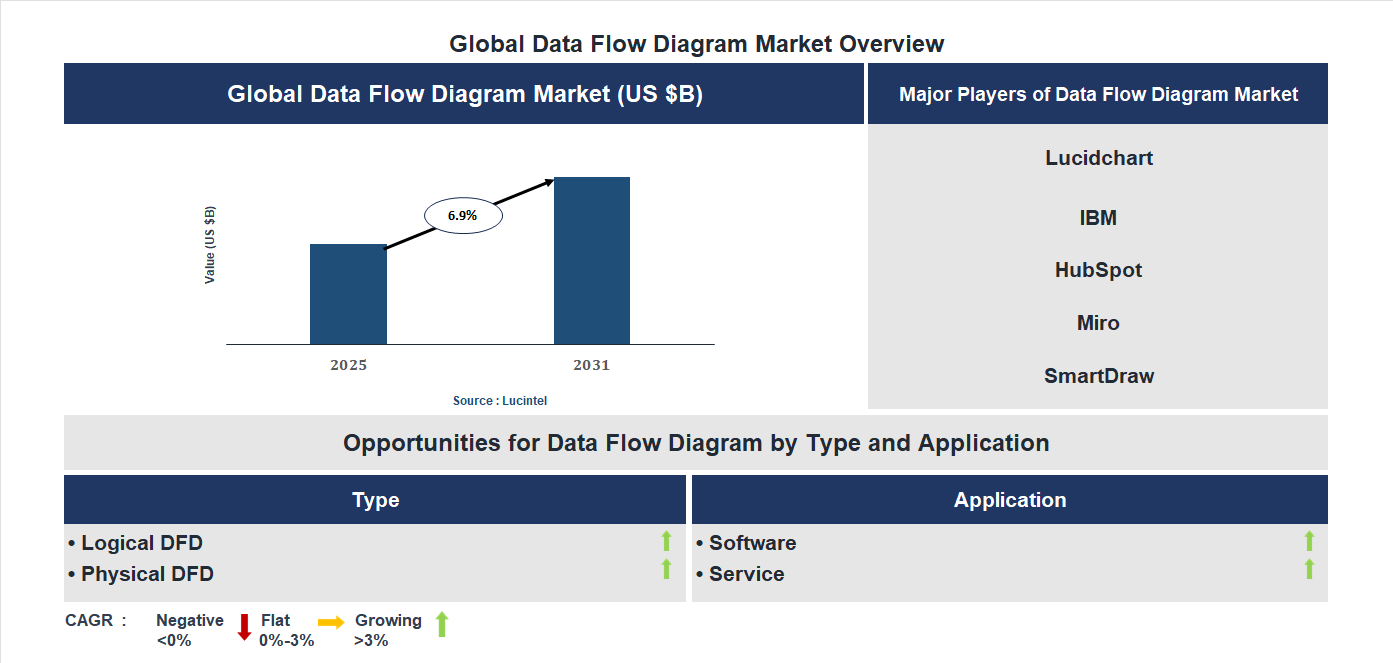
Key data points: The growth forecast = 6.9% annually for the next 7 years. Scroll below to get more insights. This market report covers trends, opportunities and forecasts in data flow diagram market to 2031 by type (logical DFD and physical DFD), application (software and service), and region (North America, Europe, Asia Pacific, and the Rest of the World)
We'll send your sample report shortly.
• Lucintel forecasts that, within the type category, logical DFD is expected to witness higher growth over the forecast period.
• Within the application category, software is expected to witness higher growth.
• In terms of region, APAC is expected to witness the highest growth over the forecast period. Gain valuable insights for your business decisions with our comprehensive 150+ page report. Sample figures with some insights are shown below.
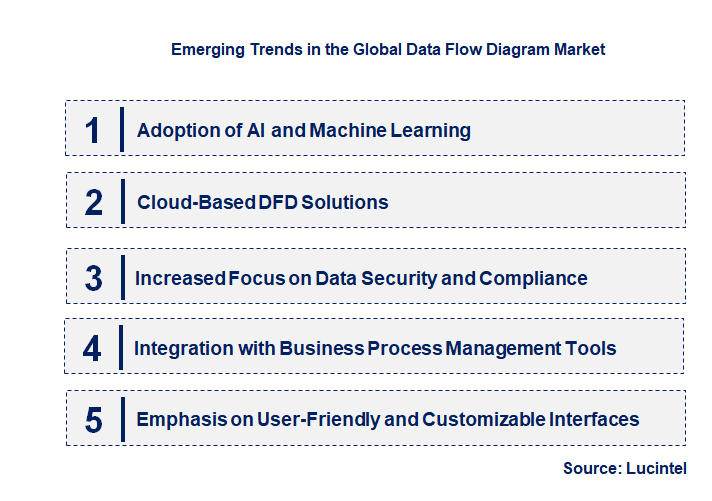
• Adoption of AI and Machine Learning: Integration of AI and ML into DFD tools enhances automation and accuracy. These technologies enable predictive analytics, anomaly detection, and intelligent process optimization, reducing manual effort and increasing reliability. As a result, organizations can generate more insightful diagrams faster, improving decision-making and operational efficiency. This trend is also fostering the development of smarter, adaptive DFD solutions that evolve with organizational needs, making data flow analysis more dynamic and responsive.
• Cloud-Based DFD Solutions: The shift towards cloud computing is transforming the DFD market by offering scalable, accessible, and collaborative platforms. Cloud-based DFD tools allow teams across different locations to work simultaneously, share updates in real-time, and store large volumes of data securely. This trend reduces infrastructure costs and enhances flexibility, enabling organizations to adapt quickly to changing project requirements. As remote work becomes more prevalent, cloud solutions are becoming the preferred choice for data flow visualization and management.
• Increased Focus on Data Security and Compliance: With rising concerns over data privacy and regulatory requirements, DFD tools are incorporating advanced security features. Encryption, access controls, and audit trails are now standard to protect sensitive information within data flow diagrams. Compliance with standards such as GDPR and HIPAA is driving vendors to develop more secure and transparent solutions. This focus ensures that organizations can visualize and manage data flows without compromising security or violating legal obligations, fostering trust and accountability.
• Integration with Business Process Management (BPM) Tools: The market is witnessing a convergence of DFD solutions with BPM platforms to streamline process modeling and automation. This integration allows for seamless mapping of data flows alongside business workflows, facilitating comprehensive process analysis and optimization. It enhances operational transparency and supports digital transformation initiatives by providing a unified view of processes and data movement. As organizations seek holistic solutions, integrated DFD and BPM tools are becoming vital for achieving efficiency and agility.
• Emphasis on User-Friendly and Customizable Interfaces: The demand for intuitive, easy-to-use DFD tools is increasing, especially among non-technical users. Vendors are focusing on developing drag-and-drop interfaces, customizable templates, and interactive features that simplify diagram creation and editing. This trend democratizes data flow visualization, enabling business analysts, managers, and other stakeholders to participate actively in process design. Enhanced usability accelerates project timelines and improves stakeholder engagement, making DFD tools more accessible and effective across diverse organizational roles. In summary, these emerging trends are fundamentally reshaping the Data Flow Diagram market by promoting automation, collaboration, security, integration, and usability. They are enabling organizations to visualize and manage data processes more efficiently, securely, and intuitively, thereby supporting digital transformation and operational excellence in an increasingly data-driven world.
• Adoption of AI and Machine Learning: Integration of AI and ML algorithms into DFD tools has improved automation and accuracy in data modeling, enabling faster and more precise system analysis. This development enhances decision-making processes and reduces manual effort, making DFD tools more accessible to non-technical users. The impact is a broader user base and increased efficiency in system design, which accelerates project timelines and reduces costs.
• Cloud-Based DFD Solutions: The shift towards cloud computing has led to the proliferation of cloud-based DFD tools, offering scalability, collaboration, and remote access. These solutions facilitate real-time collaboration among distributed teams, improving productivity and communication. The impact is a more flexible and cost-effective approach for organizations, especially in remote work environments, driving market growth and expanding the user base.
• Enhanced Visualization and User Interface: Recent developments focus on improving the visualization capabilities and user interfaces of DFD tools, making them more intuitive and easier to use. Features like drag-and-drop, customizable templates, and interactive diagrams enhance user experience. The impact is increased adoption among non-technical users and faster learning curves, broadening the market reach and improving overall efficiency.
• Integration with Other Development Tools: DFD tools are increasingly being integrated with other software development and project management platforms such as UML, BPMN, and Agile tools. This interoperability streamlines workflows and ensures consistency across different modeling techniques. The impact is improved project coordination, reduced errors, and a more comprehensive approach to system development, boosting market competitiveness.
• Focus on Data Security and Compliance: With rising concerns over data privacy and security, recent DFD solutions incorporate advanced security features and compliance standards such as GDPR and HIPAA. These features ensure secure data handling and regulatory adherence. The impact is increased trust among enterprise users, enabling adoption in sensitive industries, and fostering market expansion into regulated sectors. In summary, these recent developments are significantly transforming the data flow diagram market by enhancing functionality, accessibility, security, and integration. They are driving increased adoption across diverse industries, improving efficiency, and fostering innovation. As a result, the market is poised for continued growth, with technological advancements playing a pivotal role in shaping its future trajectory.
• Healthcare: Improved patient data management and regulatory compliance. DFDs facilitate clear visualization of complex healthcare processes, enabling better data handling, reducing errors, and ensuring compliance with standards like HIPAA. This enhances operational efficiency and patient safety, driving adoption in hospitals and clinics.
• IT and Telecom: Enhanced system design and cybersecurity. DFDs help in designing robust IT infrastructure, identifying vulnerabilities, and streamlining data flow processes. This leads to improved system reliability, faster deployment, and stronger security measures, attracting more telecom and IT service providers.
• Banking, Financial Services, and Insurance (BFSI): Risk management and process optimization. DFDs enable banks and insurers to visualize complex financial workflows, improve fraud detection, and ensure regulatory compliance. This results in reduced operational costs and increased customer trust.
• Manufacturing: Process automation and quality control. DFDs assist manufacturers in mapping production workflows, identifying bottlenecks, and automating processes. This enhances productivity, reduces waste, and ensures product quality, fostering industry growth.
• Retail: Supply chain and customer data analysis. DFDs support retailers in visualizing supply chain logistics and customer data flows, leading to better inventory management and personalized marketing strategies. This improves customer satisfaction and boosts sales. In summary, these growth opportunities are significantly impacting the data flow diagram market by enabling industries to optimize operations, enhance security, and innovate processes. As digital transformation accelerates, the demand for advanced DFD solutions is expected to rise, fostering market expansion and technological advancements across key applications.
• Technological Innovation: The rapid evolution of software tools and modeling techniques enhances the creation and analysis of data flow diagrams. Advanced visualization tools, automation, and integration with other systems improve efficiency and accuracy, encouraging organizations to adopt DFDs for system design and process optimization. This technological progress reduces development time and costs, making DFDs more accessible and appealing across industries.
• Increasing Digital Transformation Initiatives: Organizations worldwide are investing heavily in digital transformation to improve operational efficiency and customer experience. Data flow diagrams are integral to designing and understanding complex systems involved in these initiatives. As companies seek to streamline processes and ensure data integrity, the demand for DFDs grows, fueling market expansion across sectors like healthcare, finance, and manufacturing.
• Growing Data Security and Compliance Needs: With rising concerns over data breaches and stringent regulatory frameworks such as GDPR and HIPAA, organizations are prioritizing secure and compliant data management practices. DFDs help visualize data movement and identify vulnerabilities, supporting compliance efforts. This focus on security and regulation drives the adoption of DFDs as essential tools for risk management and audit readiness.
• Adoption of Cloud Computing and SaaS Solutions: The shift towards cloud-based platforms and Software-as-a-Service (SaaS) models facilitates easier access to data flow diagram tools and collaborative modeling. Cloud solutions enable real-time updates, remote access, and integration with other cloud services, expanding the reach and usability of DFDs. This trend accelerates market growth by making diagramming tools more flexible and scalable. The challenges in the data flow diagram market are:
• Data Privacy and Security Concerns: As organizations handle increasing volumes of sensitive data, ensuring privacy and security becomes critical. DFDs, which map data movement, can inadvertently expose vulnerabilities if not managed properly. The risk of data breaches and cyberattacks discourages some organizations from fully leveraging DFDs, especially in highly regulated industries, thereby limiting market growth.
• Complexity of System Environments: Modern systems are highly complex, involving multiple layers, integrations, and technologies. Creating accurate and comprehensive DFDs for such environments is challenging, requiring specialized skills and significant effort. This complexity can lead to inaccuracies or oversimplifications, reducing the effectiveness of DFDs and hindering their adoption.
• Regulatory and Compliance Barriers: While regulations promote data security, they also impose strict documentation and reporting requirements that can complicate DFD development. Organizations may face difficulties aligning DFD practices with evolving legal standards, leading to delays and increased costs. These regulatory hurdles can slow down market expansion and innovation. In summary, the data flow diagram market is driven by technological advancements, digital transformation efforts, security needs, and cloud adoption, which collectively promote growth and innovation. However, challenges such as data security concerns, system complexity, and regulatory barriers pose significant hurdles. These factors create a dynamic environment where market players must innovate and adapt to sustain growth. Overall, the market's future depends on balancing these drivers and challenges through technological solutions, regulatory compliance, and strategic planning, ensuring continued relevance and expansion in the evolving digital landscape.
• Lucidchart
• IBM
• HubSpot
• Miro
• SmartDraw
• Visual Paradigm
• Boardmix
• Microsoft Visio
• Draw.io
• OmniGraffle
• Logical DFD
• Physical DFD
• Software
• Service
• North America
• Europe
• Asia Pacific
• The Rest of the World
• United States: The US market for Data Flow Diagrams has seen rapid adoption driven by the tech sector, with increased use in software development and cybersecurity. Major players are investing in AI-powered DFD tools, enhancing automation and accuracy. Cloud integration and real-time data processing capabilities are becoming standard, supporting agile development practices. Government initiatives promoting digital transformation have also contributed to market growth, with a focus on secure and scalable solutions. Additionally, startups and established firms are collaborating to develop innovative DFD applications tailored for various industries, including healthcare and finance.
• China: China's Data Flow Diagram market is expanding due to the rapid digitalization of industries such as manufacturing, e-commerce, and finance. The government’s emphasis on smart city projects and Industry 4.0 initiatives has accelerated adoption. Local companies are developing cost-effective, AI-enabled DFD tools to cater to domestic needs. There is a strong focus on integrating DFDs with big data analytics and IoT platforms to improve operational efficiency. Additionally, partnerships between tech giants and startups are fostering innovation, making China a significant player in the global DFD market.
• Germany: The German market emphasizes precision and security in Data Flow Diagram solutions, driven by the manufacturing and automotive sectors. Industry 4.0 initiatives have increased demand for detailed process modeling and system analysis. Companies are adopting advanced DFD tools that support complex system integration and compliance with strict data privacy regulations like GDPR. The focus on sustainable and efficient production processes has led to innovations in DFD software that facilitate better resource management. Moreover, collaborations between academia and industry are fostering research into more sophisticated and secure DFD methodologies.
• India: The Data Flow Diagram market in India is witnessing rapid growth fueled by the expanding IT sector, startups, and government initiatives like Digital India. There is a rising demand for affordable and scalable DFD tools to support small and medium enterprises (SMEs). The adoption of cloud-based solutions and automation is increasing, helping organizations streamline operations. Educational institutions and training centers are also promoting DFD methodologies to build a skilled workforce. Additionally, local vendors are developing customized solutions tailored to regional business needs, contributing to the overall market expansion.
• Japan: Japan's market for Data Flow Diagrams is characterized by a focus on automation, robotics, and manufacturing efficiency. The adoption of DFD tools is driven by the need for precise process control and system integration in industrial settings. Companies are investing in AI-enhanced DFD software to improve data accuracy and process visualization. There is also a growing emphasis on cybersecurity and compliance, influencing the development of secure DFD solutions. Collaborations between technology firms and research institutions are fostering innovations in DFD methodologies, supporting Japan’s goal of maintaining its leadership in advanced manufacturing and technology sectors.


• Lucidchart
• IBM
• HubSpot
• Miro
• SmartDraw
• Visual Paradigm
• Boardmix
• Microsoft Visio
• Draw.io
• OmniGraffle Q5. Which data flow diagram market segment will be the largest in future? Answer: Lucintel forecasts that, within the type category, logical DFD is expected to witness higher growth over the forecast period. Q6. In data flow diagram market, which region is expected to be the largest in next 5 years? Answer: In terms of region, APAC is expected to witness the highest growth over the forecast period. Q7. Do we receive customization in this report? Answer: Yes, Lucintel provides 10% customization without any additional cost.


Choose a license that fits your team. Instant PDF delivery.
Prices exclude taxes. Instant delivery. Custom licensing available on request.
Market Report · July 16, 2026
Market Report · May 18, 2026
Market Report · May 18, 2026
Trusted partner for strategic intelligence and business growth


Receive a complimentary market analysis tailored to your industry. Our analysts will identify key growth opportunities and competitive dynamics specific to your business.

Market size, growth rate, and key trend analysis for your specific sector.

Top competitor positioning and market share analysis.

Strategic recommendations backed by data-driven insights.
Get curated market intelligence and competitive moves straight to your inbox.
By subscribing, you agree to receive our monthly insights. Unsubscribe anytime.
Receive a complimentary market analysis tailored to your industry. Our analysts will identify key growth opportunities and competitive dynamics specific to your business.
Market size, growth rate, and key trend analysis for your specific sector.
Top competitor positioning and market share analysis.
Strategic recommendations backed by data-driven insights.
Get curated market intelligence, emerging trends, and competitive moves straight to your inbox each month.
By subscribing, you agree to receive our monthly insights. Unsubscribe anytime.
We'll send your sample report shortly.