
Market Report · May 18, 2026

This market report covers trends, opportunities, and forecasts in the global data center security market to 2031 by technology (physical security, monitoring, analysis & modelling, and video surveillance), end use (bfsi, healthcare, energy, information technology & telecom, and others), and region (North America, Europe, Asia Pacific, and the Rest of the World)
We'll send your sample report shortly.
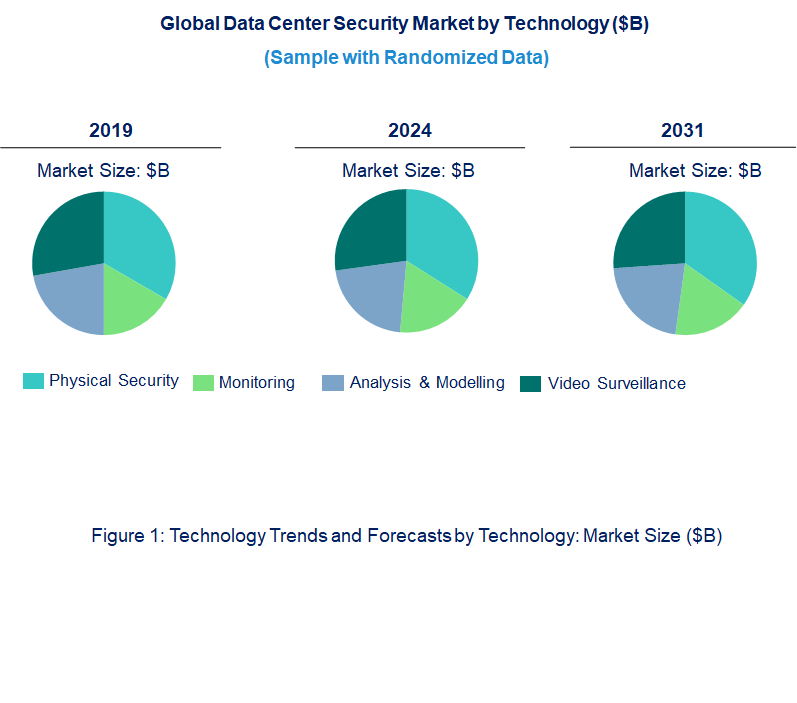
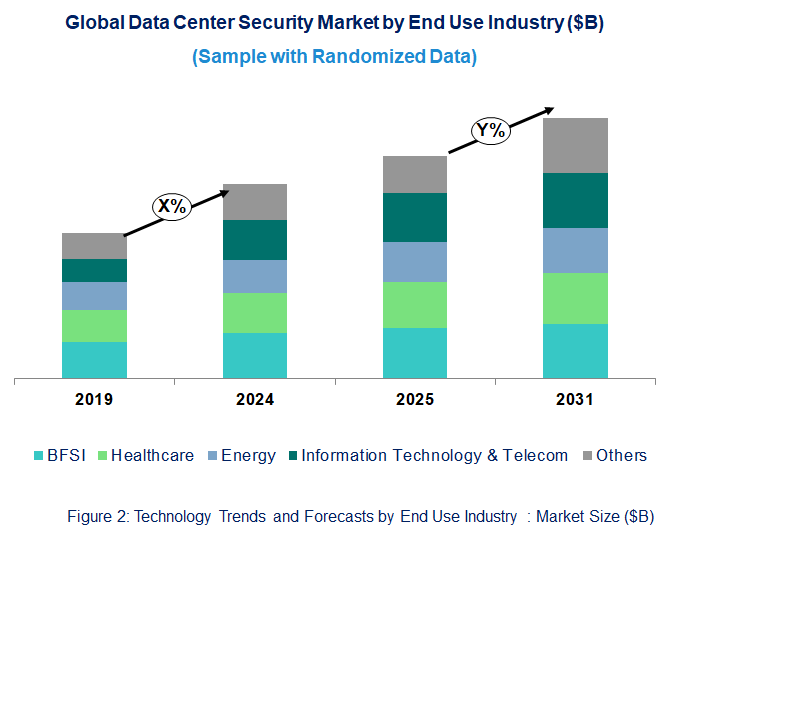
• AI and Machine Learning for Threat Detection: AI-powered systems are improving threat detection and response times by analyzing vast amounts of data in real time to identify unusual patterns and potential risks.
• Cloud-based Security Solutions: As more data centers move to the cloud, there is an increasing reliance on cloud-based security solutions to manage and monitor distributed data center environments.
• Zero Trust Security Models: The adoption of Zero Trust security, where no one, whether inside or outside the network, is trusted by default, is gaining traction to strengthen access controls and mitigate insider threats.
• Edge Computing Security: With the rise of edge computing, data center security must extend beyond traditional boundaries, incorporating physical and cybersecurity measures at edge locations.
• Advanced Video Surveillance: The integration of AI into video surveillance systems is enhancing monitoring capabilities by enabling real-time facial recognition, behavior analysis, and anomaly detection. These trends reflect a growing emphasis on smarter, more adaptive security systems capable of addressing both physical and cyber threats, reshaping how data centers protect sensitive information.
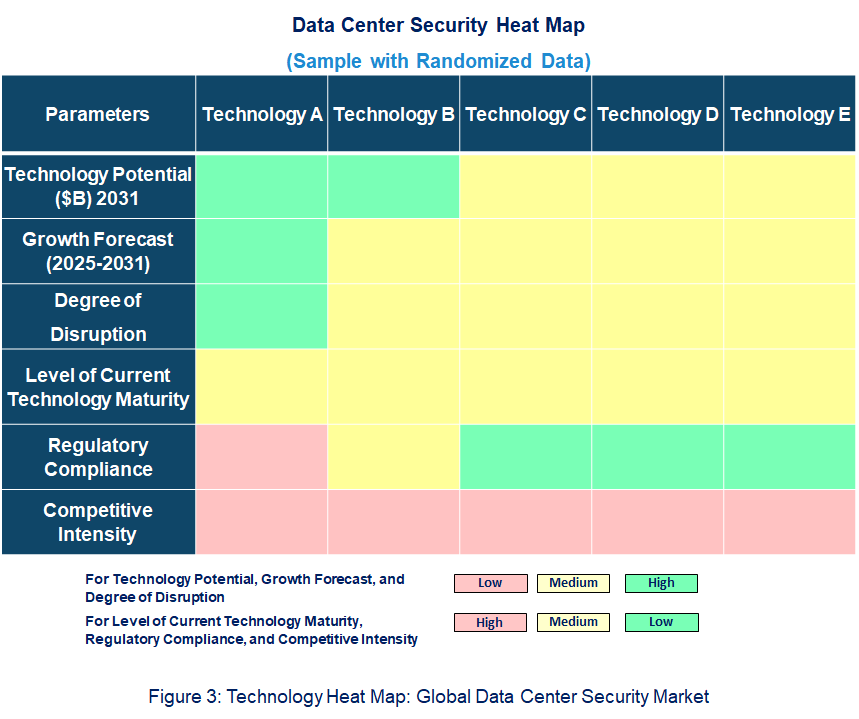
• Technology Potential The technology potential for the data center security market is high as the industry shifts towards digital transformation, cloud computing, and remote operations. The surge in cyber threats, data privacy concerns, and the growing value of stored digital information are prompting investment in advanced technologies like AI-driven threat detection, zero-trust security architecture, biometric access control, and integrated physical-cybersecurity platforms. These innovations offer predictive threat intelligence, real-time monitoring, and proactive incident response, positioning data center security as a critical enabler of business continuity and trust.
• Degree of Disruption The market is experiencing a moderate to high degree of disruption. Traditional firewall- and password-based systems are being replaced by AI/ML-based security analytics, behavior-based intrusion detection, and biometric identification. The emergence of software-defined perimeters, decentralized access models, and IoT security tools is redefining conventional perimeter-based security. This transition is disrupting legacy vendors and pushing newer, agile players into the spotlight. The integration of physical and cyber security under unified command systems also introduces a transformative shift in facility protection.
• Level of Current Technology Maturity Core cybersecurity technologies like firewalls, IDS/IPS, and encryption are mature and widely adopted. However, advanced technologies such as AI-powered threat detection, facial recognition access systems, and blockchain-based access logs are in the growth or early adoption phase. Hybrid deployments blending old and new systems are common.
• Regulatory Compliance Regulatory compliance plays a vital role in shaping the data center security market. Key regulations such as GDPR, HIPAA, ISO/IEC 27001, and PCI DSS mandate strict data protection standards. Compliance requires continuous monitoring, access control, audit trails, and risk management frameworks. Vendors and operators must align with both regional and industry-specific standards to avoid hefty penalties and reputational damage.
• Hewlett Packard (HP): HP has been integrating AI and machine learning into its security systems, focusing on predictive threat detection and security automation.
• IBM: IBM’s focus on cloud-based security solutions and AI-driven analytics is helping data centers improve both physical and cybersecurity.
• Cisco Systems: Cisco is advancing its network security solutions, including real-time monitoring and threat mitigation, as part of a broader effort to secure hybrid cloud environments.
• Fortinet: Fortinet is strengthening its security fabric, focusing on comprehensive security integration for data centers to protect both physical and digital assets.
• Check Point Software: Check Point offers advanced firewall protection and threat intelligence solutions, helping data centers safeguard their networks from evolving cyber threats.
• Honeywell: Honeywell has integrated AI-based video surveillance systems into its offering, enhancing real-time threat detection and improving the efficiency of security operations. These companies are advancing data center security by integrating AI, cloud solutions, and next-generation video surveillance to address emerging security challenges.
• Rising Cybersecurity Threats and Data Breaches The increase in ransomware, DDoS, and insider threats has heightened demand for advanced data center security. This drives adoption of AI-driven threat intelligence, behavioral analytics, and SIEM (Security Information and Event Management) solutions that improve real-time detection and response.
• Growing Regulatory and Compliance Requirements Strict regulations like GDPR, HIPAA, and ISO/IEC 27001 are pushing data centers to invest in stronger compliance mechanisms. Automated auditing, access control, and encryption tools are being integrated to meet these standards and avoid costly non-compliance penalties.
• Expansion of Cloud and Colocation Services As more enterprises migrate to cloud and colocation data centers, the need for secure multi-tenant environments is rising. This fosters growth in segmentation technologies, zero-trust architectures, and role-based access control to ensure data isolation and user accountability. Major Challenges
• Complex Integration of Security Systems Integrating physical and cyber security systems across multiple platforms and locations is technically complex and costly. Disparate systems, legacy infrastructure, and vendor fragmentation make unified threat management difficult to implement at scale.
• High Implementation and Maintenance Costs Advanced security systems, especially those using AI and biometrics, require significant capital investment and ongoing maintenance. This poses a barrier for small and mid-sized data center operators looking to modernize.
• Shortage of Skilled Cybersecurity Professionals The global shortage of trained cybersecurity professionals affects the data center industry’s ability to manage, monitor, and respond to complex threats. This skills gap delays implementation and increases the risk of breaches due to human error. The data center security market is being propelled by a surge in cyber threats, strict compliance mandates, and the expansion of hybrid IT infrastructure. While the sector is rich in growth opportunities—particularly in AI, automation, and zero-trust models—operational and financial challenges must be addressed. Success will rely on scalable, integrated security frameworks that meet both performance and regulatory needs.
• Hewlett Packard
• Ibm
• Cisco Systems
• Fortinet
• Check Point Software
• Honeywell
• Technology Readiness and Key Applications by Technology Type in Data Center Security Market: Physical security technologies are highly mature, widely deployed for access control and perimeter defense, with ongoing innovation in biometric and contactless solutions enhancing readiness. Monitoring technologies show strong readiness with IoT sensor networks and integrated alert systems commonly used for environmental and intrusion detection. Analysis & modelling tools are rapidly advancing, though some AI-driven predictive analytics remain in early to mid-stage deployment, mainly applied in risk assessment and incident response optimization. Video surveillance systems are well-developed, with AI-enabled video analytics increasingly adopted for real-time threat detection, crowd behavior analysis, and anomaly identification. Key applications for physical security include controlled access and personnel authentication; Monitoring is critical for intrusion detection and environmental hazard alerting; analysis & modelling support predictive risk management and incident forecasting; Video Surveillance provides continuous visual monitoring and forensic investigations. These technologies collectively ensure comprehensive data center protection through layered security strategies.
• Competitive Intensity and Regulatory Compliance in Data Center Security Market: The competitive intensity across physical security, monitoring, analysis & modelling, and video surveillance is high due to rapid technological advancements and increasing demand for integrated security solutions. Vendors compete on innovation, scalability, and system interoperability, driving continuous product enhancement. Physical security providers face pressure to integrate with digital platforms, while monitoring systems must ensure real-time accuracy and reliability. Analysis & modelling firms compete on AI sophistication and predictive capabilities, differentiating through proprietary algorithms. Video surveillance companies vie for advanced analytics and cloud integration. Regulatory compliance adds complexity, with strict standards like GDPR, HIPAA, and ISO 27001 governing data privacy and physical security controls, forcing all players to maintain rigorous audit trails and data protection measures. Compliance-driven features are critical competitive differentiators, as failing regulations can lead to costly penalties and reputational damage. This regulatory landscape shapes product development and deployment strategies, heightening competitive dynamics.
• Disruption Potential of Different Technologies in Data Center Security Market: Physical security technologies, such as biometric access controls and smart locks, significantly disrupt traditional perimeter defenses by offering more granular, identity-based access management. Monitoring systems leverage IoT sensors and real-time alerts to enhance proactive threat detection, moving beyond reactive security measures. Analysis & Modelling technologies use AI and machine learning to predict security breaches and optimize response strategies, transforming security from static to dynamic and predictive. Video surveillance innovations, including AI-powered video analytics and facial recognition, disrupt manual monitoring by automating threat identification and reducing false alarms. Together, these technologies redefine data center security by integrating physical and cyber domains, enabling more adaptive, intelligent protection frameworks. The convergence of these techs accelerates security automation, lowers human error, and improves compliance, thus reshaping operational efficiency. Their disruptive nature fosters new security paradigms that emphasize prevention, continuous learning, and rapid mitigation.
• Physical Security
• Monitoring
• Analysis & Modelling
• Video Surveillance
• BFSI
• Healthcare
• Energy
• Information Technology & Telecom
• Others
• North America
• Europe
• Asia Pacific
• The Rest of the World
• Latest Developments and Innovations in the Data Center Security Technologies
• Companies / Ecosystems
• Strategic Opportunities by Technology Type


Choose a license that fits your team. Instant PDF delivery.
Prices exclude taxes. Instant delivery. Custom licensing available on request.
Market Report · May 18, 2026
Market Report · May 18, 2026
Market Report · May 18, 2026
Trusted partner for strategic intelligence and business growth


Receive a complimentary market analysis tailored to your industry. Our analysts will identify key growth opportunities and competitive dynamics specific to your business.

Market size, growth rate, and key trend analysis for your specific sector.

Top competitor positioning and market share analysis.

Strategic recommendations backed by data-driven insights.
Get curated market intelligence and competitive moves straight to your inbox.
By subscribing, you agree to receive our monthly insights. Unsubscribe anytime.
Receive a complimentary market analysis tailored to your industry. Our analysts will identify key growth opportunities and competitive dynamics specific to your business.
Market size, growth rate, and key trend analysis for your specific sector.
Top competitor positioning and market share analysis.
Strategic recommendations backed by data-driven insights.
Get curated market intelligence, emerging trends, and competitive moves straight to your inbox each month.
By subscribing, you agree to receive our monthly insights. Unsubscribe anytime.
We'll send your sample report shortly.