
Market Report · July 16, 2026

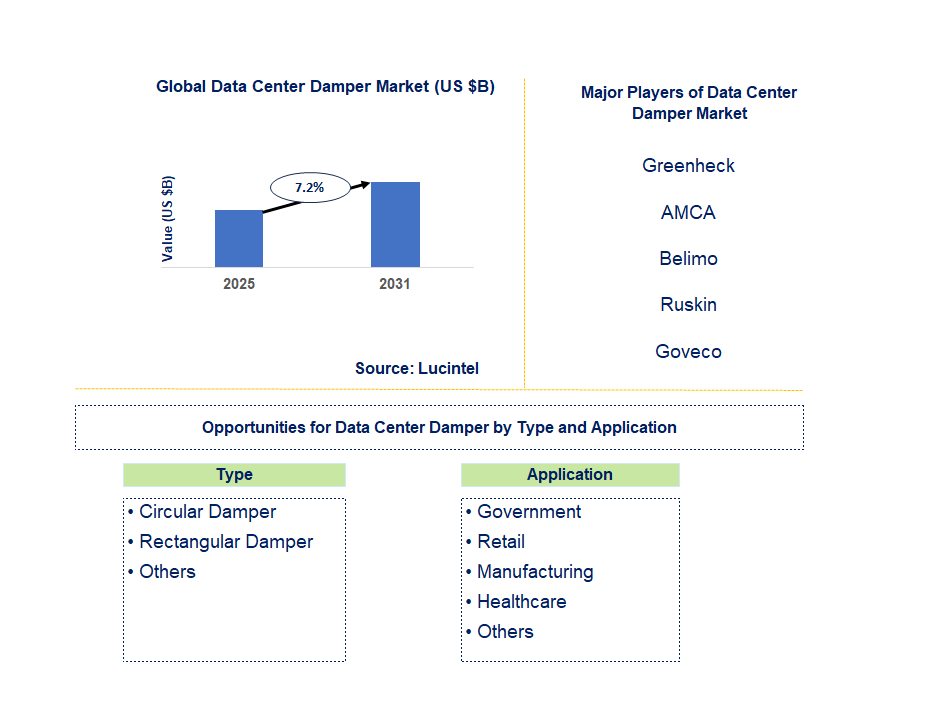
Key data points: The growth forecast = 7.2% annually for the next 7 years. Scroll below to get more insights. This market report covers Trends, opportunity and forecast in data center damper market to 2031 by type (circular damper, rectangular damper, and others), application (government, retail, manufacturing, healthcare, and others), and region (North America, Europe, Asia Pacific, and the Rest of the World)
We'll send your sample report shortly.
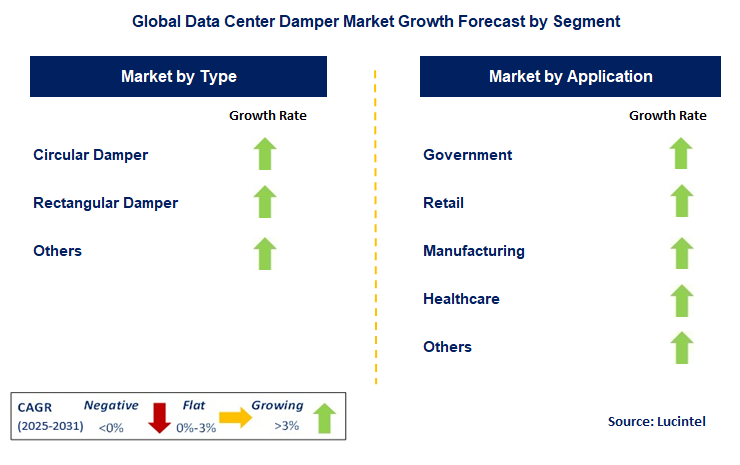
• Lucintel forecasts that, within the type category, circular damper will remain larger segment over the forecast period.
• Within the application category, the government will remain the largest segment.
• In terms of region, APAC is expected to witness the highest growth over the forecast period. Gain valuable insights for your business decisions with our comprehensive 150+ page report. Sample figures with some insights are shown below.
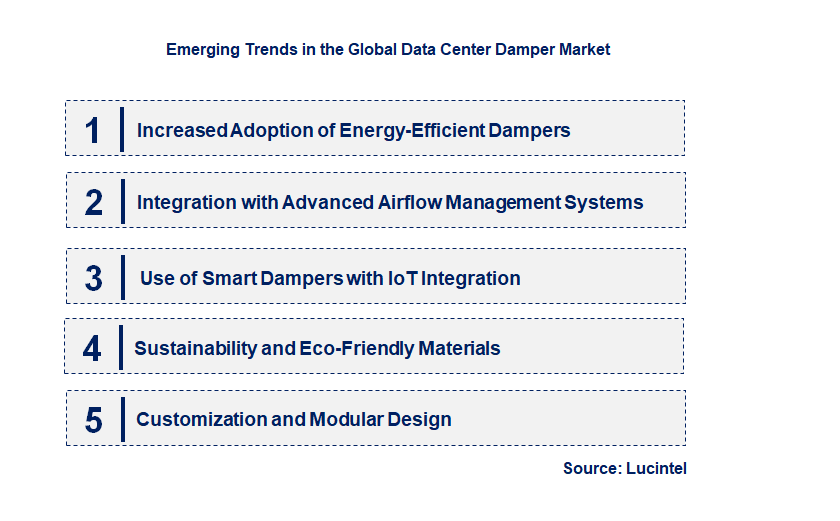
• Increased Adoption of Energy-Efficient Dampers: Energy efficiency has become a critical consideration in the design and operation of modern data centers, leading to an increased adoption of energy-efficient dampers. These dampers help optimize airflow and cooling systems, reducing the energy needed to maintain the required temperature in the facility. By controlling airflow in a more efficient manner, energy-efficient dampers lower operational costs and minimize the carbon footprint of data centers. As data centers are pressured to reduce energy consumption and meet sustainability goals, the demand for these advanced, energy-saving solutions is growing, driving innovation in the damper market.
• Integration with Advanced Airflow Management Systems: Another emerging trend in the data center damper market is the integration of dampers with advanced airflow management systems. These systems use intelligent sensors and automated controls to monitor and regulate airflow in real-time, optimizing the cooling efficiency of data centers. When coupled with dampers, these systems can automatically adjust the position of the dampers based on temperature and humidity levels, improving cooling efficiency and reducing energy usage. This integration is particularly beneficial in large-scale data centers, where precise airflow management is critical for maintaining optimal conditions for equipment operation and preventing overheating.
• Use of Smart Dampers with IoT Integration: Smart dampers integrated with the Internet of Things (IoT) are gaining traction in the data center damper market. Smart dampers have sensors and actuators for real-time monitoring and remote control via IoT platforms. These dampers can detect temperature, airflow, and humidity changes, and adjust automatically to ensure consistent conditions within the data center. IoT-enabled dampers provide greater control over airflow, reduce energy consumption, and enable predictive maintenance by identifying potential issues before they become critical. This shift toward smart, connected dampers revolutionizes data center operations by enhancing efficiency and reliability.
• Sustainability and Eco-Friendly Materials: Sustainability is a key focus in the development of new data center damper technologies. Manufacturers are increasingly prioritizing the use of eco-friendly materials that reduce the environmental impact of their products. These materials, such as recycled metals and environmentally friendly coatings, help lower the carbon footprint of dampers and contribute to the overall sustainability of data center operations. Additionally, energy-efficient dampers made from these materials help data centers meet their green building certifications and sustainability goals. As more businesses commit to environmentally responsible operations, the demand for sustainable and eco-friendly data center dampers continues to rise.
• Customization and Modular Design: Customization and modular design are becoming increasingly important in the data center damper market. As data centers vary in size, layout, and cooling requirements, manufacturers are offering more customizable and modular damper solutions to meet the specific needs of each facility. Modular dampers allow for easier installation, expansion, and maintenance, while customizable features such as adjustable airflow and temperature controls provide more precise management of cooling systems. This trend toward flexibility enables data centers to adapt their damper solutions to evolving operational demands, optimizing cooling efficiency and reducing downtime. The global data center damper market is being reshaped by a variety of emerging trends that emphasize energy efficiency, sustainability, and advanced technologies. From energy-efficient dampers and IoT integration to the use of eco-friendly materials and modular designs, these innovations are helping data centers meet the growing demands for cost-effective, sustainable, and high-performance infrastructure. As data centers strive for greater operational efficiency and sustainability, the adoption of these advanced damper technologies will play a crucial role in optimizing airflow, cooling, and energy consumption. These trends are positioning the damper market as a key enabler of the next generation of data center operations.
• Energy-Efficient Dampers: With an increasing focus on energy efficiency in data centers, the demand for energy-efficient dampers has risen significantly. New developments in damper technology are focused on minimizing energy consumption by reducing the need for excessive cooling and ventilation. These energy-efficient dampers automatically adjust airflow to match cooling requirements, improving energy use without compromising performance. They help data centers reduce operational costs while meeting stringent energy efficiency standards. The adoption of energy-efficient dampers is especially crucial as data centers strive to become more sustainable and reduce their carbon footprints, aligning with global sustainability goals.
• Integration of Smart Technologies: The integration of smart technologies into data center damper systems is one of the key developments in the market. Smart dampers use sensors, AI, and machine learning algorithms to monitor and adjust airflow in real-time. These advanced systems help optimize cooling and ventilation by dynamically responding to changing temperatures and workload demands. The ability to manage airflow more efficiently results in better energy usage, increased operational efficiency, and improved equipment lifespan. As data centers become more complex and automated, smart dampers are becoming an essential part of ensuring optimal environmental control and system reliability.
• Adoption of Acoustic Dampers for Noise Reduction: Data centers often produce high levels of noise due to cooling equipment and server operations. As noise management becomes a greater concern, especially in urban settings, the adoption of acoustic dampers is on the rise. These dampers are specifically designed to reduce noise generated by HVAC systems, thereby improving the working environment and ensuring compliance with noise regulations. Acoustic dampers also help enhance the performance of cooling systems by preventing airflow restrictions. As the demand for quieter, more efficient data centers grows, acoustic dampers are becoming increasingly important in the design of modern data centers.
• Use of Advanced Materials for Dampers: The use of advanced materials in damper construction is another key trend shaping the global data center damper market. New materials, such as carbon composites and high-strength alloys, offer greater durability and heat resistance, improving the overall performance and lifespan of dampers. These materials also provide better resistance to corrosion, making them ideal for long-term use in high-stress environments like data centers. The application of these advanced materials is helping data centers operate more efficiently by ensuring the dampers can withstand extreme conditions while maintaining optimal airflow and temperature regulation.
• Regulatory Compliance and Sustainability Standards: Data centers are increasingly subject to stricter regulations and sustainability standards, driving demand for dampers that comply with these requirements. Global initiatives aimed at reducing carbon emissions and improving energy efficiency are pushing the market for data center dampers to evolve. Manufacturers are now designing dampers that meet or exceed these regulatory standards, ensuring that data centers can operate sustainably while minimizing their environmental impact. By complying with sustainability standards, data centers can not only reduce their carbon footprint but also improve their corporate social responsibility (CSR) profiles, which is becoming an important factor in today’s business environment. Recent developments in the global data center damper market are driving improvements in energy efficiency, operational performance, and sustainability. The rise of energy-efficient dampers, the integration of smart technologies, and the use of advanced materials are enabling data centers to meet the growing demands for more efficient and eco-friendly infrastructures. Additionally, the adoption of acoustic dampers and compliance with regulatory standards are addressing noise concerns and promoting sustainable practices. As data centers continue to expand and modernize, these innovations in damper technology will be crucial in optimizing their operations and ensuring long-term success in a competitive market.
• Energy-Efficient Cooling Systems: Energy-efficient cooling systems are a major growth driver in the global data center damper market. As data centers consume large amounts of energy for cooling purposes, the need for more energy-efficient solutions has become critical. Dampers help regulate airflow, enabling more effective and optimized cooling. By improving ventilation, data centers can reduce energy consumption and lower operational costs. This has become particularly important in the face of increasing energy prices and sustainability goals. As energy efficiency continues to be a top priority, data center dampers will play an essential role in ensuring more sustainable operations.
• Integration with Advanced HVAC Systems: The integration of dampers with advanced Heating, Ventilation, and Air Conditioning (HVAC) systems presents another growth opportunity for the market. Advanced HVAC systems offer automated control over temperature and airflow, ensuring optimal conditions for data center equipment. Dampers, when combined with these systems, enable precise airflow regulation, preventing overheating and ensuring efficient cooling. As the demand for automated and intelligent HVAC solutions rises, the need for integrated damper systems that provide seamless control will drive market growth. This integration enhances the overall performance and reliability of data center operations.
• Edge Data Center Expansion: The rapid growth of edge computing and the expansion of edge data centers present significant opportunities for the global data center damper market. Edge data centers, located closer to end users, require efficient cooling solutions to handle localized processing and storage. Dampers help maintain optimal temperature levels and airflow in these smaller, distributed facilities. As industries such as IoT, smart cities, and autonomous vehicles continue to drive the need for edge computing, data center dampers will become increasingly vital in ensuring the smooth and efficient operation of these decentralized infrastructures.
• Data Center Retrofit Projects: The growing trend of retrofitting existing data centers with more energy-efficient and sustainable technologies is a key growth opportunity for the market. Many older data centers face challenges in optimizing cooling systems due to outdated equipment. Upgrading existing ventilation and cooling systems with advanced dampers can improve airflow management and cooling efficiency. Retrofitting offers a cost-effective solution for organizations seeking to enhance the performance and energy efficiency of their data centers without the need for complete infrastructure overhauls. As the retrofitting trend continues, the demand for high-performance dampers will increase, supporting the growth of the market.
• Compliance with Sustainability and Environmental Regulations: As environmental concerns and sustainability regulations become more stringent, data centers must adopt technologies that minimize their environmental impact. Dampers contribute to this goal by improving airflow efficiency, reducing cooling requirements, and lowering energy consumption. By meeting sustainability standards, data centers can not only comply with regulations but also benefit from cost savings and improved operational efficiency. The increasing emphasis on green building certifications, such as LEED, and government regulations around energy efficiency are boosting the adoption of damper systems. This market trend is expected to grow as more data centers prioritize environmental sustainability. The global data center damper market is expanding as a result of key growth opportunities in energy-efficient cooling systems, integration with advanced HVAC systems, edge data center expansion, retrofit projects, and compliance with sustainability regulations. These developments are driving demand for damper systems that enhance the efficiency, performance, and sustainability of data centers. As businesses continue to invest in more efficient infrastructure, data center dampers will play an essential role in ensuring optimal airflow, temperature control, and energy savings, contributing to the ongoing transformation of the data center industry.
• Greenheck
• AMCA
• Belimo
• Ruskin
• Goveco
• ASM Ventilation
• HALTON
• Circular Damper
• Rectangular Damper
• Others
• Government
• Retail
• Manufacturing
• Healthcare
• Others
• North America
• Europe
• Asia Pacific
• The Rest of the World
• United States: The United States remains a key player in the global data center damper market, with an increasing focus on energy-efficient and environmentally friendly solutions. Greenheck and Johnson Controls are at the forefront of innovation, offering advanced dampers that enhance airflow control and reduce energy consumption in data centers. With the trend toward hyperscale data centers, the demand for high-performance dampers is rising. Additionally, the emphasis on regulatory compliance and environmental sustainability is prompting companies to adopt dampers that optimize energy efficiency and cooling performance, which is in line with green building initiatives.
• China: The Chinese data center damper market is growing rapidly, driven by the expansion of cloud computing and the demand for efficient data processing capabilities. With major players such as Huawei and ZTE, the country is adopting advanced damper systems designed to improve the energy efficiency of data centers. China’s push toward becoming a global leader in green technology has also influenced the development of more sustainable damper solutions, contributing to energy savings and reduced carbon footprints in data centers. Additionally, China’s increasing demand for edge data centers and 5G technology is fueling the need for specialized damper solutions that cater to these new infrastructure types.
• Germany: In Germany, the data center damper market is growing steadily as companies seek to meet stringent energy efficiency and sustainability regulations. Leading companies like Rittal and Siemens are providing innovative damper systems that contribute to optimizing airflow and improving cooling efficiency. As Germany emphasizes digital transformation and Industry 4.0, data centers in the country are increasingly becoming more energy-conscious and technologically advanced. The adoption of smart, IoT-enabled dampers that allow for remote monitoring and control is also on the rise, providing improved flexibility and performance in maintaining the right environment for sensitive equipment in data centers.
• India: India is experiencing growth in the data center damper market as the country’s digital infrastructure expands with the rise of cloud computing, e-commerce, and data-heavy industries. Companies like Tata Communications and Netmagic are integrating advanced damper systems to enhance energy efficiency and cooling systems in data centers. The demand for reliable and energy-efficient cooling solutions is high, driven by the growing number of data centers and the need for cost-effective solutions. With India’s government pushing for digital transformation and initiatives such as smart cities, the market for energy-efficient damper systems is expected to keep expanding.
• Japan: The Japanese data center damper market is seeing steady growth, with a focus on integrating high-performance, energy-efficient damper systems. Companies such as NTT Communications and Fujitsu are leading the development of solutions that help optimize cooling efficiency in data centers. As Japan continues to push for advanced technological infrastructure in areas such as 5G and AI, there is an increasing need for reliable and sustainable cooling solutions. The adoption of IoT-enabled smart dampers that monitor environmental conditions in real time is on the rise, helping Japan’s data centers operate more efficiently and reduce energy consumption while ensuring maximum performance.


• Greenheck
• AMCA
• Belimo
• Ruskin
• Goveco
• ASM Ventilation
• HALTON Q5. Which data center damper market segment will be the largest in future? Answer: Lucintel forecasts that circular damper will remain larger segment over the forecast period. Q6. In data center damper market, which region is expected to be the largest in next 5 years? Answer: APAC is expected to witness the highest growth over the forecast period. Q7. Do we receive customization in this report? Answer: Yes, Lucintel provides 10% customization without any additional cost.


Choose a license that fits your team. Instant PDF delivery.
Prices exclude taxes. Instant delivery. Custom licensing available on request.
Market Report · July 16, 2026
Market Report · May 18, 2026
Market Report · May 18, 2026
Trusted partner for strategic intelligence and business growth


Receive a complimentary market analysis tailored to your industry. Our analysts will identify key growth opportunities and competitive dynamics specific to your business.

Market size, growth rate, and key trend analysis for your specific sector.

Top competitor positioning and market share analysis.

Strategic recommendations backed by data-driven insights.
Get curated market intelligence and competitive moves straight to your inbox.
By subscribing, you agree to receive our monthly insights. Unsubscribe anytime.
Receive a complimentary market analysis tailored to your industry. Our analysts will identify key growth opportunities and competitive dynamics specific to your business.
Market size, growth rate, and key trend analysis for your specific sector.
Top competitor positioning and market share analysis.
Strategic recommendations backed by data-driven insights.
Get curated market intelligence, emerging trends, and competitive moves straight to your inbox each month.
By subscribing, you agree to receive our monthly insights. Unsubscribe anytime.
We'll send your sample report shortly.