
Market Report · May 18, 2026

This market report covers trends, opportunities, and forecasts in the global customer experience management market to 2031 by technology (efm software, speech analytics, text analytics, web analytics & content management, and others), end use industry (retail, healthcare, and it & telecom), and region (North America, Europe, Asia Pacific, and the Rest of the World)
We'll send your sample report shortly.
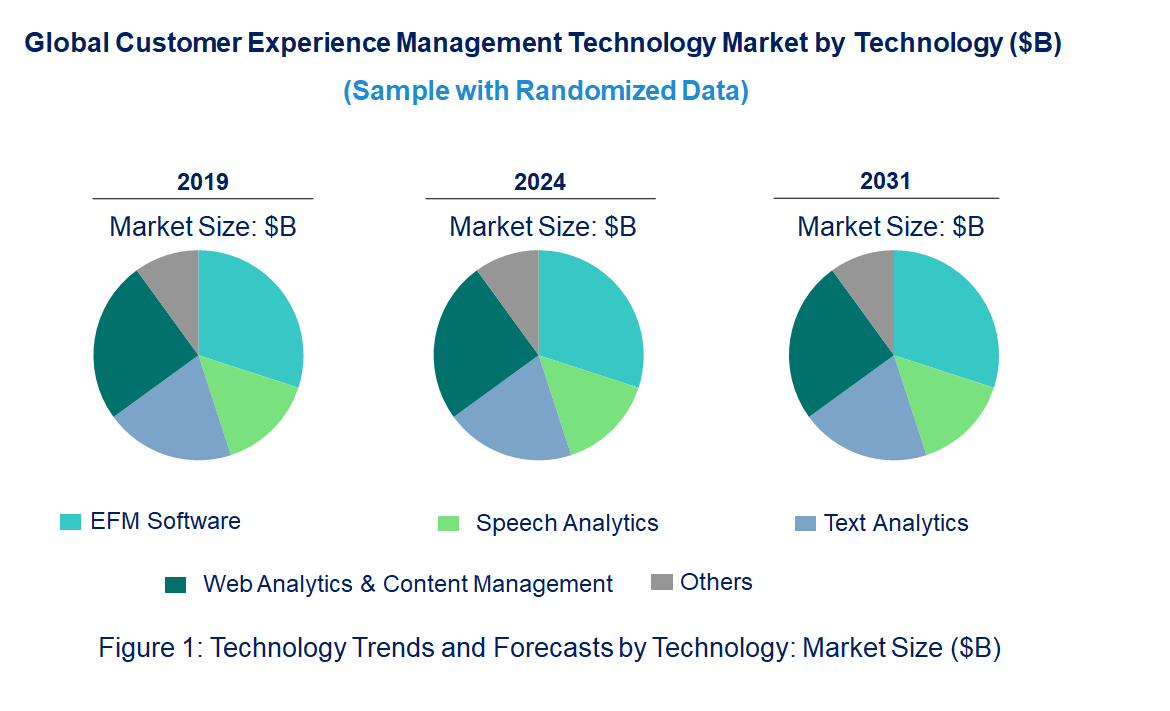
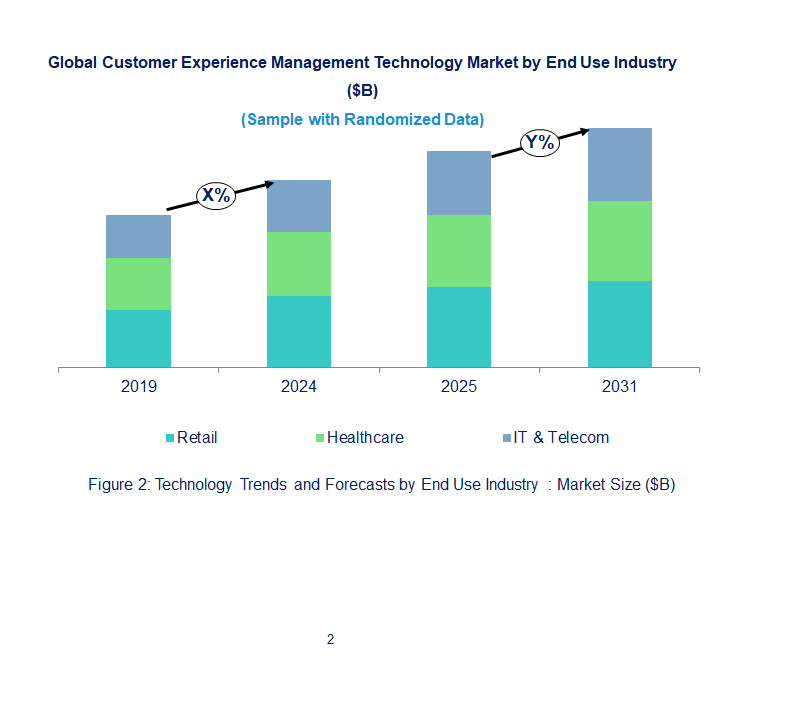
• Increased Adoption of AI and Machine Learning: AI is being increasingly integrated into CEM systems to predict customer behavior, personalize interactions, and automate responses, leading to more efficient and targeted customer engagement.
• Real-Time Analytics and Feedback: Companies are leveraging speech and text analytics to gain real-time insights from customer interactions, enabling quick decision-making and immediate improvements to the customer experience.
• Integration of Omnichannel Data: The focus is on integrating data across multiple channels, such as online, in-store, mobile, and contact centers, to provide a unified view of the customer journey, enhancing personalization and improving service quality.
• Personalization and Customer-Centric Strategies: Personalization is a key driver, with companies increasingly tailoring their products, services, and marketing based on individual customer data. This leads to more relevant and effective customer interactions.
• Self-Service and Automation: With the rise of chatbots and automated customer service solutions, businesses are empowering customers to resolve issues quickly and on their own, while reducing costs and enhancing customer satisfaction. These trends are reshaping the CEM market, driving companies to move away from traditional methods and adopt advanced, data-driven technologies for a deeper understanding of customer needs, resulting in better service and stronger loyalty.
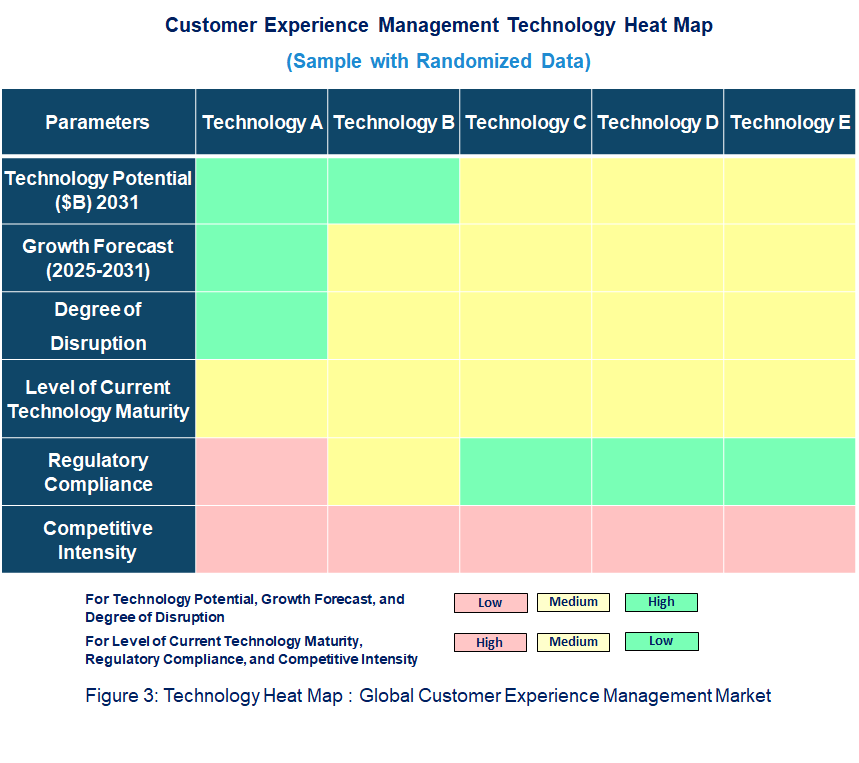
• Technology Potential: Customer Experience Management (CEM) technologies have immense potential to transform how businesses engage with customers across digital and physical touchpoints. Through AI, machine learning, predictive analytics, and omnichannel integration, CEM platforms enable real-time customer behavior analysis, personalized engagement, sentiment tracking, and seamless communication, driving increased loyalty and revenue.
• Degree of Disruption: CEM technologies are significantly disrupting traditional CRM and marketing models by shifting focus from reactive support to proactive experience orchestration. AI-driven chatbots, voice analytics, emotion AI, and customer journey mapping tools allow organizations to anticipate customer needs, resolve issues faster, and deliver hyper-personalized experiences across platforms—fundamentally altering service delivery models.
• Level of Current Technology Maturity: The CEM market is relatively mature, with several established vendors offering integrated, scalable platforms. While core functions such as feedback collection and analytics are well-developed, emerging capabilities like real-time emotion detection, unified customer data platforms (CDPs), and AI-powered automation are still evolving and seeing rapid enhancements.
• Regulatory Compliance: CEM solutions must comply with data privacy laws such as GDPR, CCPA, and industry-specific regulations to ensure responsible data usage. Transparency in data collection, consent management, and secure storage are crucial. Enterprises also face increased scrutiny on bias in AI algorithms and must ensure ethical AI practices in CEM applications.
• Adobe Inc.: Adobe has integrated AI and machine learning capabilities into its Experience Cloud platform, enabling businesses to provide personalized experiences at scale, driving deeper customer engagement.
• Avaya Inc.: Avaya has expanded its portfolio with AI-powered solutions for improving customer service in call centers, focusing on enhancing voice interactions and automating workflows for better operational efficiency.
• Clarabridge: Clarabridge has introduced advanced sentiment analysis and customer feedback capabilities, enhancing its AI-driven platform to deliver deeper insights into customer emotions, helping businesses fine-tune their services.
• Freshworks Inc.: Freshworks has expanded its customer support software, incorporating AI and automation tools to help businesses improve the customer journey by automating ticketing, chat, and call-center operations.
• Genesys: Genesys has developed a cloud-based omnichannel platform, which integrates contact center, marketing automation, and customer feedback systems, enabling seamless customer experiences across multiple touchpoints. These developments are enhancing the ability of businesses to provide more personalized, efficient, and scalable customer experiences.
• Shift to Personalization: As customers increasingly expect personalized experiences, businesses are leveraging advanced CEM tools, such as AI-powered analytics and web analytics, to gather data and create tailored interactions at every customer touchpoint.
• Advances in AI and Automation: AI and machine learning technologies enable automation of customer interactions, improving both speed and accuracy in service delivery. This results in improved customer satisfaction and operational efficiency.
• Omni-Channel Engagement: Companies are increasingly adopting CEM technologies to integrate customer touchpoints across digital and physical channels, offering seamless and consistent experiences. Web and speech analytics play a critical role in capturing customer behavior across multiple platforms.
• Real-Time Data Insights: The demand for real-time insights is growing as businesses look to be more agile and responsive to customer needs. Technologies such as speech analytics and text analytics allow businesses to react instantaneously, improving customer retention and service quality.
• Regulatory Compliance and Data Privacy: Stricter data privacy regulations (such as GDPR and CCPA) are prompting businesses to adopt more sophisticated CEM tools that ensure compliance while enhancing data protection and customer trust. Challenges:
• High Implementation Costs: Despite the advantages of CEM solutions, the costs associated with adopting advanced technologies—especially for smaller businesses—can be prohibitive. Implementing AI, machine learning, and omni-channel strategies requires substantial investment in infrastructure and skilled resources.
• Data Privacy Concerns: With stricter regulations governing customer data, businesses must navigate compliance challenges. Collecting, processing, and storing large amounts of sensitive customer data increases the risk of non-compliance and data breaches.
• Complex Integration: Integrating new CEM technologies with existing systems can be difficult. Legacy systems often lack compatibility with modern solutions like AI, big data analytics, and real-time monitoring tools, leading to operational disruptions and longer deployment times.
• Data Overload: The massive volume of data generated by various CEM tools can overwhelm businesses, especially if they lack the necessary analytical capabilities to derive actionable insights. Without proper data management strategies, companies may struggle to prioritize and act on relevant customer information.
• Skill Gaps: The rapid pace of technological change in CEM tools creates a gap in expertise. Many organizations face challenges in hiring and retaining the skilled professionals needed to effectively implement and manage these advanced solutions, limiting their ability to maximize ROI. The customer experience management (CEM) market continues to evolve rapidly, driven by technological advancements in AI, analytics, and omni-channel engagement, which enable businesses to better understand and cater to customer needs. While there are significant drivers pushing the market forward, including personalization demands and real-time data access, challenges such as high costs, data privacy concerns, and integration complexities still pose significant hurdles.
• Adobe Inc.
• Avaya Inc.
• Clarabridge
• Freshworks Inc.
• Genesys
• Technology Readiness and Key Applications: These technologies are largely at high readiness levels, widely deployed across industries such as banking, telecom, retail, and healthcare. EFM software is used for surveys and VoC programs, while speech and text analytics are integral to call centers, enhancing agent performance and automating quality assurance. Web analytics powers e-commerce and digital marketing, optimizing user journeys and conversions. Content management systems help deliver consistent, personalized experiences across channels. The "Others" category, including journey orchestration and AI-based chatbots, is rapidly maturing and increasingly central to proactive engagement. Collectively, these technologies enable seamless, contextual, and data-driven customer experiences.
• Competitive Intensity and Regulatory Compliance: The CEM technology space is highly competitive, with players like SAP, Oracle, Adobe, Medallia, and NICE innovating in AI, NLP, and omnichannel analytics. Companies are investing heavily in integrated platforms that combine analytics, CRM, and engagement. Regulatory compliance is critical, particularly around GDPR, CCPA, and data anonymization, as these tools handle sensitive voice and behavioral data. Vendors must ensure data governance, consent management, and real-time auditing. Open APIs and interoperability are also crucial, fostering a dynamic competitive landscape with high switching costs. As AI integration deepens, ensuring transparency and bias mitigation adds another regulatory layer.
• Disruption Potential: In the Customer Experience Management (CEM) market, technologies like EFM (Enterprise Feedback Management) software, Speech Analytics, Text Analytics, Web Analytics & Content Management, and Others are significantly disrupting how businesses interact with and understand customers. Speech and text analytics unlock unstructured data from calls, emails, and chats to extract sentiment and behavior insights in real time. EFM software centralizes customer feedback across touchpoints, driving strategy through data. Web analytics and content tools transform digital engagement, allowing dynamic personalization. These technologies enable proactive CX strategies, predictive modeling, and real-time issue resolution, leading to higher customer retention, revenue, and brand equity—displacing traditional, reactive customer service approaches.
• EFM Software
• Speech Analytics
• Text Analytics
• Web Analytics & Content Management
• Others
• Retail
• Healthcare
• IT & Telecom
• North America
• Europe
• Asia Pacific
• The Rest of the World
• Latest Developments and Innovations in the Customer Experience Management Technologies
• Companies / Ecosystems
• Strategic Opportunities by Technology Type


Choose a license that fits your team. Instant PDF delivery.
Prices exclude taxes. Instant delivery. Custom licensing available on request.
Market Report · May 18, 2026
Market Report · May 18, 2026
Market Report · May 18, 2026
Trusted partner for strategic intelligence and business growth


Receive a complimentary market analysis tailored to your industry. Our analysts will identify key growth opportunities and competitive dynamics specific to your business.

Market size, growth rate, and key trend analysis for your specific sector.

Top competitor positioning and market share analysis.

Strategic recommendations backed by data-driven insights.
Get curated market intelligence and competitive moves straight to your inbox.
By subscribing, you agree to receive our monthly insights. Unsubscribe anytime.
Receive a complimentary market analysis tailored to your industry. Our analysts will identify key growth opportunities and competitive dynamics specific to your business.
Market size, growth rate, and key trend analysis for your specific sector.
Top competitor positioning and market share analysis.
Strategic recommendations backed by data-driven insights.
Get curated market intelligence, emerging trends, and competitive moves straight to your inbox each month.
By subscribing, you agree to receive our monthly insights. Unsubscribe anytime.
We'll send your sample report shortly.