
Market Report · July 15, 2026

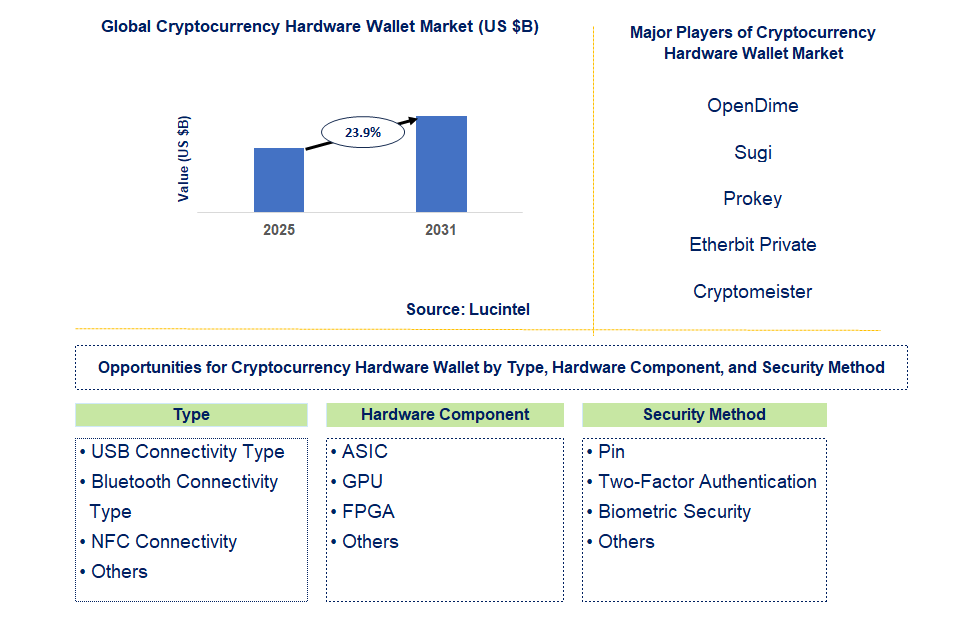
Key data points: The growth forecast = 23.9% annually for the next 7 years. Scroll below to get more insights. This market report covers Trends, opportunity and forecast in cryptocurrency hardware wallet market to 2031 by type (USB connectivity type, bluetooth connectivity type, NFC connectivity, and others), hardware component (ASIC, GPU, FPGA, and others), security method (pin, two-factor authentication, biometric security, and others), and region (North America, Europe, Asia Pacific, and the Rest of the World)
We'll send your sample report shortly.
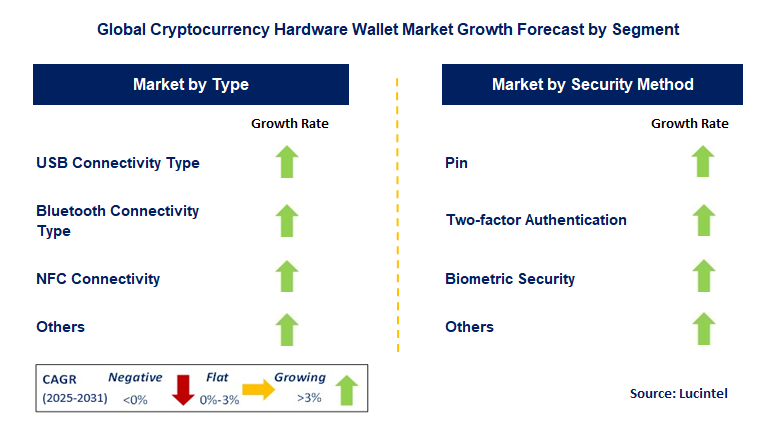
• Lucintel forecasts that, within the type category, the USB connectivity type is expected to witness the highest growth over the forecast period.
• Within the security method category, PIN is expected to witness the highest growth.
• In terms of region, APAC is expected to witness the highest growth over the forecast period. Gain valuable insights for your business decisions with our comprehensive 150+ page report. Sample figures with some insights are shown below.
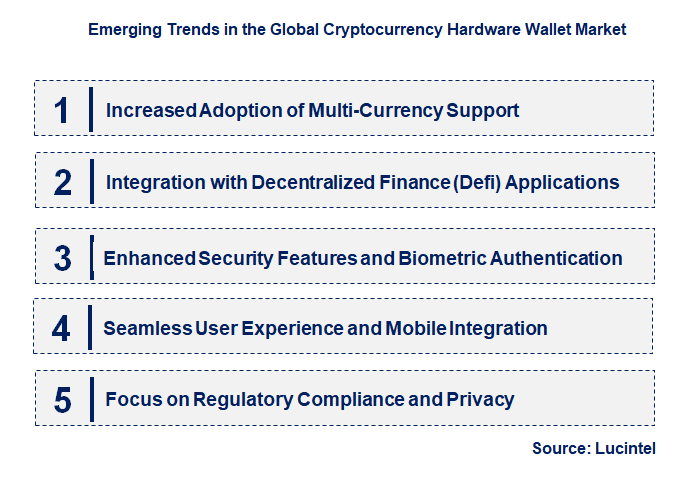
• Increased Adoption of Multi-Currency Support: As the cryptocurrency landscape expands with the proliferation of altcoins and tokens, users demand hardware wallets that support multiple currencies. Multi-currency support allows users to store not only Bitcoin but also Ethereum, Litecoin, and newer assets such as DeFi tokens. This trend responds to the growing need for convenience and efficiency in managing diverse portfolios within a single wallet. Wallet providers are integrating support for a wide array of cryptocurrencies, streamlining user experience and enabling broader adoption among crypto enthusiasts.
• Integration with Decentralized Finance (DeFi) Applications: DeFi platforms have surged in popularity, and cryptocurrency hardware wallets are evolving to integrate directly with these platforms. This trend allows users to interact with decentralized applications (dApps) while maintaining the security of their assets. By enabling secure signing of transactions on DeFi platforms, hardware wallets provide enhanced protection against the risks of centralized exchanges and smart contract vulnerabilities. As DeFi continues to expand, the integration of hardware wallets with these applications is becoming a key feature, improving security and trust.
• Enhanced Security Features and Biometric Authentication: With increasing threats in the digital space, security has become the top priority for cryptocurrency hardware wallet manufacturers. Many wallets are now incorporating advanced security features such as biometric authentication (fingerprint scanning or facial recognition) in addition to traditional PIN codes and recovery phrases. These enhanced security measures aim to offer a higher level of protection against unauthorized access and theft. As cyber threats evolve, the demand for next-generation security features continues to grow, driving innovation in hardware wallet designs.
• Seamless User Experience and Mobile Integration: As cryptocurrencies become more mainstream, the demand for user-friendly wallets is growing. Users are seeking solutions that not only provide high-level security but also offer ease of use, especially in managing and accessing their digital assets on the go. The integration of hardware wallets with mobile devices via Bluetooth or USB connections is enhancing portability and user experience. Mobile-friendly interfaces and companion apps are designed to allow seamless interaction between hardware wallets and smartphones, providing a more convenient and flexible approach to asset management.
• Focus on Regulatory Compliance and Privacy: As regulatory frameworks for cryptocurrencies evolve worldwide, hardware wallet manufacturers are increasingly focused on ensuring their products comply with regional laws while maintaining privacy standards. This trend involves aligning with anti-money laundering (AML) and know-your-customer (KYC) regulations in jurisdictions where these requirements are mandatory. Additionally, manufacturers are emphasizing privacy-focused features, such as anonymous transactions, to address concerns over surveillance and data tracking. Striking a balance between compliance and privacy is essential for gaining trust among users in an increasingly regulated market. The cryptocurrency hardware wallet market is being reshaped by key trends such as multi-currency support, DeFi integration, enhanced security, mobile integration, and regulatory compliance. These trends reflect the growing need for secure, user-friendly solutions that can adapt to the dynamic cryptocurrency landscape. As these trends continue to evolve, hardware wallets are becoming more sophisticated, offering enhanced features that cater to both security-conscious and convenience-seeking users. This transformation positions hardware wallets as a crucial element in the broader cryptocurrency ecosystem, enabling safer and more accessible management of digital assets.
• Integration of Multi-Currency Support: A major development in the cryptocurrency hardware wallet market is the integration of multi-currency support. Leading manufacturers are now offering wallets that can store a wide variety of digital assets, including Bitcoin, Ethereum, and an increasing number of altcoins. This evolution allows users to manage multiple cryptocurrencies on one device, simplifying asset management and reducing the need for multiple wallets. This trend is particularly impactful as the crypto ecosystem expands and investors seek diversified portfolios. As the variety of supported assets grows, hardware wallets are becoming more attractive to both retail and institutional investors.
• Enhanced Security Features: Security remains the most crucial aspect of cryptocurrency hardware wallets, and recent advancements have greatly improved the protection of users’ assets. Modern wallets incorporate cutting-edge security features such as biometric authentication (fingerprint or facial recognition), secure chips, multi-signature functionality, and tamper-proof designs. These enhancements make hardware wallets more secure and user-friendly. As cyber threats to cryptocurrencies become more sophisticated, these improvements provide stronger protection against hacking, phishing attacks, and physical theft. Consequently, consumers are increasingly confident in relying on hardware wallets to store their digital assets securely.
• Integration with Decentralized Finance (DeFi) Ecosystems: The rapid growth of decentralized finance (DeFi) has influenced hardware wallet manufacturers to adapt their products for seamless integration with DeFi platforms. New hardware wallets now allow users to access DeFi applications directly through the wallet interface, facilitating decentralized exchanges (DEXs) and lending protocols. This integration enables users to securely interact with their crypto assets while keeping them offline, reducing exposure to potential online threats. DeFi integration is transforming hardware wallets from simple storage devices into powerful tools for active cryptocurrency users, encouraging broader adoption among those seeking to maximize their digital asset holdings.
• Mobile and Cross-Platform Compatibility: With the increasing reliance on mobile devices for cryptocurrency management, hardware wallet manufacturers are focusing on enhancing mobile compatibility. Many new wallets offer apps that allow users to manage their assets directly from smartphones and tablets, providing greater convenience and flexibility. Cross-platform compatibility, including support for desktop computers, web browsers, and mobile apps, ensures users can easily access and control their assets from various devices. This development significantly improves the user experience, making hardware wallets more practical for everyday use, which is essential for appealing to the growing number of mobile-first cryptocurrency investors.
• Focus on User-Friendly Designs: The cryptocurrency hardware wallet market is evolving to cater to a broader audience, including less technically inclined users. As a result, manufacturers are placing a greater emphasis on user-friendly designs that simplify the setup process, navigation, and security management. This includes streamlined interfaces, easier recovery options, and clear instructions. Such improvements lower the entry barriers for new cryptocurrency users and help attract a more diverse range of customers. The focus on usability is essential for growing the market and encouraging adoption among individuals who are new to cryptocurrencies and digital asset management. These recent developments highlight how the cryptocurrency hardware wallet market is adapting to meet the needs of a rapidly growing and diversifying user base. Integration with multiple currencies and DeFi ecosystems, enhanced security, improved mobile compatibility, and user-friendly designs are all driving the evolution of hardware wallets. As security concerns remain central to the crypto community, these advancements are ensuring that hardware wallets remain a vital tool for protecting digital assets. With these innovations, the market is positioned for continued growth, offering secure, accessible, and versatile solutions for cryptocurrency investors worldwide.
• Expansion into Institutional Markets: A key growth opportunity in the cryptocurrency hardware wallet market lies in expanding into institutional markets. Financial institutions, hedge funds, and crypto exchanges are seeking secure ways to store and manage large volumes of cryptocurrency. Hardware wallets designed for institutional use can offer multi-signature solutions, cold storage, and enhanced security features tailored for high-value holdings. As institutional adoption of cryptocurrencies increases, hardware wallets that cater to these needs will become essential, driving demand in the professional sector. This opportunity enables manufacturers to tap into a high-value market segment, further cementing the role of hardware wallets in the crypto ecosystem.
• Integration with Decentralized Finance (DeFi) Solutions: The growing popularity of decentralized finance (DeFi) presents another significant opportunity for hardware wallet manufacturers. DeFi applications allow users to engage in lending, borrowing, and trading directly from their wallets without relying on intermediaries. By integrating hardware wallets with DeFi platforms, manufacturers can enhance the user experience while ensuring the security of transactions. This growth opportunity enables hardware wallets to serve as essential tools for crypto users actively involved in the DeFi ecosystem, further broadening the appeal and utility of hardware wallets beyond just storage solutions.
• Cross-Platform and Mobile Device Compatibility: As mobile devices continue to dominate the digital experience, the need for hardware wallets that seamlessly integrate with smartphones and tablets is growing. Cross-platform compatibility allows users to manage their crypto assets across devices, making it easier to access, transfer, and monitor holdings on the go. Manufacturers can capitalize on this trend by developing wallets that offer mobile apps and desktop integrations, ensuring ease of use across different operating systems. This shift is particularly appealing to younger, tech-savvy investors who rely heavily on mobile-first solutions for managing their digital assets, thus expanding the market reach.
• Enhanced Security Features for Consumer Protection: With the increasing number of cyberattacks targeting cryptocurrency holders, enhancing security remains a core opportunity in the hardware wallet market. Manufacturers can invest in advanced security features such as biometric authentication, end-to-end encryption, tamper-proof designs, and secure elements to offer greater protection against hacking attempts and physical theft. By focusing on building the most secure and reliable wallets, companies can gain consumer trust, making their products the go-to solution for anyone looking to safeguard their digital assets. This growth opportunity is crucial in establishing hardware wallets as the most secure option for crypto investors.
• Support for Emerging Cryptocurrencies and Tokens: As the cryptocurrency landscape expands, new coins and tokens are being launched regularly. There is a growing demand for hardware wallets that support a wider variety of cryptocurrencies, including altcoins, utility tokens, and NFTs. Wallet manufacturers can seize this opportunity by offering hardware wallets compatible with a broad range of emerging digital assets, making them attractive to users who invest in niche tokens. This expansion helps manufacturers capture a larger market share by catering to the needs of diverse crypto users, particularly those interested in newer or less mainstream cryptocurrencies. The strategic growth opportunities in the cryptocurrency hardware wallet market are wide-ranging, from expanding into institutional markets to integrating with DeFi solutions and enhancing security features. Cross-platform compatibility and support for emerging cryptocurrencies further present avenues for growth. By capitalizing on these opportunities, hardware wallet manufacturers can address the evolving demands of both retail and institutional customers, positioning themselves as leaders in the rapidly growing cryptocurrency security market. These opportunities ensure that hardware wallets remain a critical component in the crypto ecosystem, fostering trust and driving long-term growth in the sector.
• OpenDime
• Sugi
• Prokey
• Etherbit Private
• Cryptomeister
• BitLox
• CryoBit
• ELLIPAL
• Trezor
• Keystone
• USB Connectivity Type
• Bluetooth Connectivity Type
• NFC Connectivity
• Others
• ASIC
• GPU
• FPGA
• Others
• North America
• Europe
• Asia Pacific
• The Rest of the World
• United States: The United States remains a leader in the cryptocurrency hardware wallet market, driven by robust demand from institutional and retail investors. Key developments include the integration of multi-currency support and enhanced user interfaces for hardware wallets. Companies are focusing on advanced security features such as biometric authentication and integration with decentralized finance (DeFi) platforms. Regulatory discussions around cryptocurrency are also influencing product designs to ensure compliance. The U.S. market benefits from a tech-savvy population and strong venture capital investment in blockchain startups, fostering innovation and expanding the adoption of secure crypto storage solutions.
• China: The Chinese cryptocurrency hardware wallet market is evolving despite regulatory restrictions on digital currencies. Manufacturers are focusing on exporting hardware wallets to global markets while offering enhanced security features like anti-tamper mechanisms and encrypted backups. The rise of blockchain technology in non-crypto applications has bolstered interest in secure storage solutions, indirectly benefiting the hardware wallet market. Additionally, Chinese companies are leveraging cost-effective production to dominate the global supply chain. Although domestic crypto usage is limited, the emphasis on blockchain innovation positions China as a key player in hardware wallet technology development and manufacturing.
• Germany: The German cryptocurrency hardware wallet market is growing steadily, supported by favorable regulations and a strong emphasis on data privacy. The country is witnessing increased adoption of wallets with integrated security modules that are compliant with European standards. German manufacturers are focusing on eco-friendly designs and blockchain interoperability, catering to the environmentally conscious and tech-savvy consumer base. Collaborations between wallet providers and financial institutions are also emerging, enhancing trust in cryptocurrency security. Germany’s commitment to regulatory clarity and technological innovation makes it a significant contributor to the global hardware wallet market.
• India: The Indian cryptocurrency hardware wallet market is expanding as crypto adoption rises among its large and digitally engaged population. Recent developments include affordable wallet options tailored for small and medium investors. Indian startups are integrating regional language support and mobile-friendly features to enhance accessibility. The country’s regulatory uncertainty around cryptocurrencies has increased awareness of secure storage, driving demand for hardware wallets. Partnerships between wallet manufacturers and fintech companies are emerging, promoting innovation and adoption. As India’s crypto ecosystem matures, hardware wallets are becoming a critical component of secure investment strategies for retail investors.
• Japan: Japan remains a prominent player in the cryptocurrency hardware wallet market, benefiting from its advanced technology landscape and proactive regulatory environment. Developments include wallets with seamless integration for e-commerce and digital payments, catering to the tech-forward Japanese population. Japanese companies are also exploring compact and wearable designs, aligning with consumer preferences for convenience and portability. The government’s supportive stance on blockchain technology further bolsters market growth, attracting innovation and investment. With a strong focus on security and user experience, Japan continues to influence global trends in cryptocurrency hardware wallet technology.


• OpenDime
• Sugi
• Prokey
• Etherbit Private
• Cryptomeister
• BitLox
• CryoBit
• ELLIPAL
• Trezor
• Keystone Q5. Which cryptocurrency hardware wallet market segment will be the largest in future? Answer: Lucintel forecasts that the USB connectivity type is expected to witness the highest growth over the forecast period. Q6. In cryptocurrency hardware wallet market, which region is expected to be the largest in next 5 years? Answer: APAC is expected to witness the highest growth over the forecast period. Q7. Do we receive customization in this report? Answer: Yes, Lucintel provides 10% customization without any additional cost.


Choose a license that fits your team. Instant PDF delivery.
Prices exclude taxes. Instant delivery. Custom licensing available on request.
Market Report · July 15, 2026
Market Report · June 26, 2026
Market Report · June 24, 2026
Trusted partner for strategic intelligence and business growth


Receive a complimentary market analysis tailored to your industry. Our analysts will identify key growth opportunities and competitive dynamics specific to your business.

Market size, growth rate, and key trend analysis for your specific sector.

Top competitor positioning and market share analysis.

Strategic recommendations backed by data-driven insights.
Get curated market intelligence and competitive moves straight to your inbox.
By subscribing, you agree to receive our monthly insights. Unsubscribe anytime.
Receive a complimentary market analysis tailored to your industry. Our analysts will identify key growth opportunities and competitive dynamics specific to your business.
Market size, growth rate, and key trend analysis for your specific sector.
Top competitor positioning and market share analysis.
Strategic recommendations backed by data-driven insights.
Get curated market intelligence, emerging trends, and competitive moves straight to your inbox each month.
By subscribing, you agree to receive our monthly insights. Unsubscribe anytime.
We'll send your sample report shortly.