
Market Report · July 15, 2026

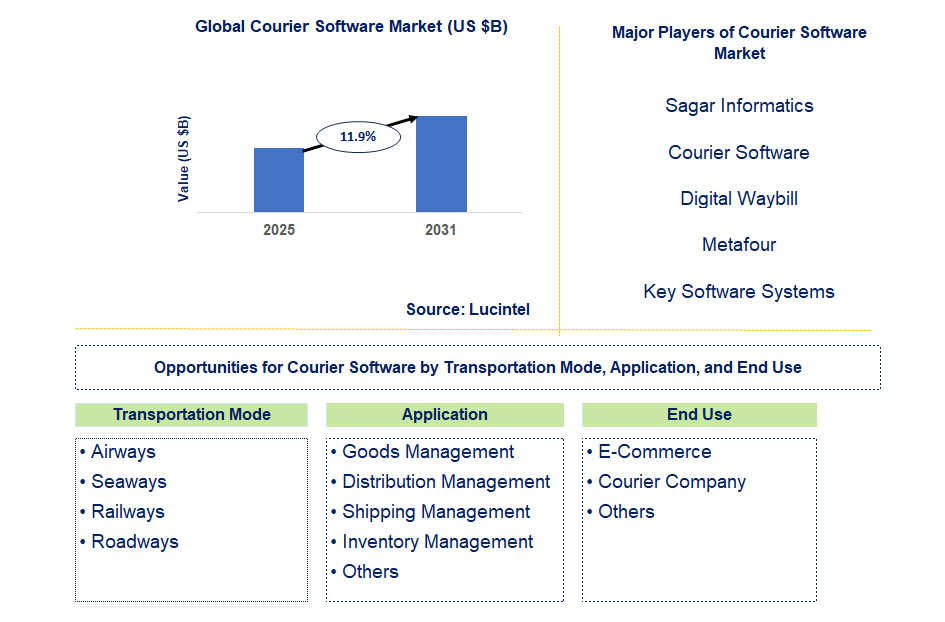
Key data points: The growth forecast = 11.9% annually for the next 7 years. Scroll below to get more insights. This market report covers Trends, opportunity and forecast in courier software market to 2031 by transportation mode (airways, seaways, railways, and roadways), application (goods management, distribution management, shipping management, inventory management, and others), end use (e-commerce, courier company, and others), and region (North America, Europe, Asia Pacific, and the Rest of the World)
We'll send your sample report shortly.
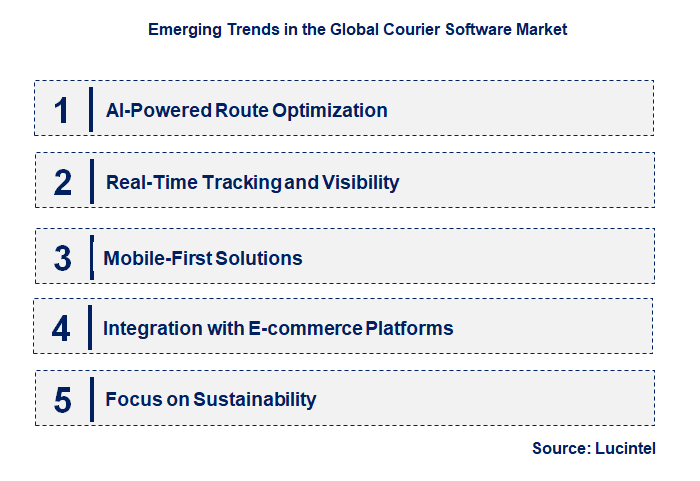
• AI-Powered Route Optimization: Courier software is increasingly leveraging artificial intelligence and machine learning to optimize delivery routes in real-time, considering factors like traffic congestion, weather conditions, and delivery time windows. AI-powered route optimization improves efficiency, reduces fuel costs, and enables faster deliveries. This trend is crucial for meeting customer expectations for speed and efficiency in today's on-demand economy.
• Real-Time Tracking and Visibility: Customers expect real-time visibility into the status of their shipments. Courier software provides real-time tracking capabilities, allowing customers to monitor their packages from pickup to delivery. Enhanced tracking improves transparency, reduces customer anxiety, and enables proactive communication. This trend is essential for enhancing customer satisfaction and building trust in the delivery process.
• Mobile-First Solutions: Mobile apps are becoming essential for both drivers and customers. Drivers use mobile apps for navigation, delivery confirmation, and communication with dispatchers. Customers use mobile apps to track shipments, manage deliveries, and provide feedback. Mobile-first solutions streamline operations, improve communication, and enhance the overall delivery experience.
• Integration with E-commerce Platforms: Seamless integration between courier software and e-commerce platforms is crucial for automating order processing and delivery management. Integration eliminates manual data entry, reduces errors, and improves overall efficiency. This trend is essential for streamlining the order fulfillment process and enabling seamless e-commerce deliveries.
• Focus on Sustainability: With growing environmental concerns, courier software is incorporating features that promote sustainable delivery practices. Route optimization algorithms consider fuel efficiency and minimize carbon emissions. Integration with electric vehicle fleets and carbon offsetting programs are also becoming more common. This focus on sustainability is driven by both consumer demand and regulatory pressures. These trends are collectively reshaping the courier software market by driving innovation, improving efficiency, and enhancing customer experiences. They are leading to the development of more sophisticated and sustainable courier solutions, transforming the way goods are transported and delivered. The future of courier software lies in creating intelligent, connected, and eco-friendly delivery ecosystems.
• AI-Powered Route Optimization: Courier software now leverages AI and machine learning for real-time route optimization, considering traffic, weather, and delivery windows. This improves efficiency, reduces fuel costs, and enables faster deliveries, crucial for meeting on-demand expectations. AI-driven routing optimizes driver time and resources, leading to cost savings and improved service levels.
• Real-Time Tracking and Visibility: Customers demand real-time visibility into their shipments. Courier software offers real-time tracking, allowing customers to monitor packages from pickup to delivery. This enhances transparency, reduces anxiety, and facilitates proactive communication. Improved tracking builds trust and enhances customer satisfaction with the delivery process.
• Mobile-First Solutions for Drivers and Customers: Mobile apps are essential for both drivers and customers. Drivers use apps for navigation, delivery confirmation, and communication. Customers track shipments, manage deliveries, and provide feedback via apps. Mobile-first solutions streamline operations, improve communication, and enhance the delivery experience. Mobile accessibility is key to efficient operations and customer engagement.
• Integration with E-commerce Platforms: Seamless integration between courier software and e-commerce platforms automates order processing and delivery management. This eliminates manual data entry, reduces errors, and improves efficiency. Integration streamlines order fulfillment, enabling seamless e-commerce deliveries and improved customer satisfaction.
• Emphasis on Sustainability and Green Deliveries: Courier software incorporates features promoting sustainable practices. Route optimization considers fuel efficiency and minimizes emissions. Integration with electric vehicle fleets and carbon offsetting programs are becoming common. This focus on sustainability is driven by consumer demand and regulatory pressures, promoting eco-friendly deliveries. These developments are collectively reshaping the courier software market by driving innovation, improving efficiency, and enhancing customer experiences. They are leading to more sophisticated, connected, and sustainable courier solutions, revolutionizing how goods are transported and delivered. The future of courier software lies in intelligent, integrated, and environmentally conscious delivery ecosystems.
• Hyperlocal Delivery Solutions: Developing specialized software solutions for hyperlocal delivery services, catering to the growing demand for fast and on-demand deliveries within limited geographic areas. These solutions require advanced route optimization, real-time tracking, and integration with local businesses. Hyperlocal delivery software enables efficient management of short-distance deliveries, catering to the increasing demand for instant gratification and same-day delivery.
• Integration with Autonomous Delivery Systems: Integrating courier software with autonomous delivery systems, such as drones and robots, to automate last-mile delivery and improve efficiency. This requires advanced route planning algorithms, real-time tracking capabilities, and integration with drone management platforms. Autonomous delivery integration has the potential to revolutionize last-mile logistics, reducing costs and improving delivery speed.
• Predictive Analytics for Proactive Delivery Management: Leveraging predictive analytics to forecast delivery delays, optimize resource allocation, and proactively address potential issues. This involves analyzing historical data, real-time traffic conditions, and weather patterns to predict delivery times and optimize routes. Predictive analytics enables proactive delivery management, improving customer satisfaction and reducing operational costs.
• Enhanced Customer Communication and Engagement: Developing features that enhance customer communication and engagement, such as real-time delivery updates, personalized notifications, and integrated feedback mechanisms. This involves integrating with communication platforms and providing customers with greater control over their deliveries. Enhanced customer communication improves transparency, builds trust, and enhances the overall delivery experience.
• Sustainable Delivery Management: Incorporating features that promote sustainable delivery practices, such as route optimization for fuel efficiency, integration with electric vehicle fleets, and carbon offsetting programs. This addresses the growing demand for eco-friendly deliveries and helps businesses reduce their environmental impact. Sustainable delivery management aligns with corporate social responsibility initiatives and caters to environmentally conscious consumers. These growth opportunities are collectively shaping the courier software market by driving innovation, improving efficiency, and enhancing customer experiences. They are leading to the development of more sophisticated, connected, and sustainable courier solutions, transforming the way goods are transported and delivered. The future of courier software lies in creating intelligent, integrated, and environmentally conscious delivery ecosystems.
• Sagar Informatics
• Courier Software
• Digital Waybill
• Metafour
• Key Software Systems
• Datatrac Corporation
• Linbis
• Storfox
• Zedex Software
• Net Interaction SRL
• Airways
• Seaways
• Railways
• Roadways
• Goods Management
• Distribution Management
• Shipping Management
• Inventory Management
• Others
• North America
• Europe
• Asia Pacific
• The Rest of the World
• United States: The US market is characterized by a diverse range of courier software providers, catering to various needs and budgets. Key trends include the increasing use of AI and machine learning for route optimization and predictive delivery estimates, the integration of drone delivery technology, and the growing emphasis on last-mile delivery solutions. The US market is also seeing a rise in specialized courier software for specific industries, such as healthcare and e-commerce.
• China: The Chinese courier software market is dominated by large logistics companies that have developed their own sophisticated software platforms. Key trends include the widespread use of mobile apps for both drivers and customers, the integration of big data analytics for real-time tracking and optimization, and the rapid adoption of autonomous delivery vehicles and robots. The Chinese market is also characterized by intense competition and a focus on speed and efficiency.
• Germany: The German market is characterized by a strong focus on data privacy and compliance with GDPR regulations. Courier software providers are prioritizing data security and transparency. There's a growing demand for solutions that offer secure data management and comply with European data protection standards. The German market is also seeing a rise in specialized courier software for specific industries, such as pharmaceuticals and automotive.
• India: The Indian courier software market is experiencing rapid growth, driven by the e-commerce boom and increasing internet penetration. Mobile-first courier software solutions are dominant, and there's a strong emphasis on real-time tracking and delivery confirmation. The Indian market is also seeing a rise in hyperlocal delivery services and the integration of digital payment options. The focus is on affordability and accessibility, particularly in rural areas.
• Japan: The Japanese courier software market is characterized by a blend of traditional and modern approaches. While traditional courier services remain prevalent, there's a growing adoption of advanced software solutions for route optimization and delivery management. The Japanese market is also seeing a rise in same-day delivery services and the integration of IoT sensors for real-time tracking and condition monitoring. Reliability and precision are highly valued in the Japanese market.


• Sagar Informatics
• Courier Software
• Digital Waybill
• Metafour
• Key Software Systems
• Datatrac Corporation
• Linbis
• Storfox
• Zedex Software
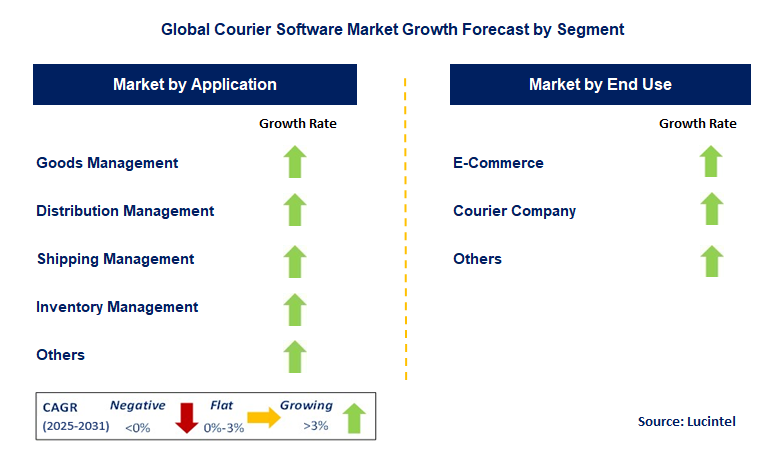
• Net Interaction SRL Q5. Which courier software market segment will be the largest in future? Answer: Lucintel forecasts that goods management is expected to witness the highest growth over the forecast period. Q6. In courier software market, which region is expected to be the largest in next 5 years? Answer: North America will remain the largest region over the forecast period due to growing use of courier software to enhance supply chain administration. Q7. Do we receive customization in this report? Answer: Yes, Lucintel provides 10% customization without any additional cost.


Choose a license that fits your team. Instant PDF delivery.
Prices exclude taxes. Instant delivery. Custom licensing available on request.
Market Report · July 15, 2026
Market Report · June 26, 2026
Market Report · June 24, 2026
Trusted partner for strategic intelligence and business growth


Receive a complimentary market analysis tailored to your industry. Our analysts will identify key growth opportunities and competitive dynamics specific to your business.

Market size, growth rate, and key trend analysis for your specific sector.

Top competitor positioning and market share analysis.

Strategic recommendations backed by data-driven insights.
Get curated market intelligence and competitive moves straight to your inbox.
By subscribing, you agree to receive our monthly insights. Unsubscribe anytime.
Receive a complimentary market analysis tailored to your industry. Our analysts will identify key growth opportunities and competitive dynamics specific to your business.
Market size, growth rate, and key trend analysis for your specific sector.
Top competitor positioning and market share analysis.
Strategic recommendations backed by data-driven insights.
Get curated market intelligence, emerging trends, and competitive moves straight to your inbox each month.
By subscribing, you agree to receive our monthly insights. Unsubscribe anytime.
We'll send your sample report shortly.