
Report Feature
Cosmetic Chemical Market Trends and Forecast
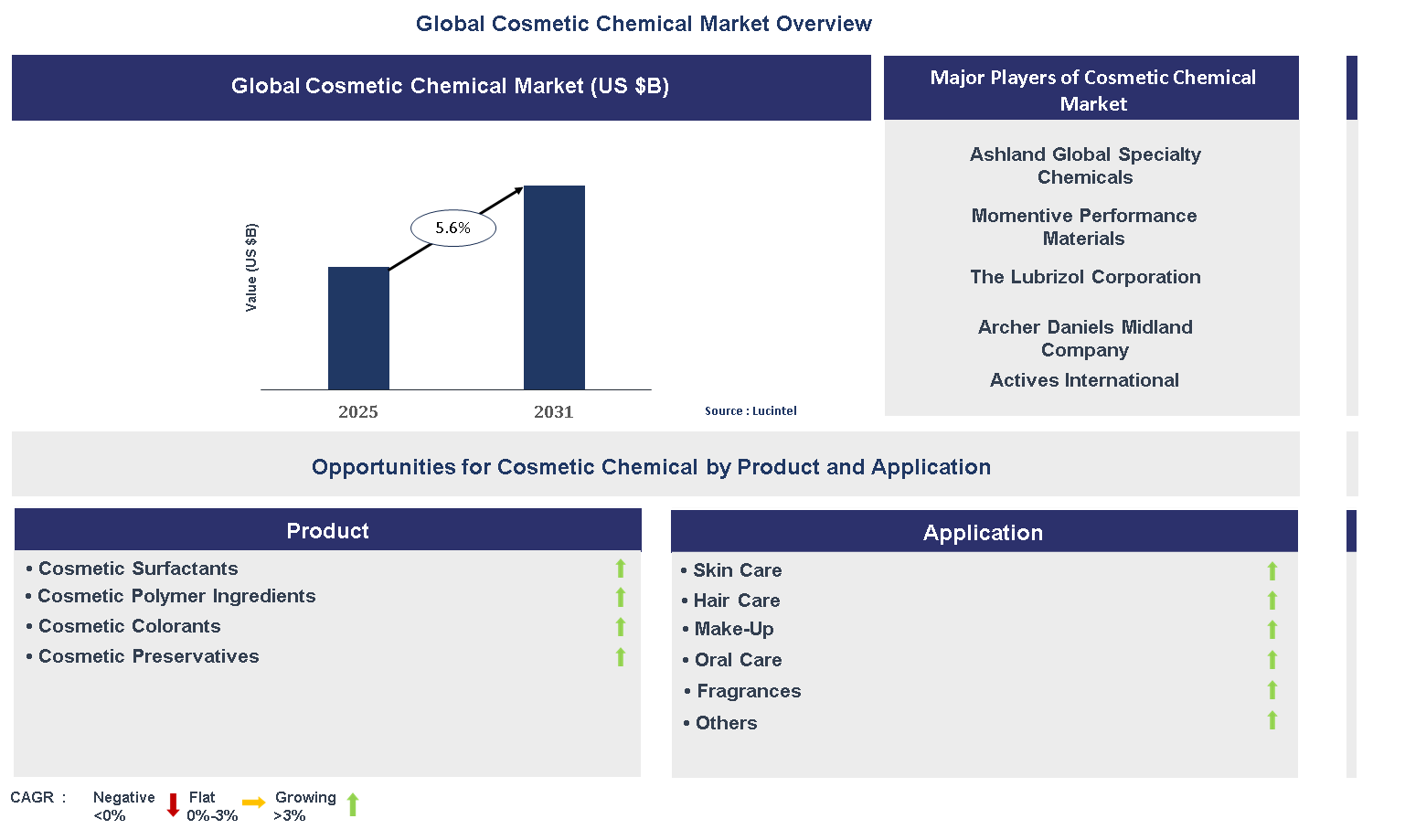
The future of the global cosmetic chemical market looks promising with opportunities in the skin care, hair care, make-up, oral care, and fragrance markets. The global cosmetic chemical market is expected to grow with a CAGR of 5.6% from 2025 to 2031. The major drivers for this market are the increasing demand for natural beauty ingredients, the rising preference for anti-aging skincare solutions, and the growing awareness of sustainable cosmetic products.• Lucintel forecasts that, within the product category, cosmetic surfactant is expected to witness the highest growth over the forecast period.
• Within the application category, skin care is expected to witness the highest growth.
• In terms of region, APAC is expected to witness the highest growth over the forecast period. Gain valuable insights for your business decisions with our comprehensive 150+ page report. Sample figures with some insights are shown below.
Emerging Trends in the Cosmetic Chemical Market
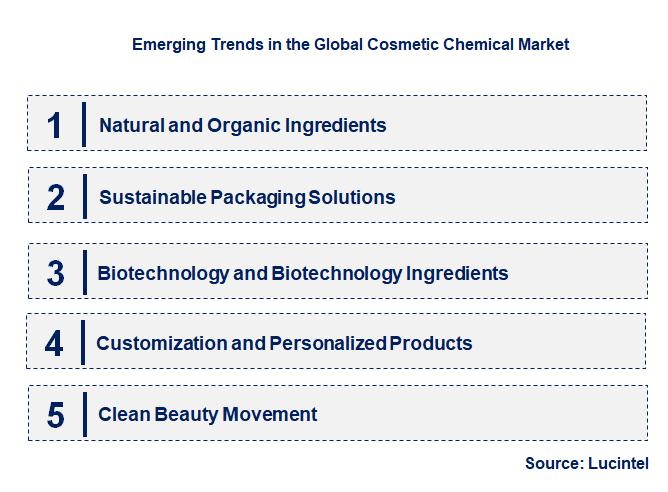
The cosmetic chemical market is witnessing several key trends that are reshaping product development and consumer preferences. These trends reflect a shift toward sustainability, innovation, and personalized experiences. Understanding these emerging patterns is critical for businesses looking to stay competitive in this dynamic industry.• Natural and Organic Ingredients: Consumers are increasingly prioritizing natural and organic ingredients in cosmetic products, driven by a desire for safer, environmentally friendly options. This trend is reshaping product formulations, with companies adopting plant-based and biodegradable chemicals. Regulatory bodies are also aligning their standards to ensure that these products are truly organic and free from harmful additives.
• Sustainable Packaging Solutions: Sustainable packaging has become a major focus in the cosmetic chemical market. Companies are adopting eco-friendly materials such as recycled plastics, glass, and biodegradable alternatives. This trend aligns with growing consumer awareness of environmental issues and the need for brands to reduce their ecological footprint. Sustainability is a key factor in brand loyalty and consumer purchasing decisions.
• Biotechnology and Biotechnology Ingredients: Biotechnology innovations are driving the creation of sustainable, efficient, and high-performance ingredients. Advances in this field are enabling the development of novel bio-based chemicals, which offer better efficacy and lower environmental impact than traditional petroleum-based products. These innovations are seen in skincare, haircare, and personal hygiene products, contributing to safer and more effective formulations.
• Customization and Personalized Products: Consumers increasingly seek personalized skincare solutions tailored to their specific needs. The growing demand for customized cosmetic products is prompting brands to leverage data and technology, such as AI and skin analysis tools, to create bespoke formulations. This shift is pushing the market toward greater individualization and precision in product offerings.
• Clean Beauty Movement: The clean beauty movement is a significant trend where consumers demand transparency about ingredient sourcing and product formulation. This trend focuses on eliminating harmful chemicals from cosmetic products and promoting safer, more ethical choices. Clean beauty has driven significant regulatory changes, requiring companies to disclose ingredients and undergo stringent safety assessments. These emerging trends in the cosmetic chemical market are shaping the future of personal care products, pushing for more sustainability, transparency, and innovation. As consumer expectations evolve, businesses must adapt to these shifts, which are not only influencing product development but also challenging companies to stay aligned with the growing demand for ethical, eco-friendly solutions.
Recent Development in the Cosmetic Chemical Market
The cosmetic chemical industry has experienced several key developments recently, with innovations shaping the products we use today. Advancements in biotechnology, sustainability, and regulatory shifts are driving growth, providing new opportunities for both established brands and startups. These developments are pivotal in responding to consumer demands and ensuring safety and efficacy in cosmetic formulations.• Biotechnology Advancements: Biotechnology has revolutionized the production of cosmetic chemicals, allowing for the development of bio-based, sustainable ingredients. Innovations in gene editing, fermentation, and plant-based sourcing are driving the creation of more effective and environmentally friendly ingredients. These advancements support the demand for natural and clean beauty products while reducing reliance on petrochemical derivatives.
• Regulatory Changes: Increased regulatory oversight, particularly in the U.S. and EU, is influencing product formulations. Stricter ingredient disclosure laws and safety standards are becoming common, pressuring companies to improve transparency. These regulations aim to ensure consumer safety while promoting the use of safe, tested ingredients. Companies that comply with these laws are gaining consumer trust and market share.
• Rise of Local Production: The shift towards local production of cosmetic chemicals, particularly in China and India, is helping brands reduce costs and improve product availability. This trend encourages the use of regionally sourced ingredients and better controls over the manufacturing process. Local production is also driving innovation as manufacturers experiment with indigenous plants and traditional cosmetic chemistry.
• Sustainable Ingredient Sourcing: Sustainability continues to be a priority, with increased emphasis on ethically sourced ingredients and renewable resources. Brands are actively seeking alternatives to synthetic chemicals, using plant-based and biodegradable ingredients. The rise of sustainable sourcing is not only responding to consumer demand but also aligning with global goals for reducing environmental impact.
• Consumer Demand for Transparency: As consumers become more aware of the ingredients in their products, demand for transparency has grown. Companies are now expected to disclose every ingredient used, its origin, and its environmental impact. This push for transparency is encouraging cosmetic brands to rethink their formulations and packaging, ensuring they meet both regulatory and ethical standards. These developments are reshaping the cosmetic chemical market by introducing innovations in ingredient sourcing, sustainability, and transparency. They are driving companies to invest in new technologies and adapt to stricter regulations, with an overarching focus on safety and consumer trust.
Strategic Growth Opportunities in the Cosmetic Chemical Market
The cosmetic chemical market presents significant growth opportunities across various applications, driven by emerging consumer trends, technological innovations, and regional market demands. Companies are positioning themselves to capture these growth avenues through strategic investments in R&D, sustainable practices, and customization, enabling them to stay ahead in this competitive market.• Skincare Innovations: The skincare sector remains a key growth driver in the cosmetic chemical market, particularly with the demand for anti-aging, hydration, and skin health products. Companies are investing heavily in research and development of new active ingredients that provide targeted skin benefits. Innovative technologies, such as probiotics and peptides, are transforming formulations and offering consumers more effective solutions.
• Haircare and Scalp Health: The haircare segment is growing with a focus on scalp health and natural ingredients. Consumers are moving towards chemical-free shampoos, conditioners, and treatments that promote healthier hair and scalp. Brands are leveraging botanical extracts, vitamins, and probiotics in their formulations, responding to the demand for more holistic, therapeutic products in the haircare market.
• Clean and Sustainable Beauty: The clean beauty movement presents a robust growth opportunity, especially with the increasing demand for cruelty-free, non-toxic, and ethically sourced ingredients. Brands that embrace sustainable practices are seeing higher consumer loyalty and expanding market share. The focus on sustainable beauty is driving demand for eco-friendly packaging, plant-based formulations, and full ingredient transparency.
• Personal Care & Hygiene: The personal care and hygiene segment continues to expand, particularly in emerging markets like India and China. The demand for products such as deodorants, body washes, and hand sanitizers has risen, especially with increased awareness of hygiene and wellness. Consumers are prioritizing safe, natural ingredients in personal care items, pushing companies to develop gentler, more effective formulations.
• Cosmetics for Men: Mens grooming and cosmetic products are gaining popularity, presenting a fresh growth opportunity. This market, which has traditionally been underdeveloped, is seeing increased interest in skincare, haircare, and shaving products tailored specifically for male consumers. Brands are focusing on developing products that meet the unique needs of men’s skin, driving innovation and expanding market potential. The strategic growth opportunities in cosmetic chemicals are broadening as companies focus on emerging trends like sustainable beauty, personalized products, and skincare innovations. As these sectors evolve, businesses are capitalizing on new technologies and consumer preferences, positioning themselves for continued growth and success in the ever-changing beauty landscape.
Cosmetic Chemical Market Driver and Challenges
The cosmetic chemical market is influenced by several drivers and challenges that shape its trajectory. Factors such as technological advancements, consumer trends, and regulatory pressures are contributing to the markets growth. However, challenges like supply chain issues, high production costs, and stringent regulations also present obstacles for industry players. The factors responsible for driving the cosmetic chemical market include: 1. Increasing Consumer Demand for Natural Products: The rising consumer preference for natural, clean beauty products is a major driver of growth in the cosmetic chemical market. Consumers are becoming more conscious of the ingredients in their personal care products, leading to a surge in demand for natural and organic alternatives. This shift is prompting companies to invest in plant-based and sustainable ingredients. 2. Advancements in Biotechnology: Biotechnology advancements are enabling the development of innovative ingredients with superior efficacy and minimal environmental impact. The rise of bio-based ingredients is transforming the market, offering new solutions for skincare, haircare, and anti-aging formulations. These technologies enable companies to create products with greater safety, sustainability, and performance. 3. Regulatory Pressures for Safety and Transparency: Regulatory frameworks in major markets like the U.S., EU, and China are becoming stricter, promoting transparency in ingredient sourcing and formulation. While this ensures consumer safety, it also drives innovation in the market. Companies must comply with these regulations, which often results in higher product quality and better consumer trust. 4. Growing Focus on Sustainability: The drive for sustainability is one of the primary market drivers, with consumers demanding products that are eco-friendly, both in terms of ingredients and packaging. Brands are increasingly focusing on sustainable sourcing, biodegradable packaging, and carbon-neutral production processes to meet these demands, contributing to their long-term success. 5. Technological Innovations in Formulations: Ongoing technological advancements in cosmetic formulation are enhancing the performance of products. Innovations such as nanotechnology, microencapsulation, and 3D printing are improving ingredient delivery and product efficacy. These developments help companies create more effective and consumer-friendly products, driving demand across the sector. Challenges in the cosmetic chemical market are: 1. Supply Chain Disruptions: Supply chain disruptions, particularly those related to raw materials and global shipping, pose significant challenges. Issues such as sourcing sustainable materials or dealing with import/export restrictions affect production timelines and costs. These disruptions can hinder a company’s ability to meet consumer demand and increase operational costs. 2. Regulatory Compliance and Costs: The increasing complexity of regulations in different markets presents challenges for cosmetic companies. Meeting compliance standards can require substantial investments in testing, certification, and transparency, which can increase production costs. Smaller companies, in particular, may struggle to keep up with the financial and administrative demands of regulatory compliance. 3. Intense Market Competition: The cosmetic chemical market is highly competitive, with numerous global and local players vying for market share. Companies must constantly innovate and differentiate their products to stay ahead. The pressure to maintain product quality while controlling costs can result in a challenging business environment, especially for smaller brands. The cosmetic chemical market is driven by technological innovation, growing consumer demand for natural products, and regulatory shifts. However, challenges like supply chain issues and regulatory compliance can hinder growth. Companies that can navigate these challenges while capitalizing on market drivers will have the best chance of success in this competitive and evolving industry.List of Cosmetic Chemical Companies
Companies in the market compete on the basis of product quality offered. Major players in this market focus on expanding their manufacturing facilities, R&D investments, infrastructural development, and leverage integration opportunities across the value chain. With these strategies cosmetic chemical companies cater increasing demand, ensure competitive effectiveness, develop innovative products & technologies, reduce production costs, and expand their customer base. Some of the cosmetic chemical companies profiled in this report include-• Ashland Global Specialty Chemicals
• Momentive Performance Materials
• The Lubrizol Corporation
• Archer Daniels Midland Company
• Actives International
• Lucas Meyer Cosmetics Canada
• Eastman Chemical Company
• Innospec
• INOLEX
• Eyesome
Cosmetic Chemical Market by Segment
The study includes a forecast for the global cosmetic chemical market by product, application, and region.Cosmetic Chemical Market by Product [Value from 2019 to 2031]:
• Cosmetic Surfactants
• Cosmetic Polymer Ingredients
• Cosmetic Colorants
• Cosmetic Preservatives
Cosmetic Chemical Market by Application [Value from 2019 to 2031]:
• Skin Care
• Hair Care
• Make-Up
• Oral Care
• Fragrances
• Others
Cosmetic Chemical Market by Region [Value from 2019 to 2031]:
• North America
• Europe
• Asia Pacific
• The Rest of the World
Country Wise Outlook for the Cosmetic Chemical Market
The cosmetic chemical market has witnessed significant transformations across various regions due to evolving consumer demands, technological advancements, and regulatory changes. As global demand for personal care products rises, countries like the United States, China, Germany, India, and Japan are driving innovation in cosmetic chemistry, shaping product formulations and manufacturing methods.• United States: The U.S. cosmetic chemical market has seen rapid growth in clean beauty and eco-friendly formulations. Regulatory changes, like stricter ingredient transparency laws, are pushing brands toward safer alternatives. Advances in biotechnology are enabling more sustainable ingredient sourcing, with increased demand for natural and organic chemicals. Companies focus on cruelty-free and vegan options to cater to growing consumer expectations.
• China: Chinas cosmetic chemical industry is expanding rapidly, driven by rising middle-class incomes and demand for high-quality skincare. The country is focusing on local manufacturing of cosmetic ingredients to reduce dependence on imports. Regulatory updates emphasize stricter safety standards for imported products and animal testing bans. Local brands are pushing for innovation in traditional beauty formulations and biotechnology.
• Germany: Germany continues to lead in cosmetic chemical innovations, focusing on sustainable ingredients and regulatory compliance. The trend toward organic, biodegradable, and dermatologically-tested products is significant. With stringent EU regulations, companies in Germany are prioritizing eco-conscious formulations. Advances in biotechnology have introduced efficient plant-based alternatives, enhancing skincare product efficacy without compromising safety.
• India: India’s cosmetic chemical market is evolving with a focus on traditional and herbal formulations mixed with modern chemical innovations. The demand for natural and Ayurvedic products is growing, influencing the chemical market. Companies are also investing in R&D for the development of high-quality active ingredients. Increased awareness of skincare and self-care among consumers is boosting growth in the sector.
• Japan: Japan’s cosmetic chemical industry is well-established, marked by high consumer expectations for advanced skincare products. Japanese consumers prioritize skin health and anti-aging, driving demand for sophisticated formulations. Companies are exploring new technologies like nanotechnology for improved ingredient delivery systems. The market emphasizes gentle, non-irritating ingredients and eco-friendly packaging solutions, in line with sustainable beauty trends.

Features of the Global Cosmetic Chemical Market
Market Size Estimates: Cosmetic chemical market size estimation in terms of value ($B). Trend and Forecast Analysis: Market trends (2019 to 2024) and forecast (2025 to 2031) by various segments and regions. Segmentation Analysis: Cosmetic chemical market size by product, application, and region in terms of value ($B). Regional Analysis: Cosmetic chemical market breakdown by North America, Europe, Asia Pacific, and Rest of the World. Growth Opportunities: Analysis of growth opportunities in different products, applications, and regions for the cosmetic chemical market. Strategic Analysis: This includes M&A, new product development, and competitive landscape of the cosmetic chemical market. Analysis of competitive intensity of the industry based on Porter’s Five Forces model.
FAQ
Q1. What is the growth forecast for cosmetic chemical market? Answer: The global cosmetic chemical market is expected to grow with a CAGR of 5.6% from 2025 to 2031. Q2. What are the major drivers influencing the growth of the cosmetic chemical market? Answer: The major drivers for this market are the increasing demand for natural beauty ingredients, the rising preference for anti-aging skincare solutions, and the growing awareness of sustainable cosmetic products. Q3. What are the major segments for cosmetic chemical market? Answer: The future of the cosmetic chemical market looks promising with opportunities in the skin care, hair care, make-up, oral care, and fragrance markets. Q4. Who are the key cosmetic chemical market companies? Answer: Some of the key cosmetic chemical companies are as follows:• Ashland Global Specialty Chemicals
• Momentive Performance Materials
• The Lubrizol Corporation
• Archer Daniels Midland Company
• Actives International
• Lucas Meyer Cosmetics Canada
• Eastman Chemical Company
• Innospec
• INOLEX
• Eyesome Q5. Which cosmetic chemical market segment will be the largest in future? Answer: Lucintel forecasts that, within the product category, cosmetic surfactant is expected to witness the highest growth over the forecast period. Q6. In cosmetic chemical market, which region is expected to be the largest in next 5 years? Answer: In terms of region, APAC is expected to witness the highest growth over the forecast period. Q7. Do we receive customization in this report? Answer: Yes, Lucintel provides 10% customization without any additional cost.
Table of Contents
List of Figures
List of Tables
Methodology
- In-depth interviews of the major players in this market
- Detailed secondary research from competitors’ financial statements and published data
- Extensive searches of published works, market, and database information pertaining to industry news, company press releases, and customer intentions
- A compilation of the experiences, judgments, and insights of Lucintel’s professionals, who have analyzed and tracked this market over the years.


Buy Now
Choose a license that fits your team. Instant PDF delivery.
Prices exclude taxes. Instant delivery. Custom licensing available on request.
Key Questions
- • What are some of the most promising, high-growth opportunities for the cosmetic chemical market by product (cosmetic surfactants, cosmetic polymer ingredients, cosmetic colorants, and cosmetic preservatives), application (skin care, hair care, make-up, oral care, fragrances, and others), and region (North America, Europe, Asia Pacific, and the Rest of the World)?
- • Which segments will grow at a faster pace and why?
- • Which region will grow at a faster pace and why?
- • What are the key factors affecting market dynamics? What are the key challenges and business risks in this market?
- • What are the business risks and competitive threats in this market?
- • What are the emerging trends in this market and the reasons behind them?
- • What are some of the changing demands of customers in the market?
- • What are the new developments in the market? Which companies are leading these developments?
- • Who are the major players in this market? What strategic initiatives are key players pursuing for business growth?
- • What are some of the competing products in this market and how big of a threat do they pose for loss of market share by material or product substitution?
- • What M&A activity has occurred in the last 5 years and what has its impact been on the industry? For any questions related to Cosmetic Chemical Market, Cosmetic Chemical Market Size, Cosmetic Chemical Market Growth, Cosmetic Chemical Market Analysis, Cosmetic Chemical Market Report, Cosmetic Chemical Market Share, Cosmetic Chemical Market Trends, Cosmetic Chemical Market Forecast, Cosmetic Chemical Companies, write Lucintel analyst at email: helpdesk@lucintel.com. We will be glad to get back to you soon.


