
Market Report · May 18, 2026

This market report covers trends, opportunities, and forecasts in the global consumer electronics in the global pcb market to 2031 by technology (surface-mount and through-hole), end use industry (personal and professional), and region (North America, Europe, Asia Pacific, and the Rest of the World)
We'll send your sample report shortly.
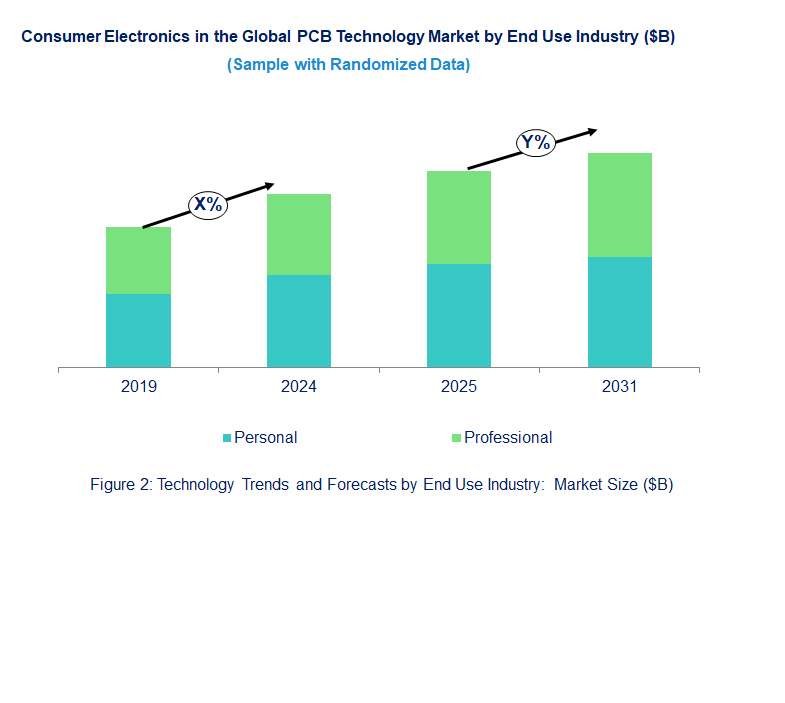
• Miniaturization and High Density Packaging (HDI) PCBs: The requirement for enhanced and more efficient consumer electronic devices is pushing the demand for HDI PCBs. These advanced circuit boards have smaller feature widths, fewer holes per layer, and a greater number of layers to enable smaller designs. High-Density Interconnect (HDI) PCBs enable the effective miniaturization of complex devices, including, but not limited to, smartphones, wearables, and Internet of Things (IoT) devices, without degrading performance, as more components can be integrated into a smaller size.
• Flexible and Rigid-Flex PCBs: The emergence of wearable electronics has led to a massive demand for flexible PCBs. These boards can fold and contour to the ergonomics of fitness bands, smartwatches, and medical devices. The combination of rigid and flexible features in a single Rigid-Flex PCB provides a variety of options, offering both strength and flexibility in one package. This development is helping manufacturers create more lightweight, compact, and functional designs.
• Environmental Sustainability and Green PCB Manufacturing: The pressure from consumers and regulators for green or environmentally friendly products is rising. Therefore, the PCB sector is relying on eco-friendly production methods. Trends such as eliminating lead from soldering, minimizing the use of toxic and hazardous substances, and managing energy during production are gaining more attention. These green practices not only help conserve the environment but, more importantly, are key in meeting global regulatory requirements.
• Deployment of 5G Technology and Other Connectivity Enhancements: As countries begin to adopt 5G networks, the world of consumer electronics has to evolve to meet the demand for faster data and better connectivity. This trend is accelerating the fabrication of PCBs for high-frequency applications and the embedding of 5G antennas and other communication elements. The trend towards integration and miniaturization of systems in the PCB industry also includes creating PCBs for increased signal frequencies and ensuring good signal quality, which necessitates advanced concepts in material science and design.
• Internet of Things (IoT) and Smart Devices: The growth of the IoT ecosystem is yet another fundamental trend affecting the expansion of the PCB market. The interconnection of an increasing number of devices requires the use of more advanced PCBs that offer greater data interflow, wireless communication, and reduced power dissipation capabilities. As smart home systems, wearables, and connected appliances grow, IoT smart devices require boards that are small, resilient, and capable of transmitting dense data at low power. These trends are enabling advancements in PCB technology, thus changing the consumer electronics industry landscape. More sophisticated, powerful, and greener devices are becoming possible as a result. From HDI and flexible PCBs that enable device miniaturization to 5G and IoT integration, which enhance connectivity, advancements in PCB manufacturing are crucial to addressing the rising demand for intelligent and smaller electronic devices. Due to the nature of technology, these trends will greatly assist the consumer electronics sector in remaining relevant in the competitive global arena.
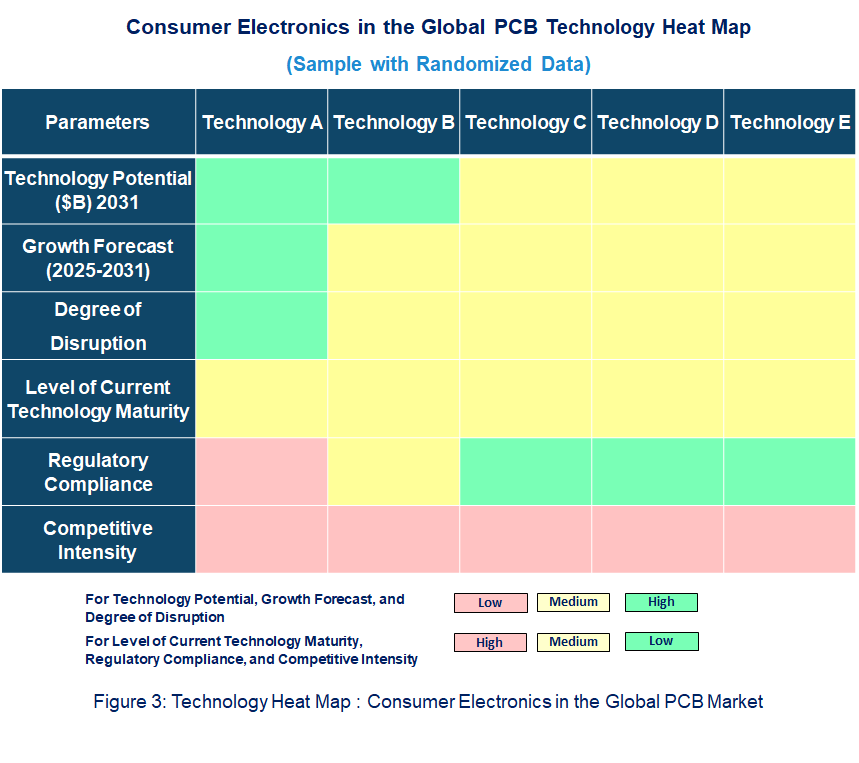
• Potential in Technology: The technology is moderately to highly mature, with innovations such as flexible PCBs, HDI (High-Density Interconnect) boards, and rigid-flex designs gaining commercial traction. These advances significantly disrupt traditional electronic design by enabling sleeker and more efficient products.
• Degree of Disruption: The degree of disruption is notable as PCB advancements directly influence device size, power efficiency, and functionality. For example, smartphones, tablets, and smartwatches rely on cutting-edge PCB designs to manage complex circuitry within limited spaces.
• Current Technology Maturity Level: Furthermore, integration of AI and edge computing into consumer electronics increases the need for high-speed and reliable PCB performance.
• Regulatory Compliance: Regulatory compliance is critical, particularly regarding RoHS (Restriction of Hazardous Substances), WEEE (Waste Electrical and Electronic Equipment), and REACH regulations in Europe, alongside global standards for product safety and environmental impact. Manufacturers must ensure the use of non-toxic materials and follow strict guidelines for waste disposal and recycling. Overall, PCB technology continues to evolve rapidly, fueling innovation across the global consumer electronics market.
• This twin strategy masterfully uses the idea of shifting the group’s core competency to target a different market segment with its high-performance seamless interconnection, smart R&D, and manufacturing. This simply means that to be competitive, Zhen Ding needs to address the market’s increasing demand for multilayer PCBs that deliver high quality at lower costs.
• NOK Corporation has made a huge impact on the manufacture of flexible and rigid-flex PCBs that improve wearable electronics devices requiring a high degree of flexibility and durability. With these improvements, NOK has been able to integrate flexible circuits into smaller, more ergonomic shapes for use in products like fitness and smartwatches, allowing NOK to compete favorably in the consumer electronics market.
• TTM Technologies has increased the number of HDI and multi-layer PCBs designed to work at high frequencies. This is crucial for devices that are 5G-enabled and for high-speed computing devices. Since TTM has focused on innovating signal integrity and data transmission, it is able to meet the growing demands of high-connectivity products, making it a major wholesaler for telecommunications and consumer electronic devices.
• Unimicron Technology has targeted the manufacture of PCBs that are environmentally friendly, owing to increasing environmental regulation. Its drive towards lead-free soldering and the use of hazardous materials is consistent with the trend of the need for greener electronics manufacturing processes. This transition towards greener processes will fulfill environmental regulations and meet the needs of environmentally conscious consumers, thereby consolidating Unimicron’s place in the market.
• Compeq Manufacturing expanded its influence in the consumer electronics industry by investing in advanced packaging technologies that allow embedding more components within a smaller footprint. This advancement is critical for Compeq in pursuing the ongoing trend of shrinking mobile phones, tablets, and other portable consumer electronics, as the market is moving towards smaller yet more powerful devices.
• Young Poong Electronics has been successful in enhancing the production of flexible and high-value-added PCBs for the automotive and consumer electronics markets. This has enabled the company to address the growing market for electric vehicles (EVs) and smart devices, where flexible circuits and high-value-added PCBs are needed for critical applications such as battery management systems and ADAS.
• New-generation PCBs enabling 5G communication and AI-enabled applications have been developed by Samsung Electro-Mechanics. Thanks to advancements in multi-layer HDI PCBs, Samsung has been a step ahead in the development of high-speed data transmission circuits for smartphones, wearables, and other interconnected devices. The company’s efforts in driving the demand for 5G-ready PCBs support the need for fast, compact, and efficient communication gadgets.
• Tripod Technology has shown great improvement in the production of high-frequency PCBs for 5G and wireless devices. Their emphasis on fabricating fast, low-dielectric-loss materials has enabled them to respond to the increasing demand for 5G devices requiring low latency. This, in turn, speeds up the deployment of 5G networks around the world.
• Ibiden, as one of the pioneers in the production of eco-friendly PCB technologies, has been at the forefront of packaging technologies for PCBs. Its goal is to make lead-free, recyclable PCBs fit the general trend of the industry, which seeks to be more sustainable. Ibiden continues to champion the development of PCBs for use in home electronics that address environmental challenges in the manufacturing industry while providing small components for modern products. Such developments correspond to the highly competitive global PCB market and show how major firms innovate, comply with regulations, or respond to changes in the dynamic electronic market. "These firms are moving in the right direction, targeting miniaturization, flexibility, and sustainability along with 5G. They are not only preparing for the future of electronics manufacturing but also positioning themselves advantageously in the international market."
• Miniaturization of Electronic Devices: The ongoing trend of creating sleek and lighter gadgets such as smartphones, wearables, and IoT devices is one of the main contributing factors to the expansion of the PCB market. The increased miniaturization of devices requires intricate PCB engineering, such as HDI and flexible PCBs, which enhance the scope of operation in small devices. This trend, therefore, creates growth opportunities for miniaturized high-end electronics.
• Advancements in 5G Technology: The introduction of fifth-generation technology or 5G has a global effect, requiring the use of PCBs that can withstand high frequencies and fast data transfer speeds. The expansion of 5G technology has prompted manufacturers to invest in tailored-made PCBs for 5G-related devices, increasing growth potential for the telecommunications and consumer electronics markets. More importantly, this technological shift is revolutionizing the market and driving the integration and innovation of new technologies in mobile and connected devices.
• Growth in the Need for Smart Gadgets: The growing number of connected devices like smart home devices, wearables, and appliances is increasing the demand for IoT devices. These devices need low-power, high-density PCBs that offer the best communication possibilities. Owing to the increasing adoption of IoT, the focus of PCB makers is shifting toward tailored offerings for this rapidly developing market, thus providing more revenue opportunities.
• Direction of the Industry Toward Sustainability: Manufacturers are being compelled to produce green, lead-free, and recyclable PCBs due to growing public responsibility and stricter environmental standards. These manufacturing methods focus on sustainability, meaning mass adoption by industry players will expand the market as more environmentally conscious consumers are targeted.
• Employment of Flexible & Rigid-Flex PCBs: Consumer electronics, including wearables, medical devices, and flexible displays, are driving the adoption of flexible and rigid-flex PCBs. Such technologies will improve durability and decrease size while improving performance to meet the demand for smaller and flexible electronic devices. The flexibility of PCBs will allow manufacturers room for creativity and innovation to design new products. Challenges:
• Rising Material and Production Costs: The higher cost of raw materials and a wide range of processes during PCB design and manufacturing are two major issues. There is a contradiction between maintaining certain quality standards and being profitable as the market for advanced PCBs grows. Companies are considering investing in robotic applications and new technologies to counter the increase in operational expenditure, but that is proving to be a challenge in itself.
• Technological Complexity and Innovation Pressure: Technological advancement occurs rapidly, and to remain relevant in the PCB sector, one must aggressively invest in research and development. As consumer gadgets evolve, manufacturers must adapt to new developments like 5G cellular technology, the Internet of Things, and artificial intelligence. Given this context, investments in technology and skilled workforce are heavy and challenging for many businesses.
• Stringent Regulatory Compliance: The PCB environment is heavily regulated concerning safety, environmental, and material (e.g., RoHS) compliance. Especially for lead-free and green products, this is difficult due to increased demand from customers that losses are internalized within the product. Adhering to such regulations while maintaining product quality and performance standards creates challenges in the international PCB market.
• Supply Chain Disruptions: Interruptions in supplies have become a recurrent issue, with the pandemic and ongoing geopolitical tensions threatening the supply chain, whether through raw material scarcity or logistical problems. PCB manufacturers, reliant on global supply chains for components and materials, are already experiencing delays and increased costs that adversely affect their capacity to meet market demand efficiently and competitively.
• Price Competition and Rivalry: Many competitors operate in the same market, leading to competition and price pressure. As a result, manufacturers find their margins lower and are forced to compete through cost or innovation to outsmart others. Smaller companies, for example, struggle to compete against larger, established players. The consumer electronics segment in the global PCB market is set to grow tremendously due to several factors, including technological advancements such as 5G, IoT, flexible PCBs, and miniaturization, as well as the shift toward sustainability. However, challenges such as increasing production costs, increasing technological complexity, regulatory compliance, supply chain issues, and high competition act as hurdles to the market’s growth potential. To be successful, companies need more investment in new technologies, process improvements in production, and environmentally and regulatory-compliant manufacturing processes, while also understanding the dynamics of the consumer electronics markets. These opportunities and challenges are reshaping the PCB segment, bringing new growth opportunities while also requiring changes to remain relevant.
• Zhen Ding Technology Holding
• NOK Corporation
• TTM Technologies
• Unimicron Technology
• Compeq Manufacturing
• Young Poong Electronics
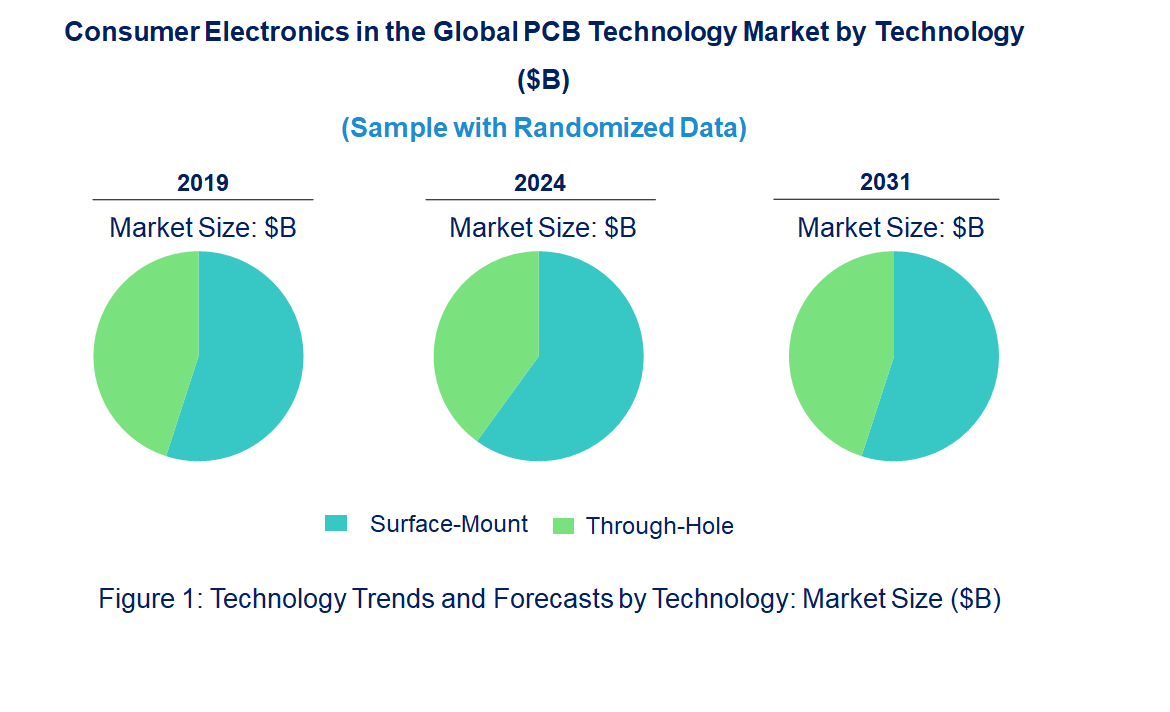
• Technology Readiness by Technology Type: Surface-Mount Technology (SMT) is highly mature and dominant in consumer electronics due to its compact size, automated assembly, and high-density circuit integration. It enables sleek, lightweight devices such as smartphones, tablets, and wearables. Through-Hole Technology is less used in modern consumer electronics but remains relevant for components requiring mechanical strength, like connectors and large capacitors. SMT faces intense competition among PCB fabricators offering multi-layer and HDI designs. Through-hole sees lower competition, mostly confined to specific use cases. SMT complies with global standards like RoHS and IPC guidelines for miniaturization and eco-safety. Through-hole also adheres to safety and environmental standards but faces fewer updates. SMT is favored in fast-moving, high-volume products. Through-hole is mainly applied in legacy devices or robust consumer products. Overall, SMT is market-ready and future-focused, while through-hole remains niche yet necessary in specific segments.
• Competitive Intensity and Regulatory Compliance: Surface-Mount Technology experiences high competitive intensity due to its widespread adoption in modern consumer electronics and continuous innovation in miniaturization and automation. Multiple global players compete on production speed, component density, and integration with advanced design software. Through-Hole Technology has moderate to low competitive intensity, mostly limited to specialized or rugged applications where mechanical strength is essential. Regulatory compliance is crucial for both technologies, with RoHS, REACH, and IPC standards governing material safety, environmental impact, and design reliability. SMT players must also comply with stringent quality and traceability requirements due to high production volumes and consumer safety considerations. Though less dynamic, through-hole manufacturers are still bound by compliance norms, especially when components are used in safety-critical or export-bound consumer products.
• Disruption Potential by Technology Type: Surface-Mount Technology holds strong disruptive potential in the consumer electronics PCB market by enabling ultra-compact, high-performance devices that align with the growing demand for portability, connectivity, and smart functionality. Its compatibility with automated manufacturing processes and multi-layer PCBs accelerates product development and reduces costs, pushing traditional design boundaries. Through-Hole Technology, while less disruptive in current mainstream electronics, remains relevant in niches requiring durability, like certain gaming consoles and audio equipment. However, it lacks the adaptability and space efficiency needed for modern miniaturized devices. As wearable tech, AR/VR, and IoT applications surge, SMT’s flexibility and performance will continue to disrupt conventional manufacturing, whereas through-hole’s disruption remains limited to structural use cases.
• Surface-Mount
• Through-Hole
• Personal
• Professional
• North America
• Europe
• Asia Pacific
• The Rest of the World
• Latest Developments and Innovations in the Consumer Electronics in the Global PCB Technologies
• Companies / Ecosystems
• Strategic Opportunities by Technology Type


Choose a license that fits your team. Instant PDF delivery.
Prices exclude taxes. Instant delivery. Custom licensing available on request.
Market Report · May 18, 2026
Market Report · May 18, 2026
Market Report · May 18, 2026
Trusted partner for strategic intelligence and business growth


Receive a complimentary market analysis tailored to your industry. Our analysts will identify key growth opportunities and competitive dynamics specific to your business.

Market size, growth rate, and key trend analysis for your specific sector.

Top competitor positioning and market share analysis.

Strategic recommendations backed by data-driven insights.
Get curated market intelligence and competitive moves straight to your inbox.
By subscribing, you agree to receive our monthly insights. Unsubscribe anytime.
Receive a complimentary market analysis tailored to your industry. Our analysts will identify key growth opportunities and competitive dynamics specific to your business.
Market size, growth rate, and key trend analysis for your specific sector.
Top competitor positioning and market share analysis.
Strategic recommendations backed by data-driven insights.
Get curated market intelligence, emerging trends, and competitive moves straight to your inbox each month.
By subscribing, you agree to receive our monthly insights. Unsubscribe anytime.
We'll send your sample report shortly.