
Market Report · July 20, 2026

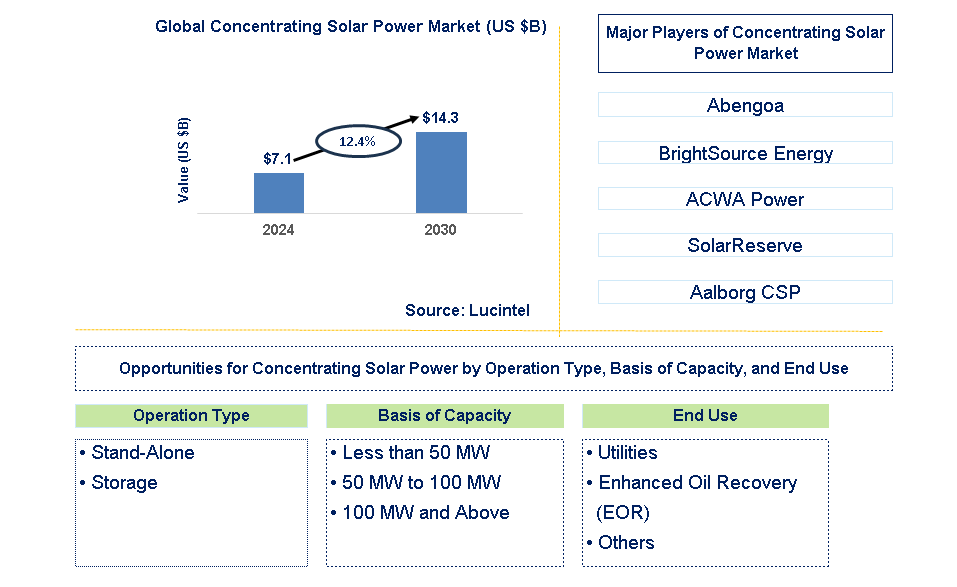
Key data points: The market size in 2030 = $14.3 billion, growth forecast = 12.4% annually for the next 6 years. Scroll below to get more insights. This market report covers trends, opportunities, and forecasts in the global concentrating solar power market to 2030 by operation type (stand-alone and storage), basis of capacity (less than 50 mw, 50 mw to 100 mw, and 100 mw and above), end use (utilities, enhanced oil recovery (EOR), and others), and region (North America, Europe, Asia Pacific, and the Rest of the World)
We'll send your sample report shortly.
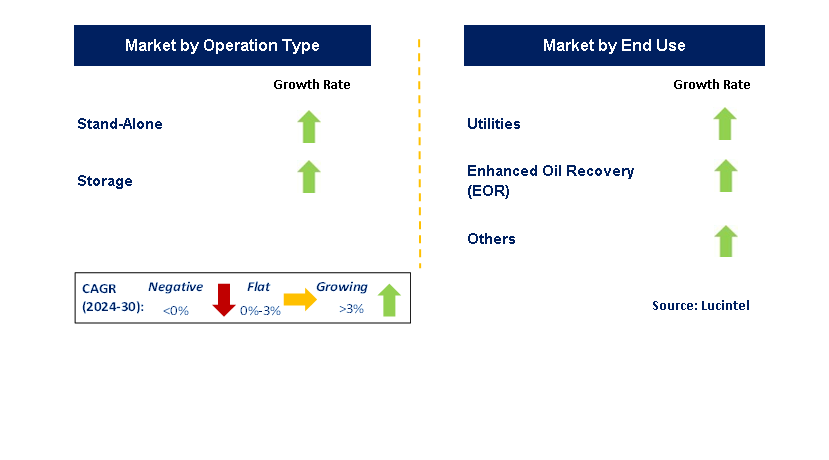
• Lucintel forecasts that, within the operation type category, the storage segment is expected to witness higher growth over the forecast period due to its growing requirement for continuous power generation through night and capacity to run the plant for an extended period of time.
• In terms of regions, PAC is expected to witness the highest growth over the forecast period. Gain valuable insights for your business decisions with our 150+ page report.
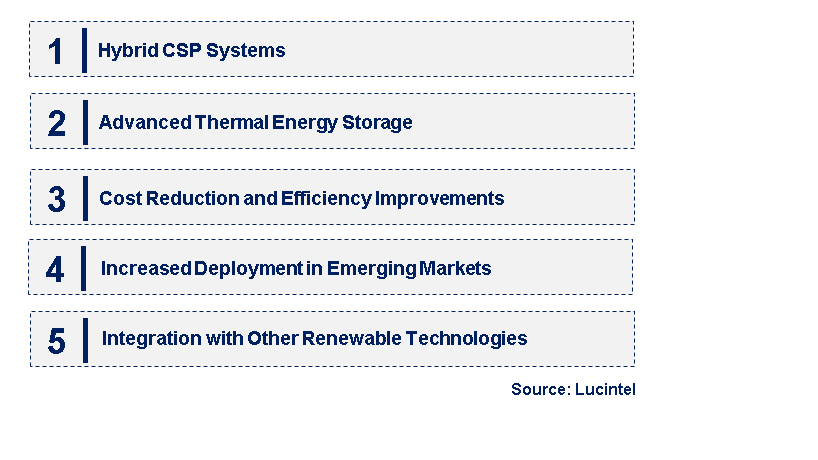
• Hybrid CSP Systems: Hybrid CSP systems, combining solar thermal with other energy sources like biomass or natural gas, are gaining traction. These systems address CSP’s intermittency issues by providing a continuous energy supply, improving reliability and efficiency. This integration helps stabilize energy output and support grid management.
• Advanced Thermal Energy Storage: Advances in thermal energy storage technologies, such as molten salt and phase-change materials, are enhancing CSP systems. Improved storage capabilities allow CSP plants to generate electricity even when sunlight is unavailable, increasing operational flexibility and providing a more stable power supply.
• Cost Reduction and Efficiency Improvements: Ongoing research and development are focused on reducing CSP costs and improving system efficiency. Innovations in materials, design, and manufacturing processes are driving down costs, making CSP more competitive with other energy sources and expanding its market potential.
• Increased Deployment in Emerging Markets: Emerging markets, particularly in regions with high solar irradiance, are seeing increased CSP deployment. Countries like India and China are investing heavily in CSP technology to meet their growing energy needs and renewable energy targets, fostering global market expansion.
• Integration with Other Renewable Technologies: Integration of CSP with other renewable technologies, such as photovoltaic (PV) systems or wind power, is becoming more common. This approach enhances overall energy system performance, improves reliability, and maximizes renewable resource utilization. Emerging trends such as hybrid CSP systems, advanced thermal energy storage, cost reduction, increased deployment in emerging markets, and integration with other renewable technologies are reshaping the CSP market. These trends are improving efficiency, expanding market reach, and enhancing the reliability and sustainability of CSP systems.
• Hybrid CSP Systems: The development of hybrid CSP systems, combining solar thermal with biomass or natural gas, addresses the challenge of energy intermittency. These systems provide a continuous and reliable power supply by integrating multiple energy sources, improving the overall efficiency and stability of CSP plants.
• Advancements in Thermal Energy Storage: Significant advancements in thermal energy storage technologies, including molten salt and advanced heat transfer fluids, are enhancing CSP capabilities. These improvements allow CSP plants to store and dispatch energy even during non-sunlight hours, increasing operational flexibility and reliability.
• Cost Reduction through Technological Innovation: Technological innovations are driving down CSP costs. Advances in materials, design, and manufacturing processes are reducing the capital and operational costs of CSP systems, making CSP more competitive with other renewable energy sources and broadening its market appeal.
• Expansion into Emerging Markets: The CSP market is expanding into emerging markets, particularly in regions with high solar irradiance. Countries like India and China are investing heavily in CSP projects to meet their renewable energy goals and address energy demand, contributing to global market growth.
• Integration with Other Renewable Energy Sources: Integrating CSP with other renewable energy sources, such as photovoltaic (PV) systems or wind power, is becoming a trend. This integration enhances overall system performance, provides a more stable energy supply, and maximizes the use of available renewable resources. Recent developments, including hybrid CSP systems, advancements in thermal energy storage, cost reduction, market expansion into emerging regions, and integration with other renewable sources, are impacting the CSP market. These developments are driving growth, improving efficiency, and increasing the viability of CSP technology.
• Deployment in High Irradiance Regions: Deploying CSP systems in regions with high solar irradiance offers significant growth opportunities. Countries with abundant sunlight, such as those in the Middle East and North Africa, present ideal conditions for CSP projects, driving market expansion and increasing global CSP capacity.
• Development of Hybrid CSP Plants: The development of hybrid CSP plants that combine solar thermal with other energy sources, such as natural gas or biomass, provides opportunities for market growth. These hybrid systems enhance energy reliability and efficiency, making CSP more versatile and appealing for a broader range of applications.
• Advancements in Thermal Storage Solutions: Investing in advanced thermal storage solutions, such as molten salt and phase-change materials, presents growth opportunities. Improved storage technologies enhance the flexibility and reliability of CSP systems, allowing for more consistent energy production and increased market competitiveness.
• Expansion into Emerging Economies: Expanding CSP projects into emerging economies, particularly in regions with growing energy needs and renewable energy targets, offers significant opportunities. Countries like India and China are investing heavily in CSP, providing a substantial market for new projects and technologies.
• Integration with Smart Grid Technologies: Integrating CSP with smart grid technologies can enhance grid stability and efficiency. Advanced grid management and energy storage solutions help optimize CSP energy distribution, address intermittency issues, and improve overall energy system performance. Strategic growth opportunities in the CSP market include deployment in high irradiance regions, development of hybrid plants, advancements in thermal storage, expansion into emerging economies, and integration with smart grid technologies. These opportunities are driving market growth, enhancing CSP technology, and expanding its global reach.
• Technological Advancements: Technological advancements in CSP systems, such as improved thermal storage and hybrid technologies, drive market growth. Innovations enhance system efficiency, reduce costs, and increase the competitiveness of CSP compared to other energy sources.
• Government Policies and Incentives: Supportive government policies and incentives, including subsidies and tax credits, play a crucial role in driving CSP adoption. These policies reduce financial barriers, encourage investment, and promote the development of new CSP projects.
• Increasing Energy Demand: Growing global energy demand, particularly in regions with high solar irradiance, drives the need for renewable energy solutions like CSP. CSP offers a reliable and scalable option for meeting increasing energy needs and reducing dependence on fossil fuels.
• Cost Reduction Strategies: Efforts to reduce CSP costs through technological innovation and economies of scale contribute to market growth. Lower costs make CSP more competitive with other energy sources, attracting investment and expanding market opportunities.
• Environmental and Climate Goals: Global environmental and climate goals, such as reducing greenhouse gas emissions, drive the adoption of renewable energy technologies like CSP. CSP contributes to these goals by providing a clean and sustainable energy source. Challenges in the concentrating solar power market are:
• High Initial Investment Costs: High initial investment costs for CSP projects can be a significant barrier. The capital required for construction and technology development can limit market entry and slow the pace of CSP adoption.
• Intermittency and Energy Storage: The intermittency of solar energy and the need for effective energy storage solutions pose challenges for CSP. Addressing these issues is essential for ensuring reliable and consistent energy production.
• Regulatory and Policy Uncertainty: Regulatory and policy uncertainty can impact the CSP market by creating challenges for project planning and investment. Inconsistent policies and changes in regulations can affect market stability and investor confidence. Major drivers of the CSP market include technological advancements, supportive government policies, increasing energy demand, cost reduction strategies, and environmental goals. Key challenges include high initial investment costs, intermittency issues, and regulatory uncertainty. Addressing these drivers and challenges is crucial for market growth and the successful adoption of CSP technologies.
• Abengoa
• BrightSource Energy
• ACWA Power
• SolarReserve
• Aalborg CSP
• General Electric
• Heliogen
• Torresol Energy
• Solastor
• Enel Green Power
• Stand-Alone
• Storage
• Less than 50 MW
• 50 MW to 100 MW
• 100 MW and Above
• Utilities
• Enhanced Oil Recovery (EOR)
• Others
• North America
• Europe
• Asia Pacific
• The Rest of the World
• United States: In the U.S., significant progress has been made in CSP technology with the deployment of new projects and advancements in thermal energy storage. The completion of large-scale CSP plants, such as the Crescent Dunes Solar Energy Project, highlights the country's commitment to expanding its CSP capacity. Additionally, federal and state incentives continue to drive investment and innovation in the sector.
• China: China has emerged as a major player in the CSP market with ambitious expansion plans. The country has increased its CSP capacity through projects like the Delingha Solar Thermal Power Station. The Chinese government’s supportive policies and investments in research and development are fostering rapid growth, positioning China as a global leader in CSP technology.
• Germany: Germany has focused on integrating CSP with other renewable energy sources to enhance grid stability and efficiency. Recent developments include the implementation of hybrid CSP systems that combine solar thermal with biomass or natural gas. These innovations aim to address the intermittency issues associated with CSP and improve overall energy reliability.
• India: India has been actively expanding its CSP capabilities with several new projects and increased funding. The country’s commitment to renewable energy is evident in its ambitious targets for solar power, including CSP. Recent advancements include the development of hybrid CSP plants and significant investments in large-scale solar thermal projects to meet growing energy demands.
• Japan: Japan has made strides in CSP technology with the development of advanced thermal storage systems and high-efficiency CSP plants. The Japanese government’s focus on reducing greenhouse gas emissions and increasing renewable energy share is driving the adoption of CSP. Recent projects emphasize the integration of CSP with other renewable technologies to enhance energy sustainability.


• Abengoa
• BrightSource Energy
• ACWA Power
• SolarReserve
• Aalborg CSP
• General Electric
• Heliogen
• Torresol Energy
• Solastor
• Enel Green Power Q6. Which concentrating solar power market segment will be the largest in future? Answer: Lucintel forecasts that storage segment is expected to witness higher growth over the forecast period due to its growing requirement for continuous power generation through night and capacity to run the plant for an extended period of time. Q7. In concentrating solar power market, which region is expected to be the largest in next 5 years? Answer: APAC is expected to witness highest growth over the forecast period. Q.8 Do we receive customization in this report? Answer: Yes, Lucintel provides 10% customization without any additional cost.


Choose a license that fits your team. Instant PDF delivery.
Prices exclude taxes. Instant delivery. Custom licensing available on request.
Market Report · July 20, 2026
Market Report · July 20, 2026
Market Report · July 20, 2026
Trusted partner for strategic intelligence and business growth


Receive a complimentary market analysis tailored to your industry. Our analysts will identify key growth opportunities and competitive dynamics specific to your business.

Market size, growth rate, and key trend analysis for your specific sector.

Top competitor positioning and market share analysis.

Strategic recommendations backed by data-driven insights.
Get curated market intelligence and competitive moves straight to your inbox.
By subscribing, you agree to receive our monthly insights. Unsubscribe anytime.
Receive a complimentary market analysis tailored to your industry. Our analysts will identify key growth opportunities and competitive dynamics specific to your business.
Market size, growth rate, and key trend analysis for your specific sector.
Top competitor positioning and market share analysis.
Strategic recommendations backed by data-driven insights.
Get curated market intelligence, emerging trends, and competitive moves straight to your inbox each month.
By subscribing, you agree to receive our monthly insights. Unsubscribe anytime.
We'll send your sample report shortly.