
Market Report · May 18, 2026

This market report covers trends, opportunities, and forecasts in the global computer peripherals pcb market to 2031 by connectivity technology (wired and wireless), end use industry (residential and commercial), and region (North America, Europe, Asia Pacific, and the Rest of the World)
We'll send your sample report shortly.
![Computer Peripherals PCB Market Trend and Forecast by End Use Industry [Value from 2019 to 2031]:](https://lucintel.com/images/Computer-Peripherals-PCB-Technology-Market-Segment.png "Computer Peripherals PCB Market Trend and Forecast by End Use Industry [Value from 2019 to 2031]:")
• Shift to Multi-Layer and Flexible PCBs: One of the key trends is the shift from traditional single-layer and double-layer PCBs to multi-layer and flexible PCBs. This shift enables more compact, higher-density designs with better functionality. Multi-layer PCBs support complex circuitry, while flexible PCBs make it possible for devices to be more adaptable, allowing for the development of thinner, lighter, and more durable peripherals.
• Adoption of HDI (High-Density Interconnect) PCBs: HDI PCBs are increasingly in demand because they can support smaller components and more advanced performance. More densely packed traces and vias in HDI technology allow for faster signal transmission and better thermal management capabilities required by high-speed computing peripherals, such as advanced gaming mice and VR controllers.
• Advanced Materials Integration: Advanced materials, such as high-frequency laminates and copper-filled vias, are improving the performance of computer peripherals. These materials offer superior signal integrity with less energy loss and improved durability. This trend supports data transmission at higher speeds and more efficient thermal management, which are critical for high-performance applications.
• Miniaturization and Compact Design: The need for smaller and more compact PCBs is driven by the trend toward portable devices and wearables. This has led to innovations in PCB design that optimize space without compromising functionality. Miniaturized PCBs enable the creation of smaller devices that can still support complex functionalities, such as smart keyboards and compact storage drives.
• Improved Connectivity Features Increasingly, Wi-Fi and Bluetooth modules are being directly integrated onto printed circuit boards. This trend supports smart peripherals that require seamless connectivity and integration within the device. Embedded connectivity is integral to the development of IoT-enabled computer peripherals and wearables that need consistent and reliable communication. These trends are reshaping the landscape by allowing devices to be faster, more efficient, and more agile. The adoption of multi-layer and flexible designs, integration of advanced materials, and enhanced connectivity features are among the key advances driving next-generation peripheral development that supports emerging user demands and technological advancements.
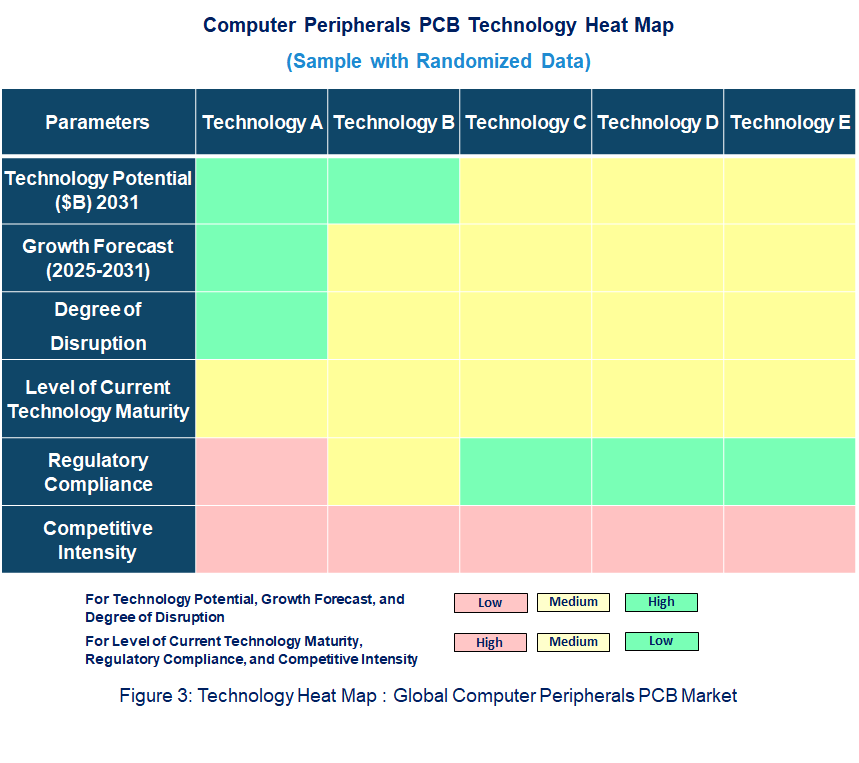
• Potential in Technology: PCB technology is rich with tremendous potential for making electronic devices more compact, efficient, and high-performance. Multilayer PCBs, flexible PCBs, and the integration of HDI technology are some of the fields that have shown robust capacity for supporting next-generation computing demands. These include faster signal transmission, improvements in thermal management, and support for smaller, lighter, and more complex electronic devices.
• Degree of Disruption: The degree of disruption introduced by these technologies is significant, as they offer the potential for more complex and efficient circuit designs, leading to devices that are smaller and more versatile without sacrificing performance. Advanced materials such as high-frequency laminates and copper-filled vias further enhance this potential by providing superior signal integrity and durability.
• Current Technology Maturity Level: The maturity of current technology has advanced to the extent that manufacturing capabilities and consistent technological improvements are maintained, enabling pervasive use in modern computing peripherals, including smart devices, gaming equipment, and IoT gadgets.
• Regulatory Compliance: Regulatory compliance in the Computer Peripherals PCB sector primarily focuses on environmental standards, especially the Restriction of Hazardous Substances (RoHS) directive, which ensures minimal environmental impact and safety in the manufacture of electronics. Regulatory compliance is ensured so that technological innovations do not degrade environmental safety or user health.
• Zhen Ding Technology Holding: Zhen Ding Technology Holding has strengthened its multilayer and flexible PCB manufacturing capabilities. This meets the demand for thinner and lighter electronic devices with high performance. The adoption of HDI and advanced material technologies has secured its position as a leader in complex, dense circuit design for next-generation peripherals.
• NOK Corporation: NOK Corporation has improved the integration of advanced materials in its PCBs, including high-frequency laminates and copper-filled vias. This has resulted in better signal integrity and enhanced thermal management. The company emphasizes these materials to ensure that its PCBs can handle faster data transmission rates and high performance for high-speed computing peripherals.
• TTM Technologies: TTM Technologies has advanced its capabilities in producing HDI PCBs, which are now in high demand due to their ability to support more complex and smaller component designs. This innovation allows the creation of high-performance computing peripherals, including VR controllers and gaming devices, with faster signal transmission and better thermal performance.
• Unimicron Technology: Unimicron Technology has maintained an emphasis on increasing multilayer PCB solutions, which enhances the circuit density and functionality of devices. More compact designs have enabled peripherals to support advanced features without significantly increasing size, driving the development of slimmer, more efficient electronic designs.
• Compeq Manufacturing: Compeq Manufacturing has been at the forefront of developing flexible PCBs that are adaptable for various high-performance peripheral applications. These flexible circuits support the production of lightweight and highly durable peripherals, such as foldable and portable smart devices, meeting the market’s growing demand for adaptable technology and space efficiency.
• Young Poong Electronics: Young Poong Electronics has utilized its expertise to integrate flexible and rigid-flex PCB solutions into its portfolio. This has helped the company design more complex and flexible devices with high-density performance, providing compact and ruggedized circuit boards for a wide range of applications, especially in wearables and mobile devices.
• Samsung Electro-Mechanics: Samsung Electro-Mechanics has led the charge in the miniaturization of PCBs through multilayer and advanced HDI technologies. The innovations achieved have translated to increased device performance while maintaining a small footprint, which is critical for smart devices, wearables, and IoT peripherals that require efficient data handling and power management.
• Tripod Technology: The PCB production of tripod technology emphasizes better efficiency by enhancing signal transmission and thermal management through the use of advanced materials and multilayer designs. These actions enhance high-speed and high-performance peripherals that meet the demands of modern computing and connectivity.
• Ibiden: Ibiden has made significant strides in the development of next-generation PCBs by employing high-frequency materials and integrating copper-filled vias. These advancements ensure improved signal transfer and support advanced functionalities for electronic peripherals. The focus on high-performance materials has positioned the company to meet the growing needs for high-speed data transfer and device durability. Advances in computer peripherals and PCB technology by these major players are pushing the boundaries of performance, connectivity, and compact design. Advancements in multilayer and flexible PCBs, the integration of HDI technology, and the use of advanced materials have helped create faster, more efficient, and more versatile devices that meet the requirements of modern computing.
• Advancements in Multi-Layer and Flexible PCBs: Multi-layer and flexible PCBs are driving innovation in electronic device design. These technologies allow for smaller, lighter, and higher-performance peripherals. Portable and wearable devices, such as smart gadgets and gaming equipment, benefit from this trend with improved functionality without significant size increases.
• High-Density Interconnect (HDI) Technology Integration: HDI PCBs enable more complex circuit designs by incorporating a greater number of interconnections in a smaller space, facilitating faster signal transmission and better heat dissipation. This feature is crucial for high-performance computing peripherals, including VR headsets and gaming devices, meeting the market’s demand for speed and efficiency. Advanced materials are incorporated within the use of HDI, such as high-frequency laminates and copper-filled vias, to support signal integrity and durability while reducing energy loss. These materials support higher data transmission speeds and efficient thermal management, which is essential for developing high-performance peripherals like smart electronics and high-speed input/output devices.
• Miniaturization and Compact Designs: The ongoing trend toward miniaturized PCBs meets consumer demand for smaller, more portable devices without compromising performance. This has led to innovations that optimize space utilization, supporting high functionality in compact devices like smart keyboards and wearables. The push for miniaturization drives manufacturers to create more advanced and efficient designs.
• Embedded Connectivity Features: Connectivity features, such as Wi-Fi and Bluetooth, are directly integrated into PCBs to support the growth of smart and IoT-enabled peripherals. This development promotes the growth of connected devices, making them more seamless and user-friendly. It ensures reliable communication with wearable technology, smart home devices, and other connected peripherals. Challenges
• Miniaturization Pressure: Shrinking device sizes demand denser PCB layouts, increasing design complexity and risk of signal interference.
• Thermal Management: Higher component density leads to heat buildup, challenging efficient thermal dissipation and long-term reliability. The major drivers and opportunities in the computer peripherals PCB technology market are centered around the demand for advanced, smaller designs that support faster data processing and efficient connectivity. These trends are reshaping the market, leading to more sophisticated and versatile electronic devices that meet the evolving requirements of consumers and businesses.
• Zhen Ding Technology Holding
• Nok Corporation
• TTM Technologies
• Unimicron Technology
• Compeq Manufacturing
• Young Poong Electronics
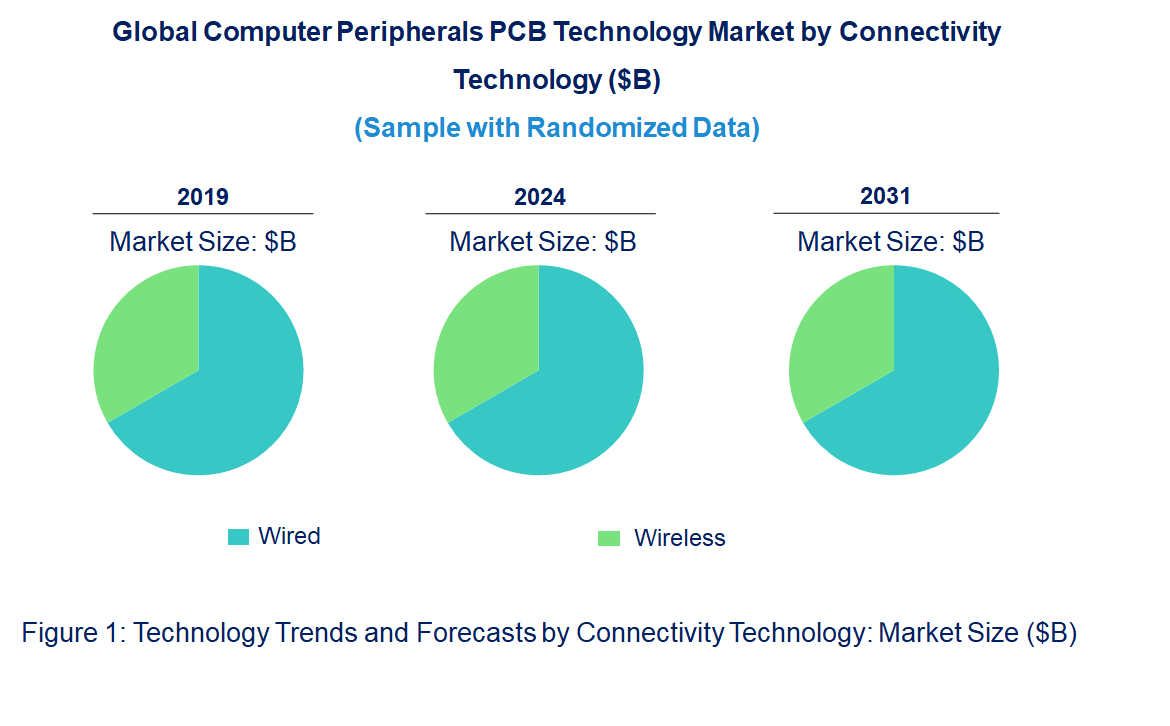
• Technology Readiness: Wired technology is already mature, with established standards and applications such as Ethernet and USB for reliable, high-speed computing and data transfer. They are preferred in applications with low latency and high stability, such as data centers, gaming setups, and professional workstations. In contrast, wireless technology is advanced, particularly the 5G and Wi-Fi 6 levels. It is suited to consumer electronics, wearables, smart home products, and IoT applications. Such devices appreciate mobility and ease of access. Wireless technology enables flexibility and scalability in terms of the connections for devices. Wired solutions can serve high-bandwidth, high-speed applications. One of the critical areas where both seamless data transfer and mobility will be needed is in emerging fields like augmented reality and virtual reality.
• Competitive Intensity and Regulatory Compliance: With a growing demand for technology-based, high-performance devices and the advancement of technologies at such speeds that companies keep increasing their investment, it results in competitive intensity both in the wired as well as wireless technology segments. Here, in this competition, the focus will remain upon the bandwidth with higher capabilities, range for signal, and higher security features; with a wired technology where its competency shall lie in terms of higher speeds, reliability, and integrity of data. Regulatory compliance for wired technologies usually focuses on electrical safety and interference standards, ensuring that the device operates within legal limits. Wireless technologies usually comply with spectrum allocation rules and electromagnetic compatibility to avoid interference. Both sectors need to focus on environmental and health safety regulations, including reducing hazardous substances in electronic manufacturing. Regulatory frameworks are necessary to ensure safety and standardize product performance, promoting healthy competition in the market.
• Disruption Potential: The highest disruption potential comes in the field of computer peripherals and electronics through wired and wireless technology. Wired technology is stable; it provides high-speed connections that become the base for reliable data transfer and power supply. This, however, is the very same space that’s rapidly being disrupted by the convenience of connectivity without physical constraints by wireless technology. New standards in wireless, such as Wi-Fi 6 and Bluetooth 5.2, are helping boost data transfer speed while increasing performance. This paves the way for more smart devices, wearables, and IoT systems. The versatility and growing infrastructure of the wireless network make it one of the critical components that will help shape the future of connected ecosystems. However, wired technology remains important in areas where high-speed, low-latency connections are needed, such as data centers and gaming peripherals. In summary, the integration of both wired and wireless technologies forms a more integrated and diversified tech landscape.
• Wired
• wireless
• Residential
• Commercial
• North America
• Europe
• Asia Pacific
• The Rest of the World
• Latest Developments and Innovations in the Computer Peripherals PCB Technologies
• Companies / Ecosystems
• Strategic Opportunities by Technology Type


Choose a license that fits your team. Instant PDF delivery.
Prices exclude taxes. Instant delivery. Custom licensing available on request.
Market Report · May 18, 2026
Market Report · May 18, 2026
Market Report · May 18, 2026
Trusted partner for strategic intelligence and business growth


Receive a complimentary market analysis tailored to your industry. Our analysts will identify key growth opportunities and competitive dynamics specific to your business.

Market size, growth rate, and key trend analysis for your specific sector.

Top competitor positioning and market share analysis.

Strategic recommendations backed by data-driven insights.
Get curated market intelligence and competitive moves straight to your inbox.
By subscribing, you agree to receive our monthly insights. Unsubscribe anytime.
Receive a complimentary market analysis tailored to your industry. Our analysts will identify key growth opportunities and competitive dynamics specific to your business.
Market size, growth rate, and key trend analysis for your specific sector.
Top competitor positioning and market share analysis.
Strategic recommendations backed by data-driven insights.
Get curated market intelligence, emerging trends, and competitive moves straight to your inbox each month.
By subscribing, you agree to receive our monthly insights. Unsubscribe anytime.
We'll send your sample report shortly.