
Market Report · July 24, 2026

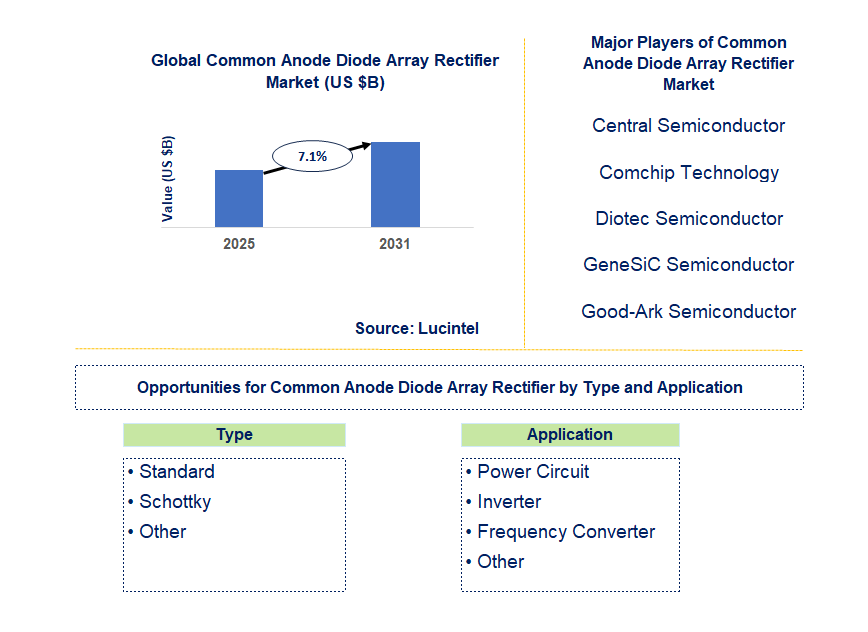
Key data points: The growth forecast = 7.1% annually for the next 7 years. Scroll below to get more insights. This market report covers Trends, opportunity and forecast in common anode diode array rectifier market to 2031 by type (standard, schottky, and other), application (power circuit, inverter, frequency converter, and other), and region (North America, Europe, Asia Pacific, and the Rest of the World)
We'll send your sample report shortly.
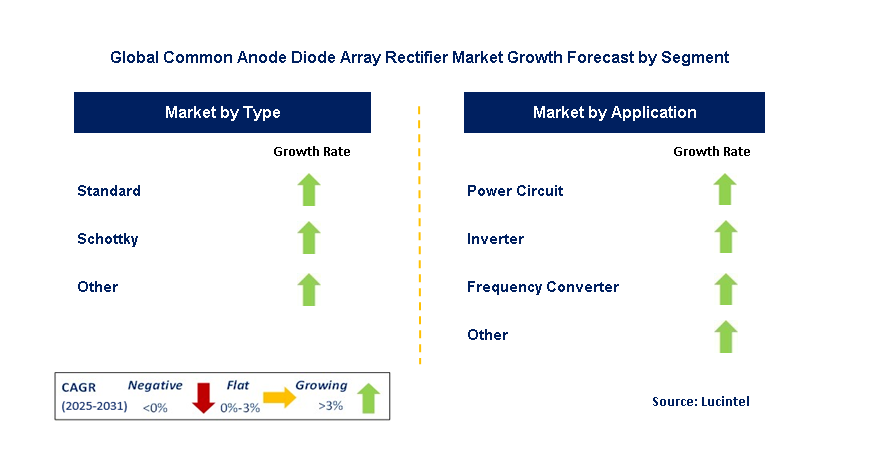
• Lucintel forecasts that, within the type category, standard diodes is expected to witness higher growth over the forecast period due to their wide use in general-purpose applications like power supplies and signal processing..
• Within the application category, power circuit is expected to witness the highest growth due to essential role in a wide range of applications across industrial, electrical, and consumer electronics sectors..
• In terms of region, APAC is expected to witness the highest growth over the forecast period due to its dominance in electronics manufacturing and growing demand for power supply systems and renewable energy applications.. Gain valuable insights for your business decisions with our comprehensive 150+ page report. Sample figures with some insights are shown below.
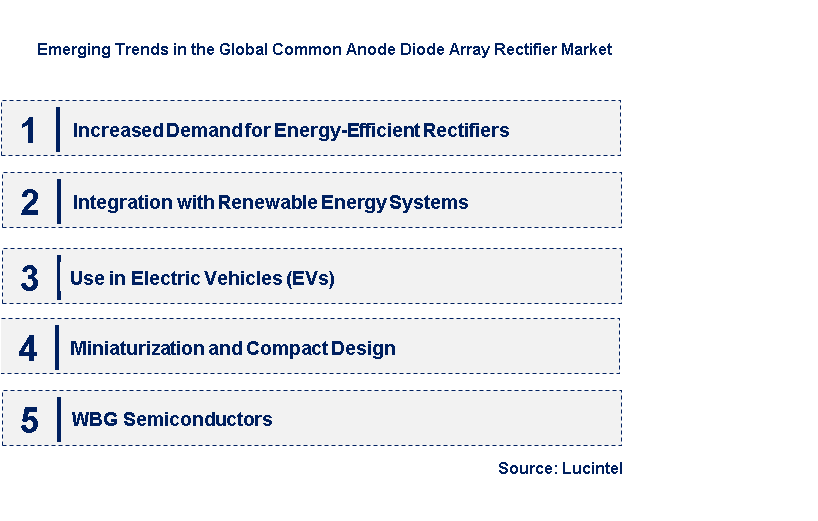
• Increased Demand for Energy-Efficient Rectifiers: As industries increasingly focus on sustainability and energy efficiency, the demand for energy-efficient Common Anode Array Rectifiers is rising. These rectifiers reduce power loss and improve system performance, which is crucial in applications like electric vehicles, renewable energy, and industrial automation. This demand is further fueled by the growing push to reduce carbon footprints and improve energy savings. This has, in turn, led to further investments in research and development aimed at improving rectifier designs and materials to make them more efficient.
• Integration with Renewable Energy Systems: The increasing adoption of renewable energy sources, such as solar and wind power, creates a significant demand for efficient power conversion technologies, including Common Anode Array Rectifiers. These rectifiers are important in the conversion of the DC power generated to usable AC power for integration into the grid. As the world continues to look for ways to reduce its reliance on fossil fuels, rectifiers are increasingly being used in renewable energy systems to enhance efficiency and optimize energy flow. This trend is likely to continue as countries invest more in green energy solutions.
• Use in Electric Vehicles (EVs): Electric vehicles (EVs) are driving significant demand for efficient Common Anode Array Rectifiers, as these components are essential for power conversion in EV charging systems. Rectifiers are used to convert AC power from the grid to DC power, which is stored in the vehicle’s battery. The growing EV market, especially in the U.S., China, and Europe, is forcing manufacturers to design rectifiers that can be more powerful, efficient, and reliable, as this is what the performance of an EV depends on.
• Miniaturization and Compact Design: Miniaturization and compact design are changing the common anode array rectifier market. Due to an increasingly pressing need in most industries to miniaturize and optimize electronics, the miniaturization of rectifiers for occupying minimal space but performing identically or even better than the full-sized rectifier has been under emphasis. For consumers in the sectors of consumer electronics, automotive, and industrial automation, the pressure has always been about available space and this calls for a design based on newness and superior material quality without necessarily affecting reliability or efficiency.
• WBG Semiconductors: Wide bandgap semiconductors, including silicon carbide (SiC) and gallium nitride (GaN), are changing the common anode array rectifier market. These materials allow for rectifiers that can operate at higher temperatures, voltages, and frequencies, making them ideal for high-performance applications in automotive, aerospace, and renewable energy. The growing interest in WBG semiconductors has driven the development of more efficient and robust rectifiers in the industries. Such developments would support the trend towards higher power conversion efficiency and better reliability. Emerging trends such as demand for energy-efficient rectifiers, integration with renewable energy systems, adoption in electric vehicles, miniaturization, and wide bandgap semiconductors are changing the game for the common anode array rectifier market around the world. Such emerging trends will encourage innovation and lead to new opportunities for growth in meeting the needs of industries that seek efficiency, sustainability, and high-performance power conversion.
• Advances in Material Technology: The development of new materials, such as silicon carbide (SiC) and gallium nitride (GaN), has significantly improved the performance of Common Anode Array Rectifiers. These materials allow rectifiers to handle higher temperatures and voltages while improving overall efficiency. The investment by manufacturers in these advanced materials is to produce rectifiers that will meet the requirements of high-power applications such as electric vehicles, renewable energy, and industrial systems, where high efficiency and reliability are of paramount importance.
• Rectifier Miniaturization for Consumer Applications: Electronic shrinkage continues while the need to reduce power-conversion components within consumer electronics persists. Common anode array miniaturization assists in placing larger current rectifiers that can be readily integrated into cellular telephone, wearable computers, and the lightest of all laptops. Future rectifier types will need new designs to replace existing types; these will ideally maintain performance on a smaller-scale footprint to adapt to the most modern of electronics.
• Increased Adoption in Electric Vehicles (EVs): The rising popularity of electric vehicles is driving demand for Common Anode Array Rectifiers, particularly in EV charging systems. Rectifiers are essential for converting AC power from the grid to DC power for charging batteries in electric vehicles. With the worldwide EV market forecasted to increase, manufacturers are now focusing on developing high-efficiency rectifiers that can withstand the increased power demands of fast charging stations and EV battery management systems.
• Renewable Energy Incentives by Government: The government incentives for renewable energy are encouraging the use of Common Anode Array Rectifiers in solar and wind energy systems. These converters are essential for transforming DC power from solar panels and wind turbines into AC power for eventual integration into the grid. As countries push for clean energy adoption and scale back use of fossil fuels, demand for converters used in renewable energy systems is likely to rise.
• Harsh Environment Application with Improved Toughness: With respect to developments in Common Anode Array Rectifiers, research and development recently has been conducted in improving toughness in harsh environment applications. High temperatures, extreme vibrations, and radiation all play a vital role in rectifiers used for aerospace, defense, and industrial automation. Rectifier manufacturers continue to improve on designs and materials for these specific sectors. The future of power conversion technology is being shaped by recent developments in the common anode array rectifier market, including advances in materials, miniaturization, adoption in electric vehicles, renewable energy applications, and improved durability. These innovations are allowing the market to meet the evolving demands of industries requiring more efficient and reliable power systems.
• Renewable Energy Industry: With a global trend in the adoption of renewable energy, such as solar and wind energy, the potential for Common Anode Array Rectifiers is considerable. These rectifiers are crucial to convert the DC power produced by the solar panels and wind turbines into AC power. Since governments are providing incentives and the general public is more interested in clean energy, this demand can be capitalized on by manufacturers through the provision of efficient and reliable rectifiers for renewable energy systems.
• Electric Vehicle (EV) Charging Infrastructure. Rapid growth of the electric vehicle market presents an ideal opportunity for Common Anode Array Rectifier, because rectification is crucial in the charge infrastructure of the EV charging system when it has to convert AC from the grid power into DC power charged in the EV’s battery bank. Manufacturers have ample scope, focusing on more efficient rectifier development capable of fast-charging features and providing the necessary high powers.
• Consumer Electronics: Common Anode Array Rectifiers have immense growth opportunities in the consumer electronics sector. With compact electronic devices and efficient power, this is one area where Common Anode Array Rectifiers will find great use. Rectifiers are used in the power supplies of smartphones, laptops, wearables, and other portable devices. The market demand for small and efficient rectifiers is always in place due to the constantly changing needs of the consumer electronics market.
• Industrial Automation: As industries increasingly adopt automation systems, there is a growing need for reliable and efficient power conversion solutions. Common Anode Array Rectifiers are used in automation systems, robotics, and control systems. Manufacturers can seize opportunities in this sector by providing rectifiers that offer high performance, energy efficiency, and durability in industrial environments.
• Automotive Industry (Non-Electric Vehicles): The automotive industry, while not necessarily electric, is also changing, as the modern vehicle demands greater reliability and efficiency in power conversion within traditional internal combustion engine vehicles. Power systems for automotive applications, such as lighting, infotainment systems, and power steering, employ Common Anode Array Rectifiers. Suppliers can identify potential opportunities to provide high-efficiency rectifiers for the needs of the new automotive industry. Common Anode Array Rectifier is the market, with growth potential, which includes diverse sectors of renewable energy, electric vehicles, consumer electronics, industrial automation, and the automotive. By focusing on innovation, efficiency, and high-performance rectifiers in compliance with emerging trends, the opportunities are there to be seized.
• Central Semiconductor
• Comchip Technology
• Diotec Semiconductor
• GeneSiC Semiconductor
• Good-Ark Semiconductor
• Standard
• Schottky
• Other
• Power Circuit
• Inverter
• Frequency Converter
• Other
• North America
• Europe
• Asia Pacific
• The Rest of the World
• United States: The United States is one of the leaders in the common anode array rectifier market, mainly because of its presence in the electronics and manufacturing sectors. The recent focus in the U.S. has been on the improvement of rectifier efficiency and miniaturization to allow for better power conversion in high-performance devices. Material technology advances, including silicon carbide (SiC) and gallium nitride (GaN), are further pushing the performance boundaries. Moreover, U.S. companies are investing in research and development to optimize rectifier designs for use in electric vehicles (EVs), renewable energy systems, and advanced communication technologies, which are driving demand for more efficient rectifiers.
• China: The common anode array rectifier market is growing rapidly in China due to the rapid expansion of the electronics, telecommunications, and renewable energy industries in the country. Chinese manufacturers are currently focusing on making the rectifier more efficient and longer-lasting in order to meet growing requirements within industrial and consumer applications. Using rectifiers in electric vehicles as well as solar power systems is fast-growing. Additionally, China’s efforts in being a global leader in renewable energy have added on to its demand for efficient power conversion technologies. China, with its governmental support and local manufacturing base, is likely to be a leading player in this market.
• Germany: Germany’s common anode array rectifier market is primarily led by its solid industrial base and the need for efficient power conversion systems. Germany’s focus on green technologies and sustainability has made energy-efficient rectifiers more in demand, particularly in electric vehicles and industrial automation systems. German manufacturers are focusing on integrating power electronics with advanced features for reliability and longevity in demanding applications. Germany is still ahead in the development of renewable energy systems, and Common Anode Array Rectifiers will see higher growth in solar and wind energy systems, thus fueling market growth.
• India: The common anode array rectifier market in India is growing with the country’s expanding manufacturing sector and increasing demand for power-efficient electronic systems. As industrialization grows, Indian companies are focusing on upgrading their rectifier technologies to meet the needs of energy-hungry industries like telecommunications, automotive, and renewable energy. The adoption of rectifiers in electric vehicles and solar power systems is growing rapidly. Government initiatives for enhancing the energy structure and minimizing consumption are creating further positive aspects leading to the market growth of the Common Anode Array Rectifier in India.
• Japan: Since Japan has an established advanced technology segment, along with the importance accorded to energy efficiency, it maintains its prominent market share in Common Anode Array Rectifier. There is an integrated effort in adding rectifiers into electric vehicles and industrial automation technologies, as well as renewable power generation systems. Japan is also investing heavily in improving the performance and efficiency of rectifiers to meet the growing demand for energy-efficient power conversion solutions. With Japan leading the development of technologies such as electric and autonomous vehicles, the usage of Common Anode Array Rectifiers is expected to increase in automotive applications, which would help drive the overall market growth in the region.


• Central Semiconductor
• Comchip Technology
• Diotec Semiconductor
• GeneSiC Semiconductor
• Good-Ark Semiconductor Q5. Which common anode diode array rectifier market segment will be the largest in future? Answer: Lucintel forecasts that standard diodes is expected to witness higher growth over the forecast period due to their wide use in general-purpose applications like power supplies and signal processing.. Q6. In common anode diode array rectifier market, which region is expected to be the largest in next 5 years? Answer: APAC is expected to witness the highest growth over the forecast period due to its dominance in electronics manufacturing and growing demand for power supply systems and renewable energy applications.. Q7. Do we receive customization in this report? Answer: Yes, Lucintel provides 10% customization without any additional cost.


Choose a license that fits your team. Instant PDF delivery.
Prices exclude taxes. Instant delivery. Custom licensing available on request.
Market Report · July 24, 2026
Market Report · July 20, 2026
Market Report · July 20, 2026
Trusted partner for strategic intelligence and business growth


Receive a complimentary market analysis tailored to your industry. Our analysts will identify key growth opportunities and competitive dynamics specific to your business.

Market size, growth rate, and key trend analysis for your specific sector.

Top competitor positioning and market share analysis.

Strategic recommendations backed by data-driven insights.
Get curated market intelligence and competitive moves straight to your inbox.
By subscribing, you agree to receive our monthly insights. Unsubscribe anytime.
Receive a complimentary market analysis tailored to your industry. Our analysts will identify key growth opportunities and competitive dynamics specific to your business.
Market size, growth rate, and key trend analysis for your specific sector.
Top competitor positioning and market share analysis.
Strategic recommendations backed by data-driven insights.
Get curated market intelligence, emerging trends, and competitive moves straight to your inbox each month.
By subscribing, you agree to receive our monthly insights. Unsubscribe anytime.
We'll send your sample report shortly.