
Report Feature
Commercial Aircraft Cabin Maintenance and Repair Market Trends and Forecast
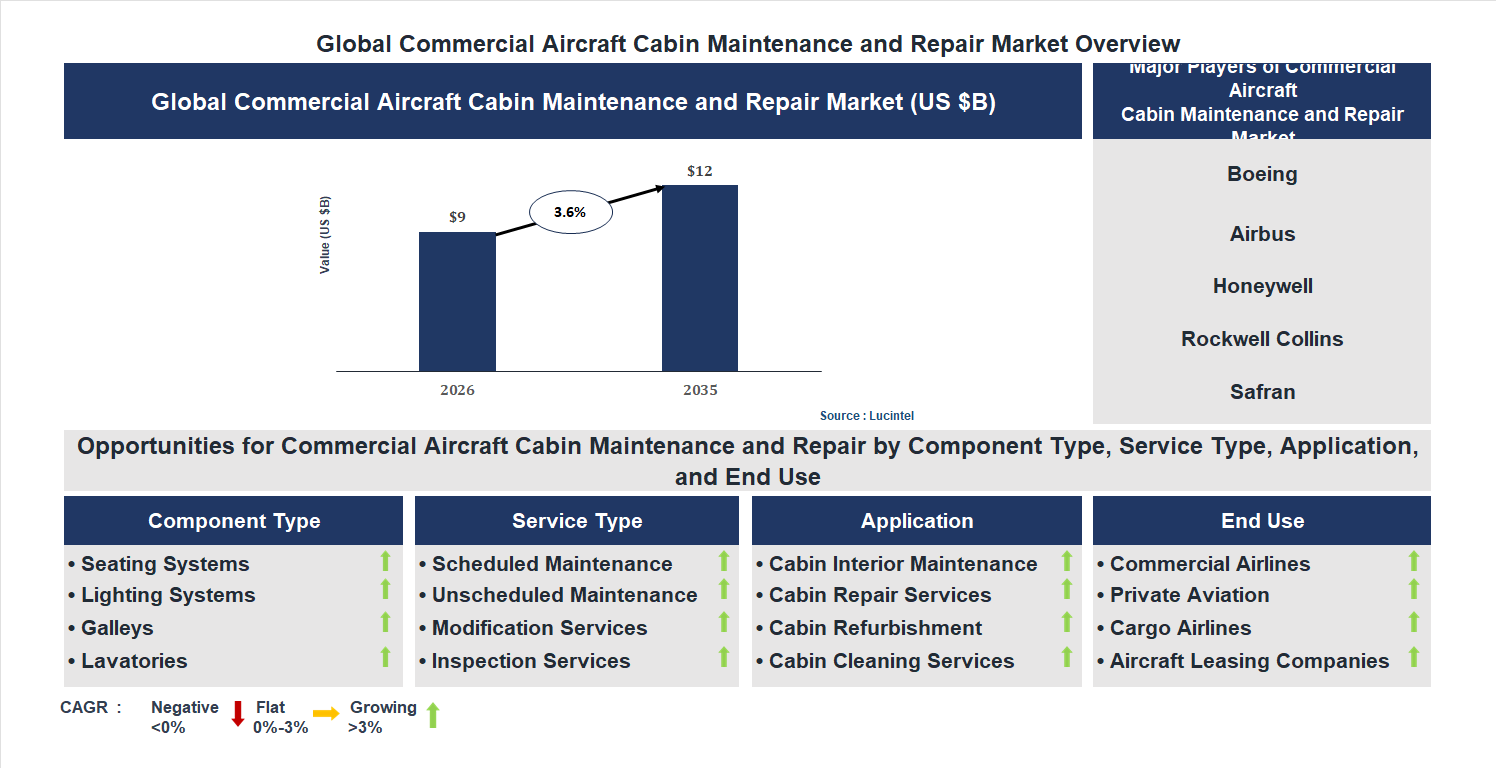
The future of the global commercial aircraft cabin maintenance and repair market looks promising with opportunities in the commercial airline, private aviation, cargo airline, and aircraft leasing company markets. The global commercial aircraft cabin maintenance and repair market is expected to reach an estimated $12 billion by 2035 with a CAGR of 3.6% from 2026 to 2035. The major drivers for this market are the increasing demand for enhanced passenger cabin experience, the rising need for regular interior maintenance upgrades, and the growing focus on safety compliance in cabins.• Lucintel forecasts that, within the component type category, seating system is expected to witness the highest growth over the forecast period.
• Within the end use category, commercial airline is expected to witness the highest growth.
• In terms of region, APAC is expected to witness the highest growth over the forecast period. Gain valuable insights for your business decisions with our comprehensive 150+ page report. Sample figures with some insights are shown below.
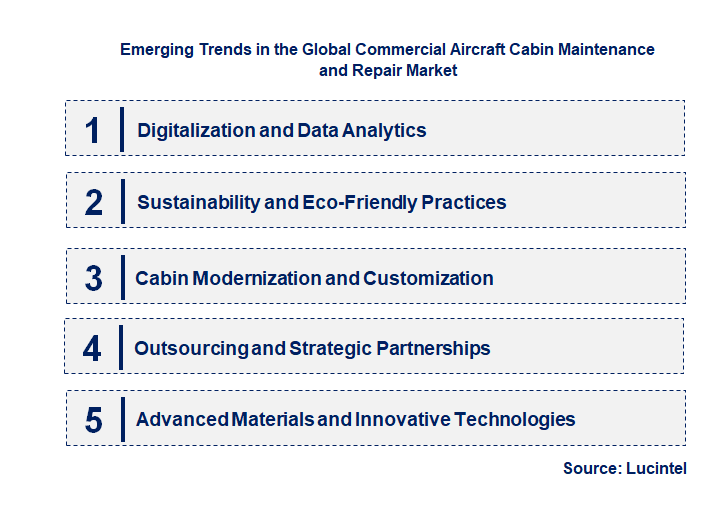
Emerging Trends in the Commercial Aircraft Cabin Maintenance and Repair Market
The commercial aircraft cabin maintenance and repair market is experiencing rapid evolution driven by technological advancements, changing passenger expectations, and regulatory pressures. As airlines seek to optimize operational efficiency and enhance passenger comfort, the industry is adopting innovative solutions and sustainable practices. These developments are reshaping the landscape, creating new opportunities and challenges for service providers. Understanding these emerging trends is crucial for stakeholders aiming to stay competitive and meet future demands. The following key trends highlight the major shifts influencing this markets trajectory and its future growth prospects.• Digitalization and Data Analytics: The integration of digital tools and data analytics is transforming maintenance processes. Real-time monitoring systems enable predictive maintenance, reducing downtime and operational costs. Airlines and service providers are leveraging IoT sensors and AI-driven analytics to identify potential issues before they escalate, improving safety and efficiency. This trend enhances decision-making, streamlines workflows, and minimizes disruptions, ultimately leading to more reliable and cost-effective cabin maintenance operations.
• Sustainability and Eco-Friendly Practices: Environmental concerns are prompting the adoption of sustainable maintenance practices. Use of eco-friendly materials, waste reduction, and energy-efficient procedures are gaining prominence. Airlines are increasingly investing in green technologies, such as low-emission cleaning agents and recyclable cabin components. These initiatives not only reduce the environmental footprint but also align with regulatory requirements and passenger preferences for sustainable travel, fostering a market shift toward greener maintenance solutions.
• Cabin Modernization and Customization: Airlines are focusing on cabin modernization to enhance passenger experience and brand differentiation. This includes installing advanced in-flight entertainment systems, ergonomic seating, and improved lighting. Customization options are expanding, allowing airlines to tailor cabins to specific passenger segments. This trend drives demand for specialized maintenance and repair services, emphasizing aesthetic upgrades and technological integrations, which in turn boost market growth and service diversification.
• Outsourcing and Strategic Partnerships: The trend toward outsourcing cabin maintenance and repair services is accelerating, driven by cost pressures and the need for specialized expertise. Airlines are forming strategic partnerships with MRO providers to access advanced technologies and ensure quality standards. This shift enables airlines to focus on core operations while benefiting from the efficiency and innovation of external service providers. It also fosters global collaboration, expanding service networks and improving response times across regions.
• Advanced Materials and Innovative Technologies: The adoption of lightweight, durable materials such as composites and advanced alloys is revolutionizing cabin maintenance. These materials improve fuel efficiency and passenger comfort while reducing maintenance frequency. Additionally, innovations like 3D printing facilitate rapid prototyping and on-demand spare parts production. These technological advancements are enhancing repair quality, reducing turnaround times, and lowering costs, thereby transforming traditional maintenance paradigms and supporting the development of next-generation cabins. These emerging trends are collectively reshaping the commercial aircraft cabin maintenance and repair market by promoting efficiency, sustainability, customization, and technological innovation. They are enabling airlines and service providers to meet evolving passenger expectations, comply with environmental regulations, and optimize operational costs. As these trends continue to develop, the market is poised for significant growth, driven by smarter, greener, and more customer-centric maintenance solutions.
Recent Developments in the Commercial Aircraft Cabin Maintenance and Repair Market
The commercial aircraft cabin maintenance and repair market is experiencing rapid growth driven by increasing air travel demand, technological advancements, and heightened safety standards. Airlines seek efficient, cost-effective solutions to maintain passenger comfort and comply with regulations. Innovations in materials, digital diagnostics, and sustainable practices are transforming the industry. This evolving landscape presents significant opportunities for service providers, manufacturers, and maintenance organizations to enhance operational efficiency, reduce downtime, and improve passenger experience, ultimately shaping the future of aviation maintenance.• Growing Air Travel Demand: Expanding global travel increases the need for regular cabin maintenance and repairs, creating a substantial market opportunity for service providers to meet rising airline requirements efficiently and cost-effectively.
• Technological Innovations in Diagnostics: Advanced digital tools and predictive maintenance systems enable quicker, more accurate diagnostics, reducing downtime and operational costs, and improving safety standards across the industry.
• Sustainability and Eco-Friendly Practices: Increasing focus on sustainable materials and environmentally friendly maintenance procedures is driving market growth, helping airlines meet regulatory requirements and reduce carbon footprints.
• Regulatory Compliance and Safety Standards: Stricter safety regulations necessitate comprehensive cabin inspections and repairs, boosting demand for specialized maintenance services and ensuring passenger safety.
• Expansion of Cabin Customization and Upgrades: Airlines investing in cabin refurbishments and personalized passenger experiences are fueling demand for repair and maintenance services, enhancing airline competitiveness and passenger satisfaction. These developments are significantly impacting the commercial aircraft cabin maintenance and repair market by fostering innovation, improving safety, and promoting sustainability. The market is poised for continued growth as airlines prioritize efficiency, passenger comfort, and regulatory compliance, creating lucrative opportunities for industry stakeholders and shaping the future landscape of aviation maintenance.
Strategic Growth Opportunities in the Commercial Aircraft Cabin Maintenance and Repair Market
The commercial aircraft cabin maintenance and repair market is experiencing rapid growth driven by increasing air travel demand, technological advancements, and stringent safety regulations. Airlines seek cost-effective, efficient solutions to enhance passenger experience and ensure compliance. Opportunities lie in innovative repair techniques, digital diagnostics, and sustainable practices. Market players are focusing on expanding service offerings, adopting automation, and leveraging data analytics to optimize operations. These developments are expected to shape the future landscape, creating new revenue streams and competitive advantages for industry stakeholders.• Adoption of Digital Diagnostics and Predictive Maintenance: Implementing advanced sensors, IoT devices, and data analytics enables real-time monitoring of cabin components. This approach reduces downtime, prevents failures, and optimizes maintenance schedules. Airlines can predict issues before they escalate, improving safety and passenger comfort. Digital diagnostics also streamline repair processes, reduce costs, and enhance operational efficiency, making predictive maintenance a key growth driver in cabin repair services.
• Expansion of Sustainable and Eco-Friendly Repair Solutions: Growing environmental concerns push the industry toward sustainable practices. This includes using eco-friendly materials, recycling cabin components, and adopting energy-efficient repair techniques. Airlines and maintenance providers are investing in green technologies to meet regulatory standards and corporate social responsibility goals. Sustainable repair solutions not only reduce environmental impact but also appeal to eco-conscious consumers, opening new market segments and fostering long-term growth.
• Integration of Automation and Robotics in Maintenance Processes: Automation and robotics are transforming cabin repair operations by increasing precision and reducing labor costs. Robotic systems can perform repetitive tasks such as cleaning, inspection, and minor repairs more efficiently. Automated processes improve turnaround times, minimize human error, and enhance safety standards. As technology advances, the adoption of autonomous repair systems is expected to expand, offering significant competitive advantages and operational efficiencies.
• Development of Modular and Rapid-Deployment Repair Kits: Modular repair kits allow quick replacement of cabin components, minimizing aircraft downtime. These kits are designed for easy installation and compatibility across different aircraft models, enabling rapid deployment during maintenance. This approach reduces repair time, lowers inventory costs, and improves turnaround efficiency. The growth of modular solutions is driven by the need for swift, flexible maintenance options in a highly dynamic airline industry.
• Enhancement of Passenger Experience Through Cabin Customization and Maintenance: Upgrading cabin interiors and ensuring consistent maintenance improve passenger satisfaction and brand loyalty. Customization options such as personalized lighting, seating, and entertainment systems are increasingly integrated with maintenance schedules. Regular, high-quality repairs ensure safety and comfort, supporting premium service offerings. This focus on passenger-centric maintenance creates opportunities for differentiation and revenue growth in the competitive airline market. These growth opportunities are poised to significantly influence the commercial aircraft cabin maintenance and repair market by fostering innovation, sustainability, efficiency, and enhanced passenger experience. Embracing these trends will enable industry players to stay competitive, meet evolving regulatory standards, and capitalize on emerging market demands, ultimately driving long-term growth and profitability.
Commercial Aircraft Cabin Maintenance and Repair Market Driver and Challenges
The commercial aircraft cabin maintenance and repair market is influenced by a variety of technological, economic, and regulatory factors. Rapid advancements in aircraft technology, increasing passenger demand, and stringent safety standards are shaping the industry landscape. Economic fluctuations impact airline profitability and maintenance budgets, while evolving regulations drive the need for compliance and safety enhancements. Additionally, technological innovations such as predictive maintenance and digital solutions are transforming operational efficiencies. These drivers and challenges collectively determine market growth, competitiveness, and innovation trajectories, requiring stakeholders to adapt swiftly to changing conditions to maintain safety, efficiency, and profitability in this dynamic sector. The factors responsible for driving the commercial aircraft cabin maintenance and repair market include:• Technological Advancements: The integration of digital tools, predictive analytics, and automation in maintenance processes enhances efficiency and reduces downtime. Innovations like augmented reality for training and remote diagnostics enable quicker repairs and improved safety standards. As aircraft become more sophisticated, maintenance procedures must evolve, creating a demand for advanced solutions that streamline operations and minimize costs. These technological improvements are crucial for airlines seeking to optimize fleet performance and passenger experience, ultimately driving market growth.
• Increasing Fleet Size and Age: The global expansion of air travel and aging aircraft fleets necessitate extensive maintenance and repair services. Older aircraft require more frequent inspections, component replacements, and upgrades to meet safety standards. The rising number of aircraft in operation directly correlates with higher demand for cabin maintenance, refurbishment, and repair services. This trend ensures sustained market growth, as airlines prioritize safety and passenger comfort through regular maintenance, creating a robust demand for specialized service providers.
• Regulatory Compliance and Safety Standards: Stringent international and regional safety regulations compel airlines and maintenance providers to adhere to strict standards. Compliance involves regular inspections, certifications, and documentation, which drive demand for specialized maintenance services. Evolving regulations also mandate the adoption of environmentally friendly practices and materials, influencing market offerings. Ensuring safety and regulatory adherence is critical for market players to avoid penalties and maintain operational licenses, thereby fueling the growth of maintenance and repair services.
• Rising Passenger Expectations: Modern travelers demand enhanced comfort, cleanliness, and in-flight amenities. Airlines invest heavily in cabin refurbishments, interior upgrades, and maintenance to meet these expectations. The focus on passenger experience drives demand for cabin repairs, cosmetic refurbishments, and technological upgrades such as Wi-Fi and entertainment systems. Meeting these evolving preferences ensures customer satisfaction and loyalty, prompting airlines to allocate significant budgets toward cabin maintenance, which in turn stimulates market expansion.
• Economic Growth and Airline Profitability: Economic stability and growth directly influence airline revenues and maintenance budgets. During periods of economic prosperity, airlines are more willing to invest in fleet upgrades and comprehensive maintenance programs. Conversely, economic downturns may lead to cost-cutting measures, affecting maintenance spending. However, maintaining operational efficiency and safety remains a priority, ensuring consistent demand for maintenance services. Overall, economic factors significantly impact the scale and scope of maintenance activities, shaping market dynamics. The challenges facing the commercial aircraft cabin maintenance and repair market include:
• High Maintenance Costs: The complexity of modern aircraft systems and the need for specialized skills result in substantial maintenance expenses. Rising costs of spare parts, labor, and compliance with safety standards can strain airline budgets, especially for smaller carriers. Additionally, the need for frequent repairs due to aging fleets increases financial burdens. Managing these costs while maintaining safety and quality standards is a persistent challenge, often requiring innovative cost-control strategies and technological efficiencies.
• Rapid Technological Changes: The fast pace of technological innovation in aircraft design and maintenance tools can render existing skills and equipment obsolete quickly. Keeping up with new systems, materials, and diagnostic tools demands continuous training and investment. This rapid evolution can lead to increased capital expenditure and operational disruptions. Companies must invest in workforce development and adapt their processes swiftly to stay competitive, which can be resource-intensive and challenging to sustain.
• Regulatory and Environmental Pressures: Increasingly strict environmental regulations and safety standards impose additional compliance costs and operational constraints. Airlines and maintenance providers must adopt eco-friendly materials, reduce emissions, and implement sustainable practices, often requiring significant investment. Navigating complex regulatory landscapes across different regions can be challenging, potentially delaying maintenance activities and increasing costs. Balancing regulatory compliance with operational efficiency remains a critical challenge for market participants. The commercial aircraft cabin maintenance and repair market is shaped by technological innovations, fleet expansion, regulatory demands, passenger expectations, and economic conditions. While these drivers promote growth and modernization, challenges such as high costs, rapid technological change, and regulatory pressures pose significant hurdles. The markets future will depend on how effectively stakeholders can leverage technological advancements and adapt to evolving standards while managing costs and compliance. Overall, these factors create a dynamic environment that demands agility, innovation, and strategic planning to sustain growth and ensure safety and passenger satisfaction.
List of Commercial Aircraft Cabin Maintenance and Repair Companies
Companies in the market compete on the basis of product quality offered. Major players in this market focus on expanding their manufacturing facilities, R&D investments, infrastructural development, and leverage integration opportunities across the value chain. With these strategies commercial aircraft cabin maintenance and repair companies cater increasing demand, ensure competitive effectiveness, develop innovative products & technologies, reduce production costs, and expand their customer base. Some of the commercial aircraft cabin maintenance and repair companies profiled in this report include-• Boeing
• Airbus
• Honeywell
• Rockwell Collins
• Safran
• Thales
• Lufthansa Technik
Commercial Aircraft Cabin Maintenance and Repair Market by Segment
The study includes a forecast for the global commercial aircraft cabin maintenance and repair market by component type, service type, application, end use, and region.Commercial Aircraft Cabin Maintenance and Repair Market by Component Type [Value from 2019 to 2035]:
• Seating Systems
• Lighting Systems
• Galleys
• Lavatories
Commercial Aircraft Cabin Maintenance and Repair Market by Service Type [Value from 2019 to 2035]:
• Scheduled Maintenance
• Unscheduled Maintenance
• Modification Services
• Inspection Services
Commercial Aircraft Cabin Maintenance and Repair Market by Application [Value from 2019 to 2035]:
• Cabin Interior Maintenance
• Cabin Repair Services
• Cabin Refurbishment
• Cabin Cleaning Services
Commercial Aircraft Cabin Maintenance and Repair Market by End Use [Value from 2019 to 2035]:
• Commercial Airlines
• Private Aviation
• Cargo Airlines
• Aircraft Leasing Companies
Commercial Aircraft Cabin Maintenance and Repair Market by Region [Value from 2019 to 2035]:
• North America
• Europe
• Asia Pacific
• The Rest of the World
Country Wise Outlook for the Commercial Aircraft Cabin Maintenance and Repair Market
The commercial aircraft cabin maintenance and repair market has experienced significant growth driven by increasing air travel demand, technological advancements, and the need for enhanced passenger comfort and safety. The industry is evolving rapidly, with innovations in maintenance procedures, digital diagnostics, and sustainable practices. Countries are adopting new policies and investing in infrastructure to support this expansion, reflecting the global importance of maintaining aircraft efficiency and safety standards. The following summaries highlight recent developments in the United States, China, Germany, India, and Japan, illustrating their unique contributions and strategic initiatives in this market.• United States: The US market has seen substantial investments in digital maintenance solutions, including AI-powered diagnostics and predictive analytics, improving turnaround times and safety. Major airlines are partnering with tech firms to develop advanced repair protocols, while regulatory agencies like the FAA are updating standards to incorporate new technologies. Additionally, there is a focus on sustainability, with initiatives to reduce waste and emissions during maintenance processes.
• China: China is rapidly expanding its aircraft maintenance infrastructure, driven by the growth of its domestic airline industry. The government is encouraging technological innovation, including automation and robotics in maintenance tasks. Several new MRO (Maintenance, Repair, and Overhaul) facilities have been established, and partnerships with international firms are increasing to enhance skill transfer and technology adoption. The focus is also on training a skilled workforce to support this burgeoning sector.
• Germany: Germany remains a leader in aerospace innovation, with a strong emphasis on sustainable maintenance practices. The country is investing in eco-friendly repair materials and energy-efficient facilities. German MRO providers are adopting digital twin technology for real-time monitoring and predictive maintenance, reducing downtime and operational costs. Collaboration with European aerospace initiatives is also strengthening, fostering shared advancements.
• India: India’s aircraft maintenance sector is experiencing rapid growth due to rising air travel and fleet expansion. The government is promoting self-reliance through initiatives like Make in India, encouraging local manufacturing of maintenance equipment and parts. Investments are being made in skill development and infrastructure modernization. The adoption of digital tools and automation is gradually increasing, aiming to improve efficiency and safety standards.
• Japan: Japan is focusing on integrating robotics and automation into its maintenance processes to enhance precision and safety. The country is also investing in research on sustainable materials and environmentally friendly repair techniques. Japanese MRO companies are expanding their capabilities in digital diagnostics and remote monitoring, aligning with global trends. Additionally, collaborations with international aerospace firms are facilitating knowledge exchange and technological advancement.

Features of the Global Commercial Aircraft Cabin Maintenance and Repair Market
Market Size Estimates: Commercial aircraft cabin maintenance and repair market size estimation in terms of value ($B). Trend and Forecast Analysis: Market trends (2019 to 2025) and forecast (2026 to 2035) by various segments and regions. Segmentation Analysis: Commercial aircraft cabin maintenance and repair market size by various segments, such as by component type, service type, application, end use, and region in terms of value ($B). Regional Analysis: Commercial aircraft cabin maintenance and repair market breakdown by North America, Europe, Asia Pacific, and Rest of the World. Growth Opportunities: Analysis of growth opportunities in different component types, service types, applications, end uses, and regions for the commercial aircraft cabin maintenance and repair market. Strategic Analysis: This includes M&A, new product development, and competitive landscape of the commercial aircraft cabin maintenance and repair market. Analysis of competitive intensity of the industry based on Porter’s Five Forces model.
FAQ
Q1. What is the commercial aircraft cabin maintenance and repair market size? Answer: The global commercial aircraft cabin maintenance and repair market is expected to reach an estimated $12 billion by 2035. Q2. What is the growth forecast for commercial aircraft cabin maintenance and repair market? Answer: The global commercial aircraft cabin maintenance and repair market is expected to grow with a CAGR of 3.6% from 2026 to 2035. Q3. What are the major drivers influencing the growth of the commercial aircraft cabin maintenance and repair market? Answer: The major drivers for this market are the increasing demand for enhanced passenger cabin experience, the rising need for regular interior maintenance upgrades, and the growing focus on safety compliance in cabins. Q4. What are the major segments for commercial aircraft cabin maintenance and repair market? Answer: The future of the commercial aircraft cabin maintenance and repair market looks promising with opportunities in the commercial airline, private aviation, cargo airline, and aircraft leasing company markets. Q5. Who are the key commercial aircraft cabin maintenance and repair market companies? Answer: Some of the key commercial aircraft cabin maintenance and repair companies are as follows:• Boeing
• Airbus
• Honeywell
• Rockwell Collins
• Safran
• Thales
• Lufthansa Technik Q6. Which commercial aircraft cabin maintenance and repair market segment will be the largest in future? Answer: Lucintel forecasts that, within the component type category, seating system is expected to witness the highest growth over the forecast period. Q7. In commercial aircraft cabin maintenance and repair market, which region is expected to be the largest in next 8 years? Answer: In terms of region, APAC is expected to witness the highest growth over the forecast period. Q8. Do we receive customization in this report? Answer: Yes, Lucintel provides 10% customization without any additional cost.
Table of Contents
List of Figures
List of Tables
Methodology
- In-depth interviews of the major players in this market
- Detailed secondary research from competitors’ financial statements and published data
- Extensive searches of published works, market, and database information pertaining to industry news, company press releases, and customer intentions
- A compilation of the experiences, judgments, and insights of Lucintel’s professionals, who have analyzed and tracked this market over the years.


Buy Now
Choose a license that fits your team. Instant PDF delivery.
Prices exclude taxes. Instant delivery. Custom licensing available on request.
Key Questions
- • What are some of the most promising, high-growth opportunities for the commercial aircraft cabin maintenance and repair market by component type (seating systems, lighting systems, galleys, and lavatories), service type (scheduled maintenance, unscheduled maintenance, modification services, and inspection services), application (cabin interior maintenance, cabin repair services, cabin refurbishment, and cabin cleaning services), end use (commercial airlines, private aviation, cargo airlines, and aircraft leasing companies), and region (North America, Europe, Asia Pacific, and the Rest of the World)?
- • Which segments will grow at a faster pace and why?
- • Which region will grow at a faster pace and why?
- • What are the key factors affecting market dynamics? What are the key challenges and business risks in this market?
- • What are the business risks and competitive threats in this market?
- • What are the emerging trends in this market and the reasons behind them?
- • What are some of the changing demands of customers in the market?
- • What are the new developments in the market? Which companies are leading these developments?
- • Who are the major players in this market? What strategic initiatives are key players pursuing for business growth?
- • What are some of the competing products in this market and how big of a threat do they pose for loss of market share by material or product substitution?
- • What M&A activity has occurred in the last 5 years and what has its impact been on the industry? For any questions related to Commercial Aircraft Cabin Maintenance and Repair Market, Commercial Aircraft Cabin Maintenance and Repair Market Size, Commercial Aircraft Cabin Maintenance and Repair Market Growth, Commercial Aircraft Cabin Maintenance and Repair Market Analysis, Commercial Aircraft Cabin Maintenance and Repair Market Report, Commercial Aircraft Cabin Maintenance and Repair Market Share, Commercial Aircraft Cabin Maintenance and Repair Market Trends, Commercial Aircraft Cabin Maintenance and Repair Market Forecast, Commercial Aircraft Cabin Maintenance and Repair Companies, write Lucintel analyst at email: helpdesk@lucintel.com. We will be glad to get back to you soon.


