
Market Report · July 15, 2026

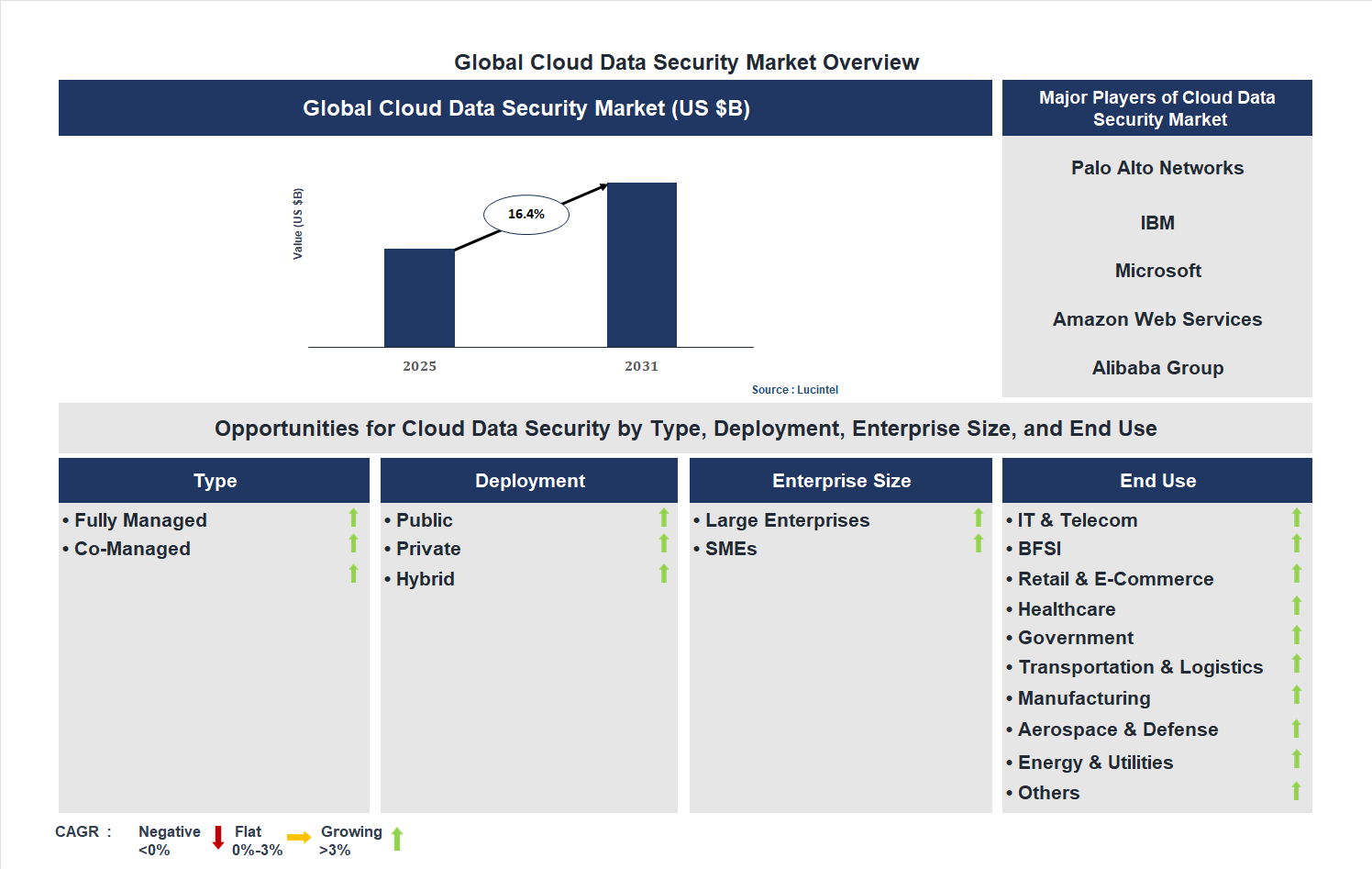
Key data points: The growth forecast = 16.4% annually for the next 7 years. Scroll below to get more insights. This market report covers trends, opportunities and forecasts in cloud data security market to 2031 by type (fully managed and co-managed), deployment (public, private, and hybrid), enterprise size (large enterprises and SMEs), end use (IT & telecom, BFSI, retail & e-commerce, healthcare, government, transportation & logistics, manufacturing, aerospace & defense, energy & utilities, and others), and region (North America, Europe, Asia Pacific, and the Rest of the World)
We'll send your sample report shortly.
• Lucintel forecasts that, within the type category, fully managed is expected to witness higher growth over the forecast period.
• Within the end use category, IT & telecom is expected to witness the highest growth.
• In terms of region, APAC is expected to witness the highest growth over the forecast period. Gain valuable insights for your business decisions with our comprehensive 150+ page report. Sample figures with some insights are shown below.
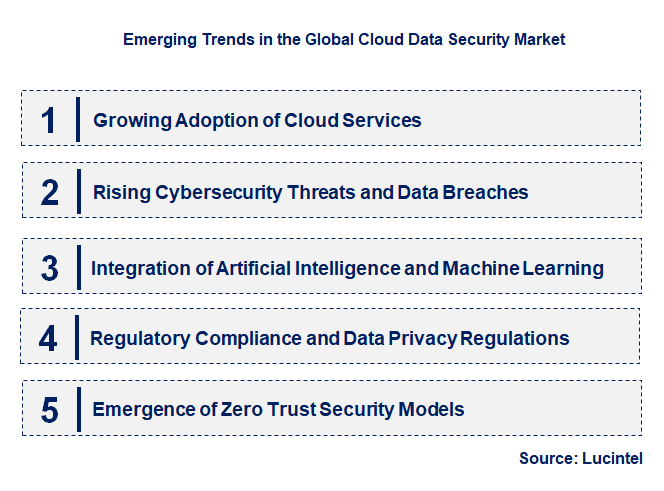
• Growing Adoption of Cloud Services: The increasing migration of businesses to cloud platforms is fueling demand for advanced data security solutions. As organizations move critical data to cloud environments, they require comprehensive security measures to protect against breaches, data loss, and unauthorized access. This trend is driven by the need for scalability, cost-efficiency, and flexibility offered by cloud services. Consequently, vendors are developing specialized security tools tailored for cloud infrastructure, which are essential for maintaining data integrity and compliance. The shift to cloud adoption is thus a key driver shaping the market’s expansion and innovation.
• Rising Cybersecurity Threats and Data Breaches: The proliferation of cyber threats, including ransomware, phishing, and insider attacks, is increasing the need for robust cloud data security. High-profile data breaches have underscored vulnerabilities in cloud environments, prompting organizations to invest heavily in security solutions. This trend emphasizes the importance of real-time threat detection, encryption, and access controls. As cyber threats become more sophisticated, the market is witnessing a surge in advanced security offerings such as AI-driven threat analytics and automated response systems. This ongoing threat landscape is a critical factor influencing market growth and product development.
• Integration of Artificial Intelligence and Machine Learning: AI and ML are transforming cloud data security by enabling proactive threat detection and automated response. These technologies analyze vast amounts of data to identify anomalies, predict potential breaches, and respond swiftly to security incidents. Their integration enhances the accuracy and efficiency of security measures, reducing false positives and enabling real-time protection. Vendors are increasingly incorporating AI/ML into their solutions to provide smarter, adaptive security frameworks. This trend is revolutionizing how organizations defend their cloud data, making security more dynamic, predictive, and effective.
• Regulatory Compliance and Data Privacy Regulations: Stringent data protection laws such as GDPR, CCPA, and HIPAA are compelling organizations to adopt comprehensive cloud security measures. Compliance requirements necessitate advanced encryption, audit trails, and access controls, driving demand for specialized security solutions. Vendors are developing tools that help organizations meet these regulatory standards efficiently. The evolving legal landscape emphasizes data privacy and accountability, influencing product features and market strategies. This trend underscores the importance of compliance-driven security solutions, shaping the market’s focus on transparency, control, and data governance.
• Emergence of Zero Trust Security Models: The Zero Trust approach, which assumes no implicit trust within the network, is gaining traction in cloud data security. It emphasizes strict identity verification, continuous monitoring, and least-privilege access to minimize risks. This model is particularly relevant in hybrid and multi-cloud environments, where traditional perimeter-based security is insufficient. Organizations adopting Zero Trust are better equipped to prevent lateral movement of threats and reduce attack surfaces. Vendors are integrating Zero Trust principles into their offerings, making it a pivotal trend that is redefining security architectures and strategies across the market. In summary, these trends are collectively reshaping the cloud data security market by fostering innovation, enhancing security postures, and ensuring compliance. The focus on advanced technologies, regulatory adherence, and strategic security models is driving growth and transforming how organizations protect their cloud data assets. As these trends continue to evolve, the market is expected to become more resilient, intelligent, and aligned with the dynamic digital landscape.
• Adoption of Zero Trust Security Models: Organizations are increasingly implementing Zero Trust architectures to enhance security. This approach minimizes trust assumptions, requiring continuous verification of users and devices, thereby reducing the risk of insider threats and lateral movement by attackers. The shift improves overall security posture and compliance, fostering greater confidence in cloud environments.
• Integration of AI and Machine Learning: AI-driven security solutions are becoming central to cloud data protection. These technologies enable real-time threat detection, automated response, and predictive analytics, significantly reducing response times and preventing breaches. Their adoption enhances the ability to identify sophisticated cyber threats, making security more proactive and adaptive.
• Expansion of Cloud Security Certifications and Standards: Regulatory bodies and industry groups are developing comprehensive standards and certifications for cloud security. These frameworks promote best practices, ensure compliance, and build customer trust. The increased emphasis on standards encourages vendors to innovate and align their offerings with global security requirements.
• Strategic Partnerships and Collaborations: Major cloud providers are forming alliances with cybersecurity firms to develop integrated security solutions. These collaborations facilitate the deployment of advanced security tools, streamline management, and improve threat intelligence sharing. Such partnerships accelerate innovation and expand market reach, benefiting end-users with more comprehensive security options.
• Focus on Data Privacy and Regulatory Compliance: With stricter data privacy laws like GDPR and CCPA, companies are prioritizing compliance in their cloud security strategies. This focus drives the adoption of encryption, access controls, and audit mechanisms. Ensuring compliance not only mitigates legal risks but also enhances customer trust and brand reputation. In summary, these developments are transforming the cloud data security market by fostering more secure, compliant, and intelligent cloud environments. The integration of advanced technologies, standards, and strategic collaborations is driving innovation, increasing trust, and enabling organizations to confidently leverage cloud solutions while managing evolving cyber threats.
• Financial Services: Enhanced Data Privacy and Compliance : Financial institutions require stringent security protocols to safeguard sensitive customer data and comply with regulations like GDPR and PCI DSS. Cloud data security solutions enable real-time monitoring, encryption, and access controls, reducing fraud risks and ensuring regulatory adherence. This growth opportunity supports the digital transformation of banking and insurance sectors, fostering customer trust and operational resilience.
• Healthcare: Securing Patient Data and Ensuring HIPAA Compliance : The healthcare industry handles highly sensitive patient information, making data security paramount. Cloud security solutions facilitate secure storage, encrypted data transmission, and access management, ensuring compliance with HIPAA and other regulations. This opportunity enhances patient privacy, reduces data breaches, and promotes telemedicine and digital health innovations.
• Retail and E-commerce: Protecting Customer Data and Payment Information : Retailers and e-commerce platforms process vast amounts of personal and payment data, making them prime targets for cyberattacks. Cloud data security tools provide fraud detection, secure payment gateways, and customer data encryption. This growth opportunity helps build consumer trust, reduces fraud-related losses, and supports omnichannel retail strategies.
• Government and Public Sector: Securing Critical Infrastructure and Citizen Data : Governments handle sensitive information related to national security, public services, and citizen data. Cloud security solutions enable secure data sharing, identity management, and threat detection across agencies. This opportunity enhances national security, streamlines public services, and ensures compliance with government regulations.
• Manufacturing and Industrial IoT: Protecting Intellectual Property and Operational Data : Manufacturing firms increasingly adopt IoT and cloud technologies, exposing them to cyber threats targeting operational data and intellectual property. Cloud security solutions offer device authentication, encrypted communications, and anomaly detection. This growth opportunity safeguards innovation, ensures operational continuity, and supports Industry 4.0 initiatives. In summary, these growth opportunities across key applications are significantly impacting the cloud data security market by driving innovation, enhancing compliance, and strengthening cybersecurity defenses. As organizations across sectors recognize the importance of robust cloud security, market growth accelerates, fostering a safer digital environment and enabling digital transformation initiatives worldwide.
• Technological Advancements: The continuous evolution of cloud computing technologies, including hybrid and multi-cloud environments, has increased the need for advanced security solutions. As organizations migrate more critical data to the cloud, the demand for innovative security measures such as encryption, identity management, and threat detection grows. These technological developments enable scalable, flexible, and efficient security frameworks, fostering market expansion. Additionally, the integration of AI and machine learning enhances threat detection capabilities, making cloud data security more proactive and reliable. This ongoing innovation is crucial for addressing emerging cyber threats and ensuring data integrity across diverse cloud platforms.
• Increasing Data Breaches and Cyber Threats: The rising frequency and sophistication of cyberattacks have heightened awareness around data security. High-profile data breaches have underscored the importance of protecting sensitive information stored in the cloud. Organizations are investing heavily in cloud security solutions to prevent data loss, unauthorized access, and compliance violations. The growing threat landscape compels businesses across industries to adopt comprehensive security measures, fueling market growth. As cyber threats evolve, the demand for advanced, real-time security solutions that can detect and mitigate attacks promptly becomes even more critical, driving innovation and adoption in the cloud data security market.
• Growing Adoption of Cloud Services: The widespread shift towards cloud-based solutions across sectors such as healthcare, finance, retail, and government is a major growth driver. Cloud services offer scalability, cost-efficiency, and flexibility, prompting organizations to migrate their workloads to the cloud. This migration increases the need for robust security frameworks to safeguard data in cloud environments. As cloud adoption accelerates, so does the demand for specialized security tools that can integrate seamlessly with cloud platforms. This trend is further supported by the proliferation of SaaS applications, which require secure access and data protection, thereby expanding the market for cloud data security solutions.
• Regulatory Compliance and Data Privacy Laws: Stringent regulations such as GDPR, HIPAA, and CCPA mandate organizations to implement comprehensive data protection measures. Compliance requirements compel businesses to adopt advanced security solutions to safeguard personal and sensitive data stored in the cloud. Failure to comply can result in hefty fines, legal actions, and reputational damage. Consequently, the market for cloud data security solutions is driven by the need to meet these regulatory standards. Companies are investing in encryption, access controls, and audit trails to ensure compliance, which in turn fuels market growth and innovation in security technologies tailored to meet evolving legal requirements.
• Increasing Cloud Data Volumes: The exponential growth in data generated by IoT devices, mobile applications, and enterprise systems necessitates scalable security solutions. As data volumes expand, traditional security measures become inadequate, prompting the need for advanced cloud security tools capable of handling large-scale data protection. This surge in data also increases the attack surface, making organizations more vulnerable to breaches. To address these challenges, vendors are developing sophisticated security platforms that offer real-time monitoring, automated threat response, and data encryption. The increasing volume of cloud data thus acts as a catalyst for market expansion, driving demand for innovative security solutions. The challenges in the cloud data security market are:-
• Evolving Cyber Threats: Cybercriminals are continuously developing new tactics, techniques, and procedures to breach cloud security systems. These evolving threats include ransomware, phishing, insider threats, and zero-day vulnerabilities, which require constant updates and improvements in security measures. Organizations often struggle to keep pace with these rapid developments, leading to potential vulnerabilities. The complexity of cloud environments further complicates threat detection and response, making it difficult to implement comprehensive security strategies. As cyber threats become more sophisticated, the market must innovate rapidly to provide effective, adaptive security solutions that can counteract emerging risks.
• Regulatory Complexity and Compliance Challenges: Navigating the complex landscape of global data privacy laws and regulations presents a significant challenge for cloud data security providers and users. Different jurisdictions have varying requirements, making compliance a complex and resource-intensive process. Organizations often face difficulties in implementing uniform security policies across multiple regions, risking non-compliance and associated penalties. Additionally, keeping up with evolving legal standards demands continuous updates to security protocols and documentation. This regulatory complexity can hinder market growth by increasing operational costs and creating uncertainty around best practices for data protection in the cloud.
• Data Privacy and Trust Concerns: Despite advancements in security technologies, concerns over data privacy and trust persist among organizations and consumers. Data breaches and misuse of personal information can damage reputations and erode customer confidence. Many organizations hesitate to fully leverage cloud solutions due to fears of losing control over sensitive data. Building trust requires transparent security practices, robust encryption, and clear data governance policies, which can be challenging to implement consistently. These concerns may slow down adoption rates and limit market expansion, emphasizing the need for enhanced security measures and trust-building initiatives within the industry. In summary, the cloud data security market is driven by rapid technological innovations, increasing cyber threats, expanding cloud adoption, regulatory pressures, and data growth. However, it faces challenges from evolving cyber threats, complex compliance requirements, and trust issues. These drivers propel market growth by creating demand for advanced security solutions, while challenges necessitate continuous innovation and strategic adaptation. Overall, the market's future depends on balancing technological progress with effective risk management, ensuring secure, compliant, and trustworthy cloud environments for organizations worldwide.
• Palo Alto Networks
• IBM
• Microsoft
• Amazon Web Services
• Alibaba Group
• Netskope
• Check Point Software Technologies
• Zscaler
• Lookout
• Orca Security
• Fully Managed
• Co-Managed
• Public
• Private
• Hybrid
• Large Enterprises
• SMEs
• IT & Telecom
• BFSI
• Retail & E-Commerce
• Healthcare
• Government
• Transportation & Logistics
• Manufacturing
• Aerospace & Defense
• Energy & Utilities
• Others
• North America
• Europe
• Asia Pacific
• The Rest of the World
• United States: The US market has seen significant advancements with the adoption of AI-powered security solutions and increased investments in zero-trust architectures. Major cloud providers like AWS, Microsoft Azure, and Google Cloud are expanding their security offerings, focusing on compliance and data privacy. The government has also introduced stricter regulations, encouraging organizations to enhance their security protocols. Additionally, startups specializing in cloud security are gaining traction, fostering innovation and competition.
• China: China’s cloud data security market is rapidly evolving, driven by government policies emphasizing cybersecurity and data sovereignty. The country has launched initiatives to develop indigenous security solutions and reduce reliance on foreign technology. Major tech firms like Alibaba Cloud and Tencent Cloud are investing in advanced encryption, threat detection, and compliance tools. The government’s focus on national security has led to stricter data localization laws, influencing how companies manage and secure data in the cloud.
• Germany: Germany’s market emphasizes compliance with stringent EU data protection regulations, such as GDPR. There is a strong focus on privacy-preserving technologies, including encryption and anonymization. German companies are adopting integrated security solutions that combine threat detection with regulatory compliance. The country also sees increased collaboration between public and private sectors to develop secure cloud infrastructure, fostering innovation in secure data sharing and management.
• India: India’s cloud data security market is expanding rapidly, driven by digital initiatives and increasing cyber threats. The government’s push for digital transformation, including initiatives like Digital India, has increased cloud adoption across sectors. Indian firms are investing in advanced security solutions, including AI-based threat detection and multi-factor authentication. The regulatory landscape is evolving, with new data protection laws encouraging organizations to strengthen their security frameworks and ensure compliance.
• Japan: Japan’s market is characterized by a focus on resilience and risk management, with significant investments in secure cloud infrastructure. The country emphasizes protecting critical infrastructure and sensitive data, especially in sectors like finance and healthcare. Japanese companies are adopting comprehensive security frameworks, integrating AI and automation to detect and respond to threats swiftly. The government promotes international cooperation and standards to enhance cloud security, ensuring compliance with global regulations and fostering trust in cloud services.


• Palo Alto Networks
• IBM
• Microsoft
• Amazon Web Services
• Alibaba Group
• Netskope
• Check Point Software Technologies
• Zscaler
• Lookout
• Orca Security Q5. Which cloud data security market segment will be the largest in future? Answer: Lucintel forecasts that, within the type category, fully managed is expected to witness higher growth over the forecast period. Q6. In cloud data security market, which region is expected to be the largest in next 5 years? Answer: In terms of region, APAC is expected to witness the highest growth over the forecast period. Q7. Do we receive customization in this report? Answer: Yes, Lucintel provides 10% customization without any additional cost.


Choose a license that fits your team. Instant PDF delivery.
Prices exclude taxes. Instant delivery. Custom licensing available on request.
Market Report · July 15, 2026
Market Report · June 26, 2026
Market Report · June 24, 2026
Trusted partner for strategic intelligence and business growth


Receive a complimentary market analysis tailored to your industry. Our analysts will identify key growth opportunities and competitive dynamics specific to your business.

Market size, growth rate, and key trend analysis for your specific sector.

Top competitor positioning and market share analysis.

Strategic recommendations backed by data-driven insights.
Get curated market intelligence and competitive moves straight to your inbox.
By subscribing, you agree to receive our monthly insights. Unsubscribe anytime.
Receive a complimentary market analysis tailored to your industry. Our analysts will identify key growth opportunities and competitive dynamics specific to your business.
Market size, growth rate, and key trend analysis for your specific sector.
Top competitor positioning and market share analysis.
Strategic recommendations backed by data-driven insights.
Get curated market intelligence, emerging trends, and competitive moves straight to your inbox each month.
By subscribing, you agree to receive our monthly insights. Unsubscribe anytime.
We'll send your sample report shortly.