
Market Report · July 15, 2026

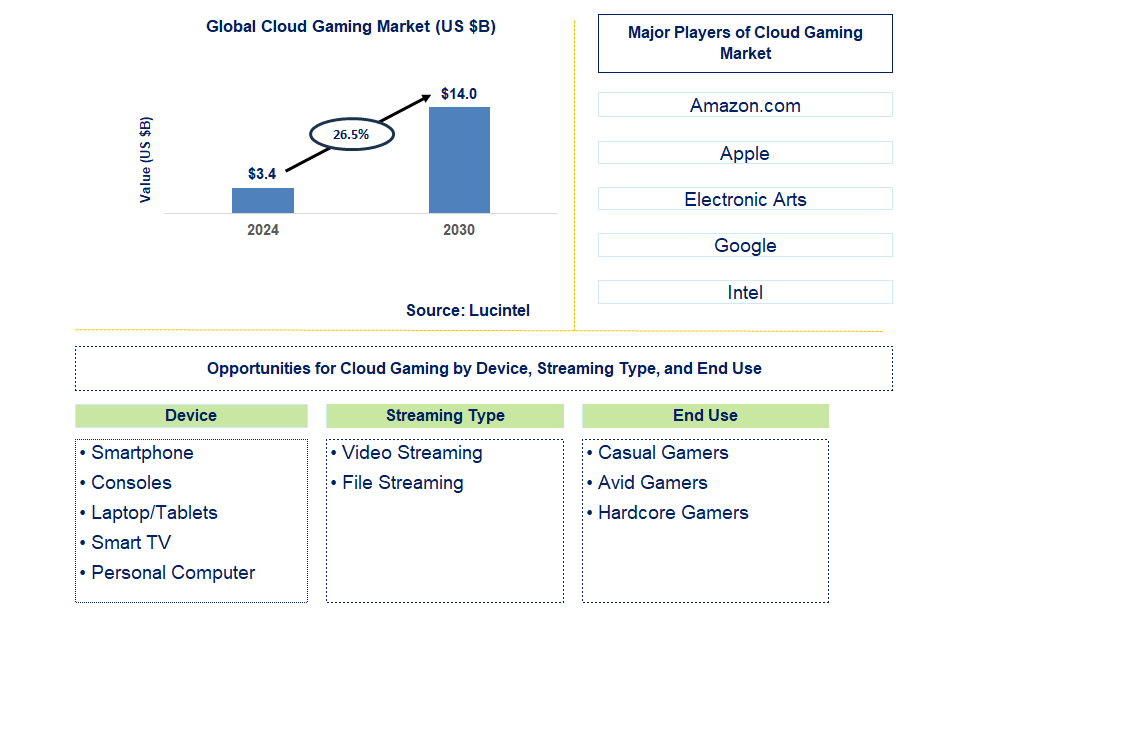
Key data points: The market size in 2030 = $14.0 billion, growth forecast = 26.5% annually for the next 6 years. Scroll below to get more insights. This market report covers trends, opportunities, and forecasts in the global cloud gaming market to 2030 by device (smartphone, consoles, laptop/tablets, smart TV, and personal computer), streaming type (video streaming and file streaming), end use (casual gamers, avid gamers, and hardcore gamers), and region (North America, Europe, Asia Pacific, and the Rest of the World)
We'll send your sample report shortly.
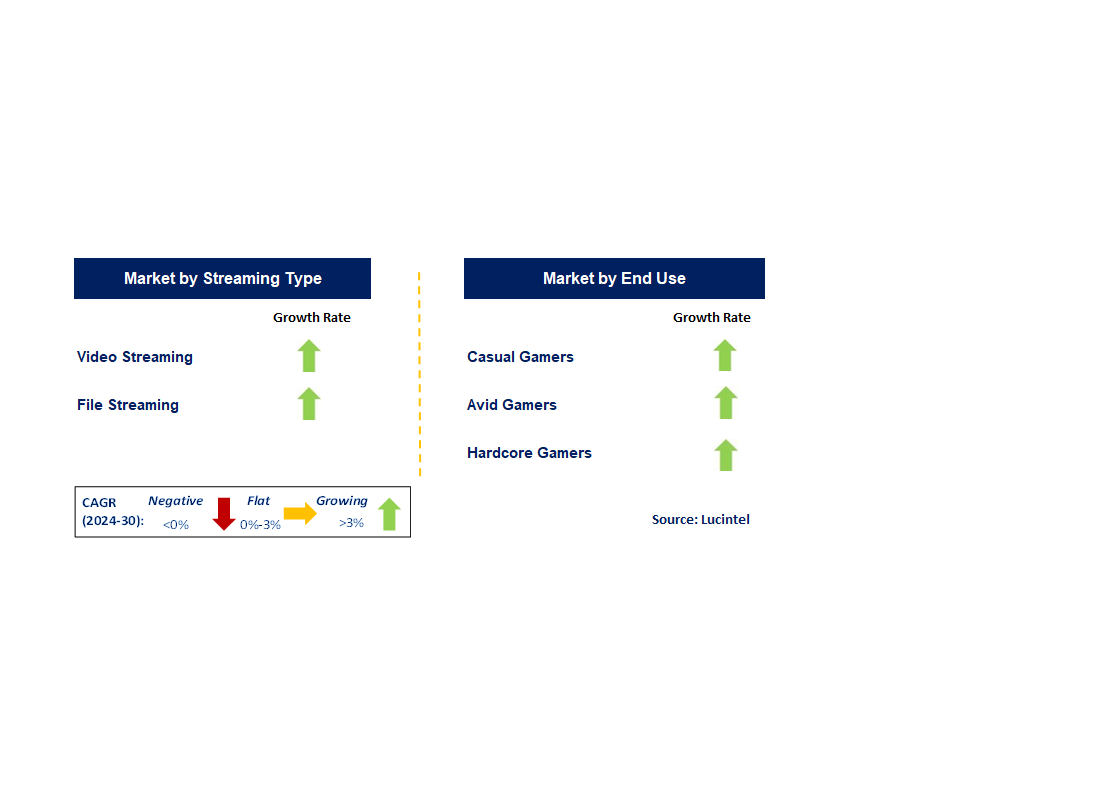
• Lucintel forecasts that, within the streaming type category, video is expected to witness the highest growth over the forecast period due to its growing demand among gamers given to its simple gaming experience regardless of technical requirements.
• Within the end use category, avid gamer is expected to witness the highest growth over the forecast period due to growing demand for cloud gaming among these gamers to play for any purposes as well as completing in-app purchases and subscribing to gaming platforms.
• In terms of regions, APAC will remain the largest region due to the availability of low-cost high-speed internet, widespread smartphone adoption, and the presence of a large gaming base in the region. Gain valuable insights for your business decisions with our comprehensive 150+ page report.
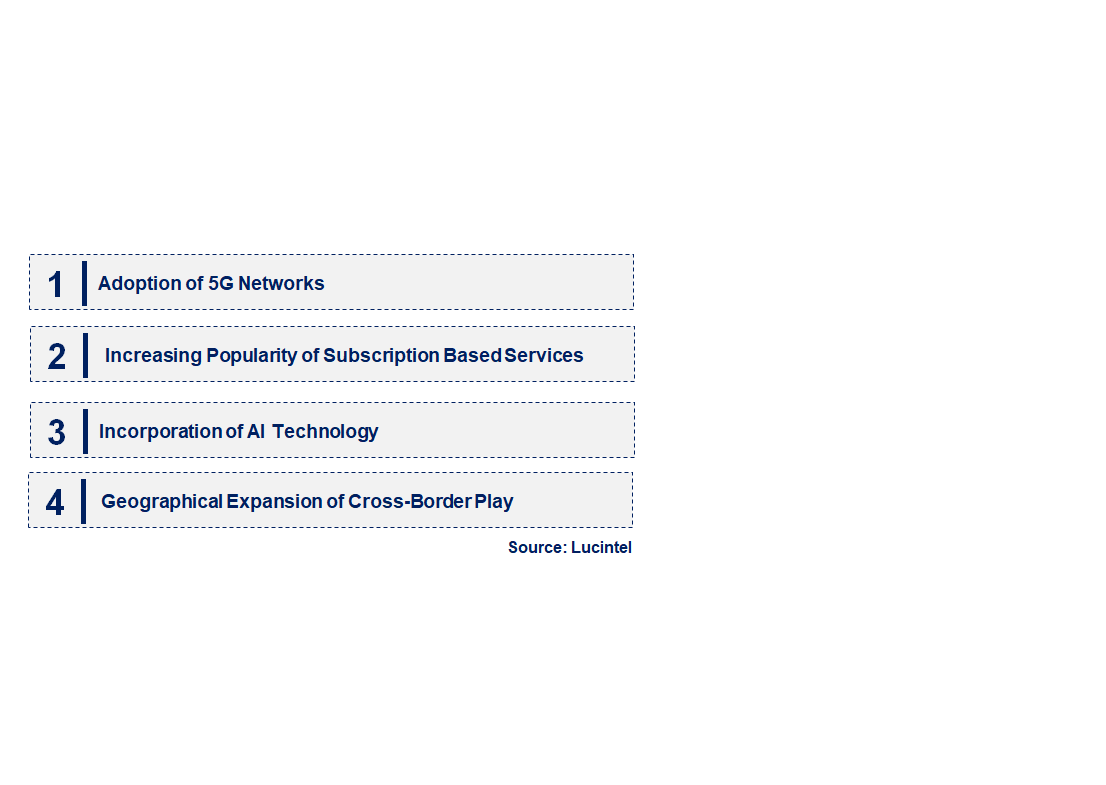
• Adoption of 5G Networks: 5G networks are emerging to enhance cloud gaming experiences due to their enhanced features, especially faster speeds and lower latency. Such technologies improve the quality of gameplay by enabling high-definition content.
• Increasing Popularity of Subscription-Based Services: Subscription business models are gaining traction among gamers as they allow them to pay a monthly fee in exchange for several games. This model has lowered the barrier to entry for prospective users concerning video games.
• Incorporation of AI Technology: Artificial intelligence and machine learning techniques are being applied to improve players' performance and enhance user experiences. One way these technologies help is by adaptive streaming, recommending appropriate games, and improving the quality of the game itself.
• Geographical Expansion of Cross-Border Play: The cross-play feature is being embraced more in cloud gaming services because gamers can interact with each other irrespective of the platform from which they are playing. This trend complements gaming as a social activity and serves to widen the audience's reach. These trends are transforming the landscape of cloud gaming by offering more advanced connectivity through 5G, more subscriptions, embedding AI to enhance user experience, ensuring support for cross-platform interaction, and increasing regional reach. All in all, they are promoting innovation and expanding the attractiveness of services provided by cloud gaming.
• Advanced Streaming Technologies: Organizations are developing more sophisticated streaming technologies to enhance video quality and minimize delays. Advancements such as adaptive bitrate streaming and other advanced compression methods are improving the overall experience for users.
• Increasing the Number of Available Games: The game catalogs for cloud gaming services are growing, providing a broader choice of games. Collaborations with game developers and suppliers are enabling the addition of big and exclusive titles.
• Adoption of 5G Networks: The implementation of 5G networks helps facilitate advancements in cloud gaming by offering higher speeds and reduced latency. This technology promotes better quality streaming and enhances the overall gaming experience.
• Stimulation of Subscription Models: It is becoming increasingly common to adopt models that grant users access to a large number of games for a flat fee charged monthly. This model offers flexible and affordable options, promoting widescale adoption of cloud gaming. These progress factors have been driving improvements in the cloud gaming market through enhancements in streaming quality, expanding game catalogs, testing support, adoption of 5G technologies, popularization of subscription models, and meeting local demands. This makes the gaming experience more exciting and accessible.
• Mobile Cloud Gaming: The increasing number of smartphone users and advanced mobile networks provides an excellent opportunity to leverage cloud gaming on mobile platforms. This strategy targets the growing mobile gaming consumer base while providing an advantage to firms.
• Integration with VR and AR: Technologies such as VR and AR can be integrated into cloud gaming systems, offering endless possibilities. As gameplay evolves, so does user participation, with more visuals and interactivity with the product and its functionalities.
• Expansion into Emerging Markets: There is an opportunity in emerging countries with a growing number of people having access to the internet and smartphones, such as Southeast Asia and Latin American countries. Cloud gaming technologies can be adapted for these regions, thus providing an opportunity for growth.
• Partnerships with Telecom Providers: By partnering with telecom providers, cloud gaming services can be enhanced, targeting their client base while utilizing their infrastructure. This will strengthen network services, add new packages, and enhance penetration. The potential opportunities outlined above are useful in identifying the domain of development and scope of activity in the cloud gaming market. Companies in the mobile gaming space, or those seeking VR/AR integration, expanding in emerging territories, general telecom companies, and the esports industry can fast-track their progress and respond well to changing consumer behavior.
• Advances in Technology: The evolution of cloud computing technologies, streaming technologies, and network infrastructure is propelling the rise of device cloud gaming. These developments improve the quality of games and make cloud-based gaming possible.
• Increasing Internet Penetration: The spread of reliable high-speed internet and the deployment of 5G networks increases the correlation of cloud gaming by providing adequate bandwidth and reducing delays. This accessibility enhances the quality of gameplay and the richness of content in high definition.
• Growing Need for Adaptable Gaming: Consumers prefer less rigid and less complicated ways of playing games. Since there is no need for top-notch hardware devices to play games, cloud gaming facilitates this by allowing play on several devices.
• Emergence of Subscription-Based Models: The use of subscription models is increasing, as consumers are willing to pay a fixed subscription fee in exchange for a wide variety of games. This model offers unlimited access while also providing a wide range of potential clientele. Challenges in the cloud gaming market include:
• Latency and Connectivity Issues: Cloud gaming quality may be affected by latency and connectivity challenges. Providing low latency and stable connections is essential for delivering a good gaming experience to users.
• Data Privacy and Security Concerns: Effective management of data privacy and security is crucial since sensitive user information is involved. Legal issues and data protection concerns are real challenges that providers face on a continuous basis. The cloud gaming market is experiencing growth due to new technologies, increasing internet use, the desire for flexibility in solutions, the introduction of subscription-based models, and investments in game libraries. Issues such as latency, data privacy, and market fragmentation need to be addressed for continued sustainability and success.
• Amazon.com
• Apple
• Electronic Arts
• Intel
• IBM
• Microsoft
• NVIDIA
• Sony Interactive Entertainment
• Ubitus
• Tencent Holdings
• Smartphone
• Consoles
• Laptop/Tablets
• Smart TV
• Personal Computer
• Video Streaming
• File Streaming
• Casual Gamers
• Avid Gamers
• Hardcore Gamers
• North America
• Europe
• Asia Pacific
• The Rest of the World
• United States: The U.S. market is very active, with more countries adopting cloud gaming technologies and companies like NVIDIA GeForce Now, Google Stadia, and Microsoft xCloud making progress. Developments include improved streaming technology, more games being added to libraries, and collaborations with well-known game publishers. The availability of 5G networks substantially improves overall performance and reduces latency in cloud gaming.
• China: In China, cloud gaming is becoming a reality, with companies like Tencent and Alibaba benefiting from it. New cloud gaming services are predicting future gaming frustrations by offering relevant local content, such as games and devices. The expansion of 5G is also a significant enabler, enhancing streaming quality and ease of access.
• Germany: The cloud gaming market in Germany is increasing, with high demands on service quality and adherence to data-sensitive requirements. Providers are adding features such as low latency and local server support to comply with regulatory requirements. Companies working on cross-platform games and delivering services to end users are driving the transformation of the game streaming paradigm.
• Indian: Cloud gaming is emerging as a significant trend in India, with more people owning smartphones and having access to the internet. Companies are offering cloud gaming solutions at relatively affordable prices, catering to the local market. Collaborations with local telecom companies are helping maximize coverage and improve the quality of cloud gaming, targeting more customers.
• Japan: In Japan, the cloud gaming market is growing with the penetration of cutting-edge technologies such as AI and VR. Besides advancements in 5G technology, young Japanese businesses are tapping into the country’s ongoing growth in gaming and working to shift the paradigm to cloud-based games. The market is expanding and innovating due to improved 5G services and partnerships with global gaming companies.


• Amazon.com
• Apple
• Electronic Arts
• Intel
• IBM
• Microsoft
• NVIDIA
• Sony Interactive Entertainment
• Ubitus Q6. Which cloud gaming market segment will be the largest in future? Answer: Lucintel forecasts that video is expected to witness the highest growth over the forecast period due to its growing demand among gamers given to its simple gaming experience regardless of technical requirements. Q7. In cloud gaming market, which region is expected to be the largest in next 5 years? Answer: APAC will remain the largest region due to availability of low-cost high-speed internet, widespread smartphone adoption, and presence of large gaming base in the region. Q.8 Do we receive customization in this report? Answer: Yes, Lucintel provides 10% customization without any additional cost.


Choose a license that fits your team. Instant PDF delivery.
Prices exclude taxes. Instant delivery. Custom licensing available on request.
Market Report · July 15, 2026
Market Report · June 26, 2026
Market Report · June 24, 2026
Trusted partner for strategic intelligence and business growth


Receive a complimentary market analysis tailored to your industry. Our analysts will identify key growth opportunities and competitive dynamics specific to your business.

Market size, growth rate, and key trend analysis for your specific sector.

Top competitor positioning and market share analysis.

Strategic recommendations backed by data-driven insights.
Get curated market intelligence and competitive moves straight to your inbox.
By subscribing, you agree to receive our monthly insights. Unsubscribe anytime.
Receive a complimentary market analysis tailored to your industry. Our analysts will identify key growth opportunities and competitive dynamics specific to your business.
Market size, growth rate, and key trend analysis for your specific sector.
Top competitor positioning and market share analysis.
Strategic recommendations backed by data-driven insights.
Get curated market intelligence, emerging trends, and competitive moves straight to your inbox each month.
By subscribing, you agree to receive our monthly insights. Unsubscribe anytime.
We'll send your sample report shortly.