
Market Report · July 15, 2026

Trends, opportunity and forecast in cinema software market to 2031 by type (local deployment and cloud deployment), application (SMEs and large enterprises), and region (North America, Europe, Asia Pacific, and the Rest of the World)
We'll send your sample report shortly.
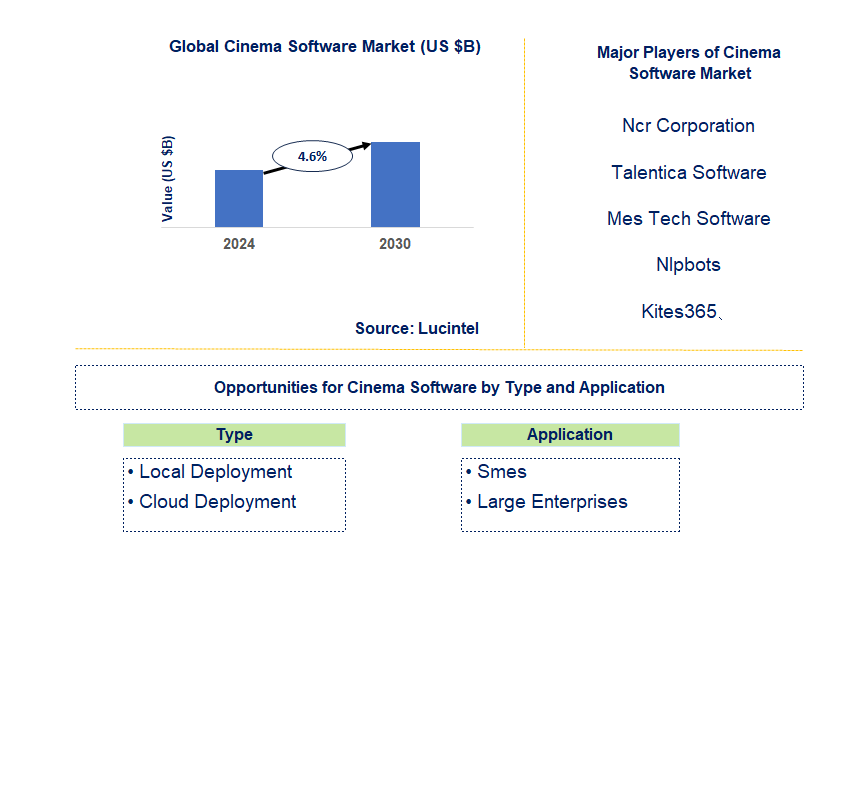
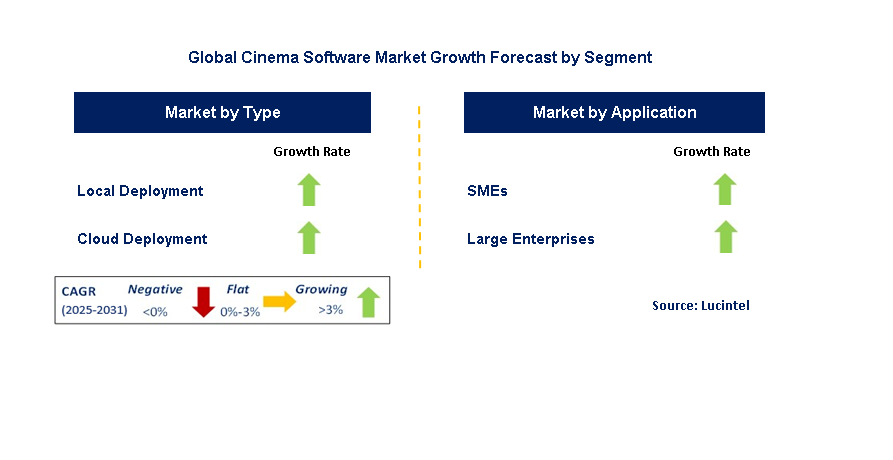
• Lucintel forecasts that cloud deployment is expected to witness higher growth over the forecast period due to allow for easier updates and remote access across multiple cinema locations.
• Within this market, large enterprises is expected to witness the higher growth due to integrated software solutions across multiple locations.
• North America is expected to witness the highest growth over the forecast period due to by a large number of cinemas. A more than 150-page report is developed to help in your business decisions. Sample figures with some insights are shown below.
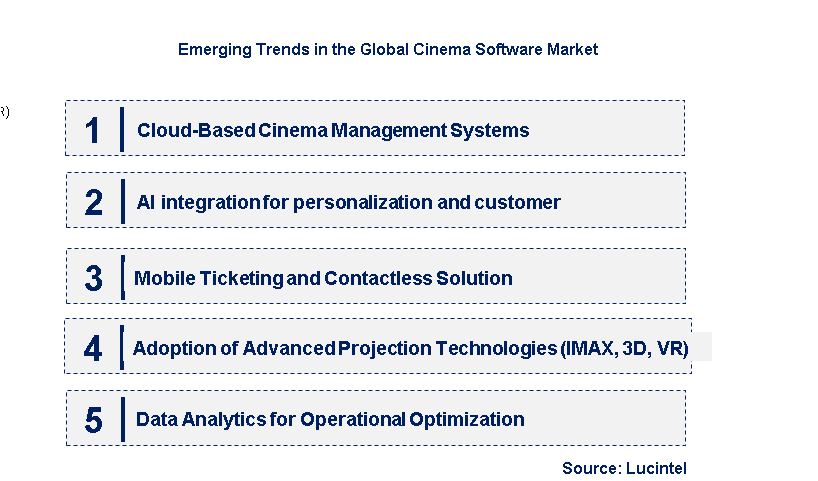
• Cloud-Based Cinema Management Systems: Cloud-based solutions are revolutionizing cinema operations. Scalability, security, and access make these solutions change the movie-going experience for cinema operators. They can even remotely handle ticketing, scheduling, inventory, and content. Cloud technology comes with easy integration with other tools, offering real-time data analytics. Lowered infrastructure costs, easier software updates, and overall operational efficiency are some of the advantages of cloud solutions, enabling the cinema to focus more on enriching the customer experience.
• AI integration for personalization and customer engagement: More and more, AI is being incorporated in movie software to ensure audiences get unique experiences. From recommending a film to suggesting an upgrade to a better seat, or running personalized promotions, AI can learn all about a customer and decide what to recommend. By utilizing customer behavior data, cinemas are able to create targeted marketing campaigns and drive engagement through tailored offerings. AI-powered chatbots for customer support and personalized content recommendations are becoming key features of cinema software, enhancing the overall customer experience.
• Mobile Ticketing and Contactless Solution: Mobile ticketing and contactless solutions have become integral to the cinema experience, especially in the wake of the COVID-19 pandemic. Consumers now expect the convenience of booking tickets, selecting seats, and making payments via their smartphones. Mobile ticketing also reduces queues and enhances safety by minimizing physical interactions. This trend has led cinemas to adopt mobile-optimized platforms, offering a smooth and secure transaction process for moviegoers while reducing operational costs.
• Adoption of Advanced Projection Technologies (IMAX, 3D, VR): With the growing demand for immersive movie experiences, cinemas are now embracing advanced projection technologies, such as IMAX, 3D, and virtual reality (VR). Software solutions in the realm of cinema are becoming increasingly sophisticated to allow theaters to manage contents, schedules, and dissemination of contents and also the adjustment of projection settings. As demand for high-quality viewing experiences continues to trend, there will also be a future demand for software support for advanced systems like VR, 4D, and even holographic displays.
• Data Analytics for Operational Optimization: Data analytics plays a very significant role in the optimization of cinema operations. Analysis of ticket sales, customer preferences, and demographic trends helps streamline scheduling, marketing strategies, and profitability. Software that integrates advanced data analytics provides insights into customer behavior, allowing cinema operators to make informed decisions about pricing, inventory, and movie selections. This trend helps cinemas tailor their offerings to customer needs and enhances overall operational efficiency. These emerging trends highlight the great change that is happening in the Cinema Software market. From cloud-based solutions to AI-powered personalization, advanced projection technologies, and data-driven decision-making, the market is evolving to meet the demands of modern cinema operators and moviegoers. As these trends continue to reshape the industry, cinema software providers will play a pivotal role in ensuring theaters remain competitive, efficient, and capable of offering exceptional experiences.
• AI-Driven Customer Engagement Tools Advancement: AI-driven customer engagement tools are becoming increasingly popular in cinema software. These tools allow cinema operators to personalize customer interactions by offering recommendations based on past viewing behavior or location. AI-powered chatbots are also being integrated into cinema apps to provide instant customer support, reducing the need for staff intervention. By using AI to enhance customer experience and operational efficiency, cinemas are able to attract and retain moviegoers more effectively.
• Mobile Ticketing and Contactless Payment Solutions: ;Mobile ticketing and contactless payments have become pretty popular lately. Cinema software service providers are considering these options because they will present a seamless user experience to those going to see movies. By using mobile apps, customers now can book, select seats and pay for movie tickets without touching the box offices, making overall convenience easier in the wake of health and safety concerns in these pandemic times.
• 3D and VR Integration for Immersive Experiences: Cinemas are using more 3D and virtual reality (VR) technologies to create a new kind of view. The incorporation of VR and 3D technologies in cinema software helps theaters to schedule complex schedules and the projection of these experiences without difficulties. Since consumers expect better viewing options, cinema software is developing to meet these higher standards for 3D and VR projections. This has improved the cinematic experience and increased viewership in cinemas.
• Data-driven analytics for efficient operations: Data analytics is a very useful tool in cinema software, aiding theater operators to make informed decisions on movie schedules, pricing, and customer engagement. Software that collects and analyzes ticket sales, demographic data, and customer feedback is enabling cinemas to optimize their operations and improve profitability. Cinemas can better tailor their offerings to customer preferences, plan more effective marketing strategies, and improve operational efficiency through the use of this data.
• Cloud-Based Ticketing Systems Integration: A cloud-based ticketing system is one of the prime developments in the Cinema Software market. This allows cinema operators to better manage ticket sales, seat selection, and even payment processing. The move of shifting to a cloud provides real-time access to ticketing data in cinemas. This cuts overhead expenses and allows cinemas to easily manage several locations. Customers can also get more flexibility in booking tickets in such a system, using mobile apps and online platforms for integration. These current trends reflect the evolution of Cinema Software towards more complex, integrated, and customer-centric solutions. It is now integrating cloud-based systems, AI, mobile ticketing, immersive technologies, and data analytics into the market to further improve not only theater operations but also customer experience. This will continue to create innovations and opportunities in the growth of the industry, making cinema software a central part of modern movie going.
• Cloud-Based Solutions for Multi-Theater Management: Cloud cinema software presents a lot of growth opportunities, mostly for multi-location operators. This solution ensures that cinemas can streamline the operations of their various venues with real-time access to ticketing, inventory, and customer data, giving room for cost-cutting, better decision-making, and improved working efficiency. The increasingly cloud-based nature of platforms will create increased demand for scalable and agile software.
• Enhanced Mobile Ticketing and Payment Solutions: Mobile ticketing and payment solutions present a major opportunity for cinema software providers. As more consumers use smartphones for booking tickets, managing seat reservations, and making payments, software providers can tap into this demand by offering mobile-first solutions. The integration of contactless payment systems and mobile apps can enhance customer experiences, reduce queues, and simplify operations for theater staff.
• AI-Based Individualized Customized Customer Engagement Tools: Personalization through AI is one of the key growth opportunities in the Cinema Software market. AI-based software analyzes customer data and offers recommendations, promotions, and targeted marketing. This helps in developing a strong relationship with the customer at their cinema-going level, attaining high retention rates, and generating revenue from more relevant experiences.
• Integration of Immersive Viewing Technologies: Cinema software vendors are now under growing opportunities through the integration of 3D and VR immersive viewing technology. This is because the more demand for this high-tech viewing grows, the greater the necessity for software that accommodates complex schedules, content management, and projection systems. In this regard, an investment in immersive technologies can be impressive in creating unforgettable experiences that may attract more customers with revenue per ticket.
• Data Analytics for Operational and Marketing Optimization: Data analytics is one of the growth areas for the Cinema Software market. This is because through customer data and ticket sales, cinema operators will be able to optimize their operations and improve on marketing strategies. Advanced analytics in software solutions make it possible for cinemas to know the preferences of customers, trends, and making informed decisions based on the analytics. This kind of data-based approach makes the theaters offer the most appealing movie selections, alter pricing dynamically, and improve business strategy. The strategic growth opportunities for the Cinema Software market point to the increasing demand for digital solutions in cinema operations. Opportunities such as cloud-based management, mobile ticketing, AI-driven customer engagement, immersive technologies, and data analytics will remake how cinemas operate in the future. The cinema software providers will be able to improve customer satisfaction, increase operational efficiency, and generate a competitive advantage in a highly dynamic market through leverage of these trends.
• NCR Corporation
• Talentica Software
• Mes Tech Software
• NLPBOTS
• Kites365
• TIBCO Software
• CiniCloud Private Limited
• Local Deployment
• Cloud Deployment
• SMEs
• Large Enterprises
• North America
• Europe
• Asia Pacific
• The Rest of the World
• United States: United States: Integrated ticketing, digital projection systems, and management content. Companies are adopting more scalable and convenient solutions through clouds. With viewers demanding better views, theaters incorporate more software related to better seating options, mobile ticketing, and dynamic pricing. In addition, the increase in 3D and IMAX technology increases the need for efficient software packages that can co-ordinate efficiently and manage processes with ease. The shift in the direction toward contactless technology and online ticketing systems by the pandemic hastened innovation within the market.
• China: In China, there is a large cinema-going populace, and, thus, great demand for the adoption of cinema management and ticketing solutions within the digital segment. Software development companies are interested in making reservations easier through smoother ticket booking as well as offering seat selection facility to theater managers while also working on data analysis tools for management purposes. In cinema software, AI is also on the rise as it allows personalized content recommendations and enhances customer experiences. China's booming film industry has also driven theaters to develop sophisticated content management systems for the distribution of films both locally and internationally. Cloud-based solutions continue to gain demand as cinemas open up.
• Germany: The German market for Cinema Software is focused heavily on the provision of enhanced customer experiences through the innovative ticketing and content management systems. It is here that the cinema operators in Germany increasingly seek digital solutions to optimize operations and engage better with customers. With the rising trend of streaming services, hybrid models are fast gaining prominence by integrating online with in-theatre experiences. Through integration of ticketing with loyalty programs and personalized offers, software solutions help cinema to retain customers. Further, in order to make Germany more environmentally conscious, software solutions are designed in ways that aid theaters in reducing energy consumption and increasing operational efficiency.
• India: The Cinema Software market in India is emerging with immense growth prospects. Theaters are adopting digital ticketing, content management systems, as well as projection technologies. With the expanding number of multiplexes and because of the growth of the streaming platforms, there is a huge demand for sophisticated cinema software solutions. The emerging needs of the smaller theaters were acknowledged, and the software providers started designing cost-effective and scalable solutions that make it easier for them to handle booking, inventory, and customer engagement operations. Mobile ticketing is gaining acceptance in India, as consumers are increasingly using their smartphones for convenience, which reduces long queues and improves the customer experience for theaters.
• Japan: The Cinema Software market in Japan is changing, with a focus on improving the customer experience through personalized digital solutions. Japanese cinemas are embracing innovative software that makes ticket booking easy, accessible on mobile, and integrates with loyalty programs. Japan is also looking at software solutions that support 4D and VR advanced projection systems. In fact, international and local distribution of films within the Japanese film industry is fueling the growth of more effective content management systems. The market is also migrating toward integrated solutions for better operational efficiency and data analytics.


• NCR Corporation
• Talentica Software
• Mes Tech Software
• NLPBOTS
• Kites365
• TIBCO Software
• CiniCloud Private Limited Q5. Which cinema software market segment will be the largest in future? Answer: Lucintel forecasts that cloud deployment is expected to witness higher growth over the forecast period due to allow for easier updates and remote access across multiple cinema locations. Q6. In cinema software market, which region is expected to be the largest in next 5 years? Answer: North America is expected to witness the highest growth over the forecast period due to by a large number of cinemas. Q7. Do we receive customization in this report? Answer: Yes, Lucintel provides 10% customization without any additional cost.


Choose a license that fits your team. Instant PDF delivery.
Prices exclude taxes. Instant delivery. Custom licensing available on request.
Market Report · July 15, 2026
Market Report · June 26, 2026
Market Report · June 24, 2026
Trusted partner for strategic intelligence and business growth


Receive a complimentary market analysis tailored to your industry. Our analysts will identify key growth opportunities and competitive dynamics specific to your business.

Market size, growth rate, and key trend analysis for your specific sector.

Top competitor positioning and market share analysis.

Strategic recommendations backed by data-driven insights.
Get curated market intelligence and competitive moves straight to your inbox.
By subscribing, you agree to receive our monthly insights. Unsubscribe anytime.
Receive a complimentary market analysis tailored to your industry. Our analysts will identify key growth opportunities and competitive dynamics specific to your business.
Market size, growth rate, and key trend analysis for your specific sector.
Top competitor positioning and market share analysis.
Strategic recommendations backed by data-driven insights.
Get curated market intelligence, emerging trends, and competitive moves straight to your inbox each month.
By subscribing, you agree to receive our monthly insights. Unsubscribe anytime.
We'll send your sample report shortly.