
Market Report · July 15, 2026

Trends, opportunity and forecast in church software market to 2031 by type (church management software, worship presentation software, and others), application (pc and mobile terminal), and region (North America, Europe, Asia Pacific, and the Rest of the World)
We'll send your sample report shortly.
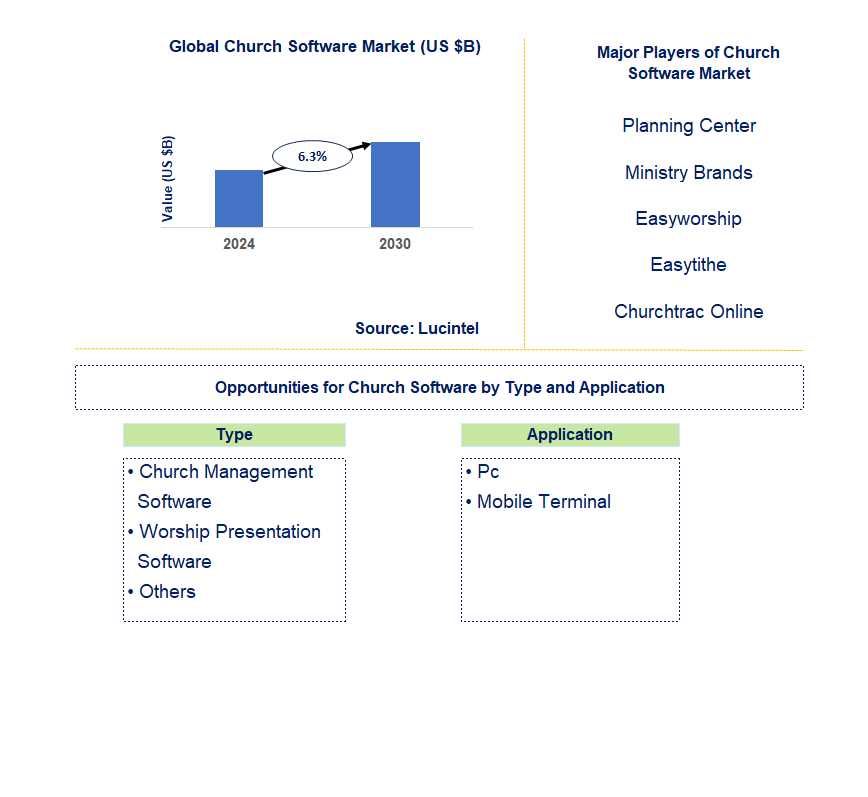
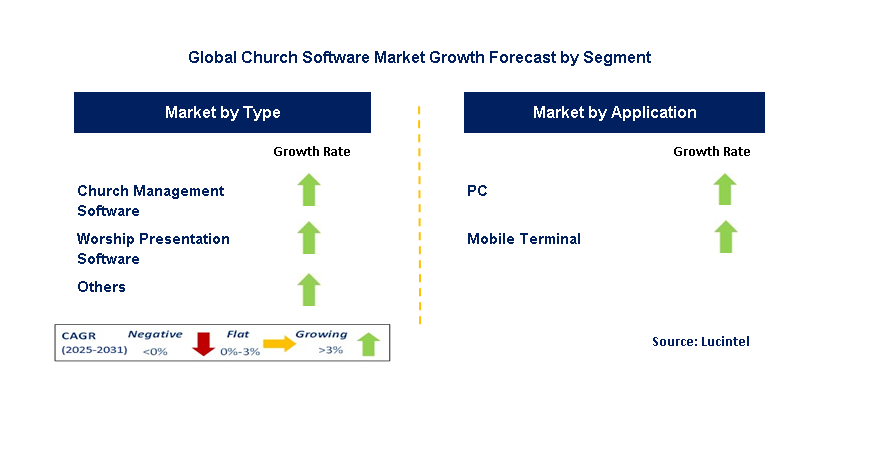
• Lucintel forecasts that church management software is expected to witness higher growth over the forecast period due to it covers a wide range of essential functions like member management, donation tracking, and event planning.
• Within this market, mobile terminal is expected to witness the higher growth due to staying connected with church activities..
• North America is expected to witness the highest growth over the forecast period due to to high technology adoption in churches. A more than 150-page report is developed to help in your business decisions. Sample figures with some insights are shown below.
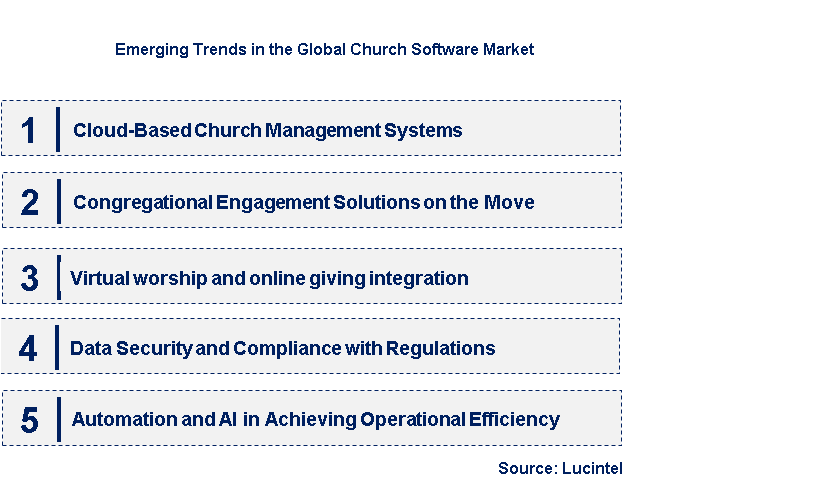
• Cloud-Based Church Management Systems: Cloud-based Church Management Systems (ChMS) are fast gaining popularity due to their cost-effectiveness, scalability, and accessibility. These systems allow churches to manage memberships, donations, event planning, and communication from any device with internet access. This shift to the cloud helps reduce hardware costs, offering secure and reliable solutions for managing church operations. Many churches have become more recent fans of the cloud-based system due to immediate data access, collaboration among the staff and volunteers, and others.
• Congregational Engagement Solutions on the Move: With increasing usage of smart mobile devices, churches are beginning to adopt a trend of the "mobile-first" church management solution. Such a solution incorporates mobile apps allowing its members to be engaged through service, monitor events, contribute money, or receive content online. These mobile solutions help churches stay connected with their members, whether it's a physical presence or digital. Further, mobile solutions make a church more agile, opening doors to younger demographics and technology-savvy individuals while increasing participation in service, donation, and outreach programs.
• Virtual worship and online giving integration: The demand for virtual worship services and integration of online giving features is increasing day by day, especially after the COVID-19 pandemic. Church software solutions will now be designed to include live streaming, allowing churches to spread out across the world. Online giving features are integrated into these platforms, allowing congregants to give safely across websites, mobile apps, and social media. This is changing the mode of conducting services in churches where more people join the congregation from the internet, and people also give digitally; hence, the mode of giving support to the church activities has become more interactive and efficient.
• Data Security and Compliance with Regulations: As the churches continue embracing digital tools, data security and compliance with regulation such as GDPR and PCI DSS have been critical issues. Church software providers are upgrading their offerings with strong security features to protect sensitive data, including member information, donation details, and financial records. Data protection regulations compliance is crucial to ensure that churches safeguard their congregants' information. Encryption, secure payment processing, and access controls are now standard features in software solutions, making data protection a priority for religious organizations worldwide.
• Automation and AI in Achieving Operational Efficiency: Automation and AI are soon coming to represent significant transformative elements to improve the efficiency of operation within church management. Automation through the use of church software takes on routine duties including scheduling, donation tracking, communication, and managing events which the church staff could then allocate much time towards higher aspects of the ministry. AI-powered tools can analyze engagement patterns and provide personalized recommendations for outreach, helping churches engage more effectively with members. These advancements help streamline administrative tasks, reduce human error, and improve overall productivity. These newer trends in church software are making churches function better and more efficient. It opens the door for better engagement and flexibility. Systems like cloud, mobile solutions, integrated online giving, improved security on data, and automation enable streamlined church work. The ongoing trend is also making the market of Church Software a dynamic area of operation and service that enhances connectivity with its community and its workflow.
• Live-Streaming Capabilities Integration: Integration of live-streaming capabilities into church management software is one of the most important developments in recent years. With more churches taking their services online, software solutions are integrating live-streaming features to help religious organizations reach their congregants from a distance. This development is especially important during the time of social distancing measures and global outreach. The vendors of church software now provide all-inclusive tools for live-streaming services, events, and community outreach.
• Online Giving and Donation Management Improvements: The online giving platforms and the donation management systems have changed how churches manage their tithes and offerings. Modern church software now provides safe, multi-channel donation options using mobile apps, websites, and social media. These developments enable churches to raise more contributions, monitor donations, and offer receipts for tax purposes. Remote management and processing of donations have made it easy for members to contribute even if they cannot attend in-person services, hence becoming more consistent and reliable sources of financial support for churches.
• Mobile Applications for Member Engagement: Churches are increasingly using mobile applications to enhance member engagement and communication. These apps provide congregants access to service schedules, the opportunity to donate, participation in group discussions, and content from church events all through their smartphones. Mobile apps also create a sense of community through the ability to share prayer requests, announcements, and updates in real-time. This development improves the overall experience of the church and increases engagement with younger, mobile-savvy congregants.
• Advanced Data Analytics and Reporting Tools: As part of the improvement, church software solutions are integrating advanced data analytics and reporting tools into helping churches understand congregational engagement better, financial trends, and outreach effectiveness. Through this, it can track donations, participation in events, and attendance to outline influential thoughts that would guide decisions. Using these insights, churches can operate more effectively, improve communication strategies, and allocate their resources appropriately. It is increasingly becoming essential for church leaders to make data-driven decisions in today's digital and connected world.
• Better Security Option for the Protection of Data: With increased dependency on digital tools, the protection of data has become one of the most important issues for a church software provider. With such sensitive information regarding its members and their donations to be protected, the church software is now evolving through advanced security features such as encryption, secure payment gateways, and multi-factor authentication. All these enhancements provide churches with compliance with data protection regulations regarding privacy for the church members. A higher emphasis on security promotes trust among congregants while, at the same time, upholding a level of compliance with regulations. One of the most recent trends in the Church Software market is likely to integrate more extensive, secure, and efficient digital solutions. Live-streaming, online giving, mobile apps, and extensive security features are all changing the ways churches operate and reach their communities. These trends will continue to shape the most integral ways churches are able to serve their congregants and the manner in which their affairs are conducted.
• Church Management Systems (ChMS): Church management systems, ChMS, form a key growth opportunity in the church software market. Such systems allow churches to manage memberships, donations, event planning, and communication. As more churches strive to make their operations more efficient, the need for ChMS solutions is rising. The implementation of these systems helps churches save time, operate efficiently, and communicate better with their members. The integrated features of a ChMS system provide mobile apps, cloud storage, and other online giving capabilities, which increase its appeal to churches of any size.
• Online Giving Platforms: Online giving platforms are a significant growth opportunity, especially as churches increasingly rely on digital donations. These platforms allow churches to offer secure, convenient ways for congregants to donate, either online or via mobile apps. The growth of mobile payments, along with the rising popularity of recurring donations, is driving demand for online giving solutions. Churches are now able to receive donations more efficiently, increase giving, and offer better financial transparency.
• Live-Streaming and Virtual Event Management: The demand for live-streaming capabilities and virtual event management tools is growing rapidly in the Church Software market. As churches seek to reach broader audiences through virtual worship services and events, software providers are incorporating live-streaming features into their platforms. This trend is likely to continue as churches increasingly cater to both in-person and online congregations. Live-streaming solutions seamlessly integrated with event management and communication tools are one of the big growth opportunities.
• Mobile App Integration: Mobile app integration is a key growth area for church software providers. Through mobile apps, congregants can participate in activities of the church, donate, view sermons, and even access community resources directly from their smartphones. Churches are using mobile apps to communicate better, to get more participation, and to engage with their younger, more tech-savvy members. As smartphone usage continues to rise, the demand for mobile-based solutions is expected to grow significantly, providing software providers with a valuable growth opportunity.
• Data Analytics and Reporting Solutions: Data analytics and reporting solutions are becoming essential for churches to track membership, attendance, giving patterns, and engagement. The ability to leverage this data for informed decision-making is driving demand for sophisticated reporting tools. Robust analytics features in church software help their leaders optimize operations, plan more effective outreach strategies, and resource allocation. Given the growing recognition by churches of the value of data-driven insight, analytics reporting solutions are rising in demand. Strategic growth opportunities are numerous in the Church Software market, driven by cloud-based systems, mobile apps, live streaming, and data analytics. This is changing how churches manage their operations, how they communicate with members, and how they relate to their community. As the church continues embracing digital solutions, the market for Church Software will expand, giving innovative and efficient tools to religious organizations worldwide.
• Planning Center
• Ministry Brands
• Easyworship
• Easytithe
• Churchtrac Online
• Breeze
• Acs Technologies Group
• Church Community Builder
• Faithlife Corporation
• ServantPC Resources
• Church Management Software
• Worship Presentation Software
• Others
• PC
• Mobile Terminal
• North America
• Europe
• Asia Pacific
• The Rest of the World
• United States: In the United States, the Church Software market is thriving with the increasing adoption of digital platforms for church management and outreach. Most churches are implementing cloud-based software for managing their members, taking donations, planning events, and communicating with each other. Leading the market in these services are Planning Center, Breeze, and Pushpay, providing the church with the ability to make their work streamlined and engage people. Live-streaming capabilities, and even social media platforms that integrate well, have also increased with the pandemic that started with COVID-19. Now churches seek software which would provide all-around digital experience in both face-to-face as well as online worship.
• China: The China market for church software is fast growing as more and more churches take to using technology for effective communication and congregation. The quick adoption of digitized religious activity is gaining the ground in this country, including church management and online services along with tracking contributions and membership registration. Platforms are being developed by local companies to match the requirements of Chinese churches, offering online donations and virtual gatherings, among other features. The great increase in digital tools will well fit within China's growth in internet penetration and the government's regulation of religious practices, urging religious groups to digitalize their activities for higher compliance and outreachability.
• Germany: Germany's Church Software market is growing, especially in administrative tasks and religious and legal regulations compliance. German churches are using software to handle membership management, track contributions, and organize events. Given the country's strict emphasis on data protection and GDPR compliance, security and data privacy are at the forefront of what software providers offer. Further, increased need for worship services in virtual media is also encouraging churches to adapt digital tools with the functionality of live-streaming and other forms of online outreach. German digital integration with the churches streamlines church administration, thus enhancing productivity and yet staying compliant to regulatory guidelines.
• India: Church Software in India is a new but growing market. The growing number of churches looking for digital tools for managing membership, donations, and communication reflects India's expanding religious landscape. Affordability and ease of access are making cloud-based software more popular, an attractive option for smaller churches. The demand for mobile-based church management solutions is also on the rise with an increase in smartphone usage. Important ones in this regard are online giving, registration for events, and other live-streaming functions, as churches look to stretch out their reach into dispersed communities across geographies.
• Japan: Japan's Church Software market is small compared with the other regions but increasingly finds itself caught in the digital waves that cut across management in the church software. To some extent, churches in Japan have started embracing church software that tracks membership, manages donations, and offers communications tools. Despite the smaller Christian population in Japan, the demand for church software is growing, particularly for services like live-streaming and virtual event management. The increasing trend of digital engagement among younger Japanese congregants is prompting churches to explore more robust software solutions to stay relevant and connected.


• Planning Center
• Ministry Brands
• Easyworship
• Easytithe
• Churchtrac Online
• Breeze
• Acs Technologies Group
• Church Community Builder
• Faithlife Corporation
• ServantPC Resources Q5. Which church software market segment will be the largest in future? Answer: Lucintel forecasts that church management software is expected to witness higher growth over the forecast period due to it covers a wide range of essential functions like member management, donation tracking, and event planning. Q6. In church software market, which region is expected to be the largest in next 5 years? Answer: North America is expected to witness the highest growth over the forecast period due to to high technology adoption in churches. Q7. Do we receive customization in this report? Answer: Yes, Lucintel provides 10% customization without any additional cost.


Choose a license that fits your team. Instant PDF delivery.
Prices exclude taxes. Instant delivery. Custom licensing available on request.
Market Report · July 15, 2026
Market Report · June 26, 2026
Market Report · June 24, 2026
Trusted partner for strategic intelligence and business growth


Receive a complimentary market analysis tailored to your industry. Our analysts will identify key growth opportunities and competitive dynamics specific to your business.

Market size, growth rate, and key trend analysis for your specific sector.

Top competitor positioning and market share analysis.

Strategic recommendations backed by data-driven insights.
Get curated market intelligence and competitive moves straight to your inbox.
By subscribing, you agree to receive our monthly insights. Unsubscribe anytime.
Receive a complimentary market analysis tailored to your industry. Our analysts will identify key growth opportunities and competitive dynamics specific to your business.
Market size, growth rate, and key trend analysis for your specific sector.
Top competitor positioning and market share analysis.
Strategic recommendations backed by data-driven insights.
Get curated market intelligence, emerging trends, and competitive moves straight to your inbox each month.
By subscribing, you agree to receive our monthly insights. Unsubscribe anytime.
We'll send your sample report shortly.