
Market Report · July 16, 2026

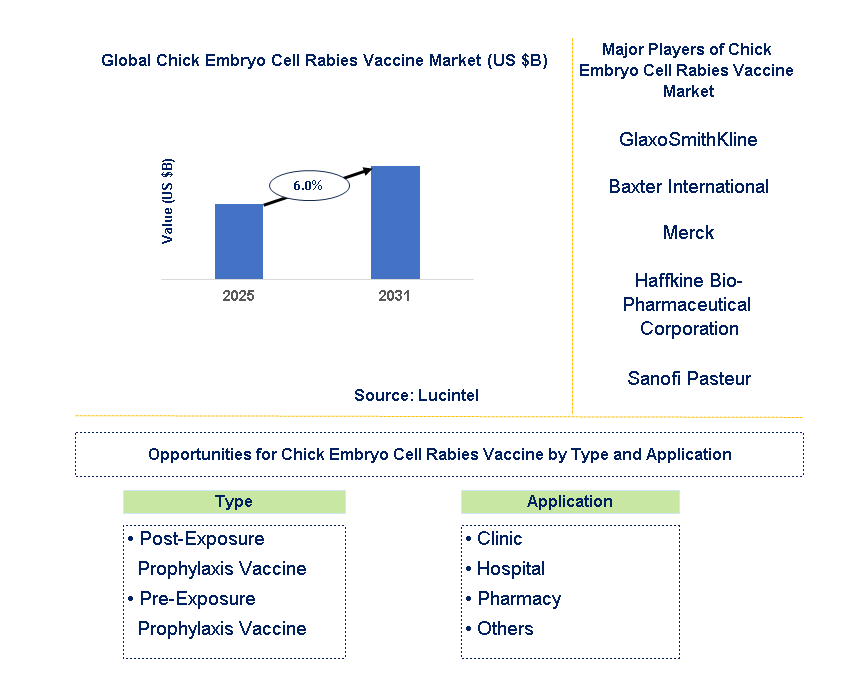
Key data points: The growth forecast = 6% annually for the next 7 years. Scroll below to get more insights. This market report covers trends, opportunities and forecasts in chick embryo cell rabies vaccine market to 2031 by type (post-exposure prophylaxis vaccine and pre-exposure prophylaxis vaccine), application (clinic, hospital, pharmacy, and others), and region (North America, Europe, Asia Pacific, and the Rest of the World)
We'll send your sample report shortly.
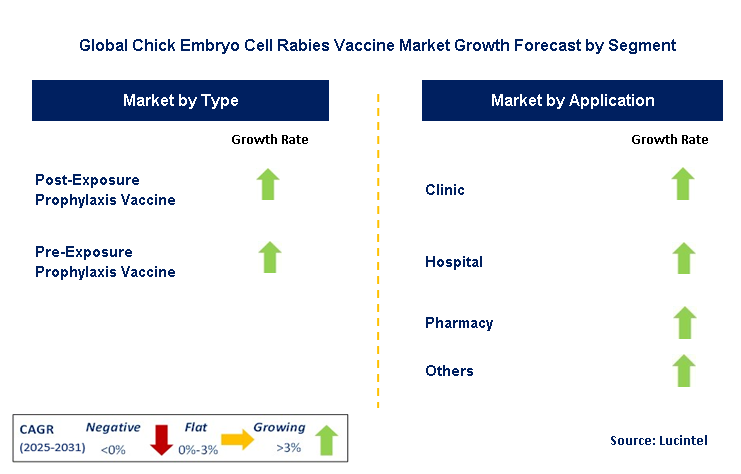
• Lucintel forecasts that, within the type category, post-exposure prophylaxis vaccine is expected to witness higher growth over the forecast period.
• Within the application category, hospital is expected to witness the highest growth.
• In terms of region, APAC is expected to witness the highest growth over the forecast period. Gain valuable insights for your business decisions with our comprehensive 150+ page report. Sample figures with some insights are shown below.
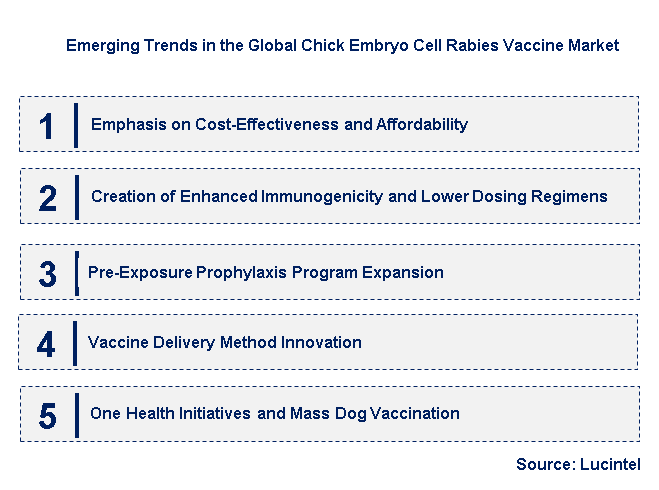
• Emphasis on Cost-Effectiveness and Affordability: One of the major emerging trends is the increased emphasis on developing extremely cost-effective and affordable chick embryo cell rabies vaccines, especially for low- and middle-income nations that have a high rabies burden. This is done by streamlining manufacturing processes and seeking creative pricing models. The effect is broadening access to life-saving vaccines in areas where budget limitations usually restrict mass vaccination. This is a key trend towards attaining global rabies elimination goals by making preventative as well as post-exposure prophylaxis available to all who require them.
• Creation of Enhanced Immunogenicity and Lower Dosing Regimens: There is a current emerging trend towards enhancing the immunogenicity of CEC rabies vaccines so that they are highly immunogenic with fewer doses or less volume per dose. This includes investigation into adjuvant technology and optimized viral strains. The effect is to increase patient compliance through lowering the number of injections needed, especially for post-exposure prophylaxis. A more convenient dosing regimen can also relieve healthcare systems from the burden and enhance vaccine acceptance, particularly in low-resourced environments.
• Pre-Exposure Prophylaxis Program Expansion: A speeding expanding trend is the greater focus and increase in pre-exposure prophylaxis (Prep) programs among those at risk, such as veterinarians, animal handlers, lab workers, and persons traveling to endemic countries. This includes educational initiatives and increasing Prep availability. The effect is decreasing the cumulative number of human rabies cases by averting infection prior to exposure, in turn reducing the dependence on frequently urgent and complicated post-exposure treatment. This preventive strategy is imperative for long-term rabies management.
• Vaccine Delivery Method Innovation: The industry is experiencing a new trend towards innovative vaccine delivery techniques beyond intramuscular injections. This entails investigation of intradermal administration, with smaller vaccine doses being used, and possibly needle-free or oral vaccines in animal vaccination. The effect is enhanced vaccine take and compliance through facilitation of easier and less painful administration. Intradermal routes also extend vaccine supplies, rendering them more cost-effective for mass vaccination campaigns, particularly in high case load areas.
• One Health Initiatives and Mass Dog Vaccination: An important new development is greater integration of CEC rabies vaccine programs into "One Health" programs with a focus on mass dog vaccination campaigns as the best strategy to end human deaths from rabies. This takes an interdisciplinary approach between human and animal health. The effect is combating rabies at its origin by breaking the virus reservoir in dogs. Involvement in mass vaccination of animals with economical CEC vaccines directly helps avert human exposure in conformity with the vision of zero human fatalities due to dog-mediated rabies. These new trends are shifting the chick embryo cell rabies vaccine market collectively by pushing innovation toward higher affordability, improved efficacy, easier administration, wider preventive measures, and an integrated "One Health" strategy. The intersectionality of these trends is speeding up global efforts to manage and eventually eradicate rabies, bringing life-saving vaccines more within reach and effective globally.
• Expanded Production Capacity and Supply Chain Optimization: One major recent improvement is the notable expansion of production capacity for chick embryo cell rabies vaccines by major producers, particularly in rabies-endemic countries. In parallel with this is a concerted effort at optimizing supply chains and cold chain logistics to maintain vaccine supply, especially in remote and underserved regions. The effect is meeting the high worldwide need for rabies vaccines, curbing shortages, and enhancing fair access to life-prolonging prophylaxis, essential for outbreak prevention and reduction of human mortality.
• Affordability and Accessibility Focus in Endemic Areas: A very significant recent advance focuses on making CEC rabies vaccines affordable and accessible in high-burden nations, including India and China. Manufacturers have streamlined manufacturing costs and partnered with governments and NGOs in bringing positive pricing and distribution strategies. The effect is facilitating greater access to both pre-exposure and post-exposure prophylaxis in resource-limited environments, where the economic cost of rabies is greatest, directly supporting global rabies elimination efforts.
• Refining Intradermal Vaccination Regimens: New innovations are the ongoing refinement and advancement of intradermal (ID) vaccination regimens for CEC rabies vaccines by agencies such as the World Health Organization (WHO). ID delivery employs a lower amount of vaccine per dose and is thus less expensive. The effect is extending vaccine supply farther, making post-exposure prophylaxis cheaper and more accessible, particularly in the developing world where vaccine supply may not be adequate. This also lowers the number of injections, enhancing patient comfort and compliance.
• New Formulations and Enhanced Stability: One major recent advance is research on new formulations of CEC rabies vaccines to enhance thermostability and shelf life. This encompasses the production of vaccines with reduced sensitivity to temperature variations, which is important for distribution in areas with variable cold chain facilities. The application is increasing the utility and coverage of vaccination campaigns, maintaining vaccine viability in adverse environmental conditions, and minimizing wastage as a result of inappropriate storage.
• Increased Use in Mass Dog Rabies Vaccination Programs: Current advancements feature increased and strategic use of chick embryo cell rabies vaccines in mass dog rabies vaccination programs as a foundation for rabies control. Realizing the greatest efficacy in preventing human rabies lies in dog vaccination, adequate investments are being placed in such campaigns. The effect is diminishing the animal reservoir of the rabies virus, thus considerably decreasing the risk of exposure to humans and helping achieve the global objective of eliminating dog-mediated human rabies-related deaths by 2030. These new advances are collectively influencing the chick embryo cell rabies vaccine market by making these essential vaccines more accessible, affordable, easy to administer, and strategically placed. The emphasis on expanding production, streamlining delivery, and complementing animal health efforts is driving progress toward a rabies-free world.
• Post-Exposure Prophylaxis (PEP) in Rabies-Endemic Areas: One of the key strategic growth opportunities is increasing the affordability and access to CEC rabies vaccines for Post-Exposure Prophylaxis (PEP) in rabies-endemic areas, especially Asia and Africa. This includes guaranteeing convenient access to clinics and pharmacies, and encouraging WHO-approved intradermal regimens. The effect is saving human lives directly through the availability of timely and effective therapy following suspected rabies exposure, the most important intervention to avoid the inevitably lethal disease. This segment captures the greatest and most pressing need.
• Pre-Exposure Prophylaxis (Prep) for Vulnerable Populations: There is an important strategic expansion opportunity in extending Pre-Exposure Prophylaxis (Prep) programs for occupational risk groups (e.g., vets, animal control personnel, laboratory workers) and foreign travelers to rabies-endemic countries. This includes focused awareness campaigns and broadening vaccine availability. The effect is decreasing the health care system's workload through the avoidance of exposures that would otherwise necessitate PEP, and providing reassurance to persons with continued rabies exposure risk. Expanded Prep use is a central preventive measure for long-term rabies prevention.
• Mass Dog Vaccination Programs: One key strategic development opportunity is the massive provision of CEC rabies vaccines for mass dog vaccination programs, particularly in countries with high dog-mediated rabies prevalence. This "One Health" initiative acknowledges that dog vaccination is the most effective method for the prevention of human rabies deaths. The effect is to end the chain of rabies transmission from animal to human, drastically cutting down on human cases and working towards the global goal of elimination. Bulk procurement and supply chain arrangements through alliances with governments and NGOs are critical in this regard.
• Government Partnerships and Public Health Initiatives: An essential strategic expansion opportunity is through active engagement in public health programs and forging robust collaborations with national governments and global institutions (e.g., WHO, Gavi). This encompasses support for national rabies control strategies, awareness campaigns, and vaccine tenders. The effect is having broad vaccine coverage, enhancing public confidence, and syncing with global health policies. Such partnerships can guarantee stable demand and backing for mass vaccinations.
• Research and Development for Improved Formulations and Delivery: A continuous strategic growth prospect is in repeated R&D to improve CEC rabies vaccine formulations with emphasis on thermostabilizing, extended shelf life, and perhaps new delivery systems (e.g., needle-free injectors, oral animal vaccines). Its effect is overcoming logistical constraints in challenging landscapes, minimizing wastage, and enhancing patient/animal compliance, making vaccination programs more effective and efficient on a worldwide level. Developments in this field ensure future market success and public health influence. These strategic growth prospects are profoundly influencing the chick embryo cell rabies vaccine industry by propelling its development towards more accessible, efficient, and broadly used solutions for rabies prevention and control. Through a focus on key human PEP and Prep, taking advantage of mass animal vaccination, building public health partnerships, and R&D investment, manufacturers can play an important role in global health while generating significant market growth.
• GlaxoSmithKline
• Baxter International
• Merck
• Haffkine Bio-Pharmaceutical Corporation
• Sanofi Pasteur
• Biological E. Limited
• Indian Immunologicals
• Vaccine Research Center
• Kaketsuken
• Serum Institute of India
• Post-Exposure Prophylaxis Vaccine
• Pre-Exposure Prophylaxis Vaccine
• Clinic
• Hospital
• Pharmacy
• Others
• North America
• Europe
• Asia Pacific
• The Rest of the World
• United States: The United States chick embryo cell rabies vaccine market is stable, mainly based on pre-exposure prophylaxis of exposed professionals (e.g., veterinarians) and tourists. New advances involve sustained emphasis on high safety and efficacy levels for authorized CEC vaccines such as Rabipur. Although other cell-culture vaccines are also common, CEC vaccines are still a central part of the U.S. rabies prevention program. The market recognizes continued research into new vaccine technologies, although CEC vaccines have a firmly established position based on their well-documented history.
• China: China's market for chick embryo cell rabies vaccines is growing strongly, with a high rabies incidence and a high drive from the government to vaccinate extensively. Recent news has included expanded domestic production capacity for CEC rabies vaccines to cover the huge demand for both human and animal vaccination. Chinese producers are investing in ramping up production and enhancing cold chain distribution to meet wider availability, particularly in rural regions where rabies is present. The nation's strong public health programs are aggressively promoting the use of high-quality and low-cost vaccines.
• Germany: Germany's chick embryo cell rabies vaccine market is dominated by a strong focus on quality, safety, and compliance with tough European regulatory requirements. Recent trends involve an ongoing dependence on established CEC vaccines such as Rabipur for pre- and post-exposure prophylaxis. Germany supports worldwide rabies control through research and development of vaccines and the provision of good-quality vaccines to other areas. Comprehensive vaccination protection of risk groups and animals is also emphasized within overall public health programs.
• India: India's market for chick embryo cell rabies vaccines is highly dynamic and amongst the largest in the world, fueled by a high burden of rabies. Recent trends have been a strong emphasis on improving the affordability and accessibility of CEC rabies vaccines, led by major Indian producers who are significant global suppliers. Regulatory authorities such as the CDSCO have expedited clearances for new domestic CEC vaccines (e.g., Vara-N), demonstrating flexibility to local requirements. Large-scale dog vaccination campaigns are also utilizing CEC-based vaccines to a great extent to stem human cases.
• Japan: Japan's chick embryo cell rabies vaccine market is dominated by a well-established public health infrastructure and preoccupation with quality, dependable vaccines, mainly for pre-exposure prophylaxis for selected occupational groups and travelers. Recent trends include current research on the next-generation vaccine technologies and delivery systems. Although rabies is almost eradicated in Japan, the market provides a consistent supply of potent CEC vaccines for prevention as well as a preparedness measure, indicating Japan's active response to public health and disease control.


• GlaxoSmithKline
• Baxter International
• Merck
• Haffkine Bio-Pharmaceutical Corporation
• Sanofi Pasteur
• Biological E. Limited
• Indian Immunologicals
• Vaccine Research Center
• Kaketsuken
• Serum Institute of India Q5. Which chick embryo cell rabies vaccine market segment will be the largest in future? Answer: Lucintel forecasts that, within the type category, post-exposure prophylaxis vaccine is expected to witness higher growth over the forecast period. Q6. In chick embryo cell rabies vaccine market, which region is expected to be the largest in next 5 years? Answer: In terms of region, APAC is expected to witness the highest growth over the forecast period. Q7. Do we receive customization in this report? Answer: Yes, Lucintel provides 10% customization without any additional cost.


Choose a license that fits your team. Instant PDF delivery.
Prices exclude taxes. Instant delivery. Custom licensing available on request.
Market Report · July 16, 2026
Market Report · July 15, 2026
Market Report · July 15, 2026
Trusted partner for strategic intelligence and business growth


Receive a complimentary market analysis tailored to your industry. Our analysts will identify key growth opportunities and competitive dynamics specific to your business.

Market size, growth rate, and key trend analysis for your specific sector.

Top competitor positioning and market share analysis.

Strategic recommendations backed by data-driven insights.
Get curated market intelligence and competitive moves straight to your inbox.
By subscribing, you agree to receive our monthly insights. Unsubscribe anytime.
Receive a complimentary market analysis tailored to your industry. Our analysts will identify key growth opportunities and competitive dynamics specific to your business.
Market size, growth rate, and key trend analysis for your specific sector.
Top competitor positioning and market share analysis.
Strategic recommendations backed by data-driven insights.
Get curated market intelligence, emerging trends, and competitive moves straight to your inbox each month.
By subscribing, you agree to receive our monthly insights. Unsubscribe anytime.
We'll send your sample report shortly.