
Market Report · May 18, 2026

This market report covers trends, opportunities, and forecasts in the global cable entry devices market to 2031 by technology (plastic & polymer glands and metal glands), application (oil & gas, mining, construction, railway, and others), and region (North America, Europe, Asia Pacific, and the Rest of the World)
We'll send your sample report shortly.
• Increased Demand for Modular and Customizable Systems: The demand for modular and customizable cable entry systems has surged as industries require solutions tailored to specific environmental and operational needs. These systems offer greater flexibility, allowing users to configure and adapt cable entry solutions based on project requirements. Modular designs improve efficiency during installation, reduce downtime, and offer greater adaptability to changes in infrastructure or cable types.
• Advancements in Sealing Technologies: The market is experiencing a shift from traditional sealing methods to more advanced sealing technologies, such as elastomeric seals and multi-component sealing systems. These newer technologies provide enhanced protection against dust, moisture, and harsh chemicals. As a result, they improve the overall durability and reliability of cable entry devices, particularly in critical applications like oil and gas and mining, where environmental conditions can be extreme.
• Integration of Smart and IoT-enabled Cable Entry Devices: The integration of smart technologies and the Internet of Things (IoT) is a growing trend in the cable entry devices market. These smart devices can monitor environmental factors such as temperature, humidity, and pressure, sending real-time data to maintenance teams. This enables predictive maintenance, reduces the likelihood of failure, and ensures that the devices are functioning at optimal levels, leading to improved safety and reduced operational costs.
• Focus on Sustainability and Eco-friendly Materials: As industries become more environmentally conscious, there is an increasing focus on sustainability in the design and manufacture of cable entry devices. Manufacturers are moving toward eco-friendly materials such as recyclable plastics and bio-based polymers. These materials help reduce the environmental impact of cable entry devices without compromising their durability or performance, especially in applications where sustainability is a key concern, such as construction and renewable energy.
• Growing Adoption of Explosion-proof and Hazardous Area Solutions: With the rise in industrial applications, particularly in oil and gas, mining, and chemical industries, there is a growing demand for explosion-proof and hazardous area-rated cable entry devices. These devices are specifically designed to ensure safety in environments where flammable gases or vapors may be present. The growing regulatory requirements and safety standards are driving the demand for such specialized solutions, making them crucial for industries operating in hazardous conditions. These emerging trends are driving significant change in the cable entry devices market, focusing on greater flexibility, safety, and sustainability. The shift toward modular, customizable systems and advancements in sealing technologies are making cable entry solutions more efficient and reliable. Integration with smart technologies and the growing emphasis on sustainability reflect the market's response to the evolving needs of industries. Additionally, the increasing demand for explosion-proof solutions ensures that cable entry devices meet the highest safety standards. As these trends continue to evolve, the market for cable entry devices will become even more advanced, providing industries with robust solutions to meet the challenges of modern infrastructure.
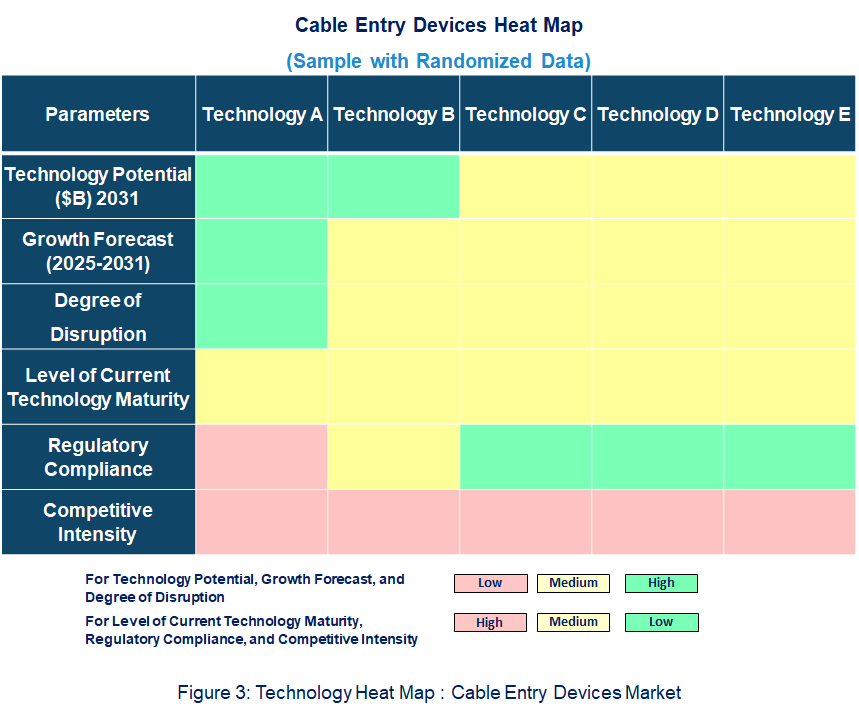
• Potential in Technology: The cable entry devices market holds significant technology potential, driven by the growing demand for reliable, efficient, and durable solutions across industries such as oil and gas, mining, construction, and transportation. Emerging technologies are enhancing the performance of cable entry devices, focusing on better sealing materials, modular designs, and advanced safety features. The potential for innovations in IoT integration, smart sensors, and automation can further revolutionize this market by enabling real-time monitoring, predictive maintenance, and smarter asset management.
• Degree of Disruption: The degree of disruption in the market is moderate. Traditional cable entry solutions are being replaced with more advanced, customizable, and modular systems. These systems are designed for improved flexibility, faster installation, and higher performance in extreme environments. While traditional designs are still widely used, new technologies are gradually reshaping the landscape.
• Current Technology Maturity Level: In terms of technology maturity, cable entry devices are relatively mature, with established standards for materials and sealing methods. However, advancements in materials (e.g., eco-friendly, high-durability plastics) and the integration of smart technology are still in the developmental stage.
• Regulatory Compliance: Regulatory compliance is critical, especially in hazardous industries. Cable entry devices must meet strict standards related to safety, explosion protection, and environmental conditions (e.g., IP ratings, ATEX certification). Regulatory requirements ensure that manufacturers produce reliable, safe, and environmentally friendly products, fostering further market growth.
• Amphenol: Amphenol has expanded its range of cable entry solutions, focusing on modular systems that provide flexibility and ease of installation. The company has introduced products featuring high-performance sealing technologies, ensuring superior protection against environmental factors like dust, moisture, and chemicals. Their innovations are particularly relevant for industries such as telecommunications and energy, where cable protection is critical for long-term reliability and performance. Amphenol's ability to offer customizable solutions helps industries meet specific operational needs.
• Emerson: Emerson has invested heavily in improving its cable entry devices by incorporating advanced sealing and protection technologies that meet stringent industry standards. Their recent product lines emphasize safety and reliability in hazardous environments, particularly in oil and gas and chemical processing sectors. Emerson has introduced explosion-proof cable entry systems, improving safety in areas with flammable materials. Their focus on durable and high-quality materials has reinforced their position in markets requiring robust and long-lasting solutions, ensuring higher operational uptime.
• ABB: ABB has introduced cutting-edge cable entry devices that integrate with automation and smart technologies. Their products now feature increased compatibility with digital monitoring systems, allowing for real-time performance tracking and predictive maintenance. By incorporating sensors that monitor temperature, pressure, and humidity, ABB's cable entry devices help industries like automotive and aerospace ensure optimal system performance and reduce downtime. This innovation reflects ABB’s commitment to merging traditional mechanical solutions with advanced, IoT-enabled technology to increase overall system efficiency.
• TE Connectivity: TE Connectivity has advanced the cable entry market by developing environmentally friendly and sustainable products. They have expanded their use of recyclable materials and bio-based polymers, responding to the increasing demand for green solutions. Additionally, TE Connectivity has enhanced its sealing technologies, offering improved protection against harsh environmental conditions while reducing installation times. Their commitment to sustainability, coupled with their focus on high-performance devices, has positioned them as a key player for industries focusing on both operational efficiency and environmental responsibility.
• Eaton: Eaton has been a pioneer in developing explosion-proof and hazardous area-rated cable entry devices, catering to high-risk sectors such as mining, oil and gas, and industrial automation. Their innovations include highly durable, non-corrosive materials that are essential for applications in extreme environments. Eaton’s focus on safety, performance, and regulatory compliance has helped them secure a strong foothold in sectors where the risk of ignition and environmental hazards is high. Their recent development of modular, easy-to-install systems has also improved operational efficiency and reduced downtime across industries. These recent developments highlight how key players in the cable entry devices market are pushing the envelope in terms of safety, sustainability, and smart technology integration. As these companies continue to innovate, they are shaping the future of cable entry solutions, ensuring that industries have the tools necessary to meet the evolving demands of modern infrastructure.
• Growing Demand for Automation and Smart Technology: Automation and smart technologies are increasingly integrated into cable entry devices, offering real-time monitoring and predictive maintenance. This boosts efficiency and reduces operational downtime across industries like manufacturing and energy.
• Rising Need for Safety in Hazardous Environments: As industries such as oil and gas and chemicals expand, the demand for explosion-proof and hazardous area-rated cable entry devices grows. These devices ensure safety in environments with explosive gases and chemicals, reducing operational risks.
• Focus on Modular and Customizable Solutions: The demand for customizable and modular cable entry systems is increasing, enabling industries to tailor solutions for specific operational requirements. This flexibility enhances efficiency, reduces installation time, and supports complex infrastructure projects.
• Advancement in Eco-friendly and Sustainable Materials: With growing environmental awareness, manufacturers are focusing on eco-friendly materials such as recyclable plastics and bio-based polymers. This shift toward sustainable production meets regulatory requirements while offering cost-effective, high-performance solutions. Challenges:
• High Initial Investment and Maintenance Costs: The cost of high-quality materials, advanced technologies, and installation makes cable entry devices expensive, particularly for small and medium-sized enterprises. High upfront costs may slow adoption and limit market penetration.
• Complexity in Integration with Existing Systems: Integrating new cable entry devices with existing infrastructure can be technically challenging, especially in older facilities with outdated systems. This can delay project timelines and increase installation costs, hindering widespread adoption.
• Regulatory Compliance and Certification Requirements: Stringent safety, environmental, and performance regulations must be met, particularly in sectors like oil and gas and chemical processing. Navigating complex certification processes can be time-consuming and costly, slowing product development.
• Limited Awareness and Specialized Expertise: There is a lack of awareness and specialized expertise in advanced cable entry technologies, particularly in emerging markets. This can impede adoption as industries may hesitate to invest in newer, more complex systems without proper training. The cable entry devices market is significantly influenced by the rising demand for automation, safety solutions, and customizable systems, as well as the shift toward sustainable materials. However, challenges such as high initial costs, integration complexities, and regulatory hurdles persist. Addressing these issues while continuing to innovate will ensure that the market maintains its growth trajectory, offering more efficient, safe, and environmentally friendly cable entry solutions.
• Amphenol
• Emerson
• ABB
• TE Connectivity
• Eaton
• Hubbell
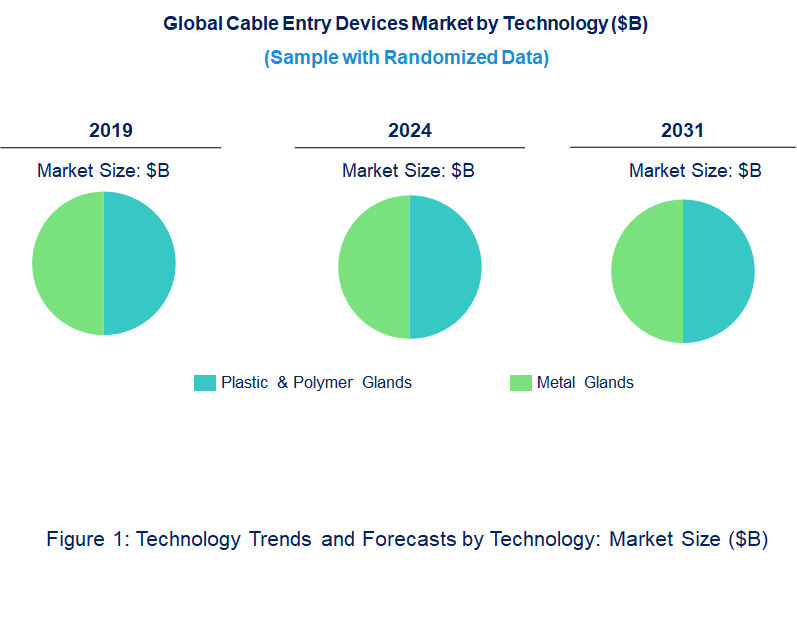
• Technology Readiness of Plastic & Polymer Glands vs. Metal Glands: Plastic glands are well-established for low-cost, standard applications, especially in non-hazardous environments, and are improving in durability and environmental resistance. Metal glands are more advanced for high-performance, hazardous applications, offering explosion-proof designs and meeting stringent safety standards. They dominate sectors like oil and gas, where safety certifications like ATEX and IECEx are mandatory. Both technologies are competitive: plastic glands excel in versatility and affordability, while metal glands lead in safety and compliance. Ongoing innovations in materials and smart technologies are expanding the potential of both.
• Competitive Intensity and Regulatory Compliance of Different Technologies: The competitive intensity in the cable entry devices market is high. Plastic and polymer glands dominate sectors like telecommunications due to their lower cost, while metal glands lead in industries like oil and gas, where safety and durability are crucial. Metal glands must meet strict safety certifications like ATEX and IECEx, while plastic glands adhere to basic standards for environmental protection. The market is shaped by balancing cost and safety, with manufacturers innovating to comply with regulations while maintaining affordability. The competition depends on the safety requirements of each application.
• Disruption Potential of Different Technologies in the cable entry devices market: Plastic and polymer glands, being cost-effective and lightweight, are disrupting the cable entry devices market by replacing metal glands in non-hazardous environments like telecommunications and construction. These materials offer good protection against moisture and dust while resisting chemicals. Metal glands, however, remain essential in harsh, explosive environments due to their superior strength, heat resistance, and safety features. As industries focus on automation and sustainability, plastic glands are evolving with more durable, eco-friendly materials, while metal glands are advancing to meet higher safety standards, such as explosion-proof designs. Both technologies are driving shifts in the market by offering tailored solutions to meet specific operational needs.
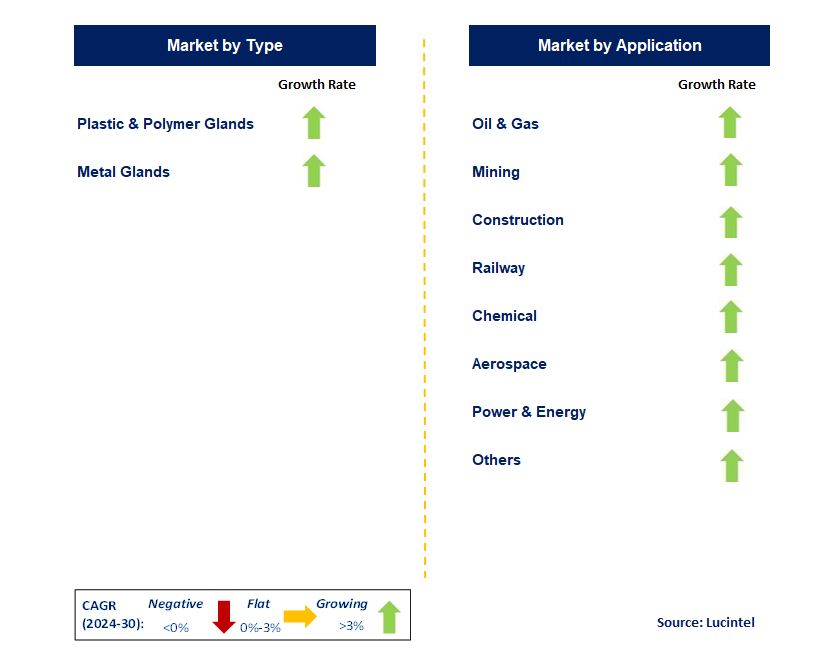
• Plastic & Polymer Glands
• Metal Glands
• Oil & Gas
• Mining
• Construction
• Railway
• Others
• North America
• Europe
• Asia Pacific
• The Rest of the World
• Latest Developments and Innovations in the Cable Entry Devices Technologies
• Companies / Ecosystems
• Strategic Opportunities by Technology Type


Choose a license that fits your team. Instant PDF delivery.
Prices exclude taxes. Instant delivery. Custom licensing available on request.
Market Report · May 18, 2026
Market Report · May 18, 2026
Market Report · May 18, 2026
Trusted partner for strategic intelligence and business growth


Receive a complimentary market analysis tailored to your industry. Our analysts will identify key growth opportunities and competitive dynamics specific to your business.

Market size, growth rate, and key trend analysis for your specific sector.

Top competitor positioning and market share analysis.

Strategic recommendations backed by data-driven insights.
Get curated market intelligence and competitive moves straight to your inbox.
By subscribing, you agree to receive our monthly insights. Unsubscribe anytime.
Receive a complimentary market analysis tailored to your industry. Our analysts will identify key growth opportunities and competitive dynamics specific to your business.
Market size, growth rate, and key trend analysis for your specific sector.
Top competitor positioning and market share analysis.
Strategic recommendations backed by data-driven insights.
Get curated market intelligence, emerging trends, and competitive moves straight to your inbox each month.
By subscribing, you agree to receive our monthly insights. Unsubscribe anytime.
We'll send your sample report shortly.