
Market Report · July 16, 2026

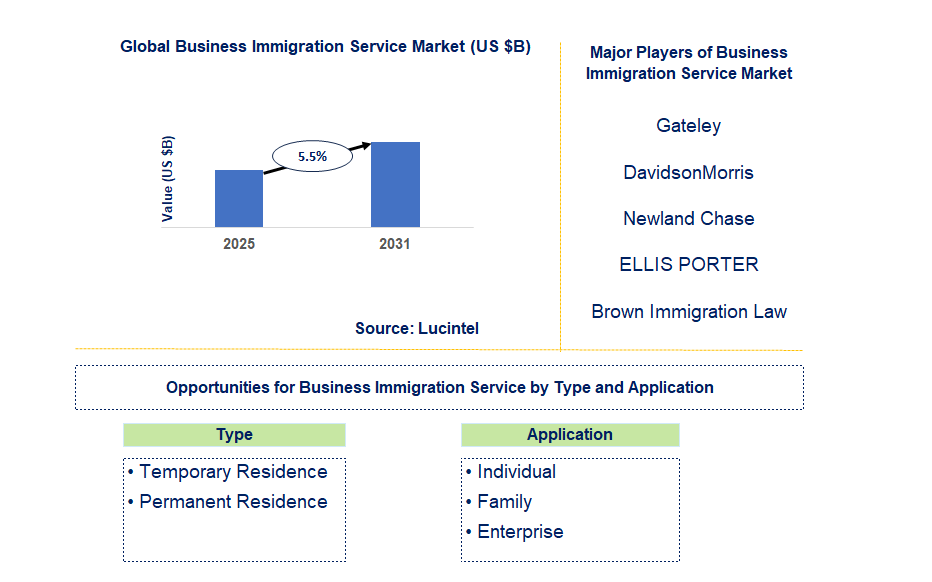
Key data points: The growth forecast = 5.5% annually for the next 7 years. Scroll below to get more insights. This market report covers Trends, opportunity and forecast in business immigration service market to 2031 by type (temporary residence and permanent residence), application (individual, family, and enterprise), and region (North America, Europe, Asia Pacific, and the Rest of the World)
We'll send your sample report shortly.
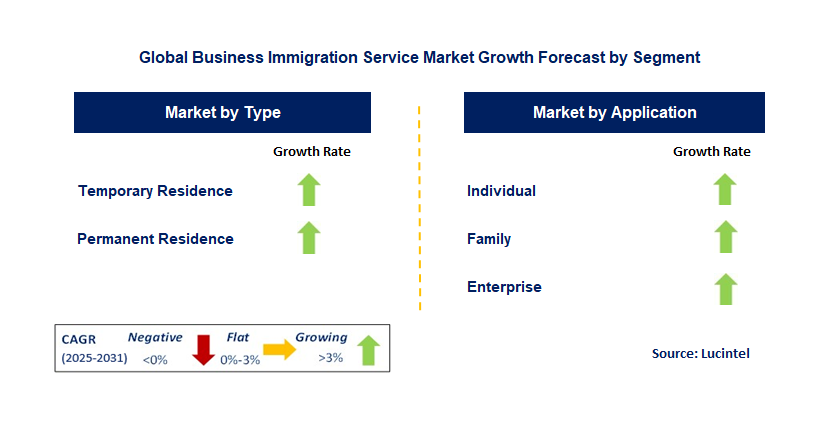
• Lucintel forecasts that, within the type category, temporary residence will remain larger segment over the forecast period.
• Within the application category, enterprise is expected to witness the highest growth.
• In terms of region, APAC is expected to witness the highest growth over the forecast period. Gain valuable insights for your business decisions with our comprehensive 150+ page report. Sample figures with some insights are shown below.
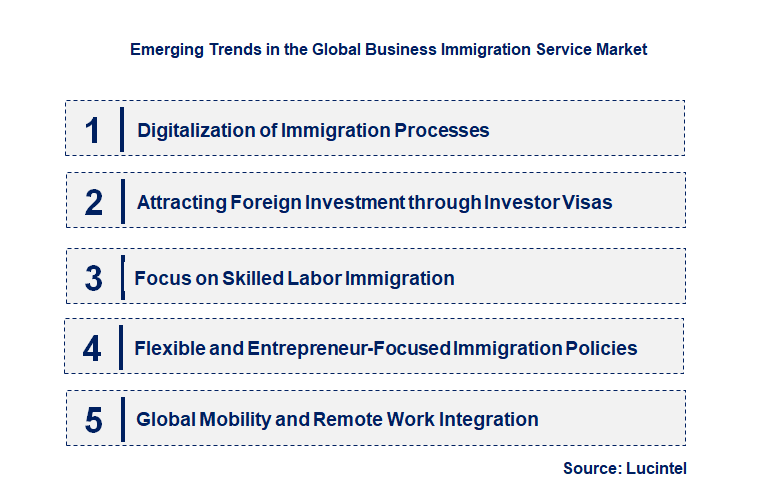
• Digitalization of Immigration Processes: Countries are increasingly adopting digital tools and platforms to streamline and automate immigration processes. E-Visas, digital documentation, and AI-powered systems have made the visa application and approval process faster and more efficient. This trend reduces administrative costs and enhances the overall experience for both businesses and foreign workers. As more countries embrace digital immigration systems, the global market will see a significant increase in efficiency and accessibility for international business professionals.
• Attracting Foreign Investment Through Investor Visas: Investor visa programs, such as the EB-5 in the U.S. and the Golden Visa in various European countries, are gaining prominence as governments seek to attract foreign capital to boost economic development. These visas allow foreign nationals to obtain residency by investing in local businesses or real estate projects. As global capital flows increase, these programs are becoming an essential tool for countries looking to boost job creation and infrastructure development, while providing international investors with an opportunity for long-term residency.
• Focus on Skilled Labor Immigration: Countries are increasingly prioritizing skilled labor immigration to address skill shortages in key industries like technology, engineering, healthcare, and finance. Programs like the “Blue Card” in Europe and the “H-1B” in the U.S. are examples of how nations are offering streamlined visa pathways for highly skilled workers. This trend is reshaping the market by focusing not only on attracting talent but also on creating faster and more efficient immigration routes for professionals in high-demand sectors.
• Flexible and Entrepreneur-Focused Immigration Policies: In an effort to foster innovation and entrepreneurship, many countries are offering immigration options for foreign entrepreneurs. This includes startup visas, which allow entrepreneurs to establish new businesses in a foreign country. Nations like Canada, the U.S., and the UK are rolling out policies that enable entrepreneurs to obtain permanent residency if they meet specific criteria. This trend is reshaping the global immigration market by providing new opportunities for business leaders to expand internationally and diversify the talent pool.
• Global Mobility and Remote Work Integration: The rise of remote work has led to an increase in global mobility, as companies are now able to hire talent from anywhere in the world. This trend has had a significant impact on business immigration, as many companies now seek workers across borders without the need for physical relocation. Countries are adjusting their immigration policies to accommodate remote workers by offering specialized visas for digital nomads and remote employees, leading to more flexible and dynamic work environments. These emerging trends are fundamentally reshaping the global business immigration service market. As digitalization simplifies processes, countries increasingly focus on attracting foreign investment, skilled professionals, and entrepreneurs to fuel economic growth. The rise of global mobility and the integration of remote work also offer new opportunities for businesses to expand talent pools beyond national borders. As a result, the market is becoming more accessible and efficient, creating new pathways for businesses and workers worldwide.
• Introduction of E-Visa Programs: Many countries have launched electronic visa programs (E-Visas) to streamline the immigration process. These digital platforms allow businesses and individuals to apply for visas online, reducing paperwork and processing times. E-Visas have become particularly popular in countries with high demand for business professionals, allowing for quicker entry and easier compliance with immigration laws. This shift toward digitalization is enhancing the efficiency of the immigration process and making it more accessible for international business talent.
• Expansion of Investor Visa Programs: Investor visa programs are increasingly being used by governments as a means to attract foreign capital. Countries like Portugal, Spain, and the U.S. offer residency or citizenship in exchange for investment in local businesses or real estate. These programs are popular among wealthy foreign nationals seeking both investment opportunities and long-term residency. The growing demand for these programs has led to an expansion of investor visa options globally, contributing to the globalization of business immigration.
• Growing Emphasis on Skilled Worker Immigration: Many countries are revising their immigration policies to better attract skilled workers in high-demand fields such as technology, healthcare, and finance. Programs like the H-1B visa in the U.S. and the “Blue Card” in Europe are designed to streamline the immigration process for professionals with specialized skills. This shift is responding to global talent shortages and increasing demand for skilled labor, particularly in tech-driven sectors, and is a key development reshaping the global business immigration landscape.
• Rise of Digital Nomad Visas: The growing trend of remote work has led to the introduction of digital nomad visas in several countries. These visas allow remote workers to live in a foreign country while working for companies outside the host nation. Countries like Estonia, Barbados, and Croatia have introduced these visas to attract remote talent. The rise of digital nomad visas reflects the changing nature of work, with more individuals and businesses seeking to take advantage of flexible immigration policies that support global mobility.
• Increased Flexibility for Entrepreneurs and Startups: Many countries have introduced or expanded startup visa programs to attract foreign entrepreneurs. These visas are designed to enable entrepreneurs to establish new businesses in foreign countries, contributing to job creation and economic growth. Nations like Canada, the U.S., and the UK have created specific visa pathways that cater to startups, allowing entrepreneurs to stay and grow their businesses long-term. This focus on entrepreneurship is reshaping the global business immigration service market by offering new opportunities for innovation and investment. These recent developments in the global business immigration service market are driving increased access to international talent and foreign investment. Digital visa platforms, investor visa programs, and skilled worker pathways are making it easier for businesses to tap into a global workforce. The rise of digital nomad visas and startup-focused immigration policies further highlights the changing nature of work and entrepreneurship. These developments are enhancing global mobility, fostering economic growth, and expanding opportunities for businesses worldwide.
• Skilled Labor Immigration Pathways: The demand for skilled workers in fields such as technology, healthcare, and engineering is driving growth in immigration services that prioritize skilled labor. Countries are developing specialized programs to attract high-value workers, such as the U.S. H-1B visa and the EU Blue Card. These programs offer businesses access to highly qualified professionals, driving innovation and enhancing competitiveness in global markets.
• Digital Nomad Visas: The rise of remote work has led to the introduction of digital nomad visas, providing remote workers with the ability to live and work in foreign countries while earning income abroad. Countries such as Estonia and Barbados have launched such programs, creating a unique growth opportunity for the global business immigration market. These visas cater to a growing segment of workers who no longer need to be tied to a specific geographic location.
• Investor and Entrepreneur Visa Programs: Investor visa programs, such as the U.S. EB-5 and the Portugal Golden Visa, offer a pathway to residency for foreign nationals who invest in businesses or real estate in the host country. Similarly, entrepreneur visa programs are increasingly popular, with countries like Canada and the UK focusing on attracting startup founders. These visa programs present a key growth opportunity, allowing countries to attract capital, foster innovation, and create jobs.
• Talent Mobility and Global Mobility Solutions: As businesses become more globalized, talent mobility solutions have emerged as a critical growth opportunity. Organizations are seeking flexible immigration services to move workers across borders for short-term assignments, project work, and permanent relocation. Companies offering global mobility services, including relocation assistance, visa processing, and compliance management, are experiencing significant growth, driven by the need for businesses to remain competitive in a globalized workforce.
• Attracting Retirees and Expats: Several countries have begun targeting retirees and expats as part of their immigration growth strategy. These groups are often financially self-sufficient and can contribute to local economies through consumption and investment. Countries offering specialized retirement visas or long-term expat residency options are creating a new stream of growth in the business immigration market. This is particularly evident in countries like Portugal, Spain, and Thailand. The global business immigration service market is evolving to meet the needs of businesses and workers in a rapidly changing global economy. Growth opportunities in skilled labor, digital nomadism, investment, and entrepreneur visas are reshaping the landscape, enabling businesses to tap into diverse talent pools, foster innovation, and drive economic growth. These opportunities are providing new avenues for both businesses and individuals to thrive in an interconnected world. The market is expected to continue evolving as countries respond to the demands of global mobility and talent attraction.
• Gateley
• DavidsonMorris
• Newland Chase
• ELLIS PORTER
• Brown Immigration Law
• Temporary Residence
• Permanent Residence
• Individual
• Family
• Enterprise
• North America
• Europe
• Asia Pacific
• The Rest of the World
• United States: The United States has seen significant changes in its business immigration services, particularly in the H-1B visa program, which is aimed at skilled workers in fields like technology, healthcare, and engineering. The U.S. government has introduced measures to streamline the visa application process, making it faster and more efficient. Additionally, there is increasing emphasis on attracting foreign investment through programs like the EB-5 investor visa, which grants U.S. residency to foreign nationals who invest in U.S.-based businesses. However, the market faces challenges from shifting political dynamics and evolving visa policies that impact international talent mobility.
• China: China has introduced a more open approach to business immigration, with a focus on attracting high-skilled professionals to its growing tech and industrial sectors. The country has expanded its work visa options for foreign professionals, especially in key cities like Beijing and Shanghai. China’s “Green Card” system has also seen improvements, allowing easier permanent residency for skilled workers in science, technology, and finance sectors. However, bureaucratic hurdles and stringent regulations still pose challenges for businesses seeking to bring in foreign talent, making the immigration process less accessible for some.
• Germany: Germany has been a leader in reforming its business immigration services, particularly with the introduction of the “Skilled Workers Immigration Act” in 2020, which makes it easier for non-EU citizens to move to Germany for work. The country is focusing on attracting highly skilled workers, particularly in fields such as engineering, IT, and healthcare. Germany’s “Blue Card” program also provides an expedited path to residence for qualified workers. However, the market faces challenges from increasing demand for skilled labor, leading to more competition and potential bottlenecks in visa processing time.
• India: India has seen a rapid expansion in its business immigration services, largely driven by the increasing demand for foreign talent and investments. The Indian government has introduced a variety of initiatives to attract international businesses and skilled professionals, such as the Overseas Citizen of India (OCI) card and a streamlined employment visa system for skilled workers. While India is a key source of talent for many countries, its own immigration policies have made it more difficult for foreign workers to settle permanently. There has been a push to address this issue, focusing on attracting high-skilled talent to fill labor gaps.
• Japan: Japan has made significant strides in improving its business immigration services, primarily in response to a declining domestic workforce and the growing need for foreign talent. The government has launched a series of initiatives, including introducing “Specified Skilled Worker” visas, to bring foreign workers into key industries such as healthcare, construction, and agriculture. Japan’s immigration policies now focus on retaining foreign workers long-term, providing opportunities for skilled workers to gain permanent residency. However, challenges remain, including societal resistance to immigration and complex visa procedures that impede broader access.


• Gateley
• DavidsonMorris
• Newland Chase
• ELLIS PORTER
• Brown Immigration Law Q5. Which business immigration service market segment will be the largest in future? Answer: Lucintel forecasts that temporary residence will remain larger segment over the forecast period. Q6. In business immigration service market, which region is expected to be the largest in next 5 years? Answer: APAC is expected to witness the highest growth over the forecast period. Q7. Do we receive customization in this report? Answer: Yes, Lucintel provides 10% customization without any additional cost.


Choose a license that fits your team. Instant PDF delivery.
Prices exclude taxes. Instant delivery. Custom licensing available on request.
Market Report · July 16, 2026
Market Report · May 18, 2026
Market Report · May 18, 2026
Trusted partner for strategic intelligence and business growth


Receive a complimentary market analysis tailored to your industry. Our analysts will identify key growth opportunities and competitive dynamics specific to your business.

Market size, growth rate, and key trend analysis for your specific sector.

Top competitor positioning and market share analysis.

Strategic recommendations backed by data-driven insights.
Get curated market intelligence and competitive moves straight to your inbox.
By subscribing, you agree to receive our monthly insights. Unsubscribe anytime.
Receive a complimentary market analysis tailored to your industry. Our analysts will identify key growth opportunities and competitive dynamics specific to your business.
Market size, growth rate, and key trend analysis for your specific sector.
Top competitor positioning and market share analysis.
Strategic recommendations backed by data-driven insights.
Get curated market intelligence, emerging trends, and competitive moves straight to your inbox each month.
By subscribing, you agree to receive our monthly insights. Unsubscribe anytime.
We'll send your sample report shortly.